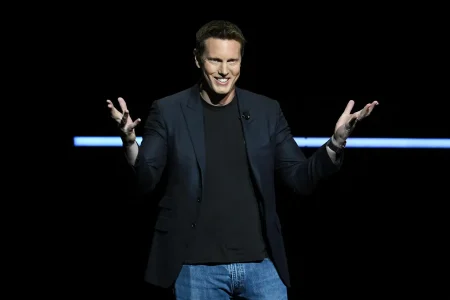


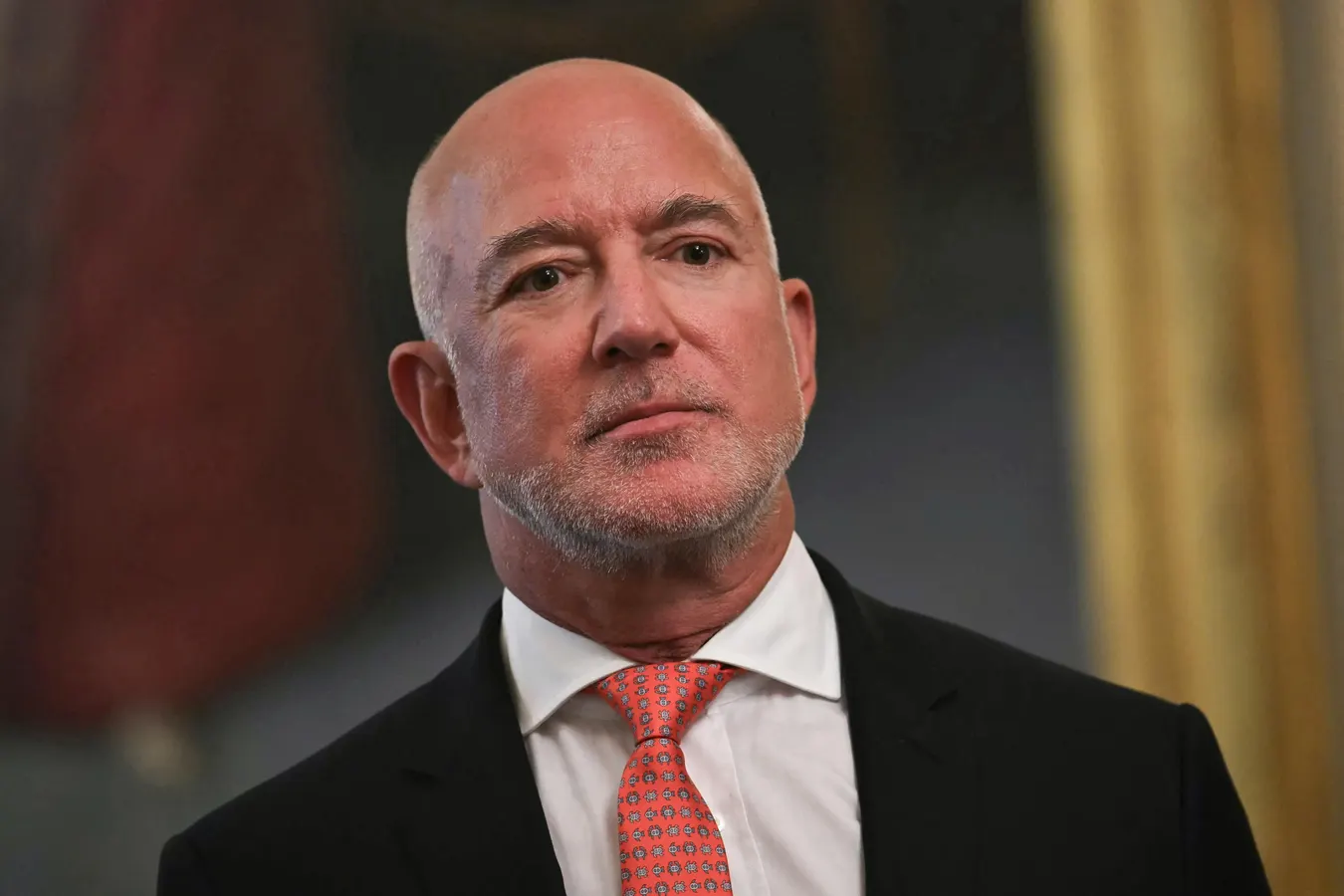
In a moment when most conversations about artificial intelligence are driven by fear, Amazon founder Jeff Bezos stepped forward with a radically different vision: one in which Americans might work only three days a week and still support their families. During an interview with Fox News’ Bret Baier that aired Wednesday evening, Bezos suggested that AI’s extraordinary gains in productivity could soon allow people to say, “I can support my family by working three days a week.” The remark wasn’t a carefully worded policy proposal, and Bezos offered no specifics about how such a transition would happen. But it was a striking counterpoint to the dystopian predictions that dominate so much of the public conversation around machine learning and automation. For decades, technological breakthroughs have been framed as threats to the livelihoods of ordinary people, and AI has inherited that anxiety. Yet Bezos’s vision is grounded in a deep optimism: rather than displacing workers, AI could liberate them. He imagined, for example, households that currently depend on two incomes deciding they no longer need that second salary. One partner could step back from the workforce entirely, choosing to stay home, raise children, care for aging parents, write a novel, or simply rest. This is not a future of scarcity but of abundance—a world in which productivity no longer demands grinding, full-time labor from everyone. It sounds like an updated version of the twentieth-century American dream, where one income is enough and weekends are long. For a culture that has come to measure worth by busyness, the idea feels almost subversive. Bezos, however, is not afraid to contradict conventional wisdom. He acknowledged that “a lot of smart people are prognosticating” AI-driven job losses. “I just happen to disagree with those smart people,” he said. That simple statement cuts through the noise. It refuses the fatalism that has become fashionable among many technologists and economists, and it turns attention away from what might be lost and toward what might be gained.
At the heart of Bezos’s confidence is a belief in productivity. The logic is deceptively simple: if artificial intelligence allows a worker to do in three days what once took five, then that worker has effectively bought back two days of life. If that worker can do in five days what once took an entire month, then families might not need two full-time earners at all. This is not the traditional story of automation, which usually imagines machines replacing humans on assembly lines or behind cash registers. Instead, Bezos is describing a world where AI serves as an amplifier, not a substitute. He argued that AI could lead to labor shortages rather than mass unemployment—a phrase that seems paradoxical in an era of layoffs and corporate restructuring, but which has a deep logic. Throughout history, technological advances have not simply destroyed work; they have changed it. The tractor did not eliminate farming so much as transform it. The internet did not kill commerce entirely; it created thousands of new industries. Our desires are infinite, and the problems that deserve human attention are endless. When productivity increases, prices fall, demand rises, and new categories of work appear. Bezos believes that AI will follow the same historical pattern. The fear of losing our livelihoods to machines is older than electricity, older than the steam engine, older than the plow. But if Bezos is right, our capacity to produce enough food, shelter, medicine, entertainment, and meaning is increasing at exactly the moment we need it most. The result, he suggests, is not a world with too few jobs, but a world where work is a choice rather than a sentence. None of this is guaranteed, of course. Productivity gains can easily be captured by shareholders instead of workers, and policy choices matter enormously. But Bezos’s comment reminds us that the future is not predetermined. It is a negotiation, and those who believe in a better outcome are empowered to build one.
The interview also touched on something more uncomfortable: Amazon itself has cut roughly 30,000 jobs over the last twelve months. How can an architect of the AI revolution justify widespread layoffs at his own company? Bezos did not dodge the question, but he reframed it. The job cuts, he said, were not driven by artificial intelligence. They were a correction after a period of reckless growth. During the COVID-19 pandemic, Amazon went on a vast hiring spree, betting that the explosion of e-commerce would last forever. When it did not, the company was left with too many workers for its actual needs. Bezos’s response was, in its own way, a deeply human accounting of how businesses really operate. Companies are not machines; they are organisms that expand and contract in response to their environment. Amazon’s headcount had simply been calibrated to a world that temporarily allowed people to stay home and order everything online. When the world reopened, the calculations changed. That does not make a single layoff easier for the individual who receives the call, and Bezos knows this. But his explanation matters because it draws a line between the ordinary turbulence of corporate capitalism and something genuinely different: a technology so disruptive that it reframes the entire labor market. If Amazon’s cuts were a hangover from pandemic-era hiring, then they are a temporary phenomenon. If they were a sign of AI swallowing jobs, they would be something far more permanent. Bezos’s framing suggests that even the largest companies are struggling to forecast their own futures, often overcorrecting in one direction and then swinging back in another. The human story is often less dramatic than the headlines suggest. People are not simply being replaced by software; they are being caught in the unavoidable churn of economic experimentation.
Baier also pressed Bezos on his earlier comment that AI was a kind of “industrial bubble,” and that this bubble was “good.” At first glance, the phrase sounds strange. Bubbles are usually dangerous, and the ones we remember—the dot-com crash, the housing collapse—leave wreckage in their wake. But Bezos offered a more nuanced perspective. “What happens in these industrial bubbles,” he said, “is that speculators can lose money because they’re investing in all of these things. But the inventions don’t disappear when the bubble pops.” This is a profound insight, and it reframes how we understand technological booms. Consider the railroad mania of the nineteenth century. Investors poured enormous sums into railway companies, many of which went bankrupt. But the railways themselves remained, spanning continents and changing the face of commerce forever. Consider the internet in the late 1990s. Thousands of startups burned through billions of dollars, and many disappeared entirely. But the broadband infrastructure, the e-commerce habits, and the technology platforms survived—and eventually gave us everything from streaming video to remote work. Bubbles, in this reading, are not simply irrational frenzies. They are also enormous social experiments, funded by risk-takers, through which we discover what is possible. Not every idea works, but the ones that do become part of our shared infrastructure. This is why Bezos, when asked whether we are witnessing a bubble right now, replied: “It’s very hard to know. What I do know is the technology is real.” He is careful not to pretend that everything will succeed. He simply insists that the underlying innovation is not a fantasy. If the AI bubble bursts, thousands of startups may vanish, and investors may lose fortunes. But the large language models, the neural networks, and the new ways of solving problems will remain. For society, that is a bargain—even if it is a brutal one for speculators who misread the market. Optimism, Bezos is suggesting, does not mean believing that nothing will go wrong. It only means believing that, after the wreckage, something better remains.
The conversation eventually turned to language itself. President Donald Trump has recently proposed renaming artificial intelligence “Super Intelligence,” or “SI,” and Bezos admitted that he liked the change. “I do like SI,” he said, “because artificial is not a very flattering thing… Nobody wants an artificial sweetener or artificial flavoring. Artificial sort of means fake.” This is more than a rhetorical quibble. Words shape how we feel about the world, and the terms we choose can determine whether we greet a new technology with curiosity or with dread. “Artificial” suggests something unnatural, a cheap imitation of the real thing. It carries a whiff of dishonesty. “Super Intelligence,” on the other hand, sounds like a blessing—something magnificent and powerful, even godlike. The rebranding may strike some as shallow, especially when the underlying technology remains exactly the same, but there is wisdom in Bezos’s instinct. The human mind rebels against the word “artificial” before it ever sees a line of code. We want genuine friendship, genuine food, genuine experience. Calling the same achievement “super” changes its emotional resonance: it becomes an ally rather than a fraud. In a sense, Bezos is reminding us that the future is not built only with algorithms and chips; it is also built with narratives. If we tell ourselves that AI is a fake version of our own minds, we will relate to it with suspicion. If we tell ourselves it is an intelligence that exceeds our own, perhaps we will approach it with the reverence it deserves. The battle for the future is being fought in the language we use today, and Bezos appears determined to choose the most hopeful vocabulary available.
For all the bold predictions, the interview is also a reminder of the immense personal stakes involved. Forbes estimates Bezos’s net worth at around $378.6 billion, making him the second-richest person in the world, behind only Elon Musk. That kind of wealth gives his words enormous weight, but it also raises questions. When a billionaire speaks of a three-day workweek and single-income households, one might be forgiven for wondering whether he is describing a future that will ever actually arrive for the people who pack boxes in Amazon warehouses or drive delivery vans. The gap between Bezos’s vision and the everyday reality of countless tired workers is enormous. Yet perhaps that is exactly why his optimism feels so necessary. The alternative—a future in which AI enriches a tiny elite while everyone else struggles to cobble together a paycheck—is too bleak to accept. If we take Bezos at his word, then the challenge is not simply to predict whether AI will create more work than it destroys, but to build a society where the gains are shared broadly enough that families really can choose to live on one income, and really can enjoy four-day weekends. That will require difficult choices, public investment, new economic rules, and a kind of political imagination that has been in short supply. But it is not impossible. The same productivity miracle that could make the rich richer can also, if we demand it, make life more humane for everyone. Bezos believes we are entering an age of abundance, not scarcity. Whether that abundance becomes a blessing or another form of inequality depends on all of us. His words are an invitation to imagine a better future; it remains our responsibility to make that future real.