



Travel is supposed to be an escape, but too often it begins with a knot in the stomach. You wake up before dawn, rush through last-minute packing, fight traffic, circle for parking, and then stand in line with hundreds of other people who all seem to be in a hurry. By the time you reach the gate, your nerves are already frayed. Flight delays and cancellations can make it even worse, turning a simple trip into a test of endurance. A new analysis by Rightway Parking, a Tampa-based airport and cruise parking reservation company, set out to measure exactly where that stress is most intense. The company looked at 55 airports across the United States, using federal flight data from the Bureau of Transportation Statistics and Google Maps estimates. It weighed several factors: how many flights were delayed, how many were canceled, how much delay patterns have changed over time, and how far each airport is from its city’s downtown. The result is a ranking that attempts to capture the invisible weight of travel anxiety. It is not just about numbers; it is about what those numbers mean for real people. A delayed flight can mean a missed connection, a lost vacation day, or a sleepless night in an airport hotel. A long drive to the airport can add another layer of stress before you even reach security. By combining all these factors, Rightway Parking identified the airports where travelers are most likely to feel overwhelmed. The findings are striking, and they offer a clear message: some airports are simply harder on the human spirit than others. The busiest hubs, with their constant motion and crowded terminals, tend to produce the most stress. But there are also airports that manage to keep things calm, proving that smooth travel is possible even in a busy world. For anyone who has ever watched a departure board flip to “delayed” with a sinking feeling, this ranking makes perfect sense.
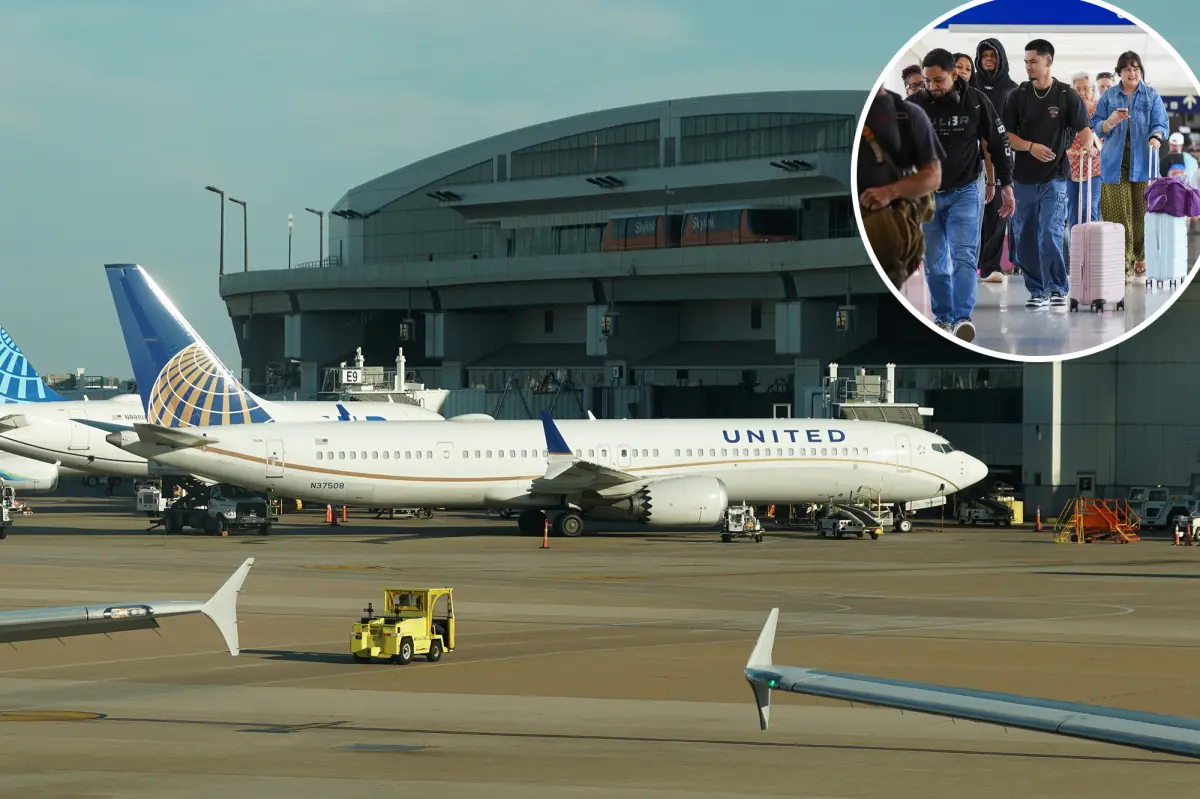
At the very top of the list is Dallas/Fort Worth International Airport, a massive hub that serves millions of passengers every year. The analysis found that nearly 28% of flights at DFW were delayed, and 2.76% were canceled. That means roughly one in every four flights did not leave on time. Even more troubling, delays at DFW have increased by 33.67% since 2021, so the problem appears to be getting worse, not better. The airport is also located about 20 miles from downtown Dallas, which means travelers often face a long and unpredictable drive before they even arrive. Picture this: you are already tense from navigating highway traffic, you finally reach the airport, and then you see the departure board filled with red “delayed” statuses. Your flight is among them. You check your phone, calculate whether you can still make your connection, and feel the stress creeping in. That is the reality for many DFW travelers. The situation came into sharp focus on Oct. 1, when the airport recorded 390 delays and 155 cancellations, the most of any U.S. airport that day, according to NJ.com. It was a single day, but it illustrates the scale of disruption that can happen at a major hub. DFW is also a major connection point, so the stress can be even worse for passengers who are not starting their journey there. They may have already flown one leg, only to land and discover their next flight is delayed or canceled. The uncertainty is exhausting. For passengers, the experience is more than an inconvenience. It can mean missing a child’s recital, arriving too late for a job interview, or losing a day of a long-awaited vacation. The ranking does not mean every DFW flight is a nightmare, of course. Many travelers pass through without a hitch. But the data suggests that the odds of encountering a problem are higher here than almost anywhere else in the country. And when problems do happen, the sheer size of the airport can make them feel even more overwhelming. Long walks, crowded shuttles, and packed waiting areas all add to the sense of chaos. For those who fly through DFW, the advice is simple: allow extra time, stay flexible, and be prepared for the unexpected.
Close behind DFW is Chicago O’Hare International Airport, which took the No. 2 spot in the ranking. At O’Hare, 24.68% of flights were delayed, and delays have increased by 42.77% since 2021. The airport is notorious for its busy runways and unpredictable weather, and travelers often have to factor in a long commute from downtown Chicago. The drive can take about 50 minutes, depending on traffic, which means the stress starts long before you reach the terminal. Anyone who has ever sat in a taxi on the Kennedy Expressway, watching the minutes tick by, knows that feeling. O’Hare is a global gateway, but it is also a place where patience is often tested. The third spot belongs to Ronald Reagan Washington National Airport in Arlington, Virginia, just across the Potomac River from Washington, D.C. Reagan National had a cancellation rate of 3.86%, the highest among the top three, and its delays have increased by 73.92% since 2021. That sharp increase is a warning sign for travelers. The airport is popular because of its proximity to the nation’s capital, but that convenience comes with a cost. The terminals are often crowded, the schedule is packed, and any disruption can ripple through the day. For travelers, the stress is compounded by the knowledge that even a short delay can throw off tight itineraries. Washington, D.C., is a city where people are always in a hurry, and Reagan National reflects that energy. The airport is close to downtown, but that does not make it calm. In fact, the combination of heavy demand and limited space can make delays feel more chaotic. The increase in delays at Reagan National is especially striking. It suggests that even airports known for convenience are becoming less reliable. For business travelers and tourists alike, that is a troubling trend. Both O’Hare and Reagan National illustrate a key finding of the analysis: airports that handle enormous numbers of flights, especially in crowded urban areas, are more likely to produce stress. The weather, the airspace, the ground transportation, and the sheer volume of people all play a role. For passengers, the experience can feel like a game of chance. You might get lucky and have a smooth trip. Or you might spend hours waiting for a gate, watching your plans unravel. The data gives travelers a way to understand the odds.
New York City’s John F. Kennedy International Airport and Philadelphia International Airport round out the top five, ranking fourth and fifth. Both are major East Coast hubs, and both have earned reputations for busy, sometimes chaotic operations. JFK is one of the busiest airports in the country, with terminals that sprawl across a huge area and a constant flow of international and domestic flights. Getting to JFK can be an adventure in itself, whether you are driving through Queens traffic or taking the AirTrain from the subway. Once inside, the crowds can be overwhelming, especially during peak travel times. Philadelphia International Airport is smaller than JFK, but it faces many of the same pressures. It serves a densely populated region, and its location near the Northeast Corridor means that weather and air traffic control issues can cause delays that ripple up and down the East Coast. For travelers, these airports represent a familiar kind of stress: long lines, crowded gates, and the constant possibility of bad news. The ranking does not single out any single cause for their problems. Instead, it reflects a combination of factors, including flight volumes, delay trends, and the difficulty of getting to the airport. JFK and Philadelphia are not necessarily the worst places to fly, but they are places where travelers should expect some turbulence. The human impact is real. A family heading to Disney World might miss their connecting flight. A business traveler might lose a day of meetings. A couple celebrating an anniversary might arrive exhausted instead of excited. When airports rank high on the stress scale, it is not just a statistic. It is a reflection of countless personal stories, each one marked by frustration and wasted time. The ranking is based on data, but it aligns with the stories travelers tell each other. Everyone seems to have a nightmare airport story, and these hubs are often the setting. The memory of a bad experience can linger long after the trip is over. The analysis by Rightway Parking does not offer solutions for every problem, but it does give travelers a heads-up. If you are flying through JFK or Philadelphia, you know to pack extra patience. You know to check the flight status before you leave. You know to build a buffer into your schedule. That kind of preparation can make a difficult situation more manageable.
At the other end of the ranking, some airports are doing things right. Salt Lake City International Airport in Utah was named the least stressful airport in the country, followed by San Jose International Airport in California and Daniel K. Inouye International Airport in Honolulu, Hawaii. All three recorded cancellation rates below 1%, and all three have relatively shorter trips from downtown compared with many of the airports near the top of the list. For travelers, these airports offer a glimpse of what flying could be like without constant anxiety. Salt Lake City’s airport is modern, spacious, and set against a stunning backdrop of mountains. The drive from downtown is quick, and the terminal is designed to move people efficiently. San Jose International is smaller than nearby San Francisco’s airport, but that works in its favor. It is easier to navigate, less crowded, and located close to the heart of Silicon Valley. Honolulu’s airport, meanwhile, benefits from a relaxed island atmosphere. Travelers often arrive with the ocean breeze in their hair and a vacation mindset, which helps. But the low cancellation rates and short commutes suggest that the airport itself also deserves credit. These airports prove that stress is not inevitable. With good planning, efficient operations, and a manageable location, airports can make travel feel almost pleasant. The success of these airports shows that size does not have to mean chaos. Even busy airports can be calm if they are well designed and well staffed. It is a lesson for the entire industry. The contrast between the top and bottom of the ranking is striking. At DFW, nearly one in four flights is delayed. At Salt Lake City, the numbers are far better. The difference is not just about luck. It is about how airports are designed, how they are managed, and how they handle the inevitable challenges of weather and congestion. For passengers, choosing a less stressful airport can make a real difference. A smooth trip to the airport, a quick security line, and an on-time departure can set the tone for the entire journey. The analysis suggests that these positive experiences are not random. They are more common at certain airports, and travelers can use that information to make smarter choices.
The new ranking is more than a list of winners and losers. It is a reminder that air travel is a deeply human experience, shaped by small moments that add up to big emotions. A delayed flight is not just a number on a screen. It is a missed birthday, a canceled interview, a long night in a strange city. A long drive to the airport is not just a commute. It is the stress of wondering whether you will make it in time. By quantifying these pressures, Rightway Parking has given travelers a useful tool. The company, based in Tampa, Florida, specializes in airport and cruise parking reservations, so it understands the importance of a smooth start to a trip. Its analysis used federal flight data and Google Maps estimates to create a picture of where travel is most stressful. The findings are clear: major hubs like Dallas, Chicago, and Washington, D.C., are more likely to test your patience, while airports like Salt Lake City, San Jose, and Honolulu offer a calmer experience. For travelers, the takeaway is not to avoid certain airports entirely. Sometimes you have no choice. But you can prepare. You can arrive earlier, check flight statuses, and build flexibility into your plans. You can also use apps and alerts to stay ahead of disruptions. The goal is not to eliminate stress entirely—that may be impossible—but to reduce it enough that the journey remains enjoyable. After all, the reason we fly is to reach the people and places we love. That should not feel like a battle. The study is a conversation starter, not a verdict. Fox News Digital reached out to Dallas/Fort Worth International Airport and Rightway Parking for comment and further details, but the data already tells a compelling story. Air travel will always have some uncertainty, but it does not have to be a constant source of stress. With the right information, travelers can navigate the system with more confidence. And perhaps airports, seeing themselves in the rankings, will work harder to improve. Until then, the best advice is simple: pack your patience, leave early, and remember that the journey is part of the adventure. Even when the departure board looks grim, the destination is still worth it.