


For decades, Burger King has built its identity around a simple yet powerful promise: “Have it Your Way.” It was a slogan that celebrated choice, individuality, and the idea that a fast-food meal could be tailored to your tastes, whether that meant extra pickles, no onions, or a Whopper made just the way you liked it. But the Miami-based chain has always understood that a slogan is only as strong as the experience behind it. That’s why, in recent years, Burger King has quietly shifted its language and its hospitality philosophy to a new refrain: “You Rule.” And now, with an even bolder slogan introduced earlier this year — “There’s a New King and It’s You” — the company is doubling down on the notion that the customer isn’t just a guest passing through a drive-thru line; they are the reigning monarch of the entire Burger King kingdom. It’s a playful, confident message, but it’s also a serious internal commitment. Joel Yashinsky, Burger King’s chief marketing officer, explained that the company is working hard to make sure this philosophy isn’t just a marketing gimmick. “We’re certainly encouraging our restaurants to bring that conversation to the forefront,” he said. “We really want to make that real.” In other words, the crown has been passed, and the entire organization — from corporate leadership to franchise operators to the person handing you your bag at the counter — is being asked to treat every customer like royalty.
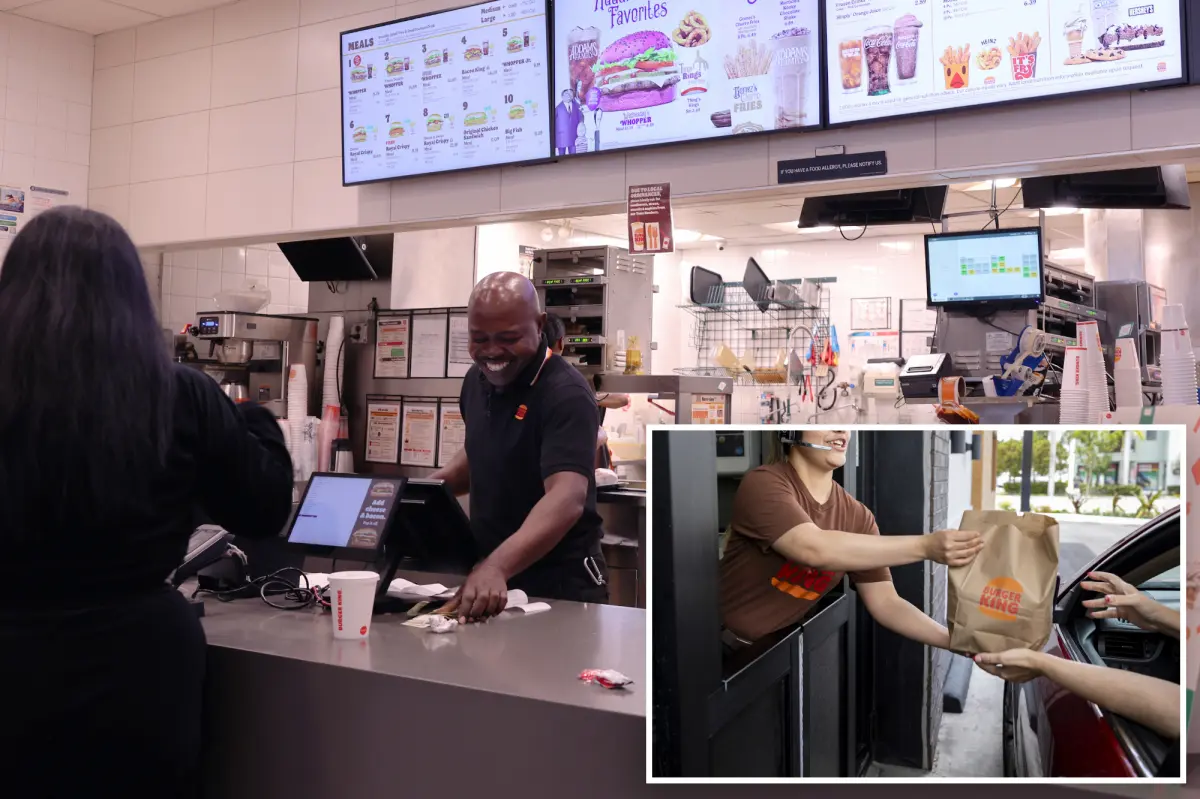
That kind of commitment sounds good in theory, but making it real requires a deliberate focus on the small, human moments that define a restaurant visit. Yashinsky emphasized that Burger King is actively partnering with franchise operators to think about how to communicate to guests, in clear and tangible ways, that they do indeed rule. It’s not enough to slap a slogan on a cup or a wrapper; the message has to come through in the welcome you receive when you walk in the door, in the patience and courtesy shown when you ask for a modification, and in the genuine warmth of the interaction. But there’s a delicate balance here. Hospitality can easily feel scripted, hollow, or robotic if employees are simply told to say certain phrases or act in certain ways. Yashinsky is very aware of that risk. “It has to be authentic,” he said. “We can’t force it, but we are trying to, obviously, encourage that type of engagement to take place because we are truly trying to live it and mean it.” This is where the real challenge lies. You can train someone to smile, but you can’t train them to mean it. You can teach them to say “welcome,” but you can’t teach them to make a customer feel genuinely valued unless the culture supports it. That’s why Burger King leadership has been spending time talking with general managers about how to make this philosophy a “natural engagement” with guests. The goal is to make the customer feel acknowledged and respected, not because a corporate memo demanded it, but because the person behind the counter genuinely believes that the guest does rule and wants to make that feeling real in every interaction.
At the heart of this effort is employee training, and Burger King has a long history of investing in it through an institution known as “Burger King University.” In the past, this was a physical campus located at the chain’s Miami headquarters, where managers and franchise owners would gather for intensive courses on everything from operations to leadership. Today, the university exists entirely online, making it more accessible and more flexible for a workforce that spans thousands of locations around the world. But the curriculum still places a strong emphasis on hospitality. For Yashinsky, the basics matter a great deal. “If we can give an authentic greeting and a welcome and a smile, it goes a long way,” he said. That might sound simple, almost too simple, but in the fast-food industry, where speed and efficiency often dominate the conversation, taking a moment to genuinely greet a guest can feel revolutionary. A smile, eye contact, a tone of voice that suggests you’re happy to see someone — these are the tiny ingredients that turn a transaction into a human connection. And when you’re asking people to embrace the idea that the customer rules, those small gestures become the proof. Training employees to understand that hospitality is part of their job, not just an afterthought, is essential to making the slogan feel credible. It’s about building a culture where employees see themselves as hosts, not just order-takers, and where every guest interaction is an opportunity to make someone feel respected and cared for.
Burger King is certainly not the first chain to understand the power of a signature customer interaction. Chick-fil-A has become almost synonymous with the phrase “my pleasure,” a simple but distinctive response that has come to represent the chain’s famously polite and attentive service. Hearing “my pleasure” after you place an order is more than just a courteous reply; it’s a cultural signal that you’re in a place where customer service is taken seriously. It’s remarkable how a single phrase can shape a brand’s reputation, and Burger King is clearly hoping to create a similar kind of association with “You Rule.” But the comparison also reveals something important: hospitality isn’t just about words, it’s about the feeling those words leave behind. “My pleasure” works because it’s unexpected and gracious. “You Rule” works because it flips the traditional power dynamic and places the customer at the center of the universe. Both phrases are simple, memorable, and aspirational. They give employees a way to express a service philosophy in just a few words, and they give customers a reason to feel like they matter. Yet the real test is consistency. A catchphrase only becomes a signature when it’s delivered with sincerity every time, in every location, by every employee. That’s hard work, and it requires not just training but ongoing reinforcement, coaching, and leadership buy-in at every level of the organization.
Of course, there are limits to what it means to let customers rule. Burger King’s hospitality philosophy does not mean the chain can grant every request, and that can sometimes create a tension between the promise of “Your Way” and the realities of running a fast-food restaurant. One of the most common points of confusion comes with the breakfast menu. Burger King is famous for items like the Croissan’wich and hash browns, but if you show up a little too late, those items disappear for the day. Breakfast hours can vary by location, but the industry standard is a 10:30 a.m. switchover to lunch, as reported by USA Today. It’s a practical necessity, but it’s also a moment when the customer’s wishes and the restaurant’s rules collide. You might really want a Croissan’wich at 11 a.m., but the fryers have already been cleaned, the breakfast line has been broken down, and the kitchen has transitioned to the lunch menu. The same goes for menu modifications that fall outside brand-approved guidelines. A Reddit post from someone claiming to be an employee explained, “We technically are not allowed to serve anything in any capacity that is not brand-approved,” when asked why ham couldn’t be added to lunch or dinner items. These constraints can feel frustrating to customers who take the “You Rule” slogan at face value. After all, if the customer is king, shouldn’t they be able to get a breakfast sandwich at noon or add a breakfast meat to a Whopper? The honest answer is that “You Rule” means the customer’s experience matters, but it doesn’t mean the rules disappear. Consistency, food safety, operational efficiency, and brand standards all matter too. The challenge for Burger King is to uphold those standards while still making guests feel like their needs and preferences are taken seriously — even when the answer has to be no. That’s where true hospitality shines: not in saying yes to everything, but in delivering a “no” with kindness, respect, and a genuine effort to offer an alternative.
Ultimately, Burger King’s journey from “Have it Your Way” to “You Rule” and “There’s a New King and It’s You” reflects a broader shift in how fast-food brands think about hospitality. In an industry built on speed, convenience, and consistency, there is growing recognition that emotional connection matters too. People may come for the food, but they return for the feeling — the feeling of being known, welcomed, and valued. That’s why Burger King is investing so much energy in working with franchise operators, training general managers, and encouraging employees to engage with guests in a natural, authentic way. It’s why a slogan like “You Rule” isn’t just a marketing phrase but a cultural aspiration that needs to be lived out in every drive-thru lane, front counter, and dining room. At its best, this philosophy transforms a routine lunch break into a small moment of dignity and recognition. It turns a fast-food worker into a host, a customer into a guest, and a transaction into a relationship. But as Burger King’s own leaders acknowledge, this can’t be forced. It has to be genuine, practiced with consistency, and backed by a culture that truly believes in it. The crown may be on the customer’s head, but it’s the people who serve them every day who make that crown feel real. And if Burger King can pull that off, then “You Rule” might just become more than a slogan — it could become a lasting part of what it means to eat there. In a world where so much of daily life feels rushed and impersonal, that’s a promise worth savoring, just like a fresh, hot Whopper made exactly the way you want it.