



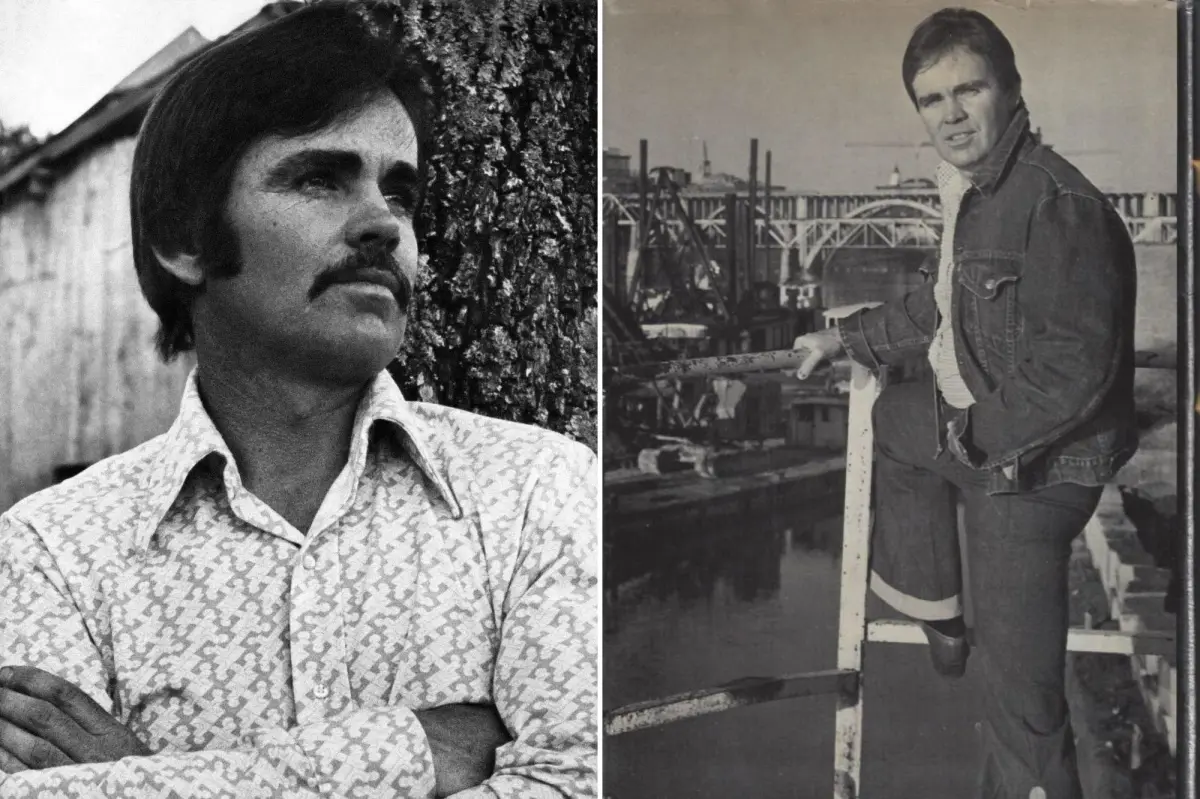
There are few things stranger than opening a newly published biography of a literary giant and finding yourself in the index. Let alone in the text. That was my odd fate with Tracy Daugherty’s Cormac McCarthy: A Legacy Revisited, which arrived from St. Martin’s Press in October with the quiet authority of a book that intends to settle some scores. My own role was small: in 2024, after a series of unsavory revelations about McCarthy’s private life, I wrote a piece asking whether Cormac McCarthy was finished. My conclusion then was that the bombshells were only the beginning of a story that would grow stranger and nastier, and that if it went on long enough, it might consign the great man to the trash can of reputation. Daugherty takes his readers to that trash can and peers inside. It is not an empty place. Philip Roth is there, Ernest Hemingway is there, and plenty of other Great Men whose personal sins have become impossible to separate from their literary achievements. That Daugherty emerges with a measured, insightful account of a man who found discussion of his life “embarrassing” is genuinely impressive. McCarthy did everything he could to block the inquiring gaze. He told interviewers that Child of God, his novel about a murdering necrophiliac, was “semi-autobiographical”—a grotesque joke designed to scare them off. A friend said, “He didn’t give a damn. He lived life on his own terms — more so than anyone I have ever known.” There is something admirable in that, and something terrifying.
McCarthy did not wake up one morning deciding to be difficult. His childhood had already made the decision for him. His father, Charles, was physically abusive to him and his brother Bill; his mother’s mental health was so fragile that she was often confined to institutions. Yet Charles was not simply a brute. At one point, watching his son drink and spiral, he wrote a note that reads like a plea from a man who knew his own failings: “To see you wasting your magnificent talents and rushing headlong into a life of unhappiness seems to tear me up inside and prevents me from using the same intelligence that I could use if you were someone I cared nothing about.” McCarthy’s response was not gratitude but a shrug. Man hands on misery to man. “You grow up in the South,” he said later, “you’re going to see violence.” That shrug became a philosophy. “I felt early on I wasn’t going to be a respectable citizen,” he wrote, and he set about proving it in ways that were sometimes self-conscious, even theatrical. His second published short story, “A Drowning Incident,” revolved around puppies being drowned—a deliberate, almost boastful claim to unpleasantness. If readers wanted comfort, he seemed to be saying, they should look elsewhere. This was not just a literary pose. It was a lifelong commitment to the dark, and it shaped everything he wrote. It also shaped the way he treated the people who tried to love him.
No one felt that darkness more than his first wife, Lee. Just before his first novel was published, Lee looked at him and said, “You don’t act as if you want a wife and baby. You act as if you want to be single again.” McCarthy gazed across the valley and replied, “I guess that’s right.” When Lee left him and admitted she did not know how she would support herself, her soon-to-be ex-husband suggested, “Be a whore.” That exchange is hard to read. It is also the origin of the McCarthy myth: a man who abandoned his wife and child so he could write. Daugherty writes that McCarthy was determined to preserve his intelligence and energy for fiction. The cost of that determination was paid by everyone around him. He was known among his friends as a “hound”; no friend’s wife, apparently, was entirely safe from his advances. The darker side of that appetite emerged after his death in a Vanity Fair article alleging a long affair with Augusta Britt, a sixteen-year-old girl, when McCarthy was in his forties. He altered her biographical details to make her appear of legal age. Britt herself, describing the falsified documents, said with mordant humor: “There’s nothing more romantic than watching a man forge your birth certificate.” McCarthy’s nickname for her was “Babushka,” shortened to “Baba”; a friend described her as a “wild-ass hippie girl.” Their relationship continued, on and off, until McCarthy died. It was never monogamous or committed on his part. The romance was all in the prose.
Given all this, what are we to do with the work? Daugherty is careful not to let the scandal erase the sentences, and he treats McCarthy’s early literary career with real sympathy. For years, McCarthy was a writer’s writer in the most literal sense: other writers admired him, but the public stayed away. His autobiographical novel Suttree received poor reviews and dismal sales. He lived in El Paso in conditions he himself described as “unfit for human company,” and he said he had been a professional writer for twenty-three years without receiving a single royalty check. Yet believers kept appearing. Larry McMurtry believed in him. Ralph Ellison believed in him. That belief crystallized in a MacArthur grant—the so-called genius award—of $236,000, which gave McCarthy the freedom to write Blood Meridian. That book was another commercial failure when it was published in 1985, but it has grown since into one of the great monuments of American literature, a novel so violent and so beautiful that it seems to have been written in a different language. Daugherty also offers a shrewd observation about McCarthy’s later success: books like The Border Trilogy and No Country for Old Men owe part of their triumph to the aggressive, confident marketing of Knopf, not merely to their own merits. That is not a knock. Fame is always a collaboration between talent and machinery, and McCarthy had both.
Fame, when it finally arrived, did not bring contentment. All the Pretty Horses sold 190,000 copies in 1992, transforming McCarthy from a cult figure into a household name. That number may seem modest in an age of blockbusters, but for a man who had spent more than two decades without a royalty check, it was a revolution. It made him wealthy, put his face in magazines, and turned his books into must-reads. By 2005 he was recognized everywhere, and several of his novels were either adapted into movies or on their way to becoming them. Yet Daugherty tells us that, “for the umpteenth time,” McCarthy considered how miserable his achievements made him. In 2005 he wrote, “Deep misery — I have no-one.” That is a devastating sentence, especially for a man who had chosen solitude as a vocation. The film adaptations are handled briskly but well: the faithful, Oscar-winning No Country for Old Men gets its due, and Daugherty traces the strange fate of Blood Meridian, which Hollywood spent decades trying and failing to adapt. He also refuses to inflate the value of McCarthy’s final works, The Passenger and Stella Maris, or his original screenplay for Ridley Scott’s baffling thriller The Counselor. Those are the productions of an old man who had become a monument, and monuments do not always breathe. They are interesting, occasionally moving, sometimes inert. Daugherty does not pretend otherwise, and the honesty gives the biography its authority.
At the end, there is no smoking gun—no new scandal, no hidden confession, no final twist. The biography does not read like an indictment. It reads like a reckoning, patient and thorough, with a difficult and ornery life. McCarthy’s addicts will find it compelling; his critics will find evidence for their reservations. Daugherty returns to that question from 2024, the one that hung over the literary world like a question mark: “Is Cormac McCarthy finished?” He admits that only the future can answer. If posterity decides that McCarthy is finished—if his bleak, strangely artificial works do not endure—then this biography will be part of the case for the prosecution. But there is another possibility. The same forces that brought down Roth and Hemingway may not finish McCarthy, because his books were never built on the author’s likeability. They were built on language, on the terrible beauty of sentences that feel as if they were carved from stone. The man was cruel, brilliant, selfish, and obsessed; he hurt people and made art from their pain and his own. We do not need to forgive him in order to read him. We only need to keep asking whether the art was worth the cost—and perhaps, as McCarthy himself might have said, that is a question no one can answer for you. In the end, the legacy is not one story but many: the writer, the abuser, the lover, the recluse, the genius, the fraud, the man who wrote “Deep misery — I have no-one” even as the world read his books. Daugherty’s biography does not resolve those contradictions. It simply lays them out, with patience and clear eyes, and lets us make our own peace—or war—with the man and his work.