



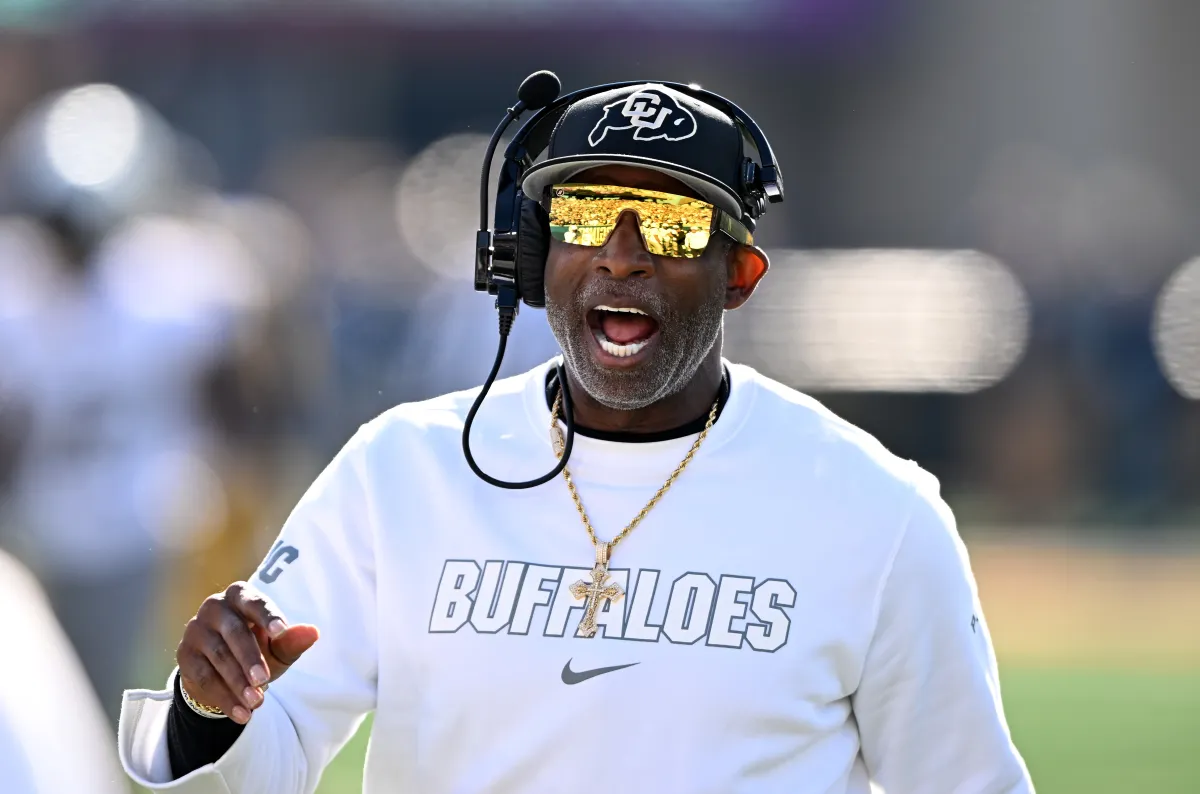
For weeks, one of the quietest mysteries in college football finally had an answer: who exactly had Deion Sanders sent packing? The Colorado Buffaloes had been carrying an uncomfortable secret since a humbling 41–7 loss to Northwestern in Week 3. In the aftermath, Sanders announced that he had removed a few players from the team, calling them “knuckleheads” and cautioning that every workplace has its share of folks who don’t get the assignment. But he didn’t name names. Not on the postgame podium, not on his coach’s show the next day, not even after a second straight loss at Baylor. Then, on Oct. 3, a Colorado spokesperson confirmed to The Athletic what many had been waiting to hear: the players dismissed were cornerbacks Jah Jah Boyd, Justin Eaglin, and Paul Omodia. The disclosure came just before a critical matchup against No. 12 Texas Tech, with Colorado reeling and searching for an identity. It turned a speculative footnote into a real story about accountability, roster management, and the sharp edges of college football’s new reality.
For Sanders, the decision was never about hiding. It was about clarity. When he first revealed that players had been sent away, he framed it not as a team-wide crisis but as a targeted cleanup. “People made a big deal out of last week, about us, you know, getting rid of a few kids,” he said on his coach’s show. “But it wasn’t a team thing. It was just a few knuckleheads. Every occupation we have, it’s a few knuckleheads, right?” It was a classic Deion Sanders answer: blunt, philosophical, a little dismissive, and wrapped in the language of tough love. But the refusal to name the players left room for speculation, and when reporters pressed him again after the Baylor loss, Sanders pushed back. “What other clarity do you need? Who wasn’t here today?” He went further, reminding everyone that this wasn’t his first time cutting a player in Boulder. He had done it before during his four seasons as head coach. And then came the line that seemed to capture everything: “I’m going to pay you to act a fool? That’s not where I come from.” It was a coach drawing a line, but also a man publicly defining what he expects from the young people under his care—and making clear that there’s a price for crossing it.
Context matters here, because Colorado wasn’t in a position of strength when Sanders made these moves. The season started with promise, but the Buffaloes were already staggering under the weight of back-to-back losses. The Northwestern defeat was ugly, a game that stripped away any illusion of early success. Then came a 23–13 loss at Baylor, tighter but no less painful. In that moment, with No. 12 Texas Tech looming, Sanders chose to make a statement. Removing three cornerbacks—three contributors, however small their roles—was not about football strategy. It was about culture, discipline, and who gets to claim a spot on the roster. In a season revolving around transfers and portal movement, Sanders has built his program with a clear hierarchy: you earn your place, and you protect it. But the timing also added risk. Colorado would face Texas Tech with three fewer defensive backs than it started the season with, and depth at cornerback became a concern. For Sanders, though, that was the point. On a team trying to find its identity, carrying players who didn’t respect the standard was worse than carrying fewer players who did.
The most recognizable of the three was Jah Jah Boyd, a name that had already started to generate real buzz in Boulder. Before arriving at Colorado, Boyd spent time on Indiana’s national championship roster, appearing in four games as part of a deep, talented defense. That experience alone set him apart, and when he transferred to Colorado, he was expected to bring a championship mindset to the secondary. Early returns were promising. In his first three games with the Buffaloes, Boyd recorded 13 tackles and a forced fumble, showing the kind of energy and fearlessness that coaches love to talk about. Eight of those tackles came in a dominant 52–21 win over Weber State in Week 2, a performance that had Sanders beaming with praise. “Sometimes he goes a little too far at times,” Sanders admitted. “But you can count on him to give everything he has.” For a player who gave everything, it seemed odd that he would be one of the first to go. But that’s exactly what made the dismissal so striking. Boyd wasn’t a benchwarmer. He was a contributor, a player who had earned 61 snaps on the season and seemed to be moving in the right direction. His removal speaks to a standard that goes beyond the stat sheet, or perhaps to an off-field incident that never became public. Either way, Boyd’s story is a reminder that in the age of transfer rosters and constant mobility, a college football career can change direction in an instant.
Justin Eaglin and Paul Omodia came to Colorado with different paths but similar dreams. Eaglin spent four seasons at James Madison, appearing in 26 games and starting 14 of them. That kind of experience is not easy to find, and it made him a valuable addition to the Buffaloes’ secondary when he arrived. Yet his time in Boulder was brief—he suited up twice and logged just nine snaps before being dismissed. Omodia’s story is rooted in the Southland Conference, where he started 13 games at Lamar and led the league with 14 forced incompletions. It was a resilient, productive career that earned him the chance to play at a bigger stage. In three games with Colorado, he managed only three snaps. These are not players who lacked ability or hunger. They had proven themselves at previous stops and made the leap to Power Four football. But for whatever reason—whether attitude, fit, a violation of team rules, or simply Sanders’ taste—their time in Boulder ended quickly and quietly. It might be tempting to see them as depth-chart casualties, but each one had a story, a journey, and a reason to believe they belonged. When Sanders says “Who wasn’t here today?” he turns them into absences. But behind that clean phrase is a messy reality: two young men who were once celebrated and now face an uncertain transfer portal search, wondering what comes next.
In the end, this is more than a roster move. It’s a window into how Deion Sanders runs a program in 2025—or, to be honest, how he has always thought about leadership. His comment, “I’m going to pay you to act a fool?” reveals a fundamental belief that college football is a profession, not a passion project. Players are paid, sponsors flow through the program, and with that investment comes a level of expected commitment. For Sanders, dismissing a player is not just discipline; it’s a signal to the entire locker room that there are consequences for conduct. That kind of messaging has a certain power. It can galvanize a team, sharpen focus, and remind everyone that the standards are real. But it also has a human cost. Boyd, Eaglin, and Omodia are not just lessons; they are people with futures. They arrived in Boulder hoping to write new chapters, and now those chapters are closing before they could even get comfortable. As Colorado prepares to face Texas Tech, Sanders will have to prove that subtracting three players made the team better. The players themselves will have to rebuild, carrying the sting of a public fall from grace. Maybe this is the toughness Sanders promises, the uncomfortable side of building a winner. Or maybe it is simply the way the sport works now—where loyalty disappears overnight and the phrase “knuckleheads” is used to describe somebody’s son. Either way, the names are finally known, and the story is no longer a mystery. It’s just football, with all its contradictions on display.