

Paragraph 1
In the early hours of a routine Tuesday, what should have been nothing more than a traveler passing through an airport terminal became the opening scene of a personal and political earthquake. Ho Yin Mo, a quiet but dedicated field representative for California State Assemblymember Catherine Stefani, was detained by U.S. Immigration and Customs Enforcement at Harry Reid International Airport in Las Vegas on September 17. The detention, sudden and disorienting, ripped him from the ordinary flow of life and placed him in a limbo that no public service record, academic achievement, or community contribution could immediately shield him from. For those who know Mo, the news landed like a thunderclap: here was a young man who had built his life around service, who had covered stories as a journalist, who had knocked on doors for campaigns, and who had spent his days helping constituents navigate the often baffling machinery of government. Now he was the one needing help, held in federal custody while the machinery of immigration enforcement began to turn. Assemblymember Stefani responded quickly, issuing a public statement that called for his release and described Mo as a selfless public servant and a valued, legal employee of the California State Legislature. The phrase “legal employee” is significant, a reminder that his work for the state was legitimate, above board, and conducted with the approval of the institution that hired him. Yet legality in the workplace and legality in the immigration system are two different planets, and Mo now found himself caught between them. He is not a figure of national prominence, not a politician, not a celebrity. He is, by all accounts, a behind-the-scenes worker who spent his energy helping others, and whose own story has now been pulled into the spotlight in the most jarring way possible. The developing nature of the case only deepens the sense of uncertainty, leaving colleagues, friends, and family members to wait, worry, and wonder what comes next.
Paragraph 2
To understand the weight of this moment, one must look at the life Mo built after arriving in the United States. According to his publicly available LinkedIn profile, he graduated from the University of California, Berkeley in 2020, a milestone that represents more than just a diploma. Graduating from Berkeley is a testament to resilience, intellect, and the kind of determination that often defines immigrant journeys. But Mo’s path was not a straight line from classroom to capitol. Before entering the world of public service, he worked as a news reporter for KTSF, a Chinese-language television station based in San Francisco. In that role, he was part of a vital institution: a bridge connecting non-English-speaking communities, particularly Chinese-speaking residents, to the news and information they needed to navigate life in the Bay Area. As a reporter, Mo would have told the stories of others, capturing the struggles and triumphs of ordinary people. Now, ironically, he has become a story himself. After his time in journalism, Mo transitioned into political work, first lending his talents to local campaigns, where he learned the grassroots mechanics of democracy: voter outreach, community organizing, issue education. By January 2025, he had joined Assemblymember Stefani’s office as a field representative, a role in which he served as a liaison between the state legislature and the constituents it represents. It is work that requires patience, empathy, and a deep understanding of how government can help or fail people—qualities that Mo apparently possessed in abundance. His biography paints a portrait of someone who genuinely believed in the promise of civic engagement, someone who wanted to give back to the communities that had welcomed him. He did not merely exist in California; he invested in it. His presence enriched the institutions he joined, and his work helped make government more accessible to the people it serves. For his colleagues, he was not an abstract immigration case file, but an actual human being with a desk, a sense of humor, a work ethic, and a future that now hangs in the balance.
Paragraph 3
The circumstances of Mo’s detention, as described by federal officials, add a layer of legal complexity to an already deeply human story. A spokesperson for the Department of Homeland Security told the San Francisco Standard that Mo entered the United States in 2020 “on a temporary basis but illegally overstayed his welcome.” That phrase—”overstayed his welcome”—is a chilling choice of words, one that reduces a human life to a matter of courtesy and frames immigration violations as a breach of hospitality rather than a complicated legal and personal circumstance. What the statement does not say is what kind of temporary status Mo originally held, why he remained, or whether he had applications pending. It does not acknowledge that overstaying a visa is an immigration violation, not a violent crime. It does not mention the ties he had formed or the contributions he had made. It simply marks him as someone who was supposed to leave and did not. Under federal law, overstaying can lead to deportation, and according to the San Francisco Standard, Mo now faces deportation to Hong Kong. The prospect of being sent to a place so different from the life he has built in California is staggering. Hong Kong is not the same city, or the same political reality, that it was when Mo first left it. The shifting political landscape there, especially in recent years, makes the prospect of return especially fraught. Mo is not being deported to a neutral destination; he is being sent into an uncertain future, stripped of the community, career, and stability he has spent years building. And because the case is still developing, there is little clarity about what legal avenues remain available to him. The absence of information only amplifies the anxiety surrounding his situation, for Mo himself and for everyone who cares about him.
Paragraph 4
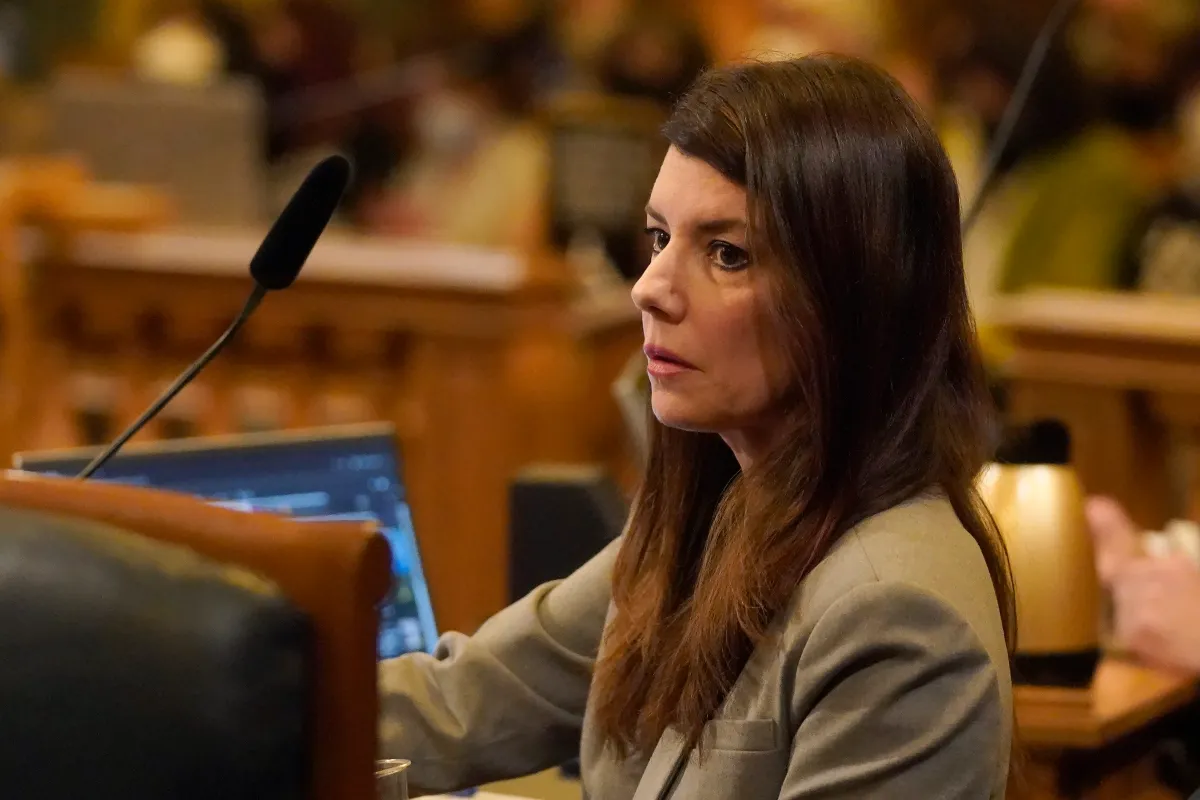
In the wake of the detention, Assemblymember Stefani has emerged as a vocal advocate for Mo, using her public platform to demand his release. Her statement, published on social media, framed Mo as a dedicated public servant whose removal would harm both his constituents and the institution he serves. That framing matters, because it pushes back against the dehumanizing tendency to view undocumented people, or those who have overstayed their visas, as abstract problems rather than integral members of their communities. Stefani’s description of Mo as a “selfless public servant” is not mere political spin; it reflects the reality of a person who chose to spend his professional life working for others. In a political era when many people are cynical about government, Mo represents the opposite: a person who believed that institutions can be forces for good and who wanted to be part of that work. His colleagues in the legislature likely share that belief, and his sudden absence will be felt in the office he left behind. The broader community, too, has reason to be concerned. Immigrants and their allies may see Mo’s detention as a warning: even those who have carved out successful careers, built meaningful relationships, and committed themselves to public service can be swept up by immigration enforcement without warning. That sense of vulnerability is not new to many immigrant communities, but it is always heartbreaking to see it made real in the life of a specific person. The outpouring of support for Mo, at least from those who know him, suggests that his reputation is strong and his character beyond reproach. He is not someone who sought to undermine the law; he is someone who dedicated himself to serving the public within the structures of government. His colleagues knew him as a friend, a helper, and a professional. Now they know him as a cause, and they are rallying to his side, hoping that their voices will make a difference in the halls of power where his fate will be decided.
Paragraph 5
Beyond the specific facts of Mo’s case, there are larger questions about the immigration system, and about the contradictions embedded in that system, that this story throws into sharp relief. Mo was, by all accounts, a lawful employee of the California State Legislature. That means he passed whatever background checks and employment verification processes the state required. He was trusted with sensitive work involving constituents and government services. He showed up, did his job, and did it well. Yet his status in the country remained precarious, and one trip to Las Vegas was enough to turn his life upside down. The detention at an airport is a reminder of how mobile immigration enforcement has become: no longer limited to workplace raids or home visits, but active at airports, where people travel for work, family, or simple vacations, and where a routine return flight can become a one-way ticket to deportation. The fact that Mo entered the United States in 2020 “on a temporary basis” and remained beyond that period means that, from the government’s perspective, his presence is illegal. But the law draws sharp lines that sometimes fail to capture the nuance of human lives. Why did he overstay? Was there an attempt to adjust status? Did he have attorneys? Was he aware of options? These questions remain unanswered, but they are central to understanding his situation. There is also a question of proportionality: is deportation to Hong Kong, a place whose political conditions have changed dramatically since 2020, the appropriate consequence for an administrative violation? For many observers, the answer is not obvious. The Constitution guarantees due process, and immigration removal proceedings are supposed to provide it. But the reality of immigration detention, particularly in the current political climate, often feels more punitive than procedural. Mo’s case is a developing story, as Newsweek noted, and the full picture may not emerge for days or weeks. In the meantime, his life is on hold, suspended between the country he calls home and the country to which the government says he must return.
Paragraph 6
Ultimately, the story of Ho Yin Mo is not just a news item or a legal puzzle. It is the story of a human being caught in the machinery of a system that often seems designed to disregard the messy complexity of real lives. Mo built a life in California. He studied, worked, reported, campaigned, and served. He made friends and earned the respect of colleagues. He became, in every meaningful sense, a part of the community, even if his immigration papers never quite caught up to the life he was living. His detention is a reminder that the immigration debate is not abstract. It is about people who ride buses, sit in offices, cover local news, and answer constituent calls. It is about people who have dreams and fears, people who have made mistakes or who have slipped through the cracks of a broken system, and people who deserve to be treated with dignity even as the law runs its course. The “developing story” label that followed the initial reports may be journalistically accurate, but it does not capture the human cost of the wait. Every hour in detention is a small eternity. Every unknown is a source of pain. For Mo, the road ahead is uncertain. Legal challenges may be filed, political pressure may be applied, and perhaps some avenue of relief will open. But no matter the outcome, his life has already been changed forever. The airport that was supposed to be a point of transit became a point of no return, and the public servant who helped so many people is now powerless to help himself. In the days and weeks ahead, his case will continue to unfold, and the people who know him will continue to hope. It is a hope that justice is more than a word, that compassion can still find a place in the law, and that the country Mo chose to serve will, in the end, find a way to serve him too.