

Paragraph 1
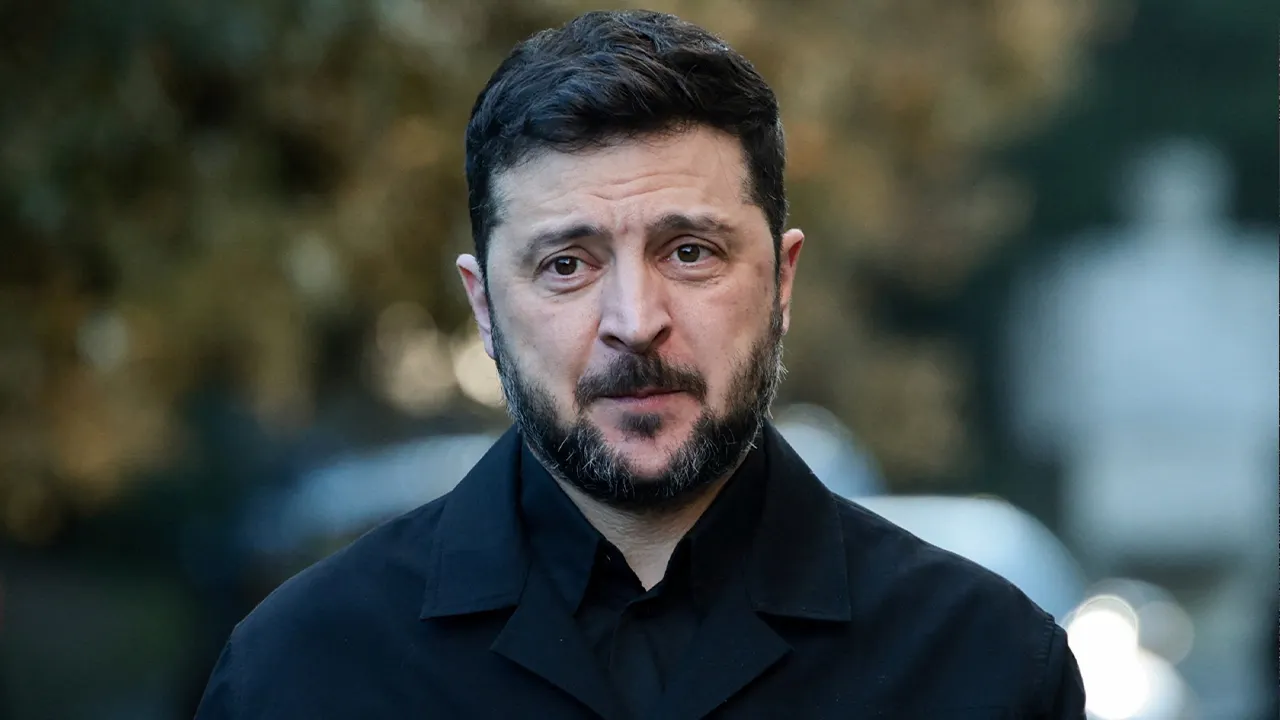
Standing in the fluorescent hum of the United Nations headquarters, President Volodymyr Zelenskyy did not mince words. Just hours after meeting with President Donald Trump on the sidelines of the UN General Assembly, the Ukrainian leader painted a grim picture of what might lie ahead for Europe if the free world fails to take Russian aggression seriously. Speaking to Fox News Digital, Zelenskyy warned that the risk of Russia launching new attacks against other European nations is “very high” — not simply a distant hypothetical, but a real and pressing danger that Moscow could act on as it searches for ways to break the resolve of Ukraine’s allies. “That’s why the risk of offensive by drones, missiles or land operation is very high against other countries who are bordering Russia or Belarus,” he said. The words were deliberate, and they landed with particular weight given the setting: world leaders had gathered to speak of peace, diplomacy and cooperation, yet here was a wartime president describing a continent on edge, bracing for something worse. For Zelenskyy, the question is no longer whether Russia will try to expand the conflict, but where and when it might strike, and whether Europe will be ready to answer. He spoke not as a strategist detached from the battlefield, but as a man who has spent the better part of three years watching Russian drones and missiles tear through his own country, and who now fears those same weapons could be aimed at Poland, the Baltic states, Romania, or any other nation that has angered the Kremlin by supporting Ukraine. His message to the world was simple: do not assume the war will stay where it is. Do not assume that Putin, frustrated in Ukraine, will simply retreat into a defensive crouch. The evidence, he suggested, points in the opposite direction.
Paragraph 2
Zelenskyy’s warning was rooted in a particular understanding of Vladimir Putin’s logic, one forged through years of negotiation, betrayal and brutal conflict. Putin, he argued, has not been able to achieve his military objectives in Ukraine. The swift victory that was supposed to topple Kyiv in days has instead become a grinding war of attrition. The Russian public has been told, over and over, that victory is imminent, that Ukraine is weak, that sanctions will collapse, that the West will grow tired and abandon its ally. None of that has happened. And so, Zelenskyy asked, what does a leader like Putin do when his grand narrative collides with reality? The answer, he suggested, is to look for another target — not necessarily to conquer it, but to create chaos, fear and instability elsewhere in Europe in order to pressure Western governments into cutting their support for Ukraine. “How to divide unanimity in Europe?” Zelenskyy said, framing the question the way Putin might see it. “To attack somebody else. To attack and say, look, I will go further if you will not stop this.” It is a classic strategy of escalation and intimidation: force your enemies to look away from the central battle by creating new crises on their borders, stir up panic, exploit divisions, and dare the democratic world to respond. Zelenskyy pointed to drone incursions and disruptions that have already affected several European countries, arguing that Moscow is testing the waters, probing the seams of NATO’s solidarity and trying to measure how far it can go without triggering a unified response. The drones that have crossed into Romanian and Lithuanian airspace, the suspected sabotage of infrastructure, the continuous signals on the airwaves — these are not isolated incidents, he implied. They are rehearsals. They are warnings. And they are also a way for Putin to demonstrate to his domestic audience that Russia remains a fearsome power, capable of reaching across borders and making Europe sweat.
Paragraph 3
The Ukrainian president’s concerns are far from abstract. Across Europe, leaders are beginning to speak in increasingly urgent terms about the possibility of Russian attacks. German Chancellor Friedrich Merz warned on September 14 that peace in Europe is under threat and called on European countries and NATO to take the danger seriously. Speaking at an EU-Arctic Summit in Finland, Merz pointed to Russia’s growing presence in the region and its hybrid attacks elsewhere, and he urged allies to respond with a united front. His words came after German authorities publicly attributed an attempted drone attack at Leipzig/Halle Airport on August 4 to Russia. That incident, initially mysterious, now appears to be part of a broader pattern of Russian activity designed to sow confusion and test defensive responses. Polish Prime Minister Donald Tusk issued his own stark warning on September 17, saying that Russia was planning drone or missile attacks against NATO countries supporting Ukraine, including Poland. Tusk suggested that Moscow might attempt to portray such attacks as accidents — a non-diplomatic, deliberately ambiguous tactic aimed at weakening the alliance’s response without triggering a full-scale military confrontation. The idea is not to declare war on NATO, but to chip away at its resolve through ambiguous, deniable acts of aggression. Meanwhile, concrete incidents continue to accumulate. On September 8, a drone entered Romanian airspace, then turned back toward Moldova and crashed, according to Romania’s Defense Ministry. A week later, Italian fighter jets operating under NATO’s air defense mission shot down a drone that had entered Lithuanian airspace from Belarus. Italian officials said the drone most likely came from Russia, though Lithuanian authorities were still investigating its exact origin. Latvian President Edgars Rinkēvičs warned in a September 18 interview with The Guardian that European countries and NATO are struggling to keep pace with developments in drone warfare, and he highlighted significant gaps in air and missile defenses that could leave European countries dangerously exposed to Russian attacks. None of these incidents have triggered a full-blown Article 5 crisis, but together they paint a sobering portrait of a Europe that is being harassed and probed on multiple fronts, all while trying to maintain its support for Ukraine.
Paragraph 4
Asked by Fox News Digital what European countries should do in response to the growing threat, Zelenskyy offered a direct, almost uncomfortable answer. “Respond. Always respond. It’s not about the war. If you don’t respond, Russians, they will go further,” he said. There was no diplomatic hedging, no carefully measured nuance. For Zelenskyy, the lesson of the past decade is that Putin respects strength and interprets restraint as weakness. Every unanswered drone incursion, every shrug at an undersea cable break, every willingness to look the other way when Russia crosses a line becomes, in his view, an invitation to push further. He did not advocate for full-scale war with Russia or for NATO troops entering Ukraine, but he made clear that a robust, consistent and unified response to Russian hybrid attacks is essential. If Europe fails to respond now, he warned, it will face larger crises later. His words carry a certain moral clarity, but they also reflect a deep frustration with the West’s repeated cycles of alarm and inaction. Europe has raised the alarm about Russian aggression many times, only to fall back into negotiations, summits and diplomatic niceties while the Kremlin continues its creeping intimidation. Zelenskyy seems to know that he is speaking to a continent that is exhausted, distracted by domestic politics and anxious about the costs of confronting Russia. His appeal is therefore not just to governments, but to publics — to ordinary citizens who might prefer to believe that the war in Ukraine is a distant tragedy rather than a harbinger of their own future. The threat to Europe, he suggested, is not a problem for someone else to solve. It is here, now, and it will require a sustained, collective willingness to stand firm in the face of a leader who respects only strength.
Paragraph 5
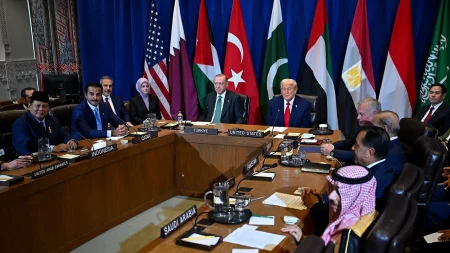
The urgency of Zelenskyy’s public warning was matched by the substance of his private conversation with President Trump. After their meeting, Zelenskyy told reporters that he had raised the possibility of a mutual halt to attacks on Russian and Ukrainian energy infrastructure — a limited but potentially meaningful step toward de-escalation. He said he was ready to agree to such a pause and expressed hope that it could reduce the suffering of civilians as winter approaches, when both sides historically intensify strikes on power grids and heating facilities. “We are ready,” Zelenskyy said of the proposed agreement, but he was quick to add that he was unsure whether Russia was prepared to reciprocate. Trust in Moscow, after years of broken promises and violated agreements, is in short supply. Zelenskyy also said that Trump had expressed a willingness to help Ukraine obtain additional air defense capabilities, particularly Patriot missile systems, which have proven critical in intercepting Russian ballistic missiles and drones. No concrete commitment on immediate deliveries was made, and Trump’s offer remained vague. Still, the fact that the two leaders discussed air defenses at all is significant, especially given the ongoing debates in Washington over the scale and pace of U.S. military aid. For Ukraine, the need for Patriots is not a matter of strategic preference; it is a daily survival question. Russian forces have repeatedly targeted Ukraine’s energy infrastructure, and the coming months could be brutal. Zelenskyy’s meeting with Trump thus served dual purposes: publicly, it reinforced the sense that Ukraine remains high on Washington’s agenda, but privately, it was a hard negotiation over weapons systems that could mean the difference between warmth and darkness for millions of Ukrainians this winter. The visit to New York, and the stark warning delivered to reporters afterward, may ultimately be remembered as part of a broader effort to keep Ukraine’s needs in the headlines and to push the United States and its allies toward faster, more decisive action.
Paragraph 6
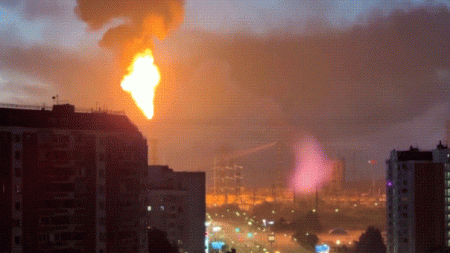
All of this unfolds against a backdrop of intensifying warfare and diplomatic tension. As world leaders gathered for the UN General Assembly, Russia and Ukraine were busy launching aerial attacks on each other’s territory, with energy infrastructure again becoming a primary target. The vicious cycle of strike and counterstrike has become a grim ritual, and each round raises new fears about where it will end. Zelenskyy’s warning to Fox News Digital should therefore be read not as alarmism, but as a plea from a leader who is fighting for his country’s existence while simultaneously trying to alert the rest of Europe to the danger he sees on the horizon. His argument is essentially this: Russia’s war is not contained, and it will not remain contained simply because Western leaders wish it so. Putin, unable to crush Ukraine, is looking for other ways to assert Russian power and fracture the political unity that has sustained Ukraine’s defense. Drone incursions, sabotage, threats against NATO allies — these are all elements of a strategy designed to test the West’s limits and to make the cost of supporting Ukraine seem more dangerous than the cost of capitulation. The only credible answer, Zelenskyy insists, is for Europe and the United States to respond firmly, to prepare for the worst, and to make clear to Moscow that further aggression will be met with consequences. His meeting with Trump, his conversations with other world leaders, and his stark public statements are all part of that effort. Whether the allies will heed his warning remains an open question. But Zelenskyy’s message to the world is clear: the danger is real, the time to act is now, and the choice is not between peace and war, but between resolve and subjugation. Europe has heard many warnings in the past; the question is whether it has finally learned that ignoring them will not make the threat go away.