


There’s a feeling around the United States men’s national team that goes beyond a simple schedule change or a new qualifying cycle. It’s a genuine shift, a changing of the guard that feels both exciting and a little unsettling. Mauricio Pochettino is still the head coach, and many of the familiar names from the 2026 World Cup will almost certainly be part of the 2030 conversation, but the reality is that competition has never been more intense. Positions that once felt locked down by veteran stars are now openly contested, and the next international window is shaping up to be less of a routine gathering and more of an audition. The old hierarchy is being questioned, not out of disrespect, but because a wave of younger players has emerged with real momentum, real confidence, and a genuine claim to meaningful minutes. That’s what makes this particular moment so compelling: it’s not just about maintaining the status quo, but about reimagining what this team can become. The conversation around form, fitness, and opportunity has changed, and the familiar comfort of knowing exactly who will start and who will play a supporting role has been replaced by a more fluid, competitive, and honestly, more thrilling atmosphere. There’s tension in the air, but it’s the healthy kind—the kind that pushes players to prove themselves and forces coaches to make difficult decisions. And that’s exactly where Alexi Lalas’ U.S. Weekend Stock Watch comes in, offering a snapshot of where some of the most important figures in the player pool stand right now, whose stock is rising, whose is falling, and what it all means for a national team that is clearly entering a new chapter.
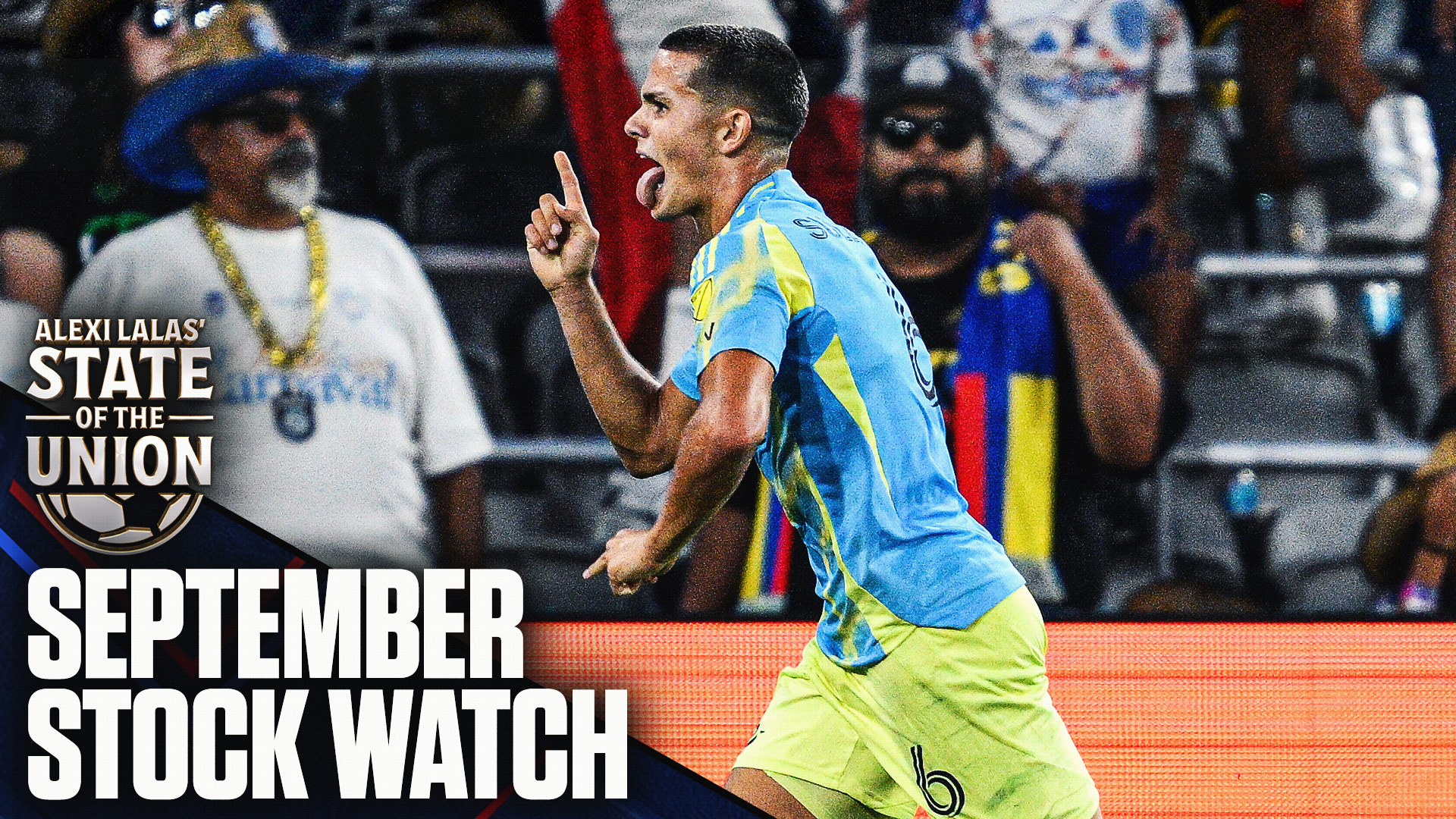
Let’s start with the good news, because there’s plenty of it. Christian Pulisic’s stock is up, and that feels particularly meaningful given everything he’s been through recently. There has been so much noise around him—injuries, inconsistent form, club instability, and endless criticism from people who expect him to be superhuman every single time he steps on the field. But in a recent moment that mattered, Pulisic didn’t just start; he made an impact. He was voted the best player on the pitch, was involved in both goals, and gave AC Milan and American fans alike a moment of genuine positivity. There’s something poetic about that, especially after a year that has tested his resilience. You can almost hear the relief in the voices of supporters who have defended him through thick and thin, because this wasn’t just a good performance—it was a reminder of what made him special in the first place. But even more intriguing is the parallel excitement around a much younger name: Cavan Sullivan. It says everything about the changing times that, in this upcoming window, there might be more curiosity about a teenager than about the most established American star in Europe. Sullivan is raw, talented, hungry, and he arrives at camp on fire. There’s a mystique about him, a sense that we’re watching the beginning of something rather than the continuation of something. We know who Christian Pulisic is—that doesn’t mean he can’t grow, but his identity as a player is largely established. Cavan Sullivan represents the unknown, the possibility, the hope that the next generation isn’t just coming, but is already here. That blend of established greatness and emerging potential is exactly what makes this national team period so compelling, and it’s why fans are watching with a mix of pride, curiosity, and anticipation.
Beyond the glamour of the biggest names, there’s a broader trend that should give American soccer fans genuine encouragement: the growing presence of U.S. players in the English Football League Championship. For years, we’ve talked about getting players into Europe as if simply arriving was the finish line. But now, the conversation has shifted. These young Americans aren’t just holding onto roster spots; they’re playing meaningful minutes, they’re getting starts, and perhaps most importantly, they’re scoring goals and making things happen. The Championship is a brutally competitive league, full of physicality, pace, and the relentless pressure of teams fighting for promotion or survival. It’s not a place where you coast or hide. For American players, using that league as a stepping stone has become a legitimate path forward, not a consolation prize. It’s where you learn how to win ugly, how to handle adversity, and how to adapt when everything around you is chaotic. There’s something honest and admirable about that journey. It’s not the glamour of the Premier League or the Champions League, but it’s real, it’s demanding, and it prepares players for exactly what international football asks of them. Watching this brigade of young Americans embrace that challenge is genuinely fun, because they’re not just surviving—they’re thriving. They’re making the case that the next great generation of U.S. talent won’t be defined by a handful of superstars, but by a deep, versatile, competitive group of players who have been tested in one of the toughest environments in the world. That depth is what international tournaments are built on, and it’s why this trend matters beyond the weekly scores or highlight reelseur old.
Another name trending upward is Johnny Cardoso, though the enthusiasm comes with a caveat that’s worth exploring. There’s no denying that he’s doing something right at the club level consistently putting in performances that make people sit up and take notice. He’s been associated with big wins, important moments, and the kind of midfield presence that managers dream about. But with Johnny, there’s always a lingering question that feels unfair and yet impossible to ignore: can he translate this into the U.S. men’s national team jersey? It’s the curse of the player who shines for his club but hasn’t quite delivered the same impact on the international stage. You can be a really, really good player—everyone can see it, the talent is undeniable—and still find that things just don’t click when you step into a different system or play alongside different teammates. It’s frustrating, and it can drive you crazy if you think about it too much. But the danger is leaving that talent on the sidelines, wasting something genuinely valuable because we don’t have the patience to figure out how to make it work. For Cardoso, this window is another opportunity to close that gap, to prove that his club form isn’t a fluke and that he can be the same dominant presence in an American shirt. The hope is real, but it’s the kind of hope that needs to be backed by consistent, tangible performances in the games that actually count. We don’t want to look back and wonder what could have been. We want to see him take that next step, embrace the challenge, and make the position his own. The talent is there; the question is whether the translation can finally happen when it matters most.
Of course, not every story this window is about rising stocks and renewed hope. There have to be disappointments too, and Ricardo Pepi’s situation is one that stings for a lot of supporters. For so long, Pepi was waiting his turn, playing second fiddle to Balogun, and doing it somewhat fairly because the competition was always fierce. Finally, this was supposed to be his moment—a chance to step out of the shadow, claim the striker role for himself, and show that he belongs at the center of this new-look national team. Instead, he finds himself in a frustrating position, watching opportunity slip away just as it seemed within reach. For his fanbase, it feels like a cruel twist of fate, the kind of moment that makes you want to throw your hands up in frustration. But there’s another side to it, one that’s harder to hear but probably more honest: it’s just another opportunity. The striker position is going to be wide open in this camp, and with so much uncertainty at the top, the door isn’t shut for Pepi—it’s just not as wide open as we all hoped it would be. The competition is fierce, the stakes are high, and every player in that squad knows that this cycle is about earning your place, not inheriting it. Similarly, Tim Weah finds himself on the wrong side of the stock watch, and that’s a significant shift from a few years ago when he seemed to have that right side locked down with a permanent marker. There’s a question that Pochettino has to be asking himself: can he still get something out of Weah, even with all the changes around him and his apparent struggle to adapt? It’s a brutal question, but it’s the reality of international football. The game evolves, new players emerge, and suddenly the person who was once essential is now competing for a spot against a crowded field. Yunus Musah is back in the fold, eager to reclaim his place, and Weah looks, at least for now, like he’s on the way out. It’s not a judgment on his talent, but rather a reflection of how quickly things can change when opportunity, form, and tactical fit all collide.
Finally, there’s a lesson that goes beyond individual players and into the stands, and it’s an important one to address with some honesty: the situation with Americans at Celtic and the behavior of certain fans. There’s nothing wrong with supporting your team passionately, with being a die-hard fan who lives and breathes every match, every tackle, every goal. In fact, that loyalty is part of what makes football so beautiful. But that passion has to come with perspectiveaine a clear understanding of where the line is between supporting and crossing into something destructive. There is absolutely nothing romantic about setting a bus on fire. There’s nothing cool about causing chaos, endangering people, or letting your emotions spiral into violence and vandalism. The idea that deep fandom is measured by how much you’re willing to destroy, or how far you’ll go to show your commitment, is not just wrong—it’s harmful. It drags attention away from the actual sport, it embarrasses the players, and it sends the wrong message to everyone watching, especially younger fans who might mistake that kind of behavior for true loyalty. Being a great fan means showing up, supporting your team through the highs and lows, and creating an atmosphere that lifts the players rather than making them feel unsafe or ashamed. It means recognizing that the club is not yours to corrupt in the name of passion. The Americans at Celtic are representing themselves and their country in a foreign environment, and they deserve support that reflects well on them, not chaos that creates headlines for all the wrong reasons. At the end of the day, football is supposed to bring people together, to give us a shared experience that transcends our differences. When fan culture turns into destruction, it betrays that purpose. So let’s keep the passion alive, but let’s do it with maturity, with perspective, and with a real understanding that supporting your team never means crossing the line into something everyone will regret.