




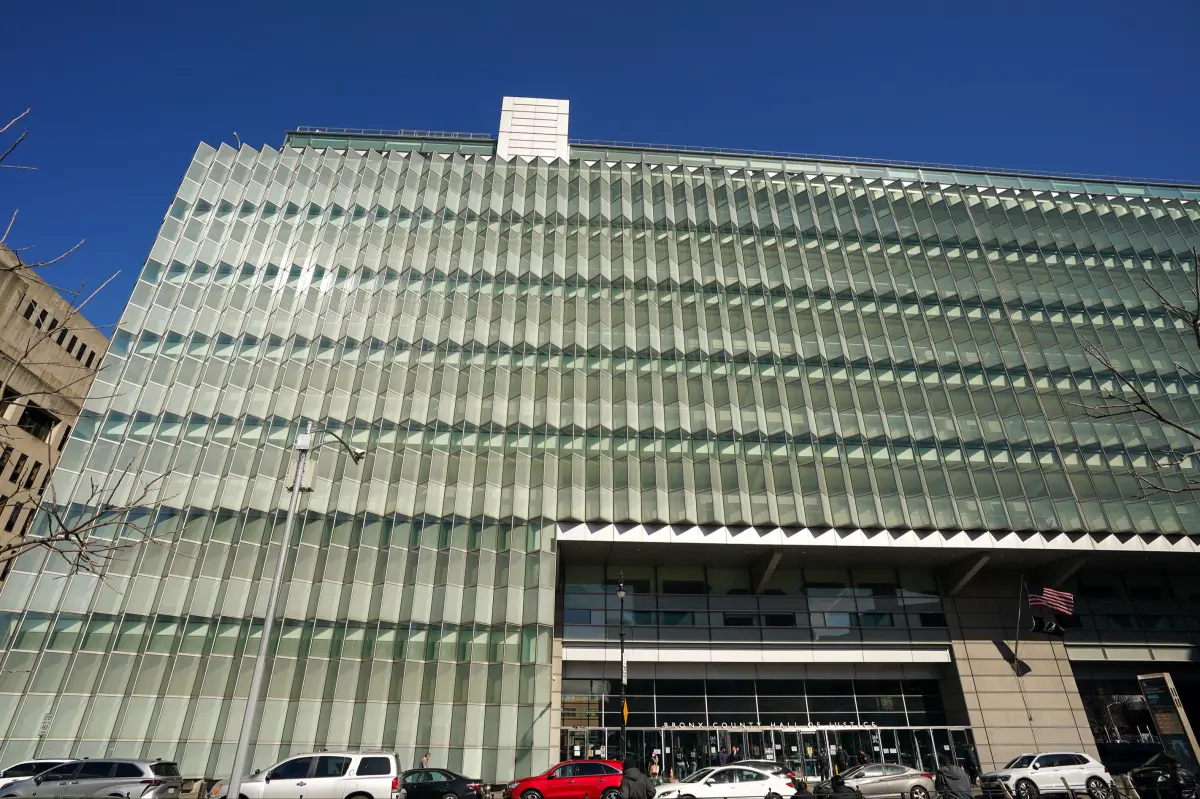
On an otherwise ordinary Monday morning, the Bronx County Hall of Justice was doing what it always does: processing the steady, anxious rhythm of people caught up in the justice system. Some were defendants, some were victims, some were witnesses, and some were simply waiting to see a judge—all of them hoping to move their lives one step closer to resolution. Into that crowded, fluorescent-lit space walked Jamal Frett, a 26-year-old man with a loaded Ruger pistol hidden in his underwear. It was just after 11:10 a.m. on September 21, and according to a criminal complaint, the semiautomatic handgun was locked, loaded, and carrying five rounds. The fact that Frett was a parolee with an astonishing 18 prior arrests, including 12 felonies, made the moment even more chilling. This was not a stranger stumbling into a courthouse; this was a person deeply familiar with the system, someone who had been arrested again and again, someone who knew exactly what he was doing. The fact that he managed to walk through security, pass a pat-down, and make his way up to Justice Guy Mitchell’s courtroom is not just a security failure—it is a nightmare made real.
What happened inside the courtroom was as bizarre as it was frightening. Frett apparently did not attempt to use the gun, at least not immediately. Instead, he began acting disorderly, using his phone and speaking loudly enough that a court officer noticed. In a courtroom, where the rule of law is supposed to reign and silence is its basic language, this was an interruption that could not be ignored. The officer approached and decided to remove Frett from the proceedings. But as Frett was being escorted out, he turned hostile. He began screaming, “Don’t f–king touch me, come see me outside, you want some,” according to the complaint. He resisted the officers’ attempts to handcuff him, pulling away and struggling. It was only while officers were trying to subdue the loud, resistant man that they felt the hard, definitive shape of the handgun concealed in his waistband. The moment, no doubt, shifted from routine disruption to something far more serious. In a heartbeat, a man who had been threatening officers was now, in their eyes, an armed threat in a courthouse. Officers arrested Frett and prosecutors charged him with multiple counts of criminal possession of a weapon, among other charges. He was remanded, but the damage to public confidence was already done.
The most disturbing part of this story is not that Frett had a gun—though that is disturbing enough—but how easily he carried it into one of the most secure places in the city. Security camera footage reviewed afterward showed Frett walking through the metal detectors at the entrance to the Bronx County Hall of Justice an hour before the gun was discovered. The metal detector went off, likely because he was wearing an ankle monitor, as he told officers. According to Al Baker, a spokesperson for the state’s Office of Court Administration, officers then conducted a pat-down using a handheld scanner. They found nothing. “Officers, using a handheld scanner, patted Mr. Frett down and discovered no immediate presence of a weapon,” Baker said. But there was a weapon—a loaded Ruger in his underwear, a place a pat-down might easily miss unless the officer was extremely thorough. The ankle monitor, in a bitter irony, may have made the security check less effective: when the alarm sounded, the explanation was already provided. The search was likely focused on the monitor, not on the possibility that a man on parole would smuggle a loaded gun into a courthouse full of judges, lawyers, and unarmed members of the public. The Unified Court System has launched an internal review to figure out how this happened, but the initial facts paint a picture of a security process that was simply not strong enough to stop someone determined to test it.
To understand the full weight of the situation, you have to look at Frett’s criminal history. This was not a man who stumbled once, made a mistake, and regretted it. Sources said he had 18 prior arrests, 12 of them for felonies. He was a parolee from state prison, released only in March. He was wearing an ankle monitor, meaning the state had decided he needed supervision, but it also meant he was free enough to walk the streets—and into a courthouse. His most recent pending case involved a brutal and terrifying allegation: on April 30, he and other men allegedly slashed a woman on the head while she was walking to the supermarket. He had appeared in court on September 8 for that case, just 13 days before he walked into the Bronx County Hall of Justice with a gun hidden on his body. Why was he there that Monday? Sources said it was unclear. But whatever his reason, the situation raises profound questions about how a person with his record was out on the streets, why his ankle monitor did not prevent or deter this behavior, and how a courthouse—of all places—could become the scene of such a spectacular security failure. When a man with 18 arrests and a pending violent case can bring a loaded weapon into a building designed to uphold the law, the line between public safety and institutional neglect begins to blur.
Behind the official reports and the criminal charges, there is a deeply human story. Courtrooms are supposed to be places of reason, where conflicts are resolved without violence. But for the officers who confronted Frett, it was suddenly a place of fear. They were not in a movie; they were in a roomful of people they had sworn to protect, and one of those people had a weapon. For the woman who was allegedly attacked in April, the courthouse should have been a haven—a place to see the man accused of hurting her face justice. Instead, her alleged attacker was brought before a judge while carrying a loaded gun. For the security guards who patted him down, the discovery was a painful reminder that their work can never rest. For the defendants waiting in the courtroom, the moment was a violent interruption of their own nervous hope. And for Frett himself, the tragedy is that a life filled with terrible decisions and missed chances at intervention has led him here. It is easy to call him a monster, but the more honest truth is that he is a young man who, for whatever combination of reasons, has become a persistent danger to everyone around him. That reality demands justice, but it also demands a reckoning with a system that has seen him slip through its fingers time and time again.
This is the moment for more than just an internal review. We all deserve to know how a loaded gun got into the Bronx County Hall of Justice. Was the metal detector working properly? Did the handheld scanner glitch, or did the officer conducting the pat-down simply miss it because he was focused on the ankle monitor? Why was a known felon with a pending violent case walking freely through the building without additional screening? The Bronx District Attorney’s Office has pointed questions to the state Office of Court Administration, and OCA has said it is conducting an internal review. But a review must not become another box-checking exercise. The public needs answers, and the people who work in our courthouses—the judges, clerks, bailiffs, and prosecutors—need to know that they are not sitting in the crosshairs of a breakdown. A loaded gun in a courtroom is one of those things that should simply never happen. It is a violation of the basic promise that justice will be served in a safe space. And while no one was shot, that is a matter of luck, not design. The next time could be worse. The next man with a gun might not be subdued so easily. The lesson of this terrifying episode is not that our institutions are hopeless; it is that they are painfully human, made of imperfect tools and fallible people. But there is no excuse for complacency. We owe it to everyone who steps into a courtroom—defendants, victims, and workers—to close the gaps, strengthen the checks, and treat a man like Jamal Frett not as an anonymous statistic, but as a warning that the system must do better. The gun was found in time this time. But the clock is ticking, and the next courtroom crisis is already waiting just beyond the metal detector.