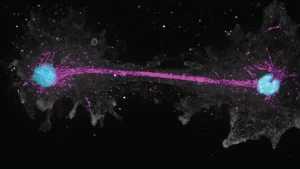



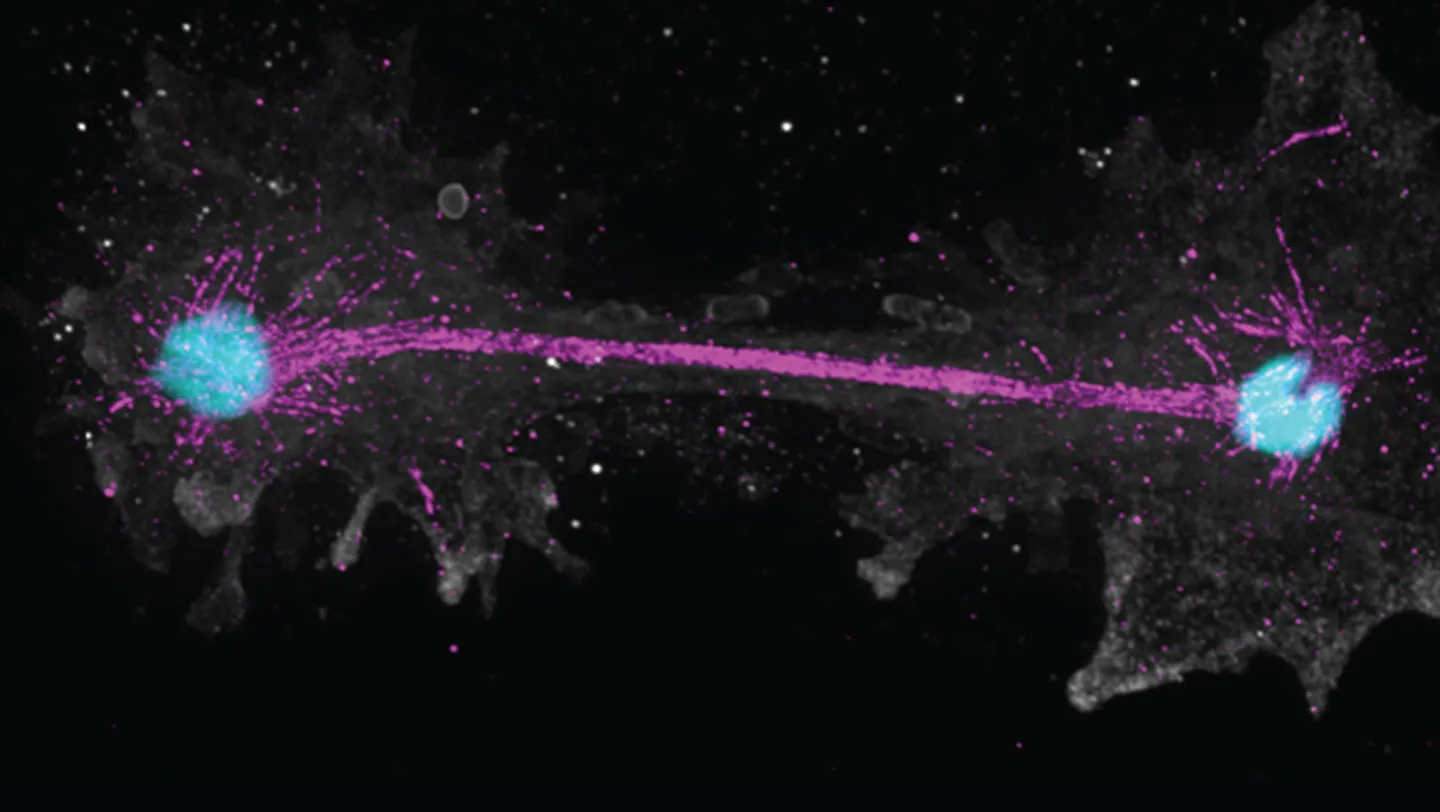
Deep in the steaming, mineral-rich waters of a California hot spring, a microscopic drama has been unfolding that scientists never expected. A single-celled organism, barely visible to the naked eye, has quietly shattered a heat tolerance record for an entire domain of life. Researchers have named it the “fire amoeba,” and it can grow and multiply at a blistering 63° Celsius, or about 145° Fahrenheit. That temperature is lethal to every other known eukaryote—the vast group of life-forms that includes plants, fungi, animals, and all organisms whose cells contain a nucleus and specialized internal structures. For decades, scientists assumed that eukaryotes had a hard ceiling when it came to heat, with a few hardy algae and fungi managing to survive at around 60° Celsius. But this unassuming blob from Lassen Volcanic National Park has pushed that boundary further, forcing biologists to rethink what these complex cells can endure. It is one thing to know that bacteria and archaea, the simpler, more ancient forms of life, can thrive in extreme environments. It is quite another to discover a creature with a nucleus, organelles, and a more intricate cellular architecture doing the same. The fire amoeba is not just surviving at temperatures that would cook most living things; it is actively growing, dividing, and living its tiny life in conditions that seem impossibly hostile.
The discovery did not happen overnight. It came from years of patient, meticulous work by a team of microbiologists who were determined to understand how microbial eukaryotes manage to live in extreme places. Between 2023 and 2025, microbiologist Beryl Rappaport and her colleagues collected water samples from geothermal hot springs in Lassen Volcanic National Park, a rugged and otherworldly landscape shaped by volcanic activity. They brought those samples back to the lab and tried to coax any amoebas they found into growing under controlled conditions. At first, they set up cultures at a range of temperatures, with the hottest being 57° Celsius. That was not an arbitrary choice. It was the highest temperature at which an amoeba had ever been documented, a record held by a species called Echinamoeba thermarum. The team expected to find something similar, perhaps a close relative of that known heat-loving amoeba. Instead, they found something that looked different—a mystery microbe that seemed to have its own personality. When they saw it thriving at 57° Celsius, they decided to push further. They turned up the heat, and the amoeba kept going. At 60° Celsius, it was still alive. At 63° Celsius, it was not just surviving but replicating, growing steadily in conditions that had previously been considered impossible for any eukaryote. Even more remarkable, when temperatures climbed to 70° Celsius, the resilient organism did not die. It simply entered a dormant state, waiting for conditions to become more hospitable. This ability to pause and resume life is a survival strategy that speaks to the amoeba’s extraordinary adaptability.
The researchers gave their discovery a name worthy of its fiery origins: Incendiamoeba cascadensis, which translates roughly to “fire amoeba from the Cascades,” a nod to the volcanic mountain range where Lassen Volcanic National Park sits. The name captures both the creature’s habitat and its almost mythical quality. It is easy to imagine a tiny organism forged in fire, living in water that would scald human skin in seconds. But the fire amoeba is not just a curiosity. Its existence raises profound questions about the limits of life on Earth. Eukaryotes are generally considered more fragile than bacteria and archaea, the so-called prokaryotes that lack nuclei and other membrane-bound organelles. Some bacteria and archaea are famous for their extreme heat tolerance. The archaeon Methanopyrus kandleri, for example, holds the overall heat record for life on Earth, growing at a staggering 122° Celsius. But eukaryotes were thought to be far more constrained, partly because their cells are larger, more complex, and more dependent on delicate internal structures. The fire amoeba challenges that assumption. It suggests that complex cells, with all their moving parts, can evolve to withstand temperatures that were once thought to be the exclusive domain of simpler organisms. This is not just a matter of setting a new record; it is a reminder that evolution is endlessly inventive, capable of finding solutions to problems that seem insurmountable.
What makes the fire amoeba so heat-resistant? Scientists are only beginning to understand the genetic and biochemical adaptations that allow it to thrive where other eukaryotes perish. One key appears to lie in the chemical features on the surface of its proteins. At high temperatures, proteins tend to unfold and clump together, which is often what kills heat-stressed organisms. The fire amoeba seems to have evolved surface characteristics that discourage this harmful clumping, keeping its proteins stable and functional even in extreme heat. This is the same kind of adaptation seen in heat-loving bacteria and archaea, suggesting that the amoeba has converged on similar solutions to the problem of surviving at high temperatures. But the fire amoeba has another trick as well. It can shift between two distinct body shapes, and researchers believe this flexibility may help it cope with the rapidly fluctuating temperatures of its hot spring environment. One form is slower and seems suited to foraging, moving methodically through its watery world in search of food. The other is faster and appears useful for escaping when conditions become less than ideal. If the water around it starts to get too hot or too uncomfortable, the amoeba can switch into its speedier form and move to a better spot. This ability to change shape on demand is a beautiful example of how even a single-celled organism can be remarkably dynamic and responsive to its surroundings.
The discovery of the fire amoeba is not just a story about one tiny creature. It is a window into the broader mystery of life’s resilience and the unknown limits of biological survival. For years, scientists have studied extreme environments—scalding hot springs, deep-sea hydrothermal vents, acidic pools, and frozen deserts—and each time they think they have found the edge of habitability, life surprises them. The fire amoeba is the latest surprise. It has pushed the known heat tolerance of eukaryotes from 60° Celsius to 63° Celsius, and there is no reason to believe that is the final word. As microbial ecologist Angela Oliverio, whose lab at Syracuse University hosted the research, put it, “As far as we know, there is no reason why 63° is the hard limit. We don’t really know what the upper temperature limits are.” That uncertainty is both humbling and exciting. It means that somewhere in the world’s most extreme environments, there may be other organisms—perhaps even more heat-tolerant eukaryotes—waiting to be discovered. It also means that our understanding of life’s boundaries is still incomplete. Every time we draw a line and say life cannot go beyond this point, nature seems to find a way to cross it.
For those of us who are not microbiologists, the fire amoeba is a reminder of how much wonder exists in the world’s hidden corners. It is easy to overlook a single-celled organism living in a steaming puddle in a volcanic park. It has no eyes, no limbs, no brain, no obvious charisma. Yet it has accomplished something that no other complex life-form on Earth has managed: it has made a home in water hot enough to cause severe burns. It has evolved its own tiny toolkit of survival strategies, from protein-stabilizing chemistry to shape-shifting mobility, all in service of a life that lasts only days or weeks. There is something deeply inspiring about that. It speaks to the tenacity of life, the way living things adapt to even the most punishing conditions. It also speaks to the importance of curiosity and careful scientific observation. The researchers who found the fire amoeba did not set out to break a record. They set out to understand the world, to see what was living in those hot springs, and to ask questions. In doing so, they uncovered something extraordinary. Their work reminds us that discovery often comes not from grand plans but from patient attention to the small, strange, and overlooked. The fire amoeba may be invisible to most of us, but its story is a testament to the resilience of life and the endless possibilities that await those who look closely enough. In a world that often feels divided and uncertain, there is comfort in knowing that even in the hottest, most inhospitable places on Earth, life finds a way to thrive.