


1. A Secret Blueprint for a Deeper Moscow-Tehran Alliance
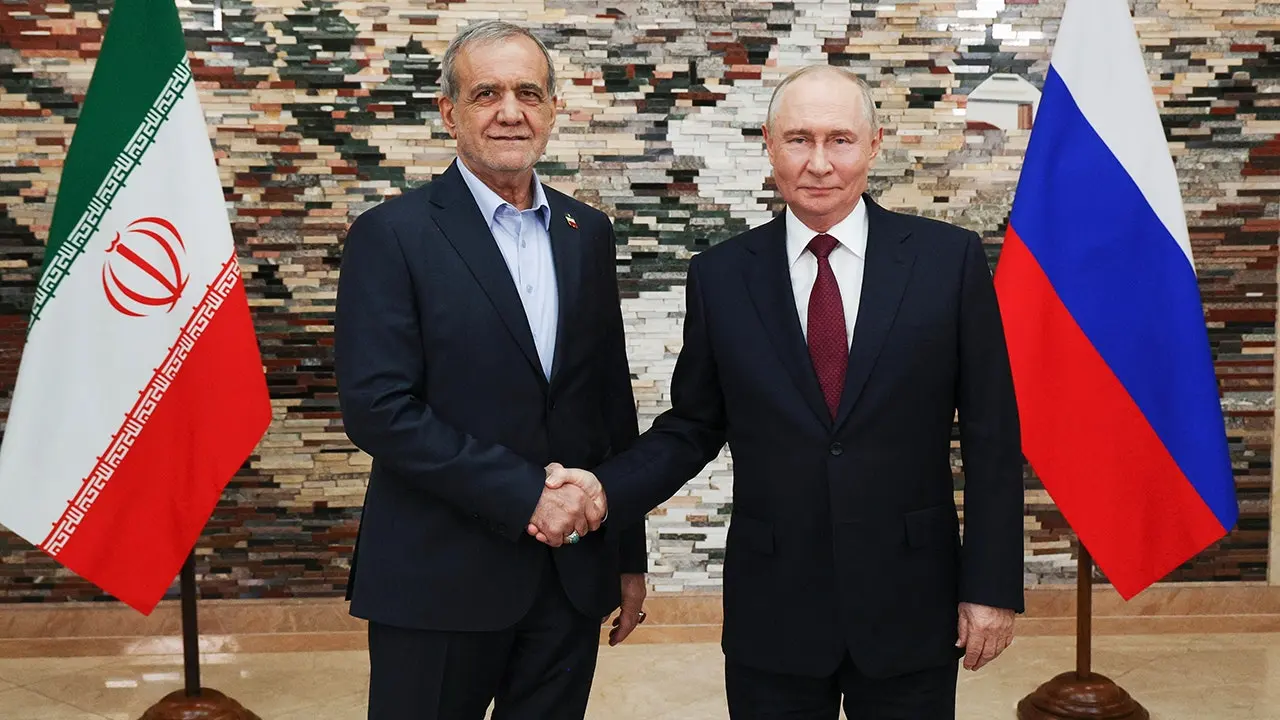
Hidden away in a 44-page Russian government document marked “For official use” is a striking picture of how Moscow views its partnership with Tehran — not as a temporary convenience, but as a long-term, carefully engineered alliance designed to withstand the pressure of Western sanctions. The document, approved on the Russian side on September 2, 2024, is titled “Plan for Cooperation Between the Russian Federation and the Islamic Republic of Iran for 2024-2026.” It assigns specific ministries, agencies, and state companies to dozens of projects, sets deadlines stretching through the end of 2026, and covers everything from financial messaging systems to joint media production. What makes the document especially revealing is not that Russia and Iran are cooperating — that much has been publicly known for years — but rather the systematic way Moscow is trying to build an entire architecture around the relationship. Rather than simply trading goods, the two countries have been working to create alternative financial channels, deepen nuclear cooperation, manufacture Russian aircraft parts inside Iran, develop major oil and gas fields, and construct new transportation routes that link Russia’s borders to the Persian Gulf. All of this was happening well before the recent war between Iran and the United States, which means the document cannot tell us precisely which projects remain active today or how the conflict may have changed Moscow’s calculations. Yet independent review and follow-up reporting show that several initiatives in the roadmap did later advance or become public in some form. As one European intelligence source put it, this is a set of “nonpublic high-level documents that illustrate the comprehensive cooperation between Russia and Iran,” focusing on areas like nuclear programs, energy trade, and financial transactions that aim to evade U.S. sanctions. It is, in other words, a quiet but determined effort to build an economically and strategically integrated relationship outside the Western-dominated global system.
2. Building a Parallel Financial World
Perhaps the clearest and most consequential part of the roadmap concerns money. The document sets a target to increase the share of bilateral trade conducted in national currencies from 68 percent in 2024 to 71 percent by 2026, while also expanding correspondent accounts denominated in rubles and rials. More ambitiously, it calls for the Bank of Russia and the Central Bank of Iran to explore using central bank digital currencies for cross-border settlements. It also urges the two sides to “ensure the use of independent systems for transmitting financial messages,” effectively connecting their financial institutions to channels that do not depend on SWIFT, the global banking messaging network dominated by Western oversight. The document never explicitly says “sanctions evasion,” but it repeatedly speaks of reducing dependence on “unilateral restrictive measures.” That language matters because it reveals the core motivation: Moscow and Tehran are not simply looking for workarounds as a matter of convenience; they are trying to build a financial infrastructure that can survive and even thrive despite Western pressure. Signs of this have already emerged in public reporting. By February 2025, Russian Deputy Prime Minister Alexei Overchuk said the two countries had “practically completely” shifted bilateral settlements into national currencies using their own systems for transmitting financial and banking messages. Iran’s ambassador to Russia similarly said Tehran and Moscow no longer needed SWIFT for bilateral banking relations and had begun linking Iran’s Shetab payment network with Russia’s Mir system. Analysts like Keti Korkiya of the Foundation for Defense of Democracies argue that the significance of these measures is cumulative. Individually, none of these steps is revolutionary, but together they reduce single points of vulnerability and add redundancy to the economic relationship. The effort is also political: the roadmap calls for coordinating through BRICS and other international institutions to counter “unilateral trade restrictions” and to build an intellectual, diplomatic campaign against sanctions themselves. That means expert communities, discussion platforms, and an international forum focused on the harm caused by unilateral restrictions — a softer, more ideological battle aimed at delegitimizing the very tools the United States and its allies have used against both countries.
3. Nuclear Energy, Oil Fields, and the Power of State Companies
Beyond finance, the roadmap reveals a deepening relationship in strategically sensitive sectors, especially civilian nuclear energy. Russia’s state nuclear corporation, Rosatom, is assigned continued responsibility at Iran’s Bushehr nuclear power plant, including fuel and maintenance for Unit 1 and ongoing construction of Units 2 and 3. This is not just paper planning; Rosatom announced in early September 2024 that Russian specialists were preparing to return to Bushehr for scheduled maintenance and partial fuel replacement, with nuclear fuel already delivered to the site. The projects at Bushehr predate the 2024 roadmap, but embedding them in this formal cooperation framework shows how central they are to the broader relationship. The same pattern appears in energy. The document identifies specific Iranian oil and gas fields — Shadegan, Kish, and North Pars — and assigns Russia’s Energy Ministry and unnamed “interested Russian companies” to advance them. For several projects, the financing column is marked simply “Confidential,” which is another reminder that the most sensitive details are deliberately kept out of public view. There is evidence that some of this work has moved forward. Russian state-owned ZN-Vostok has reportedly been developing Iran’s Shadegan oil field, and Iranian officials have said they hope to expand Russian investment across additional projects. The roadmap sets milestones through 2025 and 2026, including legal, commercial, and project-analysis work. What emerges from all of this is a coordinated, state-directed effort in which the Russian government is not merely facilitating private business deals but actively choosing strategic projects and directing state-owned giants to carry them out. This is not a normal commercial relationship; it is a geopolitical project in which energy and nuclear cooperation serve as anchors for a much broader alignment.
4. Aviation, Railways, and New Trade Routes to the Gulf
One of the most unusual provisions in the roadmap goes far beyond ordinary trade: Russia planned to help establish production inside Iran of individual parts and assemblies for Russian aircraft. Russian authorities were instructed to determine which aircraft parts could be repaired or manufactured in Iran, identify capable Iranian companies, certify those sites through Russia’s aviation regulator Rosaviatsiya, and conclude a localization agreement. The deadline for that agreement was March 31, 2026, with prototype production planned by the end of the year. Independent verification of this particular initiative is difficult, but related cooperation has become public. In February 2025, the head of Rosaviatsiya said three Iranian companies had been approved to perform maintenance and airworthiness work on Russian-operated aircraft, after an Aeroflot Airbus A330 underwent maintenance in Tehran. Russian officials also openly discussed deeper aviation-industrial cooperation, including aircraft manufacturing and joint work on jet engines. This is a vivid example of how sanctions have pushed Moscow to seek manufacturing capacity in a country that is itself heavily sanctioned — a partnership of necessity turned into a long-term strategy. The same logic drives the transportation provisions. The roadmap calls for work on a railway built to Russia’s 1,520-millimeter track gauge, stretching from Iran’s border with Azerbaijan toward Iranian ports on the Persian Gulf, as well as the Rasht-Astara railway, a roughly 162-kilometer missing link in the International North-South Transport Corridor. That project moved beyond the conceptual stage when Russia and Iran formally launched engineering surveys in May 2025, though construction still had not fully begun by late summer 2026. The roadmap also envisions Iranian investment in port infrastructure in Astrakhan, Russia, including terminals, warehouses, a logistics park, and grain and vegetable-oil facilities. Analysts have found that an Iranian-owned company later operated a terminal in Astrakhan with a railway spur and was building storage facilities closely matching the document’s description. Taken together, these transport projects point to a broader strategic vision: creating physical routes for goods, equipment, and influence that bypass traditional European corridors and bind Russia and Iran more tightly to each other and to new markets in the Gulf and South Asia.
5. Media, Technology, and the Personal Touch at the Top
The roadmap is not limited to heavy industry and infrastructure. It also includes plans for content exchange, journalist training, and joint media production, with at least two joint projects and professional training for Iranian journalists. Russian technology companies are expected to secure at least two contracts in Iran involving information and communications technology, including information security, telecommunications, and the video-game industry. These provisions might seem secondary, but they reflect an understanding that the relationship needs more than pipelines and railways — it needs a shared information environment and a technological partnership that can withstand external shocks. There is also a human dimension that adds a personal layer to the story. The Russian official overseeing the economic relationship is Energy Minister Sergei Tsivilev, who chairs the Russian side of the Permanent Russian-Iranian Commission on Trade and Economic Cooperation. Tsivilev is married to Anna Tsivileva, a Russian deputy defense minister and the daughter of Putin’s late cousin. For the European intelligence source who reviewed the document, that connection is deeply meaningful. “It should be emphasized that on Russia’s part, the economic cooperation with Iran is coordinated and managed by a representative of Vladimir Putin’s extended family,” the source said. “This indicates that the Iranian matter is not just one of many bureaucratic issues in the agenda of the Russian government. But it holds significant value for the interest of the Vladimir Putin regime.” The source’s point is that this is not a routine bureaucratic file; it is a personal, high-stakes priority for the Kremlin leadership. The degree of state coordination is also striking. Central banks, ministries, regulators, and state-owned companies are all involved, with formal deadlines and, in some cases, confidential financing arrangements. That kind of institutionalization suggests Moscow is trying to turn what could otherwise remain a politically convenient partnership into something durable, embedded in the everyday machinery of government.
6. A Long-Term Partnership That the West Cannot Ignore
In the end, this document tells a broader story about how the world is changing under the weight of sanctions and geopolitical rivalry. Russia and Iran are not just two countries that happen to share a common adversary. They are actively constructing a parallel system of finance, trade, energy, transportation, and even media that is designed to reduce their vulnerabilities and strengthen their collective position against the United States and its partners. The roadmap’s language is careful — it speaks of national currencies, independent financial messaging, and countering “unilateral restrictive measures” — but the intent is unmistakable. It also shows that Moscow is thinking strategically, not just reactively, blending practical workarounds with an ideological campaign to delegitimize sanctions themselves. The United States, for its part, maintains that its sanctions have severely isolated both countries from the international financial system and that alternative systems cannot replace the reach, liquidity, and trust of the dollar. A U.S. official said Washington closely tracks attempts by sanctioned jurisdictions to develop alternative cross-border payment mechanisms and would seek to disrupt those that facilitate sanctions evasion or illicit finance. Yet the existence of a carefully planned, high-level roadmap that already appears to be producing tangible results is a reminder that the West cannot afford to assume that its tools of economic pressure will remain effective forever. The Iranian matter, as the intelligence source noted, holds significant value for the Putin regime, and the commitment appears personal, institutional, and long-term. No one can say with certainty how many of these projects will survive the evolving conflict in the Middle East or the pressures of the coming years. But the document itself is clear evidence that Moscow and Tehran are betting on each other — and building the foundations of a relationship they expect to last well beyond the current crisis.