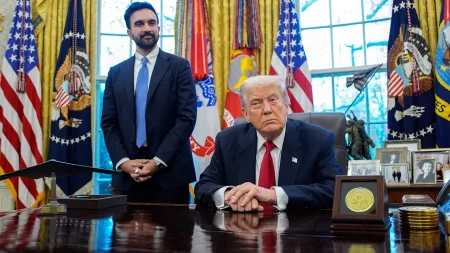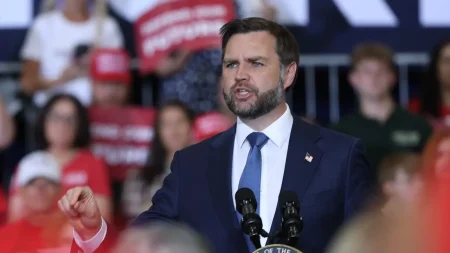



In a move that has shifted from combative rhetoric to tangible policy, President Donald Trump has announced a new security agreement with Denmark and Greenland, a development he claims will grant the United States “permanent control” over the island’s defense and permit an expanded military footprint. This accord, however, is not a done deal. It hinges on the approval of lawmakers in both Denmark and Greenland, and its full text remains undisclosed. What is known is that the agreement is designed to maintain Greenland’s status under Danish sovereignty while explicitly barring China, Russia, and other non-NATO adversaries from establishing military bases or making sensitive investments on the island. This represents a significant, if nuanced, step in Washington’s ongoing efforts to solidify its strategic position in the rapidly changing Arctic region.
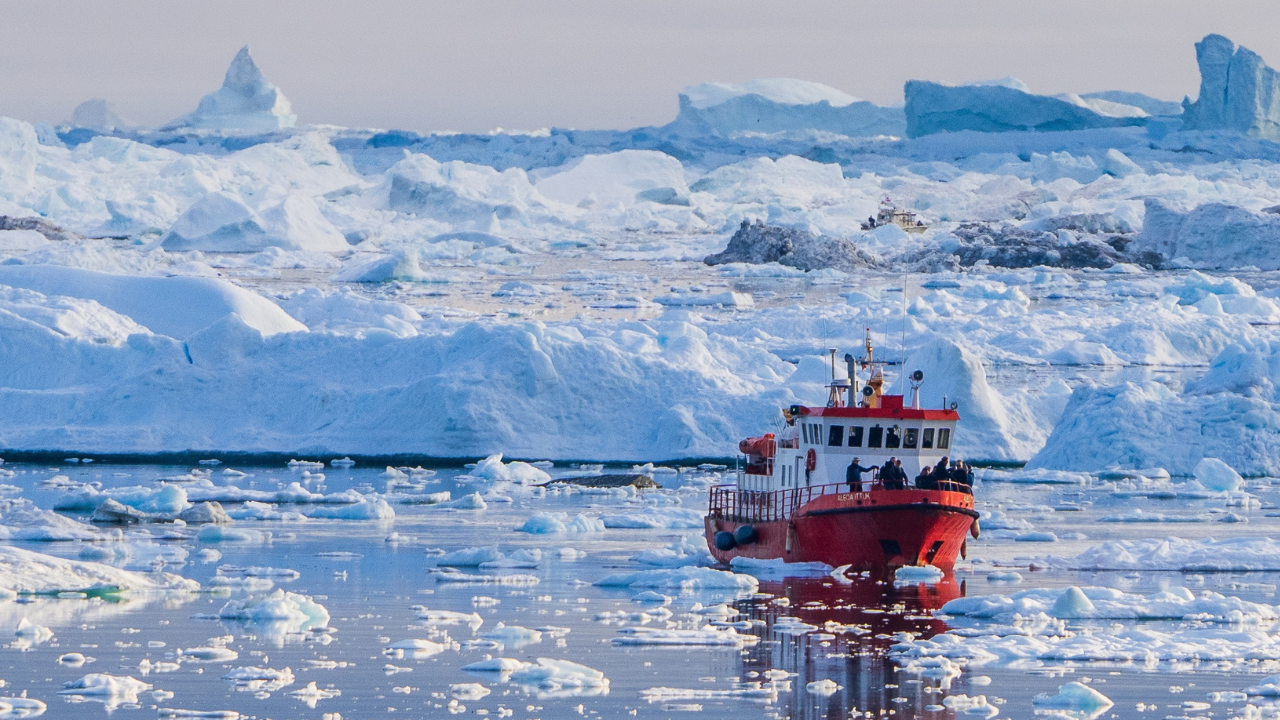
For most of the world, Greenland is a remote, icy expanse that rarely makes headlines. Yet, this perception is rapidly changing. As the Arctic ice cap retreats due to climate change, the world’s largest island has been transformed into a coveted strategic prize. A semi-autonomous territory of the Kingdom of Denmark, Greenland sits at a geopolitical crossroads, hosting a vital U.S. military installation and lying adjacent to emerging shipping lanes and vast deposits of critical minerals. Its importance is no longer just geographical but is now deeply intertwined with global security, economic competition, and the future of trade. The island’s location, bridging the Atlantic and Arctic oceans, places it at the very heart of Northern Hemisphere defense planning, making it a focal point for both established powers and rising challengers.
Life on Greenland is as unique as its geography. Its roughly 56,000 residents are scattered across five municipalities, with the majority living in small, colorful coastal towns that cling to the edge of a landscape dominated by a massive ice sheet. This ice sheet covers about 80% of the island, leaving a vast, uninhabitable interior that is as stark as it is beautiful. Despite its immense size—nearly the combined area of Alaska and Texas—the population is tiny, creating a dynamic where local communities have an outsized voice in the territory’s future. These residents are not merely spectators in the geopolitical drama unfolding around them; they are the stewards of a land that global superpowers now view as essential to their strategic interests, and their political leaders are key negotiators in any deal concerning the island’s future.
The island’s strategic value is anchored in its geography and the evolving Arctic environment. The U.S. has maintained a continuous military presence in northwestern Greenland since 1953 at what is now known as Pituffik Space Base, a critical installation operated by the U.S. Space Force for missile warning and space surveillance. This base is a cornerstone of North American aerospace defense. However, the U.S. is not alone in its interest. Russia has been actively modernizing and expanding its own military installations across the Arctic, while China, which declared itself a “near-Arctic state” in 2018, has been aggressively seeking greater economic and scientific access to the region. The retreating sea ice is opening up new shipping routes around Greenland that could dramatically shorten transit times for goods moving between North America, Europe, and Asia, promising significant economic advantages for the nations that can secure and control these passages.
Beyond its strategic location, Greenland’s value is increasingly defined by what lies beneath its frozen surface. The island is believed to hold vast reserves of rare earth elements and other critical minerals that are essential components in modern technology, from electric vehicles and wind turbines to precision-guided missiles, radar systems, and advanced aircraft. These elements are the building blocks of a modern economy and a modern military. Currently, China dominates the global supply chain for these materials, accounting for roughly 60% of mining and over 90% of processing capacity. This dependency is a major vulnerability for the United States and its allies. As Washington and Brussels actively seek to reduce their reliance on Beijing for these crucial resources, Greenland has emerged as a promising and geopolitically favorable potential supplier, offering a pathway to diversify supply chains and enhance economic and national security.
In the end, while President Trump’s agreement may fall short of his earlier, more ambitious goal of bringing Greenland under direct U.S. control, it nonetheless represents a major strategic advancement for Washington. By securing a formal agreement that acknowledges a U.S. role in the island’s defense and limits the access of adversaries, the United States has strengthened its foothold in the Arctic. The agreement provides a framework for a larger and more permanent American military presence, even if it does not entail a change in sovereignty. As competition over shipping routes, military positioning, and critical mineral resources intensifies, the significance of Greenland will only continue to grow. This new security pact, however it is ultimately ratified, underscores that the future of the Arctic—and the balance of power within it—will be shaped by control and influence over this icy, sparsely populated, yet immensely consequential island.