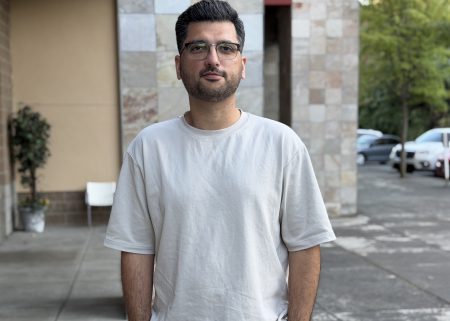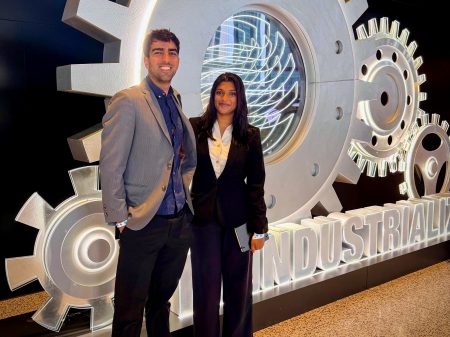





The Pacific Northwest tech and startup community has always been defined by people moving between worlds—journalists who become investors, engineers who become founders, educators who become policymakers—and this week’s personnel moves capture that restless, collaborative energy in real time. Perhaps no one embodies the blurring of those boundaries better than Nate Bek, who was just promoted to principal at Seattle-based venture capital firm Ascend. Bek joined Ascend in January 2024 as an associate and had most recently been serving as senior associate and head of research, but his path to the table wasn’t via an MBA or a stint in big tech; he spent years as a startups and venture capital reporter, learning the craft from the outside before deciding to help build companies from the inside. At Ascend’s Founders Bash event Thursday night, founding general partner Kirby Winfield stood alongside Bek, and the moment felt both celebratory and strategic. Winfield credited Bek with helping Ascend’s portfolio companies launch with national press coverage, researching and communicating the firm’s investment theses, and sourcing deals including Neuramill and Endurance Energy. “Nate has been a force multiplier for Ascend,” Winfield said. “It’s rare for a micro VC fund to have a resource like him. He not only executes and publishes novel market research and thought leadership that strengthens our brand and expands our reach; he’s also hyperconnected in the Seattie ecosystem and has sourced some of our most compelling investments.” Winfield added that the firm is excited to see Bek continue to grow as Ascend becomes a nationally recognized pre-seed firm. Bek also co-wrote a widely read GeekWire guest column in August arguing that many of Seattie’s most promising startups are building physical products—rockets, power plants, off-road vehicles—an observation that fits with his own attention to substance over hype. The promotion signals how much modern venture firms value builders who can also tell stories, and how a former journalist can become a key bridge between founders, funders, and the public.
Another significant move came from Microsoft, where Brandon Paddock, a principal software architect in the Office organization, has left after his latest chapter with the company to start his own AI software venture. Paddock, based in Seattie, was the technical lead for “Agent Mode” in Word, a feature that shipped last fall and became the default Copilot experience in Word early this year. His last day at Microsoft was Sept. 11. On LinkedIn, he shared the news with a characteristic mix of confidence and restraint: “I am incredibly excited about what I’m building, but not quite ready to talk about it here.” For Paddock, this is not a first leap into entrepreneurship. He originally worked at Microsoft from 2005 to 2013, contributing to search features in Windows 7 and Windows 8, then left to serve as CTO of Seattie startup Zealyst. Along the way, he built Tweetium, a popular Twitter client, as a side project. He rejoined Microsoft in 2016, but the pull of building his own products clearly never went away. In a broader sense, his departure is part of an ongoing pattern in Seattie: experienced product architects, tired of the constraints of a giant company, betting on themselves in the new AI wave. Around the same time, the education sector saw a different kind of homecoming. The Technology Access Foundation, a Seattie-based STEM education nonprofit, named Donya Loyd Kemp director of TransformED, its program that works with teachers at partner public schools to put TAF’s project-based STEM learning model into practice. Kemp arrives from Atlanta, where she served as principal of Purpose Built Schools Atlanta and director of project-based learning at Charles R. Drew Charter School. Most recently she was a senior consultant at Potential Unleashed Consulting. In a Q&A with TAF, Kemp said she was excited to contribute to work “that recognizes the brilliance of students, particularly students who have historically been underestimated.” TAF co-founder and executive director Trish Millines Dziko wrote on LinkedIn, “So excited to have Donya on board. Leveling up for our children and teachers.” Kemp’s move is less flashy than a startup launch, but it represents a vital kind of infrastructure—making sure that the next generation, including those often left out of tech, gets a chance to build too.
Corporate governance and tech boardrooms were also busy. Zillow Group announced a carefully orchestrated leadership transition in its financial ranks: Rikki Tremblay has been named vice president and principal accounting officer, while Jennifer Rock is retiring as chief accounting officer. According to a regulatory filing, Rock will remain in an advisory role through March 1, 2027, ensuring continuity through what can be a delicate period for a publicly traded real estate company. Tremblay has been with the Seattie-based company since 2014, most recently as vice president of reporting, technical accounting and controls, and before that she cut her teeth in audit roles at Deloitte. The move reflects a broader trend in public companies: accounting leaders are increasingly being elevated to more strategic positions just as real estate, fintech, and AI change how homes are bought and sold. In a separate tech board move, Joy Chik joined the board of NewCore, a Tel Aviv- and San Francisco-based startup building what it calls an identity platform for people and AI agents. NewCore emerged from stealth in June with $66 million in funding, and Chik’s appointment adds serious enterprise and security credibility. Chik, based in the Seattie area, spent 28 years at Microsoft, most recently as president of identity and network access before she announced her departure in April. Her decision to join a young company in the digital identity space makes sense: as AI agents begin to act independently in business and personal life, questions of identity, trust, and authorization have become existential. For NewCore, having a technologist who literally helped run identity and network access for one of the world’s largest software companies is a major win. For Chik, it’s a chance to take everything she learned in corporate infrastructure and apply it to a faster-moving, more experimental environment. These appointments, one in finance and one in tech, show how Seattie’s talent pool continues to infuse companies far beyond the city’s limits.
Meanwhile, a wave of veteran technology leaders found new homes across different industries. Werner Koepf was named chief technology officer at VanillaSoft, a sales engagement software company. Koepf is a longtime Seattie-area technology executive with a resume that reads like a tour through modern software: most recently chief product and technology officer at AI localization company LILT, and before that senior vice president of engineering at Karat. His career also includes senior engineering roles at Conversica, Ticketmaster, Expedia, and Amazon, where he led the gifting business, including Wish List and registries. That breadth—from marketplace ecommerce to AI localization to sales tools—makes him an interesting fit for a company trying to modernize how sales teams work. In another boardroom move, Mike Katz joined the board of MNTN, a publicly traded connected TV advertising company. Katz left Bellevue-based T-Mobile this year after 28 years, most recently as chief business and product officer. He remains an adviser to T-Mobile’s CEO, which could be valuable to MNTN as it tries to navigate the complicated intersection of telecom, streaming, and advertising. And Christopher Budd joined Sales force as director of security industry engagement, a newly created role designed to connect Sales force’s security team and research with the broader security industry. Budd, who has contributed many pieces to GeekWire over the years, comes to Sales force from security company Sophos, where he led X-Ops communications. He joins Iain Mulholland and other former Microsoft colleagues at Sales force, signaling that Sales force is deliberately assembling a team of people who have spent years in the security community. Budd’s role is interesting because it isn’t just a standard corporate communications job—it’s about building relationships, sharing research, and making sure that security professionals outside Sales force feel that the company is a good citizen in an increasingly dangerous digital world. Taken together, these moves show that the definition of a “tech career” is broadening: engineering leaders are moving into sales infrastructure, telecommunications executives are advising on TV advertising, and security communicators are becoming industry liaisons. The old career arc—join a company, climb a ladder, retire—has been replaced by a more fluid and dynamic ecosystem.
The worlds of politics, policy, and AI also intersected in this week’s moves. Jay Carney, who was White House press secretary under President Obama and later held top communications jobs at Airbnb and Amazon, joined the venture capital firm SV Angel as general partner and head of public policy and communications. In this role, Carney will connect SV Angel’s portfolio companies and founders with policymakers in Washington, D.C., and state capitals. A major focus will be Project Blueprint, SV Angel’s new effort to partner with tech founders and lawmakers to shape AI policy. Carney, based in Washington, D.C., spent from 2015 to 2022 as Amazon’s senior vice president of global corporate affairs, and before that was Airbnb’s global head of policy and communications. His move from the corporate side to VC is another sign that venture firms increasingly need people who understand the machinery of government, not just markets. AI policy is being written in real time, and founders don’t have time to build relationships with every legislator; Carney’s job is to give them proximity and credibility. In a different sector, Seattie-based A Place for Mom, which helps families find senior care, named Jason Conley as chief technology officer. Conley will lead the company’s technology strategy, engineering, and data organization, including the use of AI across customer experiences and internal operations. He will work remotely from Lexington, Kentucky. Conley previously served as CTO at VIP Medical Group and Envera Health, and held senior technology roles at BrightSpring Health Services. His experience in health care and technology is a natural fit for a company that is trying to modernize a deeply human decision—where to care for aging parents—with better data and AI tools. And in a homecoming of sorts, Luis Montero rejoined the Seattie-based Gates Foundation to help shape its AI communications strategy across global health and development. Montero left the foundation about a decade ago for a career in tech. Along the way, he served as global head of policy communications at Discord and held public affairs positions at Edelman, Google, and Microsoft, where he worked on executive communications for President Brad Smith. Now based in New York, he is returning to the philanthropic world at a moment when AI is transforming medicine, agriculture, and education in the developing world—and when the Gates Foundation is trying to be both optimistic and responsible about those changes. Montero’s mix of tech and nonprofit experience makes him well suited for the challenge.
Finally, some moves that span defense, communications, and cyber security. Vancouver, B.C.-based defense tech startup Juno Industries expanded its board, advisory, and leadership teams. The company develops AI-native command and control software and sensor systems for the Canadian Armed Forces and allies. Its new leaders include head of engineering Dylan Neid, who spent nearly a decade at AbCellera; head of strategy Tania Belisle-Leclerc, former director of policy to Canada’s ministers of foreign affairs and national defense; and head of growth Bryan Riddell, former CEO of Team Rubicon Canada. Two more names—Claude Rochette and Alnesh Mohan—will join the board once Juno goes public through a reverse merger with Trail Blazer Capital Corp., a shell company listed on the TSX Venture Exchange. The combination of military and tech backgrounds reflects a larger trend in the industry: defense is becoming software-driven, and startups with AI-first approaches are gaining ground. Back in the Pacific Northwest, two big names closed out the week’s news cycle. Frank Shaw, Microsoft’s communications chief, will leave the company at the end of the year after overseeing its communications for nearly three decades—first at an outside agency and for the last 17 years as a Microsoft executive. Shaw has been one of the most recognizable corporate communications leaders in tech, helping guide Microsoft through the Satya Nadella era’s cultural and business transformations. His departure marks the end of an era for a company that has increasingly used communications as a strategic discipline. And Amazon named Kevin Mandia, founder of cyber security firm Mandiant, to its board of directors. Mandia is something of a legend in the cyber security world; his firm was acquired by Google, and he has spent years helping companies respond to data breaches and nation-state attacks. Adding him to Amazon’s board signals that Amazon sees cyber security as central to its future, especially as it sells cloud infrastructure and AI services to governments and enterprises. Taken together, these latest moves—from a former reporter rising in venture capital to a Microsoft architect striking out on his own to a White House press secretary joining an AI-policy-focused VC—paint a portrait of an industry in motion. The people in Seattie and beyond aren’t just switching jobs; they’re positioning themselves around the big questions of our time: how to fund real innovation, how to govern AI, how to secure digital identity, and how to make sure the benefits of technology reach everyone. That’s the kind of change that doesn’t always make a headline, but it shapes the future in real ways.