


Paragraph 1
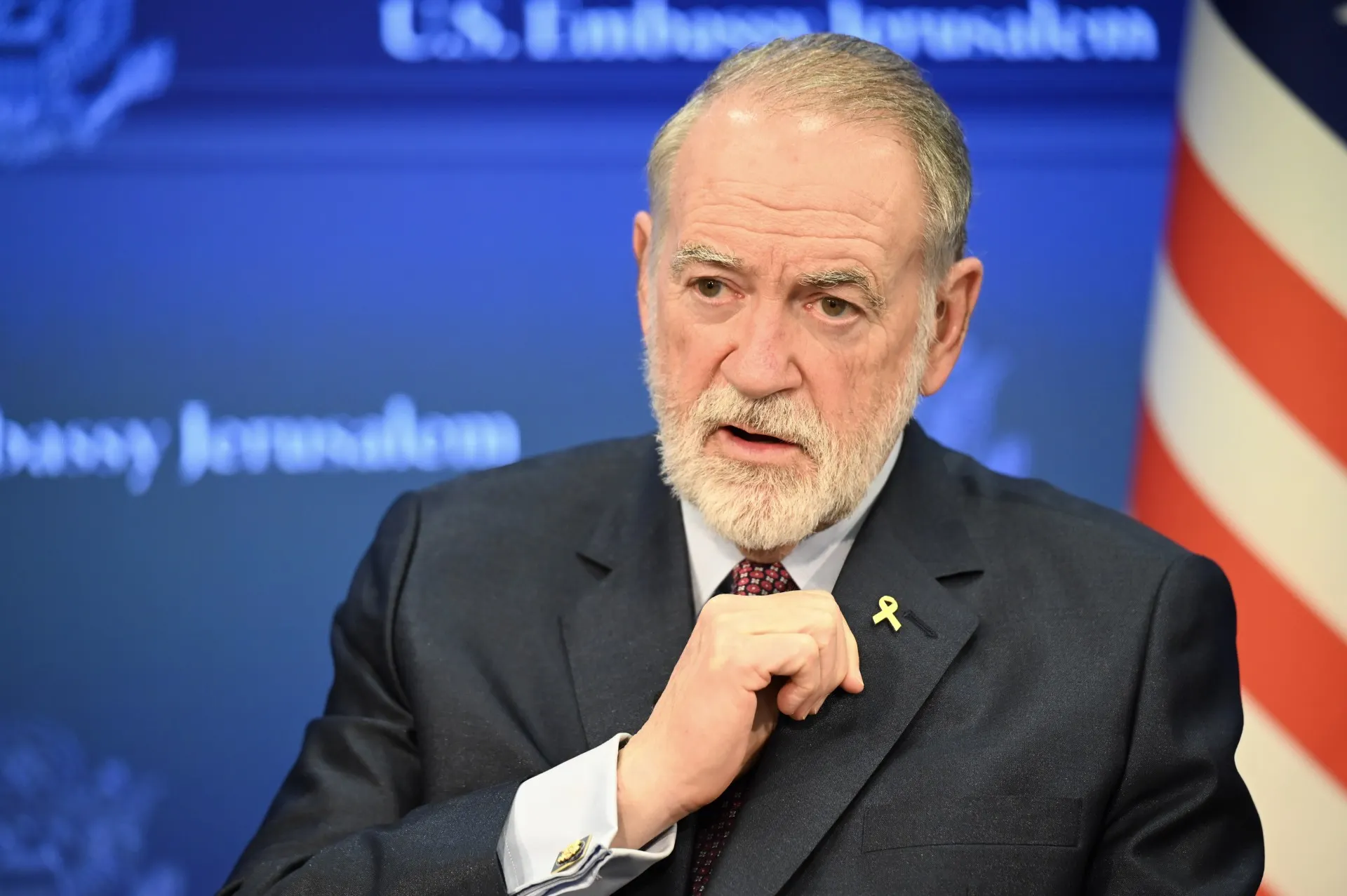
U.S. Ambassador to Israel Mike Huckabee has never been the kind of diplomat who hides behind carefully measured words, and his latest interview with Fox News Digital made that unmistakably clear. Speaking with a mixture of frustration, sorrow, and unapologetic bluntness, Huckabee addressed a moment that has left many Americans feeling as though the world has turned upside down. He pointed directly at the rapper Macklemore, not for a difference of opinion, but for what Huckabee described as a deliberate and destructive embrace of antisemitism. Huckabee’s voice carried the weight of someone who has spent significant time living in Israel, witnessing the aftermath of violence, and listening to the fears of ordinary families on both sides of the conflict. He insisted that most criticisms of Israel are rooted in misunderstanding, often repeated by people who have never set foot in the region and who have no real grasp of the threats Israel faces daily. For Huckabee, the current wave of celebrity activism around the Gaza conflict feels less like a call for peace and more like a disturbing trend of glorifying terror. He did not hold back in expressing his anger, but beneath the sharp edges of his remarks, there was something more human: a deep conviction that evil must be called by its name, and that staying silent in the face of hatred only allows it to grow. In his view, when performers use their platforms to celebrate or excuse violence, they are not engaging in political discourse; they are adding fuel to a fire that has already consumed too many innocent lives. His tone suggested a man who is tired of watching the same tragic story repeat itself, tired of seeing young people manipulated by simplified narratives, and tired of a cultural moment that seems to reward moral confusion over genuine compassion.
Paragraph 2
The heart of Huckabee’s frustration with Macklemore lies in the painful details that he felt compelled to repeat, not because they are easy to say, but because they are too often forgotten. He spoke of Hamas storming across the border from Gaza and committing atrocities that remain almost impossible for the human mind to process: rape, the beheading of babies, the burning of elderly people in their wheelchairs, and the massacre of roughly twelve hundred innocent civilians. He reminded listeners that more than two hundred fifty people were taken hostage, including American citizens. For Huckabee, the moral line could not be clearer. He expressed bewilderment that any entertainer would choose to stand on the side of a group responsible for such unspeakable cruelty, and he wondered aloud why so many celebrities seem to believe that taking a pro-Hamas position makes them appear brave or righteous. He called out the double standard that allows musicians to fill stadiums with messages of hate while pretending they are champions of the oppressed. When asked about NFL owners who have pushed back against Macklemore’s performances, Huckabee did not hesitate to say that he supports them. He framed the issue not as an attack on free speech, but as a matter of basic consequence. People are free to say what they want, he argued, but freedom does not mean immunity from accountability. Stadium owners and concert promoters did not sign up to host a rally for a designated terrorist group, and they should not be forced to provide a stage for messages that celebrate violence. Huckabee’s words reflected a broader cultural exhaustion, a sense that too many public figures have mistaken loudness for leadership and controversy for courage. He seemed to be asking a question that many ordinary Americans are asking: at what point do we stop pretending that all opinions deserve equal applause?
Paragraph 3
Beyond the Macklemore controversy, Huckabee turned his attention to a troubling trend that has been growing in countries far beyond the Middle East: the alarming rise of antisemitism, particularly in Canada. He spoke with genuine concern about Canadian Jewish communities that are increasingly afraid for their safety, people who now think twice before wearing a Star of David, sending their children to Jewish schools, or even walking through their own neighborhoods. There has been a noticeable shift in the rhetoric, Huckabee observed, and it has become harsh, aggressive, and frightening. He cited the letter sent to President Donald Trump by the National Association of Christian Lawmakers, which called on the administration to make it easier for Jewish Canadians to obtain visas and come to the United States. To Huckabee, this was not just a political move; it was a humanitarian plea from people who see history repeating itself in all the worst ways. He mentioned that President Trump had taken the letter seriously, publishing it and promising to look into the matter. Huckabee’s tone softened here, and for a moment you could hear the pastoral side of him, the side that sees beyond policy and statistics to the human beings living in fear. He did not want to exaggerate, but he also refused to downplay the danger. When he talked about Jewish families in Canada feeling threatened by the possibility of violent attacks or even terrorism, his words resonated because they were grounded in something deeply personal. He has seen what hatred can do when it goes unchecked, and he clearly believes that the international community has a responsibility to act before bigotry turns into bloodshed. The issue, in his mind, is not just about one country or one community. It is about the moral health of the entire Western world and whether we still have the courage to protect the vulnerable.
Paragraph 4
The conversation then shifted to a topic that rarely grabs Hollywood headlines but carries enormous consequence for global stability: the latest developments involving Iran, the Houthi movement, and the ongoing conflict in Yemen. Huckabee was asked whether Israel might be interested in helping Saudi-backed government forces in their struggle against the Iran-backed Houthi offensive. He answered carefully, acknowledging that Israel has repeatedly made clear its desire to build better relationships with all its neighbors in the Middle East. There is a growing sense, he said, that Israel is not the source of the region’s problems, and that many countries are beginning to understand this. Huckabee emphasized that Israel is not trying to take anybody else’s land, a statement that cuts to the heart of the accusations Israel has faced for decades. He spoke warmly about the possibility of cooperation, suggesting that if the Saudis were to ask for assistance, Israel would likely be willing to help. But he was careful not to speculate about whether such a request had already been made, noting that those details are best left to the governments involved. There was something refreshing in the way Huckabee handled the question. He did not try to score political points or create unnecessary drama; he simply expressed hope that old rivalries could be set aside in favor of practical cooperation. In a region so often defined by division, the idea of Israel and Saudi Arabia finding common ground against a shared threat feels like a small but meaningful breakthrough. Huckabee’s optimism seemed grounded not in naive idealism, but in real diplomatic shifts that have been unfolding quietly behind closed doors. He recognized that old enemies do not become friends overnight, but he also saw no reason why shared interests could not pave the way for a more stable and peaceful Middle East. For him, this is not just a foreign policy issue; it is about the ancient human longing to live without the constant threat of war.
Paragraph 5
There was an underlying thread running through everything Huckabee said, a strand of moral clarity that often feels missing from modern discourse. He spoke like a man who has learned to see the world in terms of right and wrong, not because he is simplistic, but because he has seen too much to play games with justice. His time in Israel has shaped him in ways that no briefing book or diplomatic memo could replicate. He has walked the streets, met the families, heard the stories, and witnessed the resilience of a people who refuse to let terror define their futures. When he talks about Israel, there is none of the detached academic language that often fills political conversations. Instead, there is a warmth and a personal investment that comes from genuine relationship. He did not pretend that every criticism of Israel is antisemitic, but he did argue that much of what passes for political commentary today is really just recycled hatred dressed up in righteous vocabulary. He challenged entertainers and influencers to think about the impact of their words, to consider the real people who suffer when violence is glamorized. He also reminded everyone that freedom of speech, one of America’s most cherished values, does not mean the absence of accountability. People can say whatever they want, but they should not be surprised when others choose not to applaud them, book them, or pay them. Huckabee’s message was not a call for censorship; it was a call for integrity. He seemed to be saying that we all carry a responsibility to use our voices wisely, to speak up for those who cannot speak for themselves, and to refuse to be intimidated by anyone who tries to flip the script and make good look evil. It is a message that resonates across political lines, not because it is partisan, but because it is deeply, achingly human.
Paragraph 6
In the end, Huckabee’s interview was less about any single controversy and more about the soul of a society at a crossroads. He painted a picture of a world in which hatred is becoming disturbingly normalized, where celebrities can spew antisemitic rhetoric and still be treated as cultural icons, and where Jewish communities in friendly countries feel unsafe in their own homes. But he did not leave his audience without hope. He pointed to the power of people who refuse to be passive consumers of hate, people like the NFL owners who decided that enough is enough, and people like the Christian lawmakers who are willing to stand alongside their Jewish neighbors in their time of need. He reminded us that there are still leaders who believe in moral courage, who are not afraid to take a stand even when it costs them popularity. And he held out the possibility of a Middle East that is finally moving away from endless conflict, where former adversaries might work side by side against common enemies. Huckabee’s vision is not one of naive peacefulness; it is one of hard-won pragmatic cooperation grounded in shared values and mutual respect. The takeaway from his remarks is simple but profound: words matter, actions matter, and silence in the face of evil is never neutral. Whether talking about a rapper’s concert or a diplomatic alliance, Huckabee kept returning to the same central truth that we are all responsible for the world we leave behind. We can choose to amplify hatred, or we can choose to stand against it. We can choose to ignore the fears of our neighbors, or we can choose to open our doors and offer help. The ambassador’s parting message seemed to be that history is watching, and that the choices we make today will echo far beyond the headlines. For those who care about justice, freedom, and the sanctity of human life, the path forward is clear, even if it is not easy.