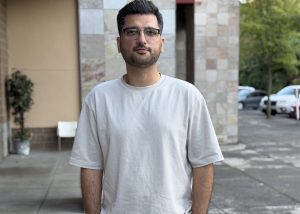


West London Man Found Unresponsive Identified as Suspect in 2017 Bus Push, Reports Say
A Sudden Turn in a Long-Unresolved Case
A 44-year-old man was found unresponsive in West London, authorities said, and British news media have identified him as the man suspected of pushing a woman into the path of a moving bus in 2017. The discovery has brought a sudden and unexpected twist to a case that had faded from the headlines but never entirely left the public’s memory. Police have not yet confirmed the man’s identity, and they have released no information about the circumstances surrounding his discovery. The authorities have not said where the man was found, how he came to be there, or whether anyone had been with him at the time. What is known is that the term “unresponsive” was used, a phrase that in emergency medicine generally indicates a person who is not awake and not responding to attempts to communicate. It is a serious condition, and it often requires immediate medical intervention. The man’s current condition has not been made public, and it is not known whether he was taken to a hospital or treated at the scene.
The identification, if correct, would mean that the man who was the subject of one of London’s most alarming police appeals in recent years has now been found, not by investigators, but by emergency medical responders. He would have been around 40 years old at the time of the alleged attack, an age consistent with the descriptions that were reported in 2017. For more than half a decade, the case remained open, with no arrest and no formal charge. The footage of the attack was still being shared online, and every few months another article would appear, asking whether the man had ever been caught. Now, it appears, he has been found. The circumstances, however, are deeply uncertain. There has been no official statement from the Metropolitan Police, no confirmation from a coroner, and no word from any legal representative. The silence has left the story incomplete, and the public is waiting for answers.
The 2017 Attack That Shocked London
The case dates back to 2017, when a woman was pushed into the path of a moving bus in London. The attack was captured on closed-circuit television, and the footage was later released by police as part of a public appeal, according to reports at the time. In the video, the woman can be seen walking along a pavement, apparently unaware of the danger. A man, who appears to be a stranger, approaches her and shoves her into the road. A bus is passing at that moment, and the woman is struck. The man does not stop. He does not look back. He simply walks away, leaving behind a scene of panic and confusion.
The footage was broadcast on British television and quickly spread across social media platforms around the world. It was difficult to watch, not only because of the violence it showed, but because of the apparent calmness of the attacker. There was no argument. There was no warning. There was no obvious motive. It was an act of random violence, carried out in broad daylight, on a street where ordinary people were going about their ordinary lives. The woman was taken to hospital for treatment, according to reports at the time. The full extent of her injuries was not widely disclosed, and she has never been publicly identified. But the impact of the attack was clear. To be singled out and thrown into the path of a moving vehicle is a traumatic experience that can leave physical and psychological wounds that last for years. The randomness of the crime made it especially frightening. It could have happened to anyone. That was the message that resonated with the public, and it was the message that made the search for the attacker so important.
Police launched an investigation, reviewed hours of CCTV footage, and appealed for witnesses. The images of the man were clear, and there was hope that an arrest would follow quickly. But the man was not found. Whether he had left the city, changed his appearance, or simply slipped through the cracks, the case remained unsolved. Over time, the investigation became one of those files that police continue to review but never close. The public moved on, but the footage did not. It remained online, a permanent reminder of an unanswered crime.
A Suspect Named by the Media
Now, years later, the story has taken a strange and troubling turn. British news media have reported that the 44-year-old man found unresponsive in West London is the same man suspected of carrying out the 2017 attack. The reports have not explained how the connection was made, and the authorities have not commented on them. It is not known whether the man was already known to police, whether his identity was confirmed through fingerprints, DNA, or documentation, or whether someone who recognised him from the original CCTV footage came forward after the emergency.
The lack of official confirmation has not stopped the identification from spreading. News outlets have named the man, and the name has been repeated across social media, blogs, and comment sections. This raises significant legal and ethical questions. In the British legal system, a person is presumed innocent until proven guilty. A man who has not been charged with any offence in connection with the 2017 attack is, in law, no different from any other citizen. The media’s decision to identify him as a suspect is protected by principles of press freedom, but it is not without risk. If the identification is wrong, the man’s reputation has been damaged with no remedy. If it is right, the man may be unable to defend himself because of his medical condition.
There is also the question of timing. Why has this information emerged now? Was the man found with personal documents that connected him to the past? Did he say something before he became unresponsive? Or did a journalist simply match the details after the emergency was reported? None of these possibilities have been confirmed. What is clear is that the case has entered a new phase, one in which the media, the police, and the public are all trying to make sense of a situation that is still unfolding.
A Medical Emergency and an Uncertain Investigation
The details of the medical emergency in West London remain unclear. The authorities have said only that a 44-year-old man was found unresponsive. They have not said whether the man was found in a private residence, a public space, or somewhere else. They have not said how long he had been there before he was discovered. They have not said whether emergency responders attempted resuscitation, whether he was transported to a hospital, or what his current prognosis might be. The lack of information is not unusual in the early stages of an incident, but it has created a vacuum that has been filled with speculation.
If the man recovers, the 2017 investigation could take a significant step forward. He may be able to explain his actions, or at least provide his version of events. He may be asked to participate in identification procedures, to provide DNA, or to answer questions about his movements at the time of the attack. If he is unable to communicate, however, the case may remain unresolved. The woman who was pushed into the road in 2017 has waited years for justice. She may have to wait longer.
The uncertainty also affects the man himself. Whatever he may or may not have done in 2017, he is now a patient in need of medical care. He is entitled to treatment, to privacy, and to the presumption of innocence. The public’s interest in the case does not override his basic human rights. At the same time, the public has a legitimate interest in knowing whether a suspected attacker has been identified and what that means for an unresolved crime. Balancing these competing interests is not easy, and it is not something that can be done in the heat of the moment. For now, the investigation is likely to focus on two things: the man’s medical condition and the evidence that may link him to the 2017 attack. Both will take time. Neither can be rushed. The case, which had gone quiet, is now alive again.
A City Revisits Old Fears
The news has also revived the unease that the 2017 attack originally provoked. For many people, the CCTV footage was a chilling illustration of how quickly everyday life can turn violent. The woman in the video was not doing anything risky. She was walking along a street, probably on her way to work, to meet a friend, or to run an errand. In a matter of seconds, she was in the path of a bus, dependent on the skill of the driver and the speed of the bystanders who rushed to help. That sense of vulnerability is not unique to London, but it is felt acutely in a city where millions of people walk and use public transport every day.
The attack also became part of a wider conversation about the safety of women in public spaces. The image of a woman being assaulted by a stranger struck a nerve, not because it was unusual, but because it was all too familiar. Women are more likely than men to experience harassment and violence in public, and they often develop strategies to stay safe. The 2017 footage was a reminder of what could happen when those strategies fail. It was a reminder that the threat is real, even on a busy street, even in the daytime.
The case has also prompted reflection on the limits of policing. CCTV is often presented as a tool that can solve crimes instantly, but it is only as effective as the work that follows. In this case, the footage was clear, but the man was not found. That is not necessarily a criticism of the police. Identifying a stranger from a video is difficult, especially when there is no connection between the attacker and the victim. The city has changed since 2017, but the challenges of investigating random violence remain. There is also the uncomfortable question of mental health. A man who pushes a stranger into traffic is not behaving rationally. If the man found in West London is the same person, his mental state at the time of the attack and in the years since may be relevant to understanding what happened. This is not an excuse for violence. It is an explanation of the conditions that can lead to violence, and it is a reminder that society must do more to support those who are struggling.
What Happens Now?
For now, the most immediate concern is the welfare of the 44-year-old man. Whatever he may have done in 2017, he is a human being in a serious medical situation. He is entitled to care, to dignity, and to the protection of the law. The legal and ethical questions can wait. The questions about the 2017 attack can wait. What matters first is whether he survives and whether he is able to communicate. If he can, he may finally be asked to account for a moment that changed two lives: his own and the life of the woman he is accused of pushing into the path of a bus. If he cannot, the case may end without a formal resolution, leaving the woman and the public without the closure they deserve.
The woman who was attacked in 2017 has not been forgotten. She has been at the centre of this story, even though her voice has not been heard. She may have spent years wondering whether the man would ever be found. She may have wondered whether the police had given up. This week’s reports will not undo what happened, but they may bring her closer to an answer. That matters, to her, to her family, and to everyone who watched that footage and felt the world become a little less safe.
The authorities in West London have said nothing about what happens next. There has been no confirmation, no reported arrest, no charge, and no official statement. The silence is unlikely to last. Journalists will continue to ask questions. Detectives will continue to review the old evidence. And the public will continue to follow the story, waiting for the next chapter in a case that has already surprised everyone. The bus was moving in 2017. The woman was pushed. The man walked away. Now, in West London, the past has caught up with him. Whether it brings justice, closure, or simply more questions remains to be seen.