



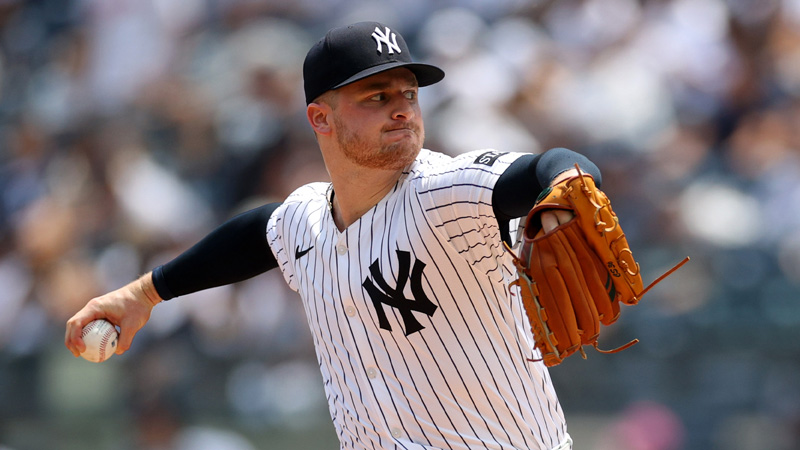
The electric hum of Yankee Stadium on a crisp Wednesday evening was amplified by a quiet, seismic shift in the home clubhouse. After 14 months of grueling rehabilitation, physical therapy, and the agonizing uncertainty that accompanies a significant elbow surgery, right-handed pitcher Clarke Schmidt was officially reinstated from the injured list, ready to contribute to a New York Yankees team with World Series aspirations. The 30-year-old walked through the familiar corridors with a renewed sense of purpose, his eyes scanning the field he had so desperately missed. His journey back to the big leagues was not a simple timeline of healing; it was a relentless battle against the clock, against self-doubt, and against the physical limitations imposed by a surgically reconstructed ulnar collateral ligament. For Schmidt, the activation meant more than just a roster spot—it was the validation of countless early mornings, late-night ice baths, and monotonous throwing drills that tested the very limits of his patience. The Yankees, currently locked in a fierce pennant race, viewed his return as a critical weapon for the postseason, a versatile arm that could bridge the gap between their stellar starters and a high-leverage bullpen. As he donned his pinstripes, Schmidt carried the weight of expectation, but also the light of a man who had clawed his way back from the precipice of a career-threatening setback, ready to redefine his role for the ultimate prize. The anticipation in the dugout was palpable, a stark contrast to the sterile confines of the training room where he had spent the majority of his recent months, and he was finally ready to trade the monotonous rhythm of rehabilitation for the adrenaline-pumping chaos of a playoff chase.
The root of Schmidt’s absence was a severe tear in his ulnar collateral ligament, the crucial stabilizing band in the elbow that allows pitchers to generate explosive velocity and sharp breaking balls. Rather than opting for the more traditional Tommy John surgery, Schmidt underwent an internal brace procedure on July 11, 2025—a modern technique that reinforces the damaged ligament with a strong suture tape while preserving the native tissue. The procedure, while offering a potentially faster recovery for some, is no less demanding mentally or physically. For months, Schmidt was confined to a world of rehab protocols, carefully monitored long-toss sessions, and the tedious, often frustrating, process of rebuilding arm strength from the ground up. He began his minor league rehabilitation assignment on August 29th, facing live hitters for the first time in over a year. Each start was a test—not just of his velocity, which ticked up encouragingly, but of his confidence that the ligament would hold under the stress of a major league pitch. The days blurred into weeks, marked by the solitary discipline of a professional athlete fighting to regain his form. Schmidt admitted the process was “a long journey,” but the grit displayed during those lonely hours in the training room and bullpen sessions speaks to a character forged in resilience. He pushed through the mental exhaustion, the fear of re-injury, and the sheer monotony of it all, driven by a singular goal: to pitch again for the Yankees. The physical pain was manageable, but the psychological weight of wondering whether he would ever be the same pitcher again was a burden he carried silently, pushing through every setback with a stubborn determination that impressed even the veteran trainers who had seen countless athletes face similar crossroads.
Upon his return, Schmidt faced an unexpected but necessary transition. Having been a mainstay in the starting rotation since 2023, his natural instinct was to slot back into the starting five. However, the Yankees’ rotation has evolved into a formidable unit, anchored by the veteran presence of Gerrit Cole, the acquired dominance of Max Fried, the consistent excellence of Carlos Rodon, and the breakout emergence of rookie Cam Schlittler. With the playoff picture coming into sharp focus, the team’s brass made a strategic decision to utilize Schmidt out of the bullpen. This is a significant adjustment for a starter, who is accustomed to the rhythm of pacing himself over six or seven innings, setting up hitters for the third time through the lineup. In relief, Schmidt will be unleashed for shorter, high-intensity bursts, allowing him to air out his arsenal—his devastating curveball and sinking fastball—with maximum effort. This role shift provides the Yankees with a versatile chess piece for October, capable of handling multi-inning relief appearances or serving as a shutdown setup man. For Schmidt, it’s a selfless embrace of a new challenge. He understands that the ultimate goal is a championship, and if that means sacrificing his preferred role for the good of the team, he is ready to do so. The bullpen, already a strength, now gains a battle-tested arm whose repertoire plays exceptionally well in high-leverage situations, and his ability to miss bats and induce weak contact makes him a nightmare for opposing hitters late in games. His transition is not just about arm strength, but about adapting his mental approach—from pacing himself over a long outing to attacking hitters immediately with his best stuff, a challenge he welcomes with the same intensity that defined his recovery.
Standing in the clubhouse before Wednesday’s game against the Minnesota Twins, Schmidt offered a glimpse into the emotional rollercoaster he had endured. “It’s been a long journey, a lot of work that goes into this. A lot of long days, early mornings,” he said, his voice carrying the weight of genuine relief. “I’ve just been itching to come back.” These words humanize the sterile statistics of a rehab assignment. The “itching” he describes is the primal desire of a competitor to feel the adrenaline of a packed stadium, to hear the crack of the bat, and to toe the rubber with the game on the line. His return is not just a physical feat but a mental victory. The Yankees’ decision to activate him now indicates their belief that he is not merely healthy, but effectively ready to contribute at a championship level. Manager Aaron Boone has expressed confidence in Schmidt’s ability to adapt, noting his competitive fire and his familiarity with the pressures of New York. Schmidt’s transition to the bullpen also mirrors his early career, where he served as a reliever before becoming a full-time starter, giving him a comfort level with the quick turnaround and the urgency of relief appearances. As he prepares to throw his first pitch in a major league game since last year, Schmidt embodies the spirit of perseverance, ready to embrace whatever role helps the Yankees secure their 28th World Series title. He knows the spotlight will be bright, but he has spent the last year preparing not just his body, but his mind, for the moment when he can once again stand on the mound and prove that his comeback is complete.
The joy of Schmidt’s return was tempered by a difficult, yet necessary, roster decision that highlighted the unforgiving nature of professional sports. To make room for Schmidt on the active 40-man roster, the Yankees designated the beloved utility player Oswaldo Cabrera for assignment. Cabrera, a fan favorite known for his infectious energy and defensive versatility, had spent most of the 2025 season on the sidelines recovering from a severe ankle injury. His absence was deeply felt in the clubhouse, where his positivity and willingness to play anywhere made him an invaluable piece. Designating him for assignment means the Yankees are placing him on waivers, giving other teams a chance to claim him, or allowing him to be outrighted to the minors if he clears. It is a stark reminder that baseball, for all its romanticism, is a cold business of roster management and performance metrics. Manager Aaron Boone, visibly emotional about the move, praised Cabrera’s character, stating, “I’m blessed to have a lot of guys on this team that you just admire and respect and love doing the job with on a daily basis. Oswaldo’s right there at the top of that list.” The human cost of a roster crunch is often overlooked, but for Boone and the players, it is a heart-wrenching farewell to a teammate who embodies the spirit of the game. Cabrera’s journey through injury and rehabilitation was just as arduous as Schmidt’s, yet the cruel arithmetic of the roster meant that only one could stay, and the decision was made based on positional need and pitching depth, not on merit or character.
As the Yankees gear up for the stretch run, the return of Clarke Schmidt and the departure of Oswaldo Cabrera encapsulate the duality of a championship pursuit. One man’s triumph is another man’s setback. The front office is tasked with making cold, rational decisions that optimize the team’s chances, while the players and coaches grapple with the emotional fallout of those decisions. Schmidt’s comeback story is one of determination, surgical innovation, and sheer willpower, injecting a new wave of energy into the bullpen. Cabrera’s exit is a poignant reminder of the fragility of a major league career, where a single injury can alter a player’s trajectory. For the Yankees, the focus now shifts to the field, where they hope Schmidt’s revitalized arm will be the missing piece in a bullpen designed to shorten games and dominate opposing lineups. The locker room will miss Cabrera’s laughter, but the team’s pursuit of glory remains undeterred. In the grand narrative of baseball, this is just another chapter—a story of resilience, sacrifice, and the relentless march toward October. Schmidt’s journey from the operating table to the bullpen is a testament to the human spirit, while the team’s willingness to make tough calls underscores their singular obsession with winning it all. As the lights dim over Yankee Stadium, the echoes of both stories linger, reminding us that behind every box score lie the beating hearts of men who play this game with everything they have, and that the road to a championship is paved with both triumph and heartbreak.