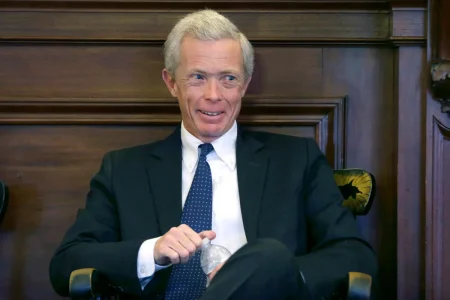



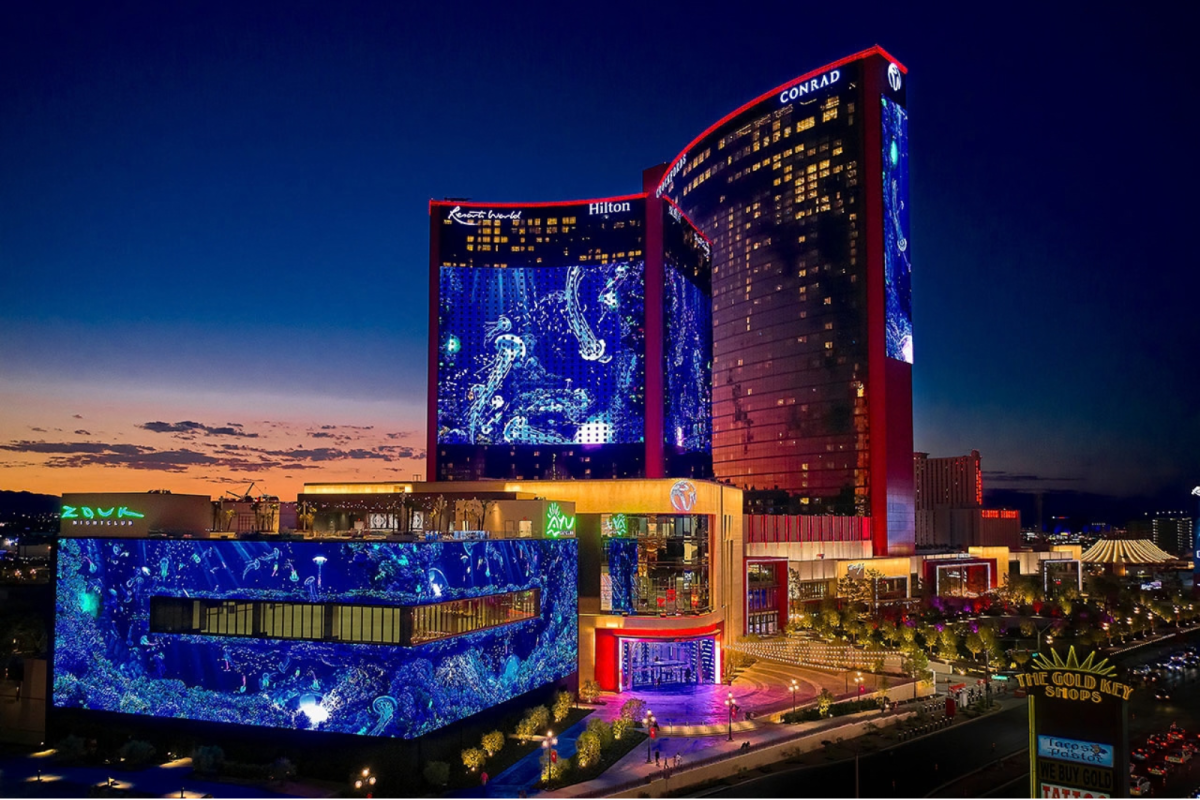
Las Vegas has always been a city of high stakes, where fortunes are made and lost on the turn of a card. But the economic landscape facing the destination in 2025 is not a game of chance; it is a test of adaptability. Carlos Castro, president and CFO of Resorts World, took the stage at Newsweek’s New Destinations World Summit this week to deliver a candid assessment of where the city stands. The summer was difficult, he admitted. Price-conscious customers were carefully weighing their options before committing to a Vegas vacation, and political friction with Canada had created a noticeable chill among Canadian travelers, many of whom chose to stay away. For a city that depends on the steady flow of visitors, those twin pressures were a reminder that momentum cannot be taken for granted. Castro spoke not as a detached executive but as someone who lives with the daily realities of balancing a massive property’s books while trying to preserve the magic that makes Las Vegas unique. His message was not one of doom, but of honest reckoning: the city cannot simply coast on its reputation. It must invest in change—in its people, its infrastructure, and the experience it offers. The summit itself, hosted in Las Vegas, was a symbol of that ongoing reinvention. Newsweek executive vice president Amit Shah noted that Las Vegas has defined the customer travel experience and inspired new levels of hospitality around the world. That is precisely why the conference was there. But the applause-worthy reputation is not enough. The city’s leaders must now ask harder questions about value, safety, service, and the future. The glimmering Strip, with its towering hotels and endless entertainment, can no longer rely on the mere spectacle of its skyline. People are looking for something deeper: a sense that their money and their time are being respected. And that, Castro suggested, is the challenge Las Vegas must embrace.
As CFO, Castro understands the economics on both sides of the equation. He has to make sure Resorts World turns a profit, pays its employees, maintains its property, and satisfies investors. At the same time, he knows that every traveler who steps onto the Strip is making a personal calculation: Is this worth it? That question has become more urgent as the cost of everything from airfare to dinner has climbed. Castro was blunt about the industry’s tendency to push prices higher. “When we all travel, we want to get value for our dollar. I think Las Vegas—[we] got a little ahead of ourselves in terms of not really providing that value,” he said. The admission is striking because it comes from a man whose job is, in part, to maximize revenue. “We need to make money. We need to be profitable. These buildings don’t pay for themselves; they’re very expensive,” he explained. But Castro insisted that the pursuit of profit cannot come at the expense of the guest experience. “So yes, we do have to try to get revenue wherever we can get it. [But] I think we have to be mindful of the value proposition that we’re providing, whether that’s coming through a room raise, beverage offerings, room service offerings or mini bar offerings.” In other words, the small charges that add up over a stay—the resort fee, the $18 cocktail, the marked-up bottle of water—can leave a sour taste if they are not matched by genuine quality. A traveler might forgive a high room rate if the room is beautiful and the service is warm. But when every interaction feels like a transaction, the magic fades. Castro’s comments suggest a shift: Las Vegas must stop treating visitors as wallets and start treating them as guests. It is a delicate balance, and one that requires constant attention. The city cannot simply choose between profitability and hospitality; it must find a way to deliver both.
The evolution worked. Business picked up this summer. “It was still challenging,” Castro said, refusing to sugar coat the situation. There is a lesson in that honesty. Las Vegas is not a city that rests on its laurels; it is in a constant state of invention and reinvention. The moment it stops evolving, it starts becoming a museum. Castro’s willingness to acknowledge that 2025 was difficult, even as numbers improved, speaks to a deeper understanding of the city’s cycle. The summer slowdown may have been caused by external factors, but the response must come from within. Resorts World, like many properties, adjusted its approach, looked for ways to offer more value, and worked to win back visitors who had hesitated. The fact that business picked up is a testament to the destination’s resilience. But Castro is not satisfied with a temporary rebound. He wants a lasting transformation. Amit Shah, Newsweek’s executive vice president, framed the larger context: “Las Vegas is in a constant state of invention and reinvention. It’s a city that has defined the customer travel experience and inspired new levels of hospitality around the world. That is a large part of the reason Newsweek chose the city as the host of our New Destinations conference.” To capture the imagination of today’s more experienced and discerning travelers, Las Vegas must offer something they cannot find anywhere else. That requires more than a new roller coaster or a celebrity chef restaurant. It requires a culture of genuine hospitality, a commitment to making every guest feel valued. Castro’s comments at the summit were a call to action, not just for his own property, but for the entire city. He knows that no single resort can carry Las Vegas on its own. The Strip is an ecosystem. If one property fails to deliver, it affects the whole. If the city’s reputation for safety or service slips, every business suffers. That is why his vision extends beyond the walls of Resorts World.
Castro doesn’t just want Resorts World to evolve. He was emphatic that the City of Las Vegas needs to do the same. “I believe that Las Vegas has to take a step back and get back to our core, making sure that our customers and our visitors feel safe in the city. [That means] supporting our men and women in law enforcement,” he said. The statement is a reminder that hospitality is not only about amenities; it is about security. A visitor can forgive a crowded casino or a delayed show, but they cannot forgive feeling unsafe. Safety is the foundation upon which everything else is built. If people do not feel comfortable walking down the Strip, exploring downtown, or returning to their hotel late at night, no amount of luxury will bring them back. Castro’s call to support law enforcement is also a call to the broader community. It takes more than police officers to make a city safe; it takes residents, business owners, and local leaders all working together. Las Vegas has faced its share of challenges in this area, and the perception of safety can be fragile. One high-profile incident can overshadow years of progress. That is why Castro’s message is so important: the city must be proactive, not reactive. It must make safety a priority in every decision, from urban planning to event management. And it must communicate that commitment to the public. When visitors see visible security presence, well-maintained streets, and a clean environment, they feel reassured. When they hear stories of incidents, they hesitate. The economic impact of safety cannot be overstated. A city perceived as dangerous will struggle to attract conventions, families, and international travelers. A city perceived as safe becomes a magnet for investment. Castro understands this better than most. As the CFO of a major resort, he knows that safety is not a cost to be minimized; it is an investment in the brand. Every dollar spent on security, training, and community partnerships is a dollar spent on the future. But he also knows that safety alone is not enough. Once visitors feel secure, they expect to be served well. That brings Castro to the next piece of his vision: service.
Service is the second pillar of Castro’s vision. “I think Las Vegas needs to reevaluate the service proposition. We need to make sure that we’re serving our guests, that we’re providing great service,” he said. It sounds simple, but in a city the size of Las Vegas, it is anything but. The hospitality industry is built on people, and delivering consistent, genuine service requires training, empowerment, and a culture that values the guest above all else. It also requires investment. Hotels must pay competitive wages, provide ongoing education, and create an environment where employees feel proud of their work. Castro’s call to reevaluate the service proposition is really a call to put people first—both the people who visit and the people who serve them. He also emphasized the importance of the physical product. “[Also,] the properties on the Strip need to be making sure that they’re reinvesting in their asset,” he said. The great hotels of Las Vegas are aging, and maintaining them is not cheap. Reinvestment is about staying ahead of expectations. Visitors come to Las Vegas to experience a level of luxury and excitement that is out of the ordinary. If the physical environment fails to deliver, the dream collapses. Castro’s message to the industry is clear: do not let the assets decay. But he didn’t stop there. He called for a collective effort. “I think collectively as Las Vegas, we need to step up and say we’re going to make this the safest city in the world. We’re going to provide the best service in the world, and we’re going to have the best assets in the world, and I think innovation will come. I think people will come and make an investment.” That is a bold vision, but it is also a practical one. When a city commits to excellence in these three areas—safety, service, and assets—it creates a foundation for sustainable growth. Innovation does not happen in a vacuum.
For Castro, the future of Las Vegas is not about any single attraction or marketing campaign. It is about a shared identity. The city has always been a place where people come to escape, to celebrate, to take risks. But to remain a world-class destination, it must offer more than escapism. It must offer respect. Respect for the visitor, who has countless choices and limited money. Respect for the workers, who bring the city’s magic to life. Castro’s remarks at the New Destinations World Summit were not a corporate pitch; they were a plea. He was asking the city to look in the mirror and decide what it wants to be. Does it want to be a place that squeezes every possible dollar out of tourists, or a place that makes them feel so welcome they cannot wait to return? The answers will determine the city’s trajectory for decades to come. The good news is that Las Vegas has a history of rising to challenges. But the world is changing faster than ever. Castro’s vision is a roadmap: safety, service, assets, and the innovation that follows. It requires leadership from executives like Castro, but also from every business owner, every employee, and every resident who benefits from the city’s success. It requires a willingness to invest in things that do not always show up on a quarterly report—things like trust, reputation, and goodwill. When a visitor leaves Las Vegas feeling safe, valued, and delighted, they become an ambassador. That is the cycle that sustains a destination. And that is the cycle Castro is trying to build. His message is simple: Las Vegas must be the best at what it does, not because it is easy, but because it is necessary. The city has the assets, the talent, and the spirit to make it happen. What it needs now is the collective will to step up and claim that future. If it does, the next chapter of Las Vegas will be its greatest yet.