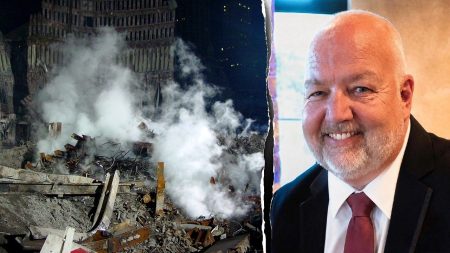

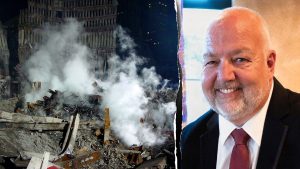


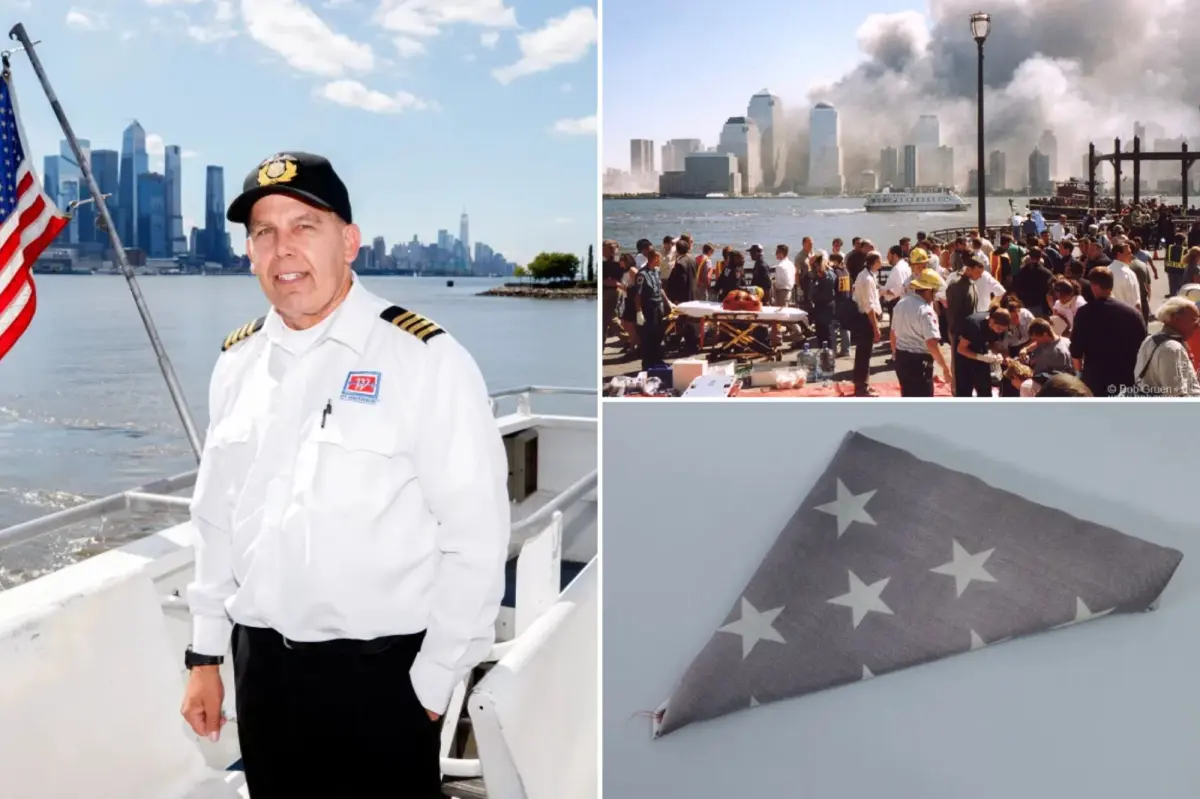
It began as a bright, deceptively ordinary September morning on the Hudson River. Captain Rick Thornton was four hours into his Waterway shift, guiding the Henry Hudson ferry between the New Jersey shoreline and Midtown Manhattan, when something in the sky caught his eye. A plume of white smoke was trailing from the World Trade Center, curling into the blue expanse with an unnatural urgency. Then the radio crackled with terrifying news: a plane had struck the North Tower. For a moment, Thornton and his crew allowed themselves to believe it was a terrible accident, the kind of freak tragedy that would dominate headlines but eventually be explained. That fragile hope was shattered sixteen minutes later when a massive fireball erupted from the second tower. In that instant, Thornton understood with chilling clarity that this was no accident. This was a coordinated attack, a deliberate assault on the heart of the city he had served for years. Standing in his pilothouse, with the smoke growing thicker and the first screams beginning to echo across the water, he made a decision that would define the rest of his life. He turned to his crew and said, “We’re going down there. We’re gonna start evacuating. Let’s go.”
Thornton was no stranger to catastrophe, but nothing could have fully prepared him for what lay ahead. A Navy veteran who had spent his life responding to emergencies, he had also captained one of the ferries during the 1993 World Trade Center bombing, when the first cracks appeared in the myth of American invulnerability. That experience had taught him the value of immediate action, the need to move toward danger while others hesitated. So he did not wait for permission. He did not radio his superiors and ask for instructions. He simply abandoned his scheduled route and aimed the Henry Hudson toward the madness, toward the towers that were now pouring black smoke and fire into the sky. The NY Waterway fleet, thirty vessels strong, would ultimately rescue as many as 160,000 people from Manhattan that day, but Thornton did not know that yet. All he knew was that there were thousands of people trapped on an island, with bridges and tunnels closing, and that his boat could carry them to safety. He intended to sail directly to Wall Street, but the scene unfolding along the shoreline forced him to change course. As he approached, he saw dozens of people jumping into the Hudson River, leaping from the seawall in a desperate, heart-wrenching attempt to escape the horror behind them. He redirected toward Battery Park, where the water was thick with swimmers and the land was crowded with the terrified, the injured, and the fleeing.
What happened next was both beautiful and brutal, a raw display of human desperation and compassion. When the ferry arrived at Battery Park, people did not wait for instructions or for the gangplank to be lowered. They saw the boat as a lifeline, and they surged toward it with a primal urgency. They climbed over the railing along the seawall, pushed past one another, and swarmed onto the deck, their faces streaked with tears and ash. Thornton’s crew looked up at him, uncertain, overwhelmed by the sheer volume of humanity pressing in on all sides. He did not hesitate. “Just start loading!” he shouted. They loaded until the Henry Hudson, built to carry 399 passengers, was packed with more than 500 crying, screaming people. There was no room to move, no space to breathe, but no one complained. Many grabbed life jackets, not because they expected to need them, but because the simple act of holding something solid gave them a fleeting sense of security. When Thornton could not fit another soul, he picked up the loudspeaker and tried to calm the crowd. “Don’t worry folks, we’re coming back. We’ve got more boats coming,” he said. But as the ferry began to back away from the seawall, people were still climbing over the rail, still jumping across the open water, reaching desperately for the boat. Thornton later compared it to the scene in Titanic, where passengers fought to board the last lifeboat. It was not a movie, though. It was real, and every person who made it onto that deck represented a life saved from an unimaginable fate.
Halfway to Hoboken, with the boat packed to overflowing and the weight of the moment pressing down on everyone, the South Tower collapsed. The sound was not loud so much as it was immense, a deep, rolling thunder that seemed to come from the earth itself. On the Henry Hudson, the screaming and crying suddenly stopped. An unnerving silence fell over the crowd, broken only by the hum of the engines and the distant roar of the falling tower. Thornton looked at the faces around him and saw the same realization dawning on each one: the building was still filled with people. There were firefighters, office workers, first responders, ordinary people who had been alive just moments before. Now they were gone, their lives winked out in the blink of an eye. No one spoke. There was nothing to say. The silence was a form of grief, a shared acknowledgment of the enormity of the loss. But there was no time to mourn. The Henry Hudson reached Hoboken, unloaded its passengers, and turned back toward the city. Over the course of that endless day, Thornton and his crew made twenty trips, ferrying countless survivors away from the apocalyptic landscape. At times, the smoke and ash were so thick that he could not see the water in front of him. He navigated by radar, trusting his instruments and his instincts, moving through a gray, choking haze that turned day into night. The city he had known his entire life had become a war zone, and his ferry was a small vessel of hope in the middle of it.
Throughout the day, the Henry Hudson became more than just a ferry. It was a refuge, a rescue ship, a symbol of resilience. At one point, Thornton carried Secret Service agents to safety, and in their hushed, urgent conversations, he learned that the Pentagon had also been attacked and that President George W. Bush was secure. The news offered a small measure of relief, but it also deepened the sense of a world unraveling. If the Pentagon could be hit, if the heart of the nation’s defense could be breached, then nowhere was safe. Yet Thornton kept going. He kept piloting the boat through the smoke and the debris, past the twisted remains of the towers, past the ash-covered streets and the silent, shell-shocked crowds. It was not until 7 p.m. that the evacuations finally slowed enough for him to be pulled off the water. By then, his uniform was coated in toxic dust, the same fine gray powder that blanketed lower Manhattan and would later sicken so many first responders. The crew was told to throw their uniforms away, and they did so gladly, eager to shed the physical reminders of the horror they had witnessed. But Thornton did not throw away the American flag that had flown from the deck of the Henry Hudson throughout the rescue mission. He carefully took it down, folded it, and carried it with him. “This was a historic moment,” he explained. “I know how important flags are. They mean a lot. They’re a part of history.”
For twenty years, that ash-covered flag lived in Thornton’s home, a private relic of a public tragedy. He would look at it and remember the faces of the people he had carried, the silence after the collapse, the desperate hands reaching out from the seawall. He thought about the thousands of lives that had passed through his hands that day, and he wondered if he had done enough. But this summer, he decided it was time to share the flag with the world. He donated it to the 9/11 Memorial & Museum, where it now rests alongside other artifacts of that terrible day: victims’ shoes, charred FDNY trucks, personal belongings recovered from the rubble. The flag is a testament to the ordinary people who became heroes on September 11, not because they sought glory, but because they saw a need and answered it. Thornton is now celebrating his thirty-sixth year as a Waterway ferry captain, still working alongside the same kind of dedicated men and women who led the evacuations that day. He often pilots the Henry Hudson, the same boat that carried so many to safety. He does not speak of his actions with pride, but with a quiet sense of duty. “It’s the highest honor to know that you did something positive that day,” he said. “Maybe you saved a life, maybe you saved a thousand lives.” In those words, the true meaning of his flag becomes clear. It is not just a symbol of a nation under attack. It is a symbol of the courage that rises in ordinary people when they are faced with the worst of humanity, and the best of what it means to be human.