


The Myth of the Free Drink, and the Man Who Never Wanted One
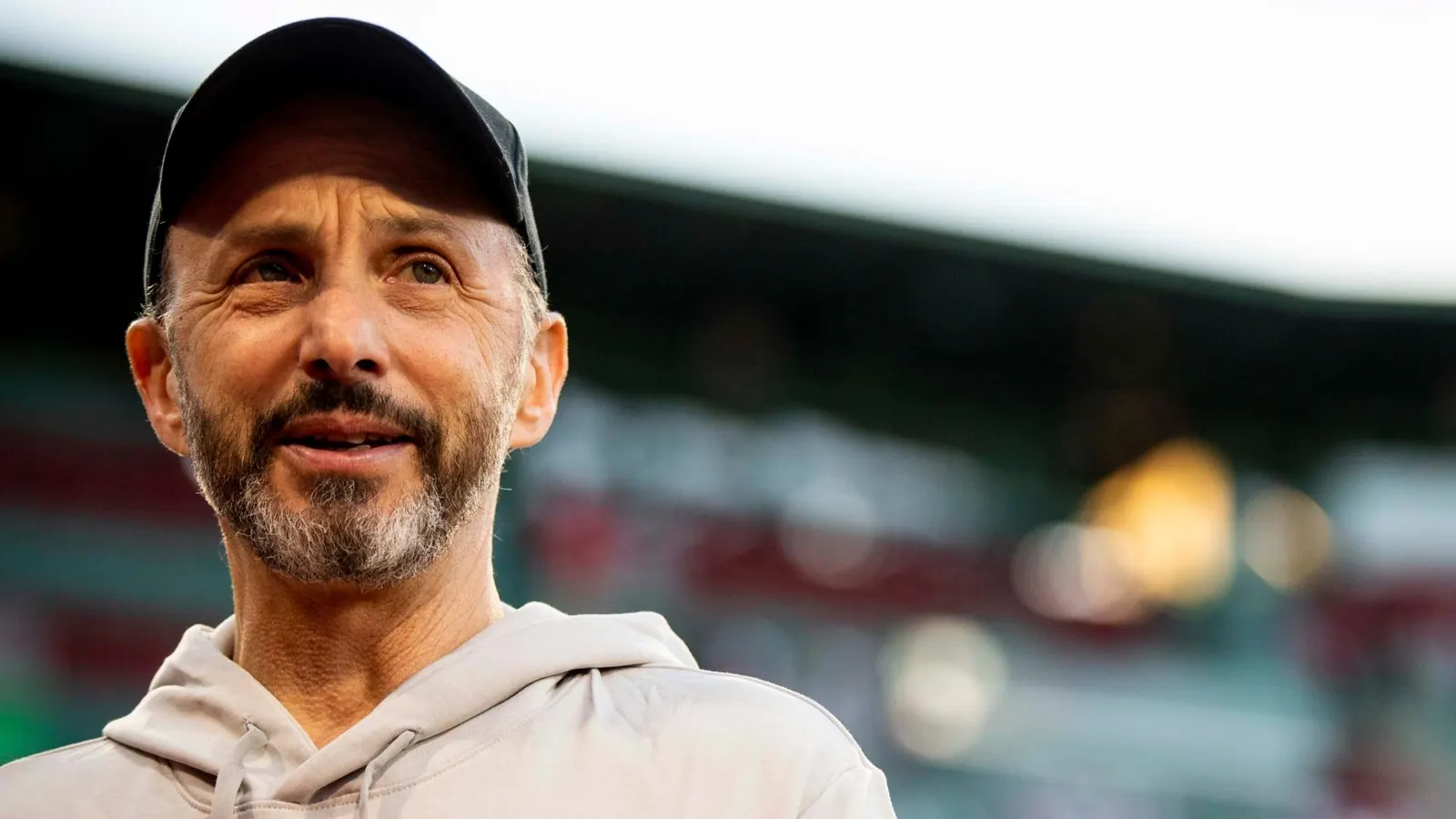
The myth of the American sports owner is often wrapped in a simple, seductive promise: buy a championship, and the city will love you forever. John Henry, the principal owner of Fenway Sports Group (FSG), learned just how hollow that promise can be this past spring. During a rare public appearance in May, as the Boston Red Sox stumbled through an early-season swoon, Henry recalled the advice he received when he first arrived in Boston 25 years ago. “I was told if you win the World Series, you’ll never have to buy another drink in this town,” he said, with a wistful, almost rueful laugh. “It doesn’t actually work that way.” Despite ending the infamous 86-year curse in 2004 and adding three more championship rings by 2018, Henry still found himself the target of “sell the team” chants from the notoriously passionate Fenway faithful. The 76-year-old billionaire’s lament captures the brutal, often thankless nature of high-stakes sports ownership in an era of instant gratification and exorbitant player contracts. Yet, just a few miles away in spirit, and across the Atlantic in reality, there is another FSG partner who has never had to worry about such public scrutiny. His name is Mike Gordon, and if you don’t recognize it, that’s entirely by design. While Henry is the public face of the empire, and Tom Werner the alternate voice of boardroom authority, Gordon is the invisible hand—the silent partner who prefers spreadsheets to spotlights, and data to dinner parties. But this week, as FSG finalized a monumental deal that cements Liverpool Football Club as the most valuable asset in their sporting portfolio, Gordon’s quiet genius is finally stepping out of the shadows. Not because he seeks the spotlight—he emphatically does not—but because his work has made the headline unavoidable. The recent sale of a minority stake in Liverpool at a staggering $7 billion valuation tells a story that goes far beyond the beautiful game; it tells the story of a Milwaukee kid who sold popcorn, a finance whiz who beat the market, and a man who built a sporting dynasty without ever once craving a single cheer or a free pint.
The deal that has thrust Gordon into the limelight—against his will, no doubt—is nothing short of breathtaking in its scope. Last week, FSG agreed to sell between 30% and 40% of Liverpool Football Club to a consortium called 1892 Holdings, a move that values the English Premier League giant at roughly $7 billion. The buyer is led by Amit Bhatia, the son-in-law of Indian mining billionaire Lakshmi Mittal, but the name that truly caught the attention of the global financial press was that of Jeff Bezos, the Amazon founder, who is reportedly among the consortium’s deepest pockets. The transaction is a resounding vindication of the strategy that Gordon has championed for nearly two decades. When FSG acquired Liverpool in 2010 for a modest $475 million—a price that seemed risky at the time—the club was a sleeping giant, rich in history but burdened by mismanagement and underinvestment. Today, that $475 million investment has grown nearly fifteen-fold, making Liverpool more valuable than the Red Sox, which Forbes currently estimates at $5.25 billion, despite the Sox being the “original crown jewel” of FSG’s collection. In the official statement announcing the deal, Gordon offered a rare glimpse into his philosophy: “Liverpool has always been built by thinking beyond one season and making decisions with the club’s long-term interests in mind.” It’s a sentence that might read as corporate boilerplate, but for those who know Gordon’s record, it is a manifesto. While John Henry lamented the fleeting nature of public adoration in Boston, Gordon quietly engineered a financial masterpiece in Liverpool, one rooted in patience, analytical rigor, and a deep understanding of value that most billionaire owners simply do not possess. The sale also brings a new layer of prestige to the FSG portfolio, which includes the NHL’s Pittsburgh Penguins, acquired in 2021, and the NASCAR team now known as RFK Racing. But Liverpool is undeniably the star, and Gordon is the architect of its modern renaissance.
Gordon’s journey to the top of the sports world is as improbable as it is inspiring, a classic American ascent that began in the unlikeliest of places: a concession stand in Milwaukee. As a teenager, Gordon took a job selling popcorn at Milwaukee Brewers games, a humble gig that planted the seeds of a lifelong fascination with the sports business. His mother happened to be friends with Bud Selig, the future MLB commissioner, who then owned the Brewers. That small social connection would prove serendipitous decades later. After graduating from Tufts University in 1987, Gordon moved to Boston and landed a job as a research analyst at Fidelity Investments, the mutual fund giant. There, he quickly distinguished himself, becoming the trusted lieutenant of Jeffrey Vinik, managing the famed Magellan Fund and the Blue Chip Growth Fund. Gordon’s financial acumen was staggering. When Vinik left Fidelity in 1996 to found his own hedge fund, Vinik Asset Management, he brought Gordon along as a co-founder. Over the next 17 years, until the fund was unwound in 2013, it posted an average annualized return of 17%, handily beating the S&P 500’s 10% growth over the same period. Vinik, who has since gone on to own the Tampa Bay Lightning, recalls Gordon’s exceptional skill with a mix of admiration and humility. “To an extent, he was under my shadow, where it was Vinik Asset Management and he was helping me out,” Vinik told Forbes. “But he was also running his own money, doing extremely well. For the many years that Mike and I both ran our own money, he beat me almost every single year. So Mike on his own is an exceptional money manager.” It was this extraordinary financial brain that John Henry wanted when he began assembling his ownership group to bid for the Red Sox in 2001. Gordon walked into Vinik’s office one day and casually announced that Henry had reached out. Both men saw the opportunity as a once-in-a-lifetime venture, and they secured small stakes in the group originally called New England Sports Ventures, which ultimately purchased the Red Sox, Fenway Park, and NESN for around $700 million.
But it was the Liverpool investment that would become Gordon’s true masterpiece, a labor of love that tested his patience and rewarded his vision. In 2009, Henry asked Gordon and Vinik to travel to Liverpool to vet the club as a potential acquisition target. At the time, Liverpool was in a state of disarray—a fallen giant that had last won a league title in 1990, before the Premier League era, and was languishing under toxic American ownership. Most potential investors saw only risk; Gordon saw an undervalued asset with a global fan base and an unmatched pedigree. “Mike felt very strongly about the potential there,” Vinik recalled. “It was one of the great sports assets of the world, but it was completely out of favor. To him, it was very clear that it was an attractive asset.” FSG completed the purchase in 2010, and Henry made Gordon the point person for the club, entrusting him with the day-to-day oversight of its transformation. Gordon immersed himself in the intricacies of soccer—the transfer windows, the youth academies, the tactical nuances—and hired the right people to execute his vision. The most significant hire came in 2015, when Gordon was instrumental in bringing Jürgen Klopp to Anfield. The charismatic German manager was exactly what the club needed, and under his leadership, Liverpool won the UEFA Champions League in 2019 and the Premier League in 2020. Klopp, who left in 2024, has never been shy about crediting Gordon for the club’s success. “Mike is the brain behind all the things at Liverpool,” Klopp told the Boston Globe. John Henry echoed that sentiment, calling Gordon “by far FSG America’s most knowledgeable person with regard to soccer.” The financial results speak for themselves: Liverpool’s revenue has grown from approximately $300 million in 2010-11 to $911 million in 2024-25, and the club’s valuation has risen more than tenfold. A multi-stage renovation of Anfield added 16,000 seats, bringing the capacity to 61,276, and ensuring that the historic stadium remains a world-class venue.
The paradox of Mike Gordon is that he is a billionaire many times over—his roughly 10% stake in FSG alone is worth around $1.4 billion—yet he possesses a level of privacy that borders on the monastic. He declines almost all interview requests, let alone the ones he can avoid through a spokesperson. He doesn’t chase headlines, doesn’t court the media, and doesn’t seek the validation of a cheering crowd. When the New York Times sold its 17.5% stake in FSG between 2010 and 2012 for $225 million (a spectacular return on its initial $75 million investment), Gordon bought a substantial chunk of that equity, quietly increasing his influence and control. While his old partner Vinik pivoted to the Tampa Bay Lightning, buying the NHL team in 2010 for $170 million and selling a majority stake in 2024 at a $1.8 billion valuation, Gordon doubled down on FSG and its global ambitions. Even now, as Liverpool prepares to kick off the 2026-27 Premier League season at Newcastle United on Sunday—a season that will feature a new first-year manager, Andoni Iraola, and the looming presence of new investors once the 1892 Holdings deal closes—Gordon remains an enigma. Whether he is watching from a private box at Anfield, where he might go unrecognized by the very fans whose club he saved, or from his New England home in front of a television, the broadcast cameras will almost certainly not find him. And that is precisely the way he wants it. He lets the results on the pitch speak for him, and the balance sheets speak even louder. In a world of celebrity owners who crave attention, Gordon represents something increasingly rare: a steward of capital who measures success in longevity and stability, not in retweets or standing ovations.
In the end, the story of Mike Gordon is a rebuke to the very myth that John Henry so plaintively described. The promise of free drinks for life was always a hollow one for Henry, because public adoration in sports is fickle, tied to the latest win or the most recent loss. Gordon, on the other hand, never wanted the drinks. He never wanted the spotlight. He wanted the challenge of restoring a fallen giant, the intellectual pleasure of outmaneuvering the market, and the quiet satisfaction of watching a club he nurtured reach the pinnacle of the sport. As the 2026-27 season dawns and Liverpool embarks on a new chapter—with a new manager, new investors like Jeff Bezos, and a valuation that places it among the most valuable sports franchises on Earth—Gordon’s legacy is already secure. He is not the name on the front of the jersey or the face on the television screen, but he is the very foundation on which the modern Liverpool has been built. His journey from selling popcorn in Milwaukee to presiding over a global sports empire is a testament to the power of quiet competence, analytical brilliance, and an unshakeable belief in the long game. While Henry laments the ingratitude of the Boston faithful, and the world’s most famous billionaires rush to buy a piece of Liverpool’s glory, Gordon remains where he has always been: in the background, watching the numbers add up, and smiling—just a little—at the knowledge that the best investments are the ones you never have to talk about. The cameras may never find him, but then again, he never wanted them to. He just wanted to build something that would last, and in that, he has succeeded beyond anyone’s wildest imagination—including, perhaps, his own.