

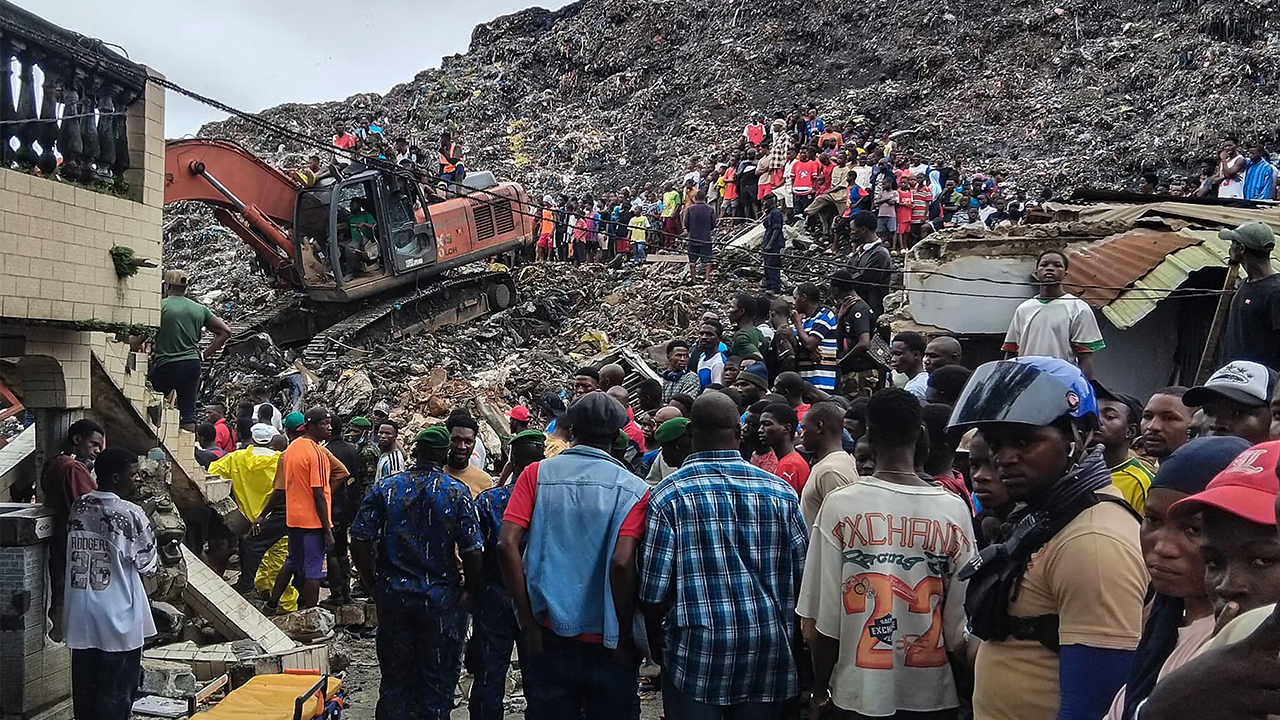
The tragedy in Conakry, Guinea, struck in the dark hours of a rainy Sunday, when a mountain of garbage that had been growing for years finally turned violent. At least thirty people were killed in a massive landslide at the Dar Es Salam landfill, the largest open-air waste dump in the West African capital, as tens of thousands of tons of trash broke loose and buried the small shacks clustered along its base. The victims were not strangers passing through; they were mothers, fathers, children, and grandparents who had made their homes in the shadow of the waste pile because they had nowhere else to go. Their houses were built from salvaged wood, rusted metal sheets, and old plastic tarpaulins, fragile shelters that offered little protection from storms but at least a place to sleep. When the ground shifted and the avalanche of garbage roared down the slope, it came without warning. Some families were sleeping, others were just waking to another day of scavenging the dump for recyclables to sell. In seconds, their entire world vanished beneath a suffocating mass of refuse. Survivors stumbled through the rain, screaming the names of loved ones, clawing at the rubbish with bare hands in a desperate attempt to reach those trapped below. The sight was one of raw horror—mud, plastic, food waste, and human life mixed together into a brutal tableau. The landfill was their neighborhood, their workplace, their source of survival, and now it had become their tomb.
The conditions at Dar Es Salam had been deteriorating for a long time, and the disaster was not the product of a single moment but the culmination of decades of neglect. The dump was not a carefully engineered facility, but a sprawling, uncontrolled mound of urban waste that had grown into a towering hill. Inside it lay the collective refuse of a city of millions—rotting food, plastic bottles, torn clothing, broken electronics, and other debris brought by trucks and carts every day. These layers of garbage were unstable, compressed only by gravity and the weight of whatever was dumped on top. Heavy rain, which poured over the area for much of the night, made the situation far worse. Water seeped into the deeper layers, making the whole mass heavier and more fluid, turning what should have been solid ground into a creeping, shifting slurry. According to Guinea News, the overwhelming pressure of the waste caused a three-story building beneath the slope to collapse from the sheer weight above it. The rain continued relentlessly, saturating the rubbish and eroding whatever cohesion the mound still had. Eventually, the side of the hill simply broke away, sending a dark avalanche cascading down onto the cluster of homes below. It was a natural disaster in the sense that rain was involved, but it was also a man-made catastrophe, born of broken governance and an approach to waste that treated poor neighborhoods as dumping grounds.
What makes this tragedy even more heartbreaking is that the danger had been recognized before lives were lost. The landfill had been scheduled to close that very Sunday, according to Lt. Col. Baldé Mamadou Bailo, the sanitation officer for the military engineering battalion. Officials had issued warnings about hazardous conditions, pointing to an earlier incident at the site that had raised serious alarm about its safety. Residents living near the garbage mound were served eviction notices and ordered to leave the area as a precautionary measure. They were told that the place was no longer safe, that the mountain could collapse at any moment. But being told to leave is not the same as being given a way out. The families who lived at Dar Es Salam were deeply poor, with no savings, no connections, and no alternative homes waiting for them. Many had built their lives around the opportunities the landfill provided, collecting materials to sell, feeding themselves from discarded food, and forming a community in a place that official society had cast aside. Where were they supposed to go? Shelters were full. Land was unaffordable. Relatives were equally poor. So they stayed, not out of ignorance, but out of desperation, just as they had stayed after previous storms and previous threats. The official warning was real, but it was hollow without a comprehensive evacuation plan. In the end, the paper notices could not move a community out of harm’s way, and so the residents remained to face the mountain of trash that everyone knew was falling.
As the sun rose over the wreckage, rescue teams launched a desperate search-and-recovery operation. Workers from the military, emergency services, and local volunteers gathered at the site, digging through wet and rotting waste in a race against time. Six people were reported to have been seriously injured, and several homes were completely destroyed, according to reports. For each survivor pulled from the debris, there were many others who were not so fortunate. The atmosphere was suffocating in every sense—the stench of decomposing garbage, the cries of distraught families, the heavy knowledge that every minute meant a lower chance of finding someone alive. Rescue workers risked their own safety on the unstable piles, knowing that another collapse could occur at any moment. They used shovels, machetes, and their bare hands, cutting through the waste that had become a burial ground. Dienabou Touré, the minister of territorial administration and decentralization, arrived at the scene and spoke to the survivors and officials. “We will ensure that the remaining families are relocated elsewhere,” she promised, acknowledging that even those who had escaped the landslide were no longer safe where they stood. It was a necessary statement, but for the people standing in the mud, looking down at the place where their homes used to be, it was cold comfort. No promise of relocation could bring back the ones who were missing. No government announcement could heal the sight of a small shoe lying in the garbage, or the sound of a child calling for a mother who would never answer. The operation at Dar Es Salam became more than a rescue mission; it became an act of witnessing, as a community confronted the brutal consequences of being forgotten.
This was not the first time that Dar Es Salam had delivered death to those who lived around it. Reuters reported that in 2017, torrential rains triggered an earlier mudslide at the same landfill, killing at least eight people. That disaster was a warning, a glaring red flag that should have led to immediate closure, permanent resettlement, and a serious investment in safer waste management. Instead, it was absorbed into the long and tragic history of neglect that marks many informal settlements in West African cities. The dump remained open. The families remained in place, or new families arrived to take the places of those who had died. Each day, more waste was added to the pile, making the slopes steeper and the risks greater. The people who lived off this waste—sorting plastics, metals, and cardboard by hand under the hot sun—are essential to the invisible economy of the city, yet they are treated with indifference and sometimes contempt. They are the urban poor, and their lives are considered cheap. The failure to act after 2017 was not an oversight; it was a choice. It was the result of a system that sees certain people as disposable, their suffering as an acceptable price for the convenience of having somewhere to throw the trash. The landfill grew because the city grew, but the people who absorbed the consequences were never compensated, never protected, and never truly recognized as human beings with rights and dreams. By the time Sunday’s landslide struck, the stage had been set for years, and the only question was when, not whether, another tragedy would unfold.
In the aftermath, Guinea now faces painful and unavoidable questions. The immediate priorities are clear: recover the bodies, treat the wounded, and shelter the survivors. But the deeper obligation is to prevent this from ever happening again. Closing the landfill is not enough. The government must develop a real plan for relocation, with safe, dignified housing and access to work, not just a promise made in front of cameras. It must invest in modern waste management facilities that do not rely on the labor of desperate people living in danger zones. It must enforce safety regulations with genuine accountability, ensuring that officials who know about the risks cannot simply issue notices and walk away. And it must see the people of Dar Es Salam as citizens, not as obstacles. The international community can help, but the real change must come from within Guinea—a change in political will, a change in how the poor are treated, and a change in the way urban growth is planned. The families who lost everything deserve more than sorrow; they deserve justice. The dead cannot be brought back, but they can be honored by ensuring that no one has to make a home on a garbage heap again. The memory of this catastrophe should not fade, because forgotten victims are victims twice over. If Guinea’s leaders truly mean that they will rebuild and protect, they must start now, with transparent actions, real resources, and the simple recognition that every person buried beneath that trash was someone’s entire world. Only then can the promise of “never again” become something more than words spoken over a mass grave.