


Paragraph 1: The Ragin’ Cajun’s Explosion
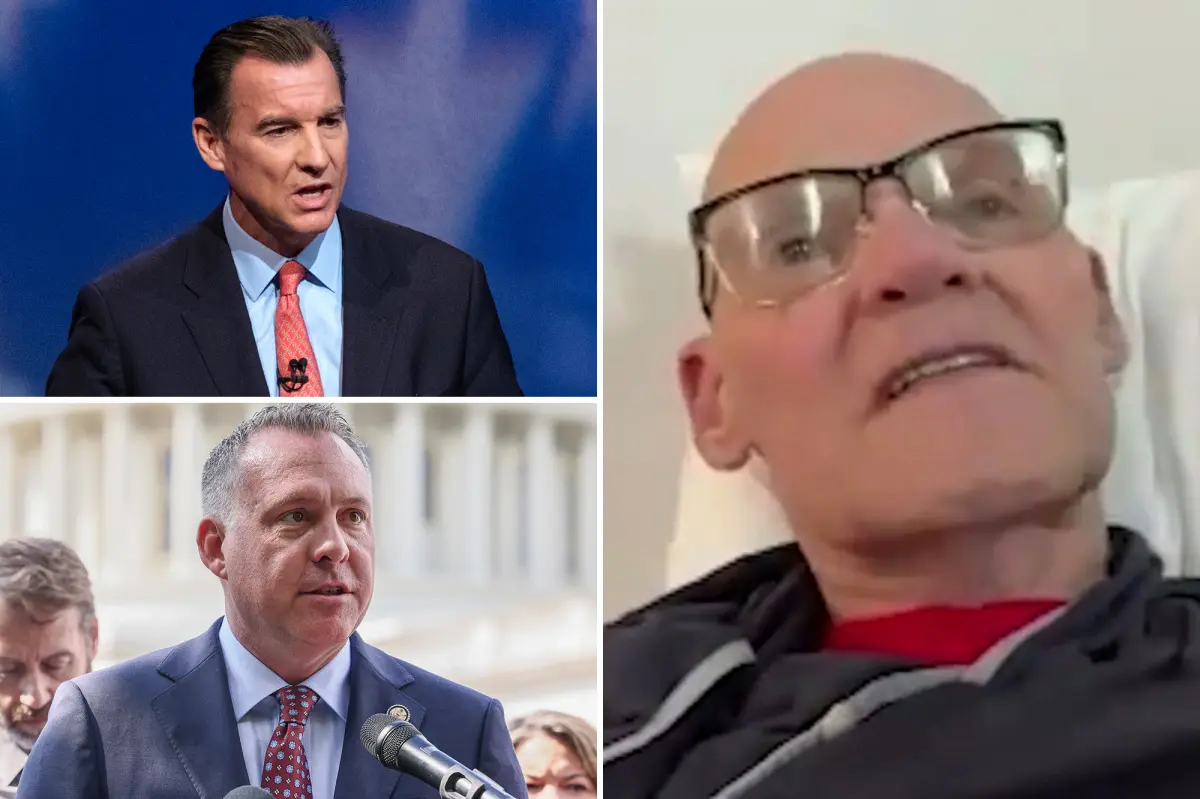
It began with a volcano of frustration. James Carville, the legendary “Ragin’ Cajun” of Democratic politics, the man who masterminded Bill Clinton’s rise to the White House and has spent decades as the party’s bare-knuckled consigliere, stood before a video news conference and finally let loose. You could almost hear the decades of accumulated exasperation in his voice as he unloaded on what he sees as a self-destructive insurgency clawing at his party’s very foundation. He wasn’t just criticizing policy differences; he was unleashing a scorched-earth rebuke of the far-left activists and self-described “democratic socialists” who he believes have hijacked the Democratic brand. “We get subjugated by some of the more outspoken people who, by the way, [are] not even Democrats,” Carville seethed, his voice dripping with the venom of a man watching his life’s work get torched by outsiders. His demand was stark and devoid of compromise: “I wish they’d take the word Democrat out of their name. I have no idea why the democratic socialists — if you hate the Democratic Party so much, well, then don’t use our goddamn name. Go think of your own name.” It was a plea not just for accountability but for basic respect—the respect of a veteran soldier asking why the enemy is being allowed to wear the uniform of his own army.
The moment was the raw, unfiltered heartbeat of a party in crisis, a visceral reaction to the awkward reality that the loudest voices claiming to represent the Democratic tent often despise the very institution they inhabit. Carville’s outburst highlighted a profound emotional schism: the establishment, which built its legacy on incremental progress, bargaining, and winnable coalitions, now feels alienated in its own home. He isn’t just arguing about tax rates or healthcare; he’s arguing about ownership. For Carville, the Democratic Party is a storied, albeit messy, machine that has delivered civil rights, social security, and the Affordable Care Act. To watch a fringe element—one that openly sneers at capitalism and the American flag—strut around under that same banner is, to him, a betrayal of historic proportions. He wants a divorce, or at least a rebranding, so the Democrats can stop being the whipping boy for a radical ideology that most Americans—and he insists most Democrats—reject. The imagery he conjured was that of a lynch mob wearing the robes of the sheriff, or an arsonist borrowing the fire department’s hose. It was a cry for the party to reclaim its identity before the brand becomes permanently synonymous with chaos, a sentiment that resonates deeply with moderates across the country who feel their political home has been occupied by strangers.
Paragraph 2: The Rise of the “Promise to America”
This outburst wasn’t just venting; it was the war cry for a new counter-offensive. Standing alongside Carville in spirit were two moderate House Democrats, Reps. Tom Suozzi of New York and Adam Gray of California, who have taken it upon themselves to provide a lifeboat for the drowning center-left. They launched the “Promise To America,” a set of guiding principles designed to pull the party back from the socialist cliff and re-anchor it to the common-sense values that win elections in the purple and blue-collar districts across the nation. The platform is a direct rebuke to the “woke” left, foregrounding unapologetically American vocabulary: capitalism, safety, fiscal responsibility, effective government, common purpose, and patriotism. These are the forbidden words in the modern progressive lexicon—phrases that have been abandoned to the Republicans in recent years but which Suozzi and Gray are desperately trying to reclaim with the urgency of firefighters retrieving a family heirloom from a burning house. By placing safety next to capitalism and wrapping it in the flag of patriotism, they are signaling a starkly different vision from the “defund the police” and “abolish ICE” rhetoric that has dominated viral headlines.
This initiative is a calculated effort to distance themselves from the socialist wave that has already toppled several establishment-backed Democrats in primaries, making the “Squad” a bogeyman for the centrists. Suozzi and Gray are not merely offering policy proposals; they are waging a cultural war within their own party, arguing that the far-left’s obsession with ideological purity is a luxury they cannot afford in a two-party system where the ultimate prize is control of the House and Senate. They believe that while the activists are busy tweeting about the revolution, actual voters in swing districts are worrying about the rising cost of groceries and the safety of their streets. The “Promise To America” is thus an attempt to build a coalition of the reasonable, dragging the conversation away from the theoretical utopias of the left and back to the pragmatic realities of governing a massive, diverse nation. Interestingly, Carville praised the effort as “just common sense,” noting that “80% of Democrats really want” this centrist approach. He argued that the far-left, though loud, is a numerically insignificant minority that drowns out the silent majority of Democrats who just want a functioning government. It’s a stark tale of acoustics versus arithmetic, where the squeaky wheel doesn’t just get the grease—it derails the entire train.
Paragraph 3: The Civil War Within the Left
The schism Carville describes is the defining feature of current American politics: an intraparty cold war that is as visceral and emotional as any contest against the Republican Party. On one side stand the pragmatists—the Suozzis and Grays—who view politics as the art of the possible, where winning 60% of a loaf is better than starving for purity. On the other side stand the progressives, the self-described democratic socialists, who view compromise as capitulation and incremental progress as a betrayal of the working class. The conflict has become a full-blown ideological Civil War, one where primaries have become more dangerous battles than the general elections. The establishment-backed Democrats have watched with horror as grassroots insurgents, powered by small-dollar donors and viral social media campaigns, have demolished their carefully constructed careers in the span of a single news cycle. The psychological impact of this is immense; it creates a sense of walking on eggshells among moderate incumbents, who fear that a single vote for a military spending bill or a rejection of Medicare-for-All could trigger a primary challenge that ends their career.
Carville’s fury is rooted in this very dynamic—the fusion of activism and socialism that has become the new currency of Democratic primaries. He sees a party that has lost its spine, cowering before a shrinking but vociferous base that demands total allegiance to an orthodox ideology. This dynamic is not just a political dispute; it feels personal to millions of Democratic voters who are caught in the middle, forced to chose between their desire for progressive social goals and their deep-seated fear of radical economic restructuring. The average Democratic voter in a suburban district in New Jersey or a rural district in California is not thinking about abolishing the police; they are thinking about making sure their local precinct is staffed. They want to see the rich taxed, but they don’t want to see the stock market crash. This emotional whiplash—careening between the utopian promises of Bernie Sanders’ speeches and the grim reality of a divided Congress—has left many voters exhausted and alienated. The moderates are fighting not just for seats, but for the emotional resonance of the party itself, trying to convince the American public that the Democratic Party still belongs to the lunch-pail worker, not the college-campus revolutionary.
Paragraph 4: The Republican Knife in the Wound
Of course, watching this self-immolation from the sidelines is the Republican Party, who are rubbing their hands with glee and preparing to exploit every tear in the Democratic fabric. They have turned the intraparty feud into a central campaign talking point, arguing that the chaos and infighting on the left is proof positive that a Democratic majority would be a rubber stamp for socialism. The GOP is running ads that stitch together Carville’s angry clips with videos of Alexandria Ocasio-Cortez, painting a portrait of a party in meltdown. Their message is simple, devastating, and extraordinarily effective: the Democrats are too busy fighting each other to govern, and if they win the midterms, the far-left will be holding the gavel. They are specifically capitalizing on the divisive issues that the moderates are trying to bury—the “defund the police” rhetoric, the open borders chants, the calls to cancel student debt—and framing them as the unified platform of the Democratic Party. It is a masterclass in political branding, as the Republicans need not offer any solutions of their own; they simply need to stand back and let the Democrats have their very public nervous breakdown.
The human impact of this is that the “silent majority” of American voters are getting scared. They are hearing the loudest Democratic voices screaming about the overthrow of capitalism, while the moderates whisper about balanced budgets. The GOP’s narrative weaponizes the fear of the unknown—the fear that the “radical left” will take the country into an un-American abyss. For every moderate Democrat who wants to talk about infrastructure and water quality, there is a viral clip of a left-wing activist demonstrating against the police, creating a cognitive dissonance that drives voters into the arms of the Republican Party out of sheer self-preservation. Carville knows this better than anyone; he built his career on triangulation, understanding that you win by appealing to the center. To see his party handing the Republicans a baseball bat to beat them over the head with is his ultimate nightmare. It is like watching a general hand the enemy a map of his own bunkers. The GOP’s strategy is not to prove they are better, but simply to remind voters that the Democrats are scarier—and in a midterm year marked by inflation and crime anxiety, fear is the strongest motivator at the ballot box.
Paragraph 5: The Numbers Game and the Silence of Leadership
Despite the existential urgency of their cause, the “Promise To America” has gathered a shockingly small following amongst the Democratic caucus. Just ten House Democrats have signed onto the pledge so far, a paltry number that the Republicans have latched onto as evidence that the far-left truly does own the party. Out of the litany of Democrats running for the House, only five are signatories. This is the cruel irony of Carville’s assertion that “80% of Democrats” want centrist policies—if that is true, why are only ten out of 213 members willing to put their names to it? The answer lies in the palace politics of Washington. Many incumbents are terrified of the progressive primary electorate; signing onto a platform that explicitly mentions “capitalism” and “patriotism” could be seen as a hostile gesture toward the activist wing that can send a challenger their way. Moderation, it seems, is a political liability in the primary phase, but an absolute necessity in the general election. This creates a bizarre contradiction where politicians privately agree with Suozzi and Gray but publicly remain silent, paralyzed by the fear of the primary calendar.
Adding to the strangeness is the deafening silence from House Democrats’ senior leadership. The Speaker and the top-ranking members have said little about the socialist insurgency, treading a careful tightrope to avoid alienating the progressive wing that controls crucial committee funding and grassroots organizing. Suozzi and Gray, however, defended their leaders, suggesting that the absence of vocal support does not mean a lack of private encouragement. “I think the leadership is being very supportive,” Suozzi claimed, “they have a lot to balance. They’ve got the whole country to worry about.” It’s a diplomatic dodge, but it hints at a deeper dysfunction: a leadership paralyzed by the fear of losing either faction. To endorse the centrists would anger the left; to endorse the socialists would doom the general election. So they sit on their hands, hoping the storm passes, while the party’s election prospects leak away. The ten signatories represent a brave pocket of resistance, but their isolation highlights the extraordinary grip that the progressive minority holds on the party’s infrastructure. It is a hostage situation where the moderates have the guns but the radicals hold the keys to the viral internet.
Paragraph 6: The Ground-Level Rebuttal and the Fight for the Soul
In the face of questions about their paltry numbers, Gray and Suozzi shot back with a rebuttal that seeks to reframe the entire battleground. “We only want 10 members of Congress because we don’t want to make it only about Washington,” Suozzi argued, “That’s why we’re going out to the state and local officials.” He and Gray are trying to pivot the conversation away from the hallowed halls of the Capitol and toward the diners, town halls, and county fairs across the country. Gray elaborated, hammering home his disdain for the nationalizing of politics: “The efforts on the cable news networks and everything else to nationalize our politics all the time, pretend that, you know, somebody in some big city represents all of us is absurd. … It’s a distraction, this idea that somehow some leader somewhere is supposed to win my district.” This is the human heart of their message: real politics happen at the kitchen table, not in the Twitter feed. They are betting that the vast majority of Americans, regardless of party, respond to the simple truth that they want their streets safe, they want their taxes handled responsibly, and they want to feel pride in their country, not shame.
Ultimately, this fight is about the soul of the Democratic Party and the future of American governance. Carville’s fiery words, the moderates’ lonely stand, and the Republicans’ eager exploitation all coalesce into a single, human drama: a struggle for relevance between a pragmatic reality and a romanticized revolution. The moderates are not asking for glory; they are begging for a seat at the table so they can save the party from itself. Carville’s plea for “common sense” is a plea to the American public to look past the screaming headlines and recognize that government is meant to fix potholes, secure borders, and protect the vulnerable—not to act as a purifying agent for ideological purity. As the midterms loom, the existential question remains: can the Democratic Party find a way to harness the energy of the left without being consumed by it? The “Promise To America” offers a lifeline, but it is a thin one, stretched across a chasm of mutual distrust. The outcome of this bitter clash will not just determine who controls Congress in November; it will dictate whether the Democratic Party can ever again claim to represent the broad, messy, and pragmatic coalition of the American majority, or if it will splinter into a niche faction of ideological extremists, leaving the center stage to the Republicans by default. The battle is far from over, and the loud crack of Carville’s voice is merely the sound of the dam breaking.