


Switzerland has long occupied a singular position in the world of finance, attracting investors and corporations from across the globe with its promises of political stability, economic strength, and notably favorable tax rates. The country’s banking sector alone manages more than a fifth of the world’s cross-border privately held assets, cementing its status as a nucleus for private wealth. But the face of this wealth is changing, reflecting a global shift in how fortunes are made. The days of a closed circle of old-money dynasties are gone, and today’s billionaire class in Switzerland is startlingly diverse. These individuals hail from more than a dozen countries and have built their fortunes in sectors as varied as pharmaceuticals, kitchen appliances, private equity, and jewelry, showing a dynamic evolution from the nation’s traditional banking and finance roots.
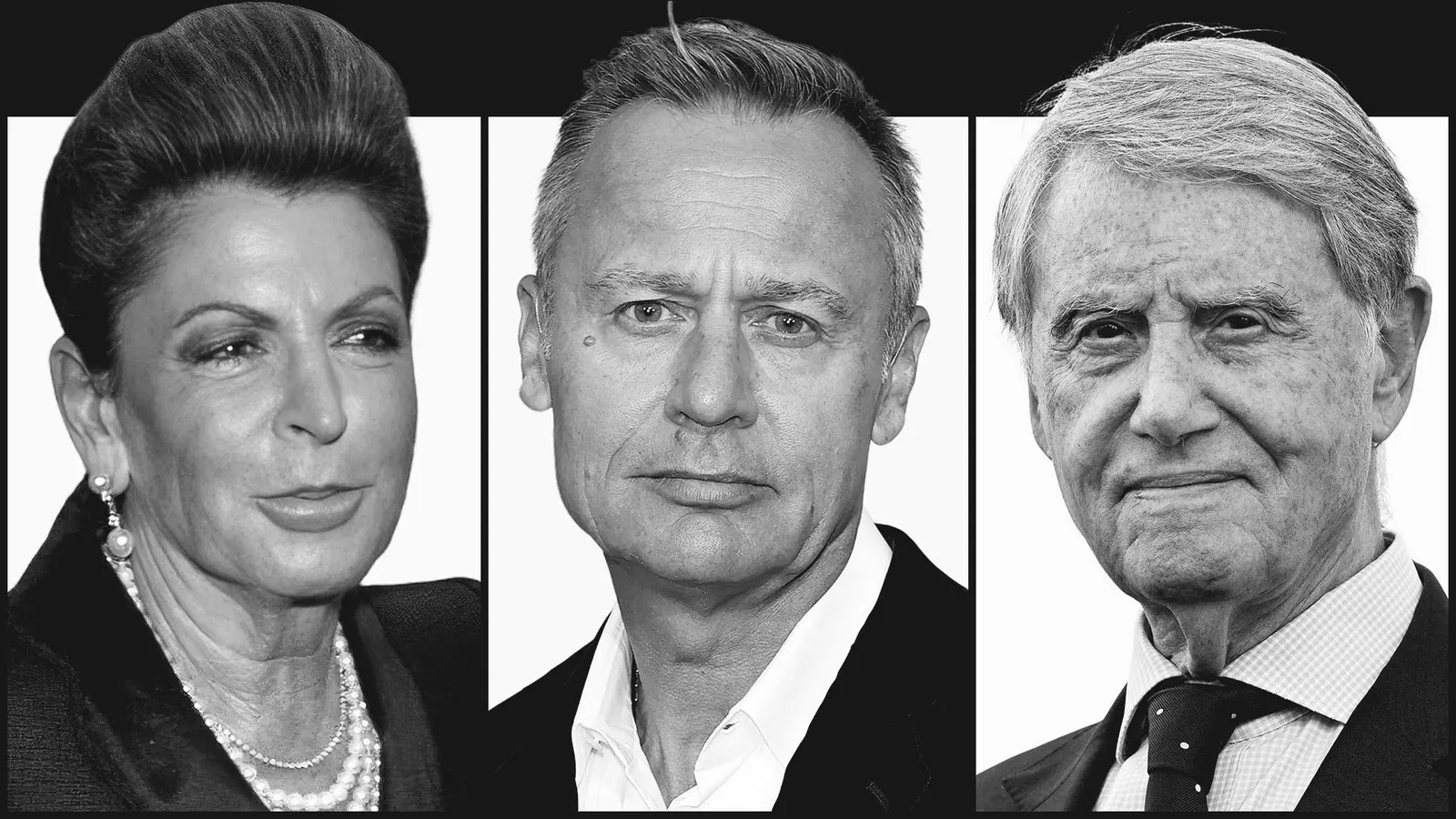
The ultimate embodiment of this new, diversified wealth is found in Gianluigi and Rafaela Aponte, the husband-and-wife team behind Mediterranean Shipping Company, or MSC, the world’s largest shipping line. Their story is a classic narrative of ambition and enterprise. Gianluigi, a former ship captain from Naples, met Rafaela, the daughter of a Swiss-based banker, on a trip to the island of Capri in the swinging sixties. In 1970, their shared ambition led them to enter the shipping industry with a single vessel purchased on a $200,000 loan. Of particular note is their decision to base their company in landlocked Geneva, following in the footsteps of Rafaela’s father. From this Swiss headquarters, they guided MSC over the next few decades into a global maritime jungle covering everything from ships and ports to entire healthcare centers and high-speed rail networks. The fortitude of the Apontes has paid off handsomely. Their fortunes have seen an extraordinary 18% growth in the past year, fueled by continued spending on port terminals and a well-time cap on oil tankers. Each is now worth an estimated $44.5 billion, good enough for nearly a third of all Swiss billionaire wealth combined, with the Apontes remaining firmly planted in their adopted home. In a recent decision that solidifies their Swiss legacy, they announced in April that they will pass the ownership of their firm to their children, Diego and Alexa, both of whom were brought up in Switzerland and are residents there.
But the Apontes, while at the pinnacle, are simply two of the 89 billionaires making their residence in Switzerland today. With roughly 10 billionaires for every million citizens, the small nation is a significant hub of global wealth. And importantly, a full 38 of these residents hold Swiss citizenship, while another four Swiss billionaire citizens live abroad in the UK, US, or Monaco. In total, the Swiss-born three-comma club alone carries a staggering combined net worth of $278.2 billion—a sum equivalent to nearly a quarter of Switzerland’s annual GDP. This marks a significant increase from $242.7 billion in the just the last year, as the country’s blue-chip index, the SMI, returned 10% thanks to stable stocks such as Nestlé, Roche, and Novartis. The wealth mythos of Switzerland is not a recent phenomenon, either. The country’s rich history traces back to the Middle Ages and Renaissance, where, devoid of natural resources, its most valuable export was in mercenaries. As elite troops returned from foreign wars, a growing need safe-income management gave rise to private banking houses. Switzerland’s rugged alpine geography and its longstanding policy of neutrality shielded it from conflict for centuries, allowing its financial system to flourish while naturally keeping taxes low. The arrival of tens of thousands of French Huguenots at the turn of the 17th century, many of them expert watchmakers and bankers, further fueled a growing financial ecosystem. A steadfast insistence on banking secrecy finally solidified the country’s role as a global safe haven, a sanctuary for the super-wealthy, a spirit very much alive and well in present times.
A remarkable 30% of the Swiss billionaire citizens were actually born abroad, providing a continental flavor to the country’s wealth. This includes Ivan Glasenberg, now the country’s third-richest person with an net worth of $13.7 billion. Glasenberg’s path began in Johannesburg, South Africa, where he studied business and accounting and got an MBA in the U.S. before taking a job as a coal marketer. In 1994, he moved to the very country where hiscompany, commodity trading giant Glencore, was founded and is still headquartered in the town of Baar, and became its global director of coal. He rose to CEO in 2002, eventually orchestrating a massive $11 billion IPO in 2011 and a mega-merger with Xstrata in 2013 to create a global powerhouse in commodities and mining, before retiring in 2021. He remains the single largest individual shareholder in Glencore with just over 10%, and his stock has climbed 35% since January, fueled by soaring copper prices partly driven by global demand for AI data centers. Glasenberg is joined by a host of other foreign-born billionaires, such as the Soviet-born Margarita Louis-Dreyfus, an heiress to a commodities fortune, and the German-born goldsmith and watchmaker Karl Scheufele III, who purchased the luxury jewelry brand Chopard. Thirteen additional billionaires live Switzerland but are primarily citizens of homogeneous countries, including Italian-born financial software kingpin Andrea Pignataro and Canadian-born fashion and Formula One mogul Lawrence Stroll, and Brazilian-born financier Jorge Paulo Lemann, demonstrating that Switzerland’s appeal knows no borders.
Across the 42 Swiss citizen billionaires, wealth creation spans a dozen diverse industries, a mix of both traditional and ultra-modern sectors. Manufacturing, still making up a quarter of the Swiss economy, is home to seven billionaires, including the Blocher family heirs in chemicals and polymer production and Peter Spuhler who built up the railcar manufacturer Stadler Rail, while Michael Pieper controls the global kitchen appliance company Franke. The finance and investments industry remains a cornerstone, hosting eight billionaires, with fortunes both old like Stephan Schmidheind’s family dating back to 1867 and new like the others who founded payment platform Checkout.com. But more than any other sector, healthcare has become the dominant billionaire generator with 15 list members. This includes the Bertarelli siblings, who moved a pharmaceuticals company to Switzerland in 1977; alongside the Grogg family (behind Bachem) and the Oeri clan (behind Roche). Even more specialized are figures like Willy Michel, who co-founded Ypsomed, a company known for self-injection pens used in treating diabetes to weight loss, with profits doubling in the latest fiscal year. The billionaires as a group in Switzerland also show a high degree of entrepreneurial spirit. 18 are self-made, largely creating their own fortunes rather than inheriting them, including medical device innovator Rudolf Maag and Hansjörg Wyss, who sold Synthes to Johnson & Johnson in a massive deal worth over $20 billion in 2012.
Perhaps the most famous of these modern tycoons is Roger Federer, the tennis legend who was named a billionaire by Forbes in 2025. Now, his net worth is carefully balanced, teetering on the edge of the three-comma mark as his shares in the clothing company On that Holdings have flagged. But Federer, a lifelong Swiss citizen, is more than just an investor; he is quite possibly the most famous symbol of his country. He rose from the tennis courts of Basel, trained at the Swiss National Tennis Center, and then went on to become a global ambassador, earning $20 Grand Slam singles titles and massive brand deals with global words like Uniqlo, Mercedes, and of course, the Genevan watchmaker Rolex. His pride is palpable, as he described himself as an ambassador to the country, stating, “I’ve always felt like I’ve been an ambassador to the country… I’m so very proud to be from here.” In all, the continued evolution of the Swiss wealth story is a suitable metaphor for a nation’s own economic vitality, balancing its historic banking bedrock with a diverse modern wave of global and industry-agnostic capital, all nestled in a location known for its stable and discreet sanctuary, still attracting the wealthiest from all corners of the world.