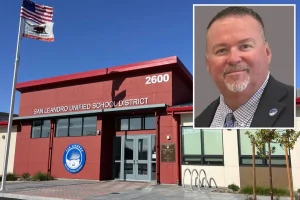



The pen Mr. Paxton pocketed more than a decade ago was not a spectacular pen. It was probably the sort of instrument that waits beside a microphone, clips to a speech, or rests in a ceramic cup on a conference table. It may have had a bank’s name printed along the barrel, or a small logo from a convention, or nothing at all except a ballpoint tip that had been clicked by a hundred hands before his. It was the kind of pen people forget one second after they put it down. But it did not stay in the place where it was placed. It crossed an invisible line. It went from the public world into Mr. Paxton’s pocket, and for a while, the world did not notice. That is the way with small acts. They happen in a second, without witnesses, without a soundtrack. The person who does them does not think, I am establishing a pattern. He thinks, This is mine, or This is nothing, or This is exactly what everyone does. And then time passes. The pen is tossed into a drawer, mixed with loose batteries and old receipts, forgotten by almost everyone, including the man who took it. But it is not gone. A thing that was once small can be made large. It only takes someone to look at it again and say, here is a story. The pen has resurfaced as a campaign issue, which is another way of saying that the past has refused to stay past. Mr. Paxton, no longer the person he was when he slipped that pen into his pocket, now has to answer for the person he used to be.
Think about the day itself. It may have been a meeting with constituents, a bill signing, a Chamber of Commerce lunch, or a tour of a building whose name nobody remembers. Mr. Paxton would have been wearing a suit that felt important. There might have been an aide at his elbow, a photographer on the edge of the room, a table with a pitcher of water and a notepad. The pen was placed in front of him, perhaps as part of a packet, perhaps left over from the last speaker, perhaps handed to him by a well-meaning official who said something like, “Here, you’ll need this,” in the way people say such things without thinking. The decision to take it was probably not a decision at all. It was an absent-minded gesture, a habit learned in offices where pens multiply and disappear. Office workers do this every day; so do waiters and nurses and visiting professors. The act lives in a shadow moral category: not theft in the grand sense, not honest in any sense, but too small to have a name. Yet for Mr. Paxton, the category changed the moment he became a public figure. Public life is a magnification machine. It takes a tiny flaw and projects it onto the wall of the state. The person who pocketed a pen in one room would later cast a vote, hire a staff member, decide a policy. Voters are not unreasonable to wonder: if a man takes a pen when no one is watching, what will he take when everyone is? That is an old and powerful question, and it has wrecked larger careers than a pen would seem to justify. But human memory has its own grammar. We do not remember the years; we remember the moments. And a moment with a pen is easier to hold onto than a moment with a budget document. It has a shape. It has a beginning, a middle, and a gesture. It has a hand moving casually, fingers curling around the barrel, the object vanishing into the dark fabric of a jacket. That is the kind of image that survives everything else.
Then came the resurfacing. It could have begun with a photograph from a county records office, or a line in a financial disclosure, or a remark from a retired colleague who had kept the story in a drawer far longer than Paxton kept the pen. Campaign research is patient. It digs through old newspapers, court filings, meeting minutes. It looks for the thing that people said many years ago, the thing that was not yet a controversy. Perhaps someone had once joked about the pen in a staff meeting. Perhaps a clerk had seen Mr. Paxton leave the room and had thought, did he just take that? But no one said anything at the time, because it was a pen, and people are afraid of being petty. The quiet memory stayed alive, though, and in a new political climate, a single detail is enough. A campaign team picks it up and places it in a digital file. Negative ads are drafted; slogans are tested. The pen moves from a drawer to a metaphor. It is printed on a palm card or read aloud by a narrator’s gravelly voice: “Over ten years ago, he pocketed a pen. Now he wants to show us what he will take next.” The sentence is unfair, but it is effective. It turns a forgotten moment into a defining one. Mr. Paxton’s staff may respond with a statement calling it a souvenir, a misunderstanding, a nonissue. But no response can truly return the pen to its original size. Once the pen is in public, it is like a hole in a photograph: every eye goes to it. No one remembers what the room looked like. They only remember the pen. And because politics is a game of repetition, the pen is mentioned again and again. It is made to stand for something much larger than itself. It becomes a keyhole through which voters are invited to see the whole man—or the whole man as his opponents want him to be seen.
To understand why a pen became a campaign issue, it helps to remember what a campaign issue actually is. It is not necessarily a policy or a vote. It is a way of compressing a candidate into a sentence. In a world of short attention spans, a campaign issue is a handle you can carry. Voters do not have time to read an ethics report or a transcript, but they can understand a pen. It does not need a PowerPoint. It needs only a story. And the best stories are the ones that feel small enough to be true. The pen is true in exactly that way. It is not a conspiracy theory; it is not a deep-state fantasy; it is a mundane thing. That is what makes it potent. If Mr. Paxton had been accused of a grand scheme, his lawyers could have replied with complexity. They could have pointed to documents and legal precedents. But when the accusation is a pen, every defense sounds too big. Calling it a gift is easy, but the word gift does not pass the eye test. People know what it is like to take a pen; they also know that there is a difference between taking a pen from a hotel lobby and taking a pen from a desk in the state capitol. The first is anonymous. The second is a relationship. A public official is surrounded by gifts and temptations, and the law is not the only boundary; the boundary must also exist in the way the official treats the props and accessories of the office. A pen is one of those props. To pocket it is to say, without words, that the office exists as a backdrop for the official’s comfort. This may be unfair—a pen sometimes is just a pen—but politics is not a place where fairness gets to write the first sentence. The campaign issue is not really the pen. The campaign issue is the question it raises: what does a person feel entitled to take when no one is looking? And because no one can prove that Mr. Paxton has ever taken anything else, the pen must carry all the weight. It must be the symbol, the proof, the joke, and the warning at once. Small objects have always done that in politics. A hat, a cigar, a flag pin, a pen. They are never just themselves. They are the physical form of a citizen’s doubt.
Humanizing Mr. Paxton means making the story feel less like a symbol and more like a memory. Perhaps he has thought about the pen more than anyone knows. Years later, late at night, when a campaign announcement is written and the lights of the office are turned down, the smallest memory has a way of returning. He may remember the exact weight of the pen, the texture of the cap, the way he slid it into his inside jacket pocket, and the thought that followed: no one saw. Or maybe he never thought about it at all. Maybe the whole thing happened in a moment of distraction, and the pen sat in that jacket all the way home, passed through the laundry, and ended up somewhere anonymous. In either version, Mr. Paxton is a human being. Human beings are strange in this way: they steal and forget; they regret and rationalize; they know they are not the people the advertisements say they are. He may feel a flash of anger at the campaign that turned his life into a caricature. He may also feel the quieter shame of a person who is caught not in a lie but in a truth about himself. Because the truth is, many people who would never steal a dollar would still pocket a pen. They would justify it as a courtesy, or as a souvenir, or as a thing that was already half given away. If everyone who pocketed a pen had to run a campaign, there would be no one left to vote. But Mr. Paxton is not everyone. He asked for the public trust. That trust does not come with a statute of limitations. A decade does not remove a moment; it only makes the moment older, and years do not make it less true. The pen is a memory with a taste. It cannot be swallowed. It has to be lived with. In a human sense, Mr. Paxton is not some villain in a dark alley. He is a person who made a mistake that is embarrassingly ordinary. But in a political sense, that is exactly the problem. Ordinary mistakes are the ones that connect with people. They are the ones that make voters say, “I know exactly what that is,” and for a public official, that recognition is rarely comfortable. People expect their leaders to be better than the crowd, not just smarter or stronger, but less likely to take a pen that is not theirs. When the leader turns out to be just like everyone else, he does not gain sympathy. He loses altitude.
At the end of the campaign, the pen will mean what the voters decide it means. In one place, it will be a joke—a clerk will tell the story after the election and laugh. In another, it will be proof—a preacher will use it to make a point about small sins. In the home of Mr. Paxton, if the pen still exists, it will perhaps be found in a box, unremarkable, with a dried-up cartridge and a scratched barrel. It will not look like a campaign issue. It will look like an old ballpoint, one of a billion. But the election season gave it a second life. It has become a small monument to the strange geography of public life, where the distance between a pocket and a scandal can be exactly ten years and one photograph. The lesson may seem to be “do not take pens,” but that is too easy. The better lesson is that every person who enters public life agrees to be measured by a yardstick that is not perfectly calibrated. It can measure a man’s height by the depth of his pocket. It is unfair, yes. But it is also revealing. And if Mr. Paxton survives the campaign, he will owe a small debt to the pen. It forced him to look at the man he was. It asked a question he may not have asked himself: What do I think I can take without being seen? The voters will answer his answer. The pen itself will go back to wherever it has always been—waiting, small, patient. In a way, it has done the job of the voters. It has kept watch. It has remembered. And in a democracy, that is the best place to begin: with the smallest thing, in the light, held up for all to see. Whatever the outcome, the pen is no longer just a piece of plastic and metal. It is a reminder that in a public life, there is no such thing as a private gesture. The hand that reaches for something that is not offered is always being watched, even when no one is watching. And when the watching stops, the memory begins.