




The Weight of a Decision: Families Turn to GLP-1 Drugs for Children
When Jenna Ceriani’s son turned ten, he faced an unexpected heartbreak — he was kicked off his local football team not for lack of skill, but because he weighed 155 pounds, far exceeding the league’s 125-pound limit. As a larger child hovering in the 99th percentile for weight, he had already endured sleep apnea, surgery to remove his tonsils and adenoids, and countless doctor visits urging him to lose weight. But the rejection from the sport he loved cut deepest. “Every time I tackle someone, they call me a fat ass,” he confided to his mother, his enthusiasm for practice dwindling until he no longer wanted to go at all. The name-calling and humiliation, Ceriani recalled, “really did a number on his confidence.” For this Boston-area family, the problem extended far beyond fitting into a uniform — with a family history of health complications, Ceriani desperately wanted her children to avoid diabetes and other chronic conditions that often accompany obesity. But despite years of frustration, visiting specialist after specialist with little progress, the family found themselves running out of options and feeling utterly helpless.
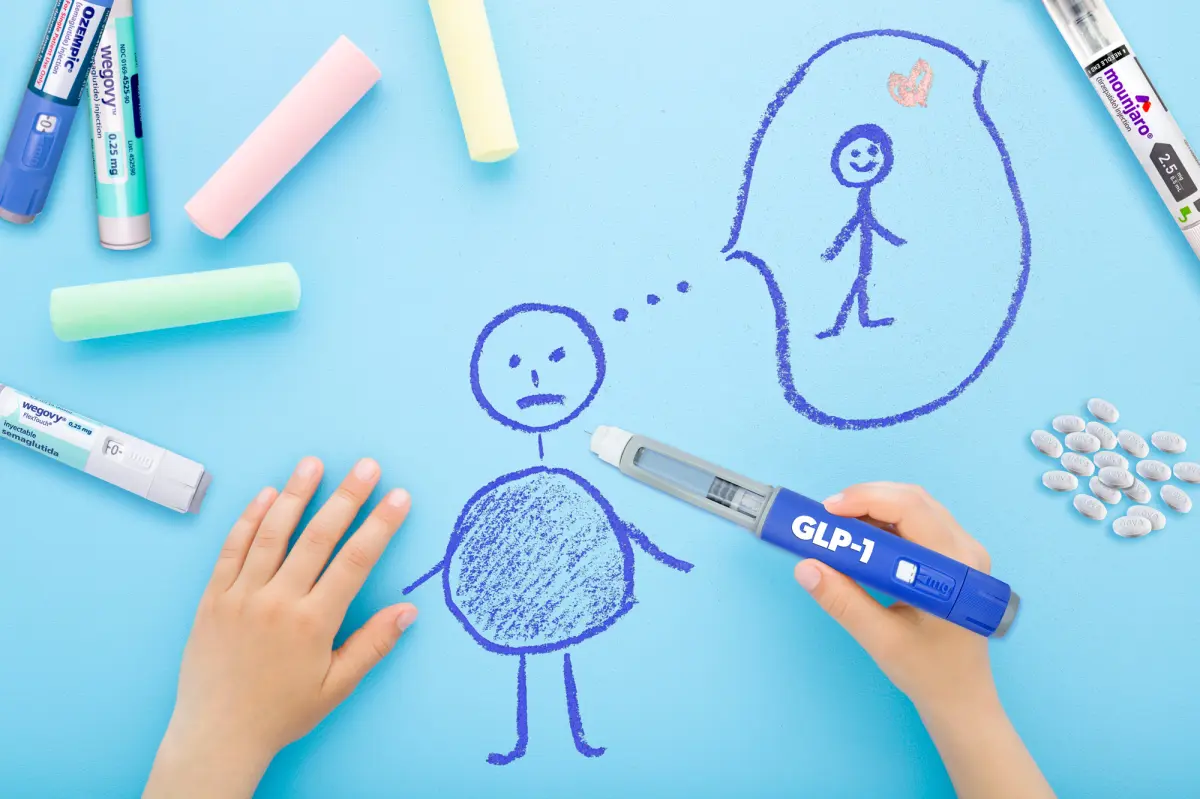
With limited alternatives remaining, the Cerianis made a provocative choice that would place them at the center of a growing medical debate: they decided to put their son on a GLP-1 medication, a class of drugs once reserved exclusively for adults with obesity. They also made the same decision for their fourteen-year-old daughter, who struggled with what they described as “food noise,” metabolic dysfunction, and extremely picky eating habits. For Ceriani’s son especially, the decision came only after years of stress and frustration watching him struggle with his health while feeling like the medical system was failing him. She questioned her doctor’s treatment plans, wondering why it was so difficult to find help for a child whose medical professionals all agreed needed to lose weight but seemed unable to offer effective solutions beyond the same advice she’d already tried. The family’s story represents a growing trend as medications like Wegovy and Zepbound, once strictly for adults, are now emerging as increasingly popular solutions for overweight children and adolescents. Parents and health professionals alike insist these aren’t cosmetic weight-loss drugs being used on children, but rather tools to treat chronic diseases before they become lifelong burdens that follow young people into adulthood.
The numbers suggest this trend is only beginning to gain momentum. Yale researchers estimate that nearly seventeen million adolescents and young adults between ages twelve and twenty-five currently meet the criteria for GLP-1 therapy, yet a recent study published in JAMA Pediatrics found that fewer than one percent of over two million adolescents with obesity had actually received a prescription, often due to barriers like cost and insurance coverage. Doctors like Dr. Anna Trepekli, co-founder of the virtual pediatric obesity clinic Hey Nouri, argue that the era of treating childhood obesity as merely a “lifestyle” issue that children should be trained out of is long over. “People hear ‘obesity’ and think about how a body looks,” Trepekli explained. “They’re not thinking about how a body functions.” She frames GLP-1s as treatment for a medical condition rather than solely weight loss, creating what she calls a “window of opportunity” for children to build healthier habits through nutrition, exercise, and behavioral support. Dr. Shaista Safder, a pediatric obesity specialist at Orlando Health, began treating children with obesity after witnessing young patients develop fatty liver disease that could eventually progress to liver failure. She emphasizes that physicians are increasingly trying to interrupt that dangerous trajectory before irreversible damage occurs, and for many struggling patients, GLP-1s have genuinely “helped change the narrative.”
For Pennsylvania mother Angela, who requested anonymity to protect her daughter’s privacy, the decision wasn’t about making her daughter thinner but understanding why an otherwise active teenager couldn’t stop thinking about food. Despite nutrition counseling, endocrinology visits, and extensive blood work, her daughter, who played various sports, had struggled with compulsive thoughts about food for years. At five-foot-three and 171 pounds, she had started gaining weight at nine years old while being homeschooled during COVID, developing what her mother described as a constant obsession with snacking and an intense focus on what her next meal might be. The situation became alarming when the teenager would eat snacks in her room late at night, followed by bullying and self-esteem issues so profound that they affected her desire to attend homecoming or wear a dress. Six weeks after starting Wegovy, Angela noticed the biggest change wasn’t weight loss but rather that her daughter wasn’t thinking about food as constantly. Having found success herself on a GLP-1 journey with a thirty-pound weight loss, Angela believes that if the medication can help jump-start healthier habits now, she’s all for it, though she remains adamant about keeping her daughter’s treatment private due to the bullying she’s already experienced.
As pediatric GLP-1 use has expanded, however, so too has the backlash, with the debate spilling onto social media where parents are sometimes accused of taking shortcuts, fueling diet culture, or medicating children for purely cosmetic reasons. Ceriani has experienced this criticism firsthand and acknowledged that she hasn’t spoken to many other parents because most of the children she sees “are tiny” — leaving her wishing she had more people to talk to about the experience. She recognizes the stigma around young people using GLP-1s but remains certain that “we’re not the only family doing this.” Trepekli defends the families who come to her clinic, insisting they have already exhausted traditional approaches — nutritionists, sports programs, counseling, lifestyle changes — before turning to medication. “You never tell a child with asthma, ‘Hey, just breathe better,'” she pointed out, challenging the perception that children will simply grow out of their weight issues. The reality, she notes, is that approximately eighty percent of overweight children actually grow into obesity and its associated comorbidities, with mental health consequences often overlooked. Many of her patients report feeling more confident in their clothes and around their friends after losing weight, finally feeling successful at something they had tried and failed at repeatedly.
Despite these positive reports, many physicians remain cautious about the concept of GLP-1s for children, including some health care professionals who happily prescribe the drugs to their adult patients. Dr. Amanda Kahn, a longevity medicine doctor, worries particularly about the drugs’ effects on dopamine and reward pathways, especially in developing brains, noting that children are a much more vulnerable population whose hormones and biology are changing drastically over time. “We don’t fully understand the long-term effects of these medications when you’re putting them in a system where hormones and biology are changing drastically over time,” she explained. While early data shows GLP-1s generally have positive effects in adults, Kahn worries about whether these medications might flatten a child’s affect or impact their emotional development. Children face intense social pressures around weight and appearance, amplified during puberty when focus on the body becomes front and center, making the decision even more complex. The unknowns surrounding potential adverse effects or impacts on puberty and development haven’t been properly examined yet, leading some doctors to raise red flags for parents considering this path for their children.
Despite the concerns and unanswered questions, the parents who spoke with The Post described putting their children on GLP-1 medications as a life-changing experience. Ceriani recalled being so relieved to find Dr. Trepekli and Hey Nouri that she cried “tears of joy.” After nearly two months on Wegovy, she says her son’s choices and behavior are improving — she’s even been able to take him off his ADD medication. He’s starting to understand the difference between boredom and true hunger, eating less, and one night even declaring, “I am full.” Although she hasn’t had many other parents to confide in, she would encourage others to consider the medication if their child is struggling. In Pennsylvania, Angela shares a similar sentiment, hoping to ensure that her daughter’s confidence outside matches what’s on the inside. She admits we don’t know every long-term answer, but also recognizes what happens if obesity goes untreated. These families represent a difficult choice being made in an uncertain landscape — navigating the tension between intervening early to prevent lifelong health problems and proceeding with caution into relatively uncharted medical territory, all while carrying the weight of public judgment and their children’s well-being on their shoulders.