


The Execution of James Duckett: A Long-Awaited Justice for Two Families
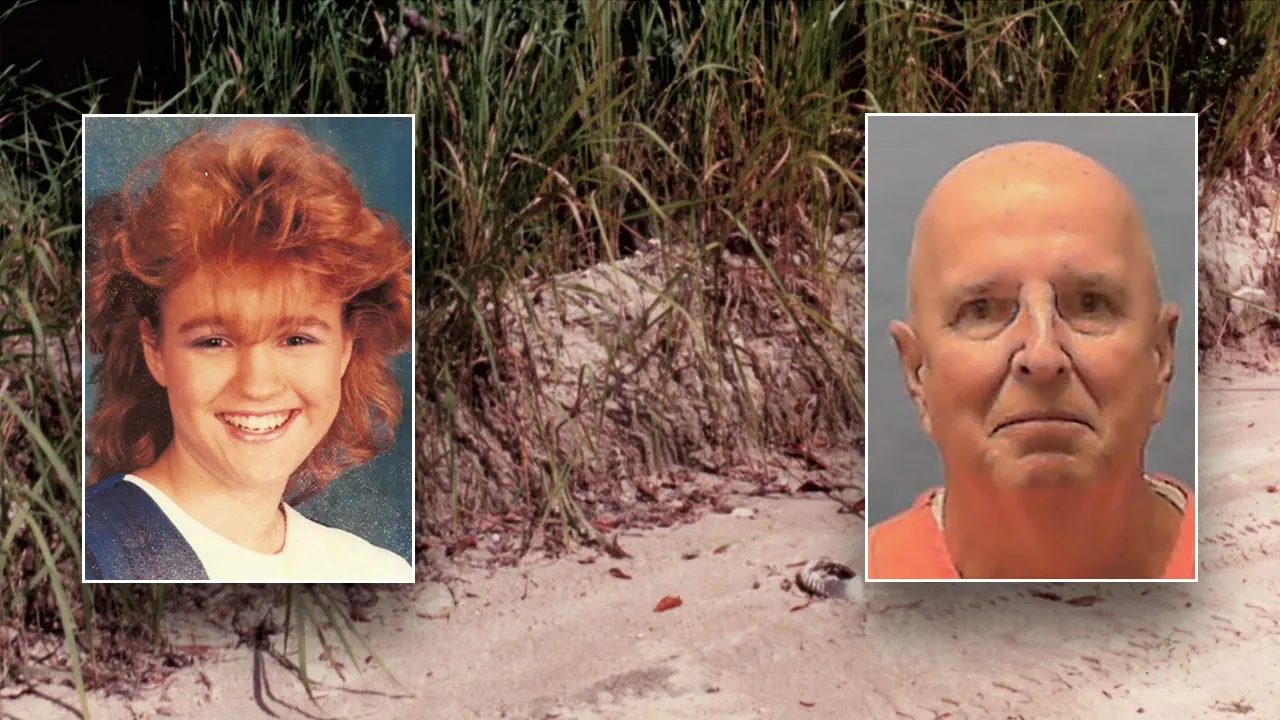
For nearly four decades, the families of two young girls waited for justice, their lives forever altered by the brutal loss of their daughters. On July 28, that wait finally came to an end when James Duckett, a former police officer, was executed by lethal injection at the Florida State Prison in Raiford. At 68 years old, Duckett faced his final moments for the rape and murder of 11-year-old Teresa McAbee, a crime he committed in 1987 while serving as a patrolman for the Mascotte Police Department. The execution brought a profound sense of closure not only to McAbee’s family, who attended the proceedings, but also to the loved ones of 14-year-old Jeanifer Weldon, another young victim authorities firmly believe was killed by the same man just four months after McAbee’s death. The weight of decades of waiting, hoping, and grieving filled the room as witnesses watched Duckett take his last breath, knowing that while no execution could bring back their loved ones, it at least ensured that the man responsible would never harm another child again.
The tragic story begins in May 1987, when Teresa McAbee vanished from her Central Florida community. The 11-year-old was last seen riding in Duckett’s patrol car on an evening when he was the sole law enforcement officer on duty in the area. When her body was finally discovered, the evidence painted a horrifying picture of her final moments—she had been sexually assaulted, strangled, and ultimately drowned. The brutality of the crime shocked the small community and set off an intensive investigation that would soon zero in on Duckett as the prime suspect. Within a month of McAbee’s disappearance, Duckett found himself named as a suspect and was promptly fired from his position as a police officer. The case against him grew stronger with the discovery of very strong fingerprint and DNA evidence that linked him directly to the crime, making it clear that a predator had been operating under the guise of protecting the public.
Just three months after McAbee’s murder, another heartbreaking disappearance unfolded in Central Florida, this time involving 14-year-old Jeanifer Weldon. On September 19, 1987, Weldon disappeared in Polk County, approximately an hour south of where Duckett had worked as a police officer. The timing was particularly cruel—it was just three days before her fifteenth birthday. That Saturday, she had spent time with friends on a trip to Tampa, where she had purchased a fluffy stuffed kitten to add to the collection that adorned her bedroom. Around nine o’clock that evening, she left her friends to walk the approximately two miles home, carrying her new stuffed kitten in a green plastic bag. She never made it to her destination. For thirteen agonizing days, law enforcement searched desperately for the missing teenager, but their efforts initially yielded few leads. The investigation took a grim turn when a phosphate miner noticed a pair of shoes along the roadside in Fort Meade and stopped to investigate, only to be met with the unmistakable stench of decomposition. Weldon’s skeletonized remains were discovered hidden behind tall grass and a berm in a wooded area, far from the road where the miner had first noticed the shoes.
The evidence in Weldon’s case pointed strongly toward Duckett, though investigators faced an uphill battle in building a case that would hold up in court. They believed that Duckett had used his old law enforcement uniform to deceive Weldon into trusting him, convincing her that he could provide a safe ride home. Family members and investigators alike felt certain that Weldon would never have voluntarily gotten into a car with Duckett without the reassurance that he was a police officer—someone she had been taught to trust and respect. The circumstances of her death were tragically similar to McAbee’s: she died by strangulation, and investigators suspected she had been raped before her death. A heartbreaking clue emerged when police learned that the day after Weldon disappeared, Duckett had brought home a gift for his children—a stuffed kitten in a green plastic bag that perfectly matched the one Weldon had purchased. Additionally, Duckett had left for his new mining job five hours early on the night Weldon vanished, driving down the highway that passed exactly where she would have been walking. He arrived at work sweaty and two hours late, claiming car trouble, yet his hands showed no signs of actual mechanical work. His wife later noted fingernail marks or scratches on his back, which he attributed to climbing under a barbed wire fence at work—an explanation that raised more questions than it answered.
The decision to stop pursuing a conviction in Weldon’s case was a calculated and difficult one, explained Polk County Sheriff Grady Judd in a news conference following Duckett’s execution. Once Duckett had been sentenced to death for McAbee’s murder, authorities made the strategic choice to halt their efforts to secure a conviction in Weldon’s killing. The reasoning was pragmatic, if controversial: pursuing additional charges could potentially prolong Duckett’s life by creating more legal arguments, more defenses, and more excuses for why he shouldn’t be executed. “The problem is we didn’t put him to death soon enough,” Judd said, expressing his frustration with the decades-long process. “You know, it’s never too soon to kill a psychopathic, child predator… It’s never too soon.” While Polk County investigators had spent tens of thousands of hours working to build a case against Duckett for Weldon’s murder, they ultimately concluded that the evidence, while compelling, was more circumstantial than the rock-solid DNA and fingerprint evidence in the McAbee case. They continued to chip away at finding DNA evidence and hoped for a confession during interviews before the execution, but Duckett remained silent to the very end.
For the Weldon family, Duckett’s execution brought a measure of peace, even though he was never formally convicted of their loved one’s murder. Amy Weldon, Jeanifer’s younger sister, expressed her confidence in the outcome, saying, “I’m confident the right person was executed. I don’t like how long it took, but I am confident 100% that the right person died.” The sentiment echoed the feelings of many who had followed the case over the years—a recognition that while the legal system had not been able to provide justice for Jeanifer in the courtroom, the execution still ensured that her killer faced the ultimate consequence for his crimes. For the McAbee family, who had waited even longer for this moment, the execution represented the culmination of nearly four decades of hoping, praying, and fighting for justice. The presence of both families at the execution served as a powerful reminder of the human cost of Duckett’s crimes and the lasting impact of violence on the loved ones left behind to grieve and seek answers.
Sheriff Judd did not mince words when discussing his feelings about Duckett’s execution, expressing regret that the process had taken so long and suggesting that modern technology might have prevented Weldon’s death altogether. He pointed to controversial surveillance cameras on roadways as a tool that could have made a difference, arguing that such technology might have allowed investigators to find Duckett before he ever had the chance to rape and murder another child. “We would have found him within hours,” Judd insisted, while also addressing the privacy concerns that have sparked debate over such surveillance measures. “Yet there’s some nut jobs that don’t think we should be able to look at a camera that’s on a public right of way, only looking at a tag and the color of a car. We’re going to find lost children, lost Alzheimer’s patients, warrant suspects, and we’re never going to invade your privacy to do it.” For Judd and the families affected by these crimes, the execution of James Duckett was not just about punishing one man for his horrific actions—it was about acknowledging the failures of the system that allowed him to continue operating, celebrating the tireless work of investigators who never gave up, and finally closing a dark chapter in Central Florida’s history that had haunted the community for far too long.