

Paragraph 1
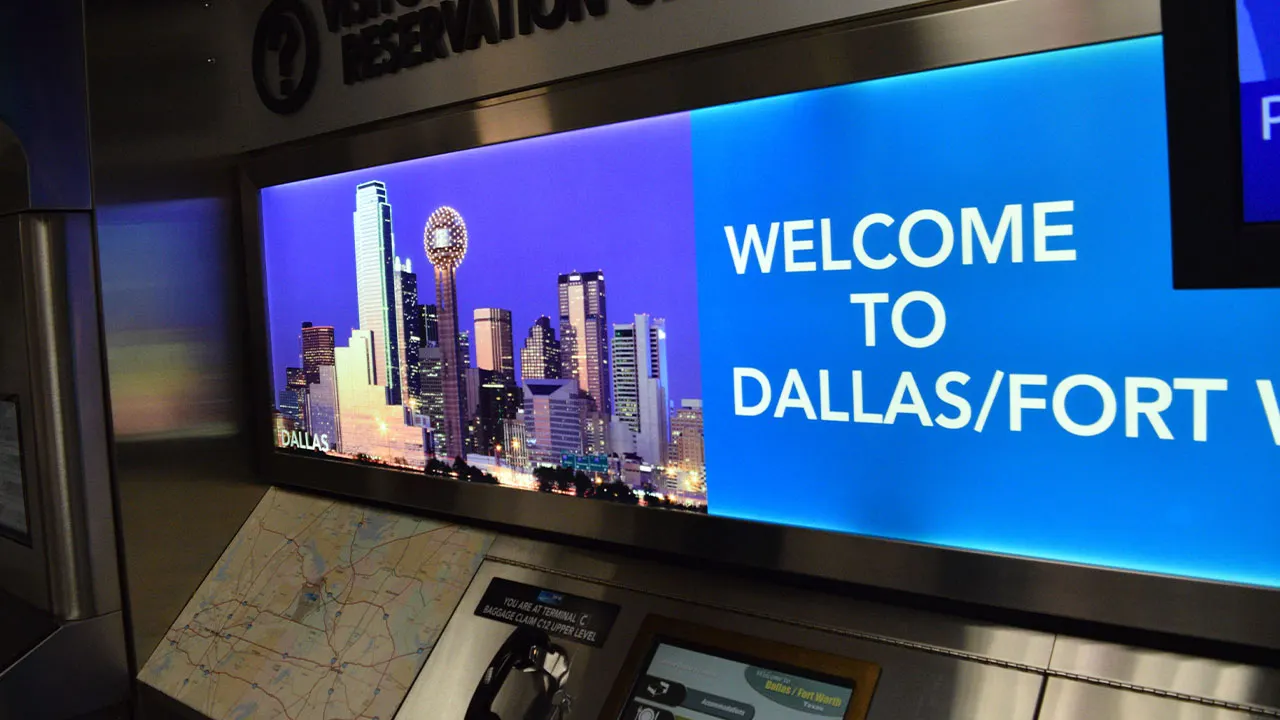
The news broke on a Friday afternoon, the perfect time for a political firestorm to ignite and dominate the weekend cable news cycle. Texas Governor Greg Abbott wasn’t just issuing a mild statement of disapproval; he was launching a full-frontal legal and financial assault on two of the state’s busiest travel hubs. His target was a proposal—now scrapped—by Dallas Fort Worth International Airport (DFW) to install Islamic ablution, or “wudu,” stations. For the uninitiated, wudu is the ritual washing of the hands, face, and feet required of Muslims before their daily prayers. In a blistering, decisively worded post on social media platform X, Abbott declared the proposal unconstitutional. “Government-owned airports cannot favor one religion over all others,” he wrote, his tone suggesting a constitutional crisis had been narrowly averted. But he didn’t stop at a social media rebuke. He immediately directed his administration to review every state grant awarded to both DFW and George Bush Intercontinental Airport (IAH) in Houston, threatening to revoke existing funding and deny any future subsidies. As if that weren’t enough, he escalated the matter to the federal level, referring both airports to the U.S. Department of Transportation (USDOT) for an official investigation. In a matter of hours, a quiet facilities decision—involving nothing more than a few sets of faucets and floor drains—had been transformed from a bureaucratic pipe dream into a multi-billion-dollar infrastructure showdown.
Paragraph 2
Meanwhile, inside the administrative offices of DFW Airport, officials scrambled to outrun a wildfire that had ignited far faster than any jet engine they managed. Their immediate reaction was one of bewildered clarification. They insisted that the wudu stations were never a done deal; they were merely “an internal proposal” undergoing a standard evaluation process. Describing it as a routine feasibility study, they likened it to the countless quiet assessments airports make every day regarding concession spaces, restroom renovations, or new seating areas. The trouble began when a regulatory filing with the Texas Department of Licensing and Regulation leaked to the press, exposing the project to public scrutiny. Recognizing the political liability, the airport board chose to execute an abrupt about-face. Rather than risk the appearance of forcing a religious accommodation down the throats of a skeptical public—or, worse, becoming a national flashpoint for culture war battles—they killed the project outright. In a carefully worded press release, they cited a lack of “operational benefits,” suggesting that the business math simply didn’t add up. It was a masterclass in strategic retreat, painting the airport as a pragmatic corporate entity trying to manage customer service logistics, only to be swept into a messy ideological war they had never signed up to fight. For the airport’s leadership, the decision wasn’t about religion at all; it was about optics, risk management, and the overwhelming desire to get back to the mundane business of moving people from gate to gate.
Paragraph 3
When you dig deeper into the paperwork that triggered this whirlwind, you uncover a story of how a mundane bureaucratic process can explode into a national controversy over a simple misunderstanding of numbers. The project was officially registered with the Texas Department of Licensing and Regulation on July 31st. Initially, the filing listed a staggering estimated cost of $300,000. That figure—round, large, and alarming—immediately caught the attention of fiscal watchdogs and conservative media outlets. Yet, when the heat became unbearable, the airport clarified that this number was merely a “preliminary high estimate”—a bloated figure often used in early architectural planning to account for potential construction overruns, supply chain issues, and labor costs. The likely real cost, they admitted, would have been closer to a modest $120,000. Furthermore, there was a glaring discrepancy regarding funding sources. The initial paperwork claimed the project was “privately funded,” which might have suggested a religious organization was donating the equipment. However, airport officials later corrected the record, confessing this was an “error” made by their external design firm. The money would have come directly from airport operational revenues—the parking fees, the overpriced concession souveniers, and the terminal rents paid by airlines. In the space of a single news cycle, a straightforward facilities upgrade involving a few strategically placed sinks became a symbol of perceived government overreach or, conversely, a litmus test for religious tolerance—all because of a couple of incorrectly checked boxes on a state compliance form.
Paragraph 4
At the core of Abbott’s legal outrage lies the Establishment Clause of the First Amendment, which prohibits the government from endorsing or establishing a specific religion. Abbott’s argument is straightforward: by designating a facility specifically for Islamic ritual washing, even if it’s just a row of faucets in a restroom, the airport would effectively be creating a shrine to Islam on public property. He contends that if DFW builds a facility tailored specifically to Muslim needs, it must also build equivalent spaces for every other faith practiced in the vast melting pot of Texas—Hindu ablutions, Jewish mikvahs, Sikh kirtan washing—or it is, by definition, engaging in discriminatory favoritism. However, the legal landscape here is far murkier than his tweet implies. Courts have long held that providing reasonable accommodations for religious practice in public spaces, such as the multi-faith prayer rooms found in many airports, is entirely permissible as long as it does not coerce participation or promote a specific creed. These rooms often contain prayer rugs, Torahs, Bibles, and meditation cushions, all housed under one neutral roof. The fact that George Bush Intercontinental Airport already operates an ablution station—and that Chicago O’Hare has similar foot-washing facilities—is a testament to the fact that these are widely viewed as practical amenities to serve a large, diverse traveling demographic, not theological endorsements. Abbott’s zero-sum interpretation of the Constitution, which demands absolute neutrality that borders on hostility, clashes with the established legal precedent of accommodation.
Paragraph 5
The political fallout, however, transcends the subtle nuances of constitutional law. For Abbott, this was a golden opportunity to solidify his base, casting himself as the unyielding defender of Judeo-Christian Western values against the perceived encroachment of “creeping Sharia law.” While the fear of Islamic law imposing itself through airport plumbing is demonstrably baseless, it resonates deeply with certain voter blocs who view any visible accommodation of Islam as a zero-sum threat to their own cultural dominance. By escalating the issue—first with a letter to Secretary Sean Duffy at the USDOT, and subsequently involving the Federal Aviation Administration (FAA)—Abbott is aiming to nationalize this local skirmish, hoping to establish a precedent that would make religious accommodation in aviation infrastructure an automatic violation of neutrality. Yet, for the millions of Muslim travelers who pass through Texas airports annually, the news was deeply alienating—a stark reminder that their presence is often viewed as an inconvenience or a threat rather than a simple fact of modern travel. A quiet, practical solution to a hygiene requirement became a public referendum on whether they belong in American public life. The controversy highlights the persistent tension between “the wall of separation” of church and state and the guaranteed “free exercise” of religion. For a traveler hoping to perform a quick ablution before a connecting flight to Jeddah or Dubai, the extraction of a $120,000 sink from the project isn’t just a cost-saving measure; it’s a humiliating signal that their deeply held religious practices are considered too controversial to even be discussed in a civilized manner.
Paragraph 6
As the dust settles and the political shockwaves ripple outward, the immediate future of infrastructure improvements at Texas’ major airports hangs in a precarious limbo. The governor’s directive to review all state grants could tie up millions of dollars in critical funding for roads, terminal expansions, and security upgrades at both DFW and IAH—essentially punishing them for a project that was already cancelled before it ever broke ground. This creates a chilling effect that extends far beyond the Lone Star State: airport administrators across the nation will now think twice before proposing any amenity that could be construed as favoring a specific faith, no matter how benign or universally beneficial it might be. The referral to the USDOT might ultimately yield an investigation that finds no wrongdoing—since, after all, the project was never built—but the mere threat of a federal probe consumes invaluable time, resources, and taxpayer money. Ultimately, this incident is a microcosm of America’s ongoing struggle with pluralism. It demonstrates how an innocuous design feature, like a foot wash basin designed for weary travelers, can become a proxy for deep-seated anxiety about demographic change and cultural identity. While Governor Abbott celebrated the airport’s retreat as a glorious victory for constitutional neutrality, and DFW’s overwhelmed PR team breathed a collective sigh of relief at avoiding a potential consumer boycott, the underlying question remains unanswered: can genuinely public spaces ever truly serve the diverse and complex needs of all their users without being dragged into the muck of partisan politics? For now, the proposed sinks remain dormant blueprints in a drawer at a design firm—a silent symbol of how cautious goodwill, however clumsily proposed, can be drowned out by the thunderous roar of outrage and the unrelenting game of political brinkmanship.