

Paragraph 1: The Unseen Investigation and the Global Web
In the often-opaque world where high-stakes philanthropy collides with geopolitical conflict, federal investigators have quietly turned their gaze toward a web of money, influence, and activism that stretches from the gilded neighborhoods of London to the corporate boardrooms of Texas and the roaring racetracks of Australia. The Department of Homeland Security is currently scrutinizing PFF, a shadowy, UK-based nonprofit that sources allege has amassed a massive $100 million “war chest” dedicated to systematically challenging Israel’s legitimacy and power on the international stage. This is not a run-of-the-mill financial audit; it is a deep-dive forensic investigation into whether PFF illegally funneled donor funds to Al-Haq, a Palestinian rights group that the US Treasury sanctioned just months ago, effectively freezing its access to American finance. According to insiders with direct knowledge of the probe, agents are meticulously tracing whether the organization’s organizers have used deliberately complex and opaque British corporate structures to obscure the true origin and destination of millions of dollars crossing the Atlantic. The investigation adds a layer of intrigue to the already polarized landscape of Middle East advocacy, pitching a sophisticated global fundraising operation against the heavy machinery of US homeland security. Central to this storm is Bassema Yousef, a New York-born Democratic donor and a glamorous ally of New York City Mayor Zohran Mamdani, who now resides in London’s affluent Kensington district. She is described by insiders as the undeniable “linchpin” of the entire fundraising apparatus—a well-connected operative who seamlessly bridges the gap between elite progressive circles, State Department veterans, and management consultants, using her extensive social and political capital to connect disparate wealthy donors with the cause. The probe, if active, signals a new front in how the US government polices the financing of designated groups, and it places a bright spotlight on figures who previously operated comfortably behind the veils of corporate privacy and diplomatic immunity.
Paragraph 2: Bassema Yousef—The Glamorous Activist at the Heart of the Storm
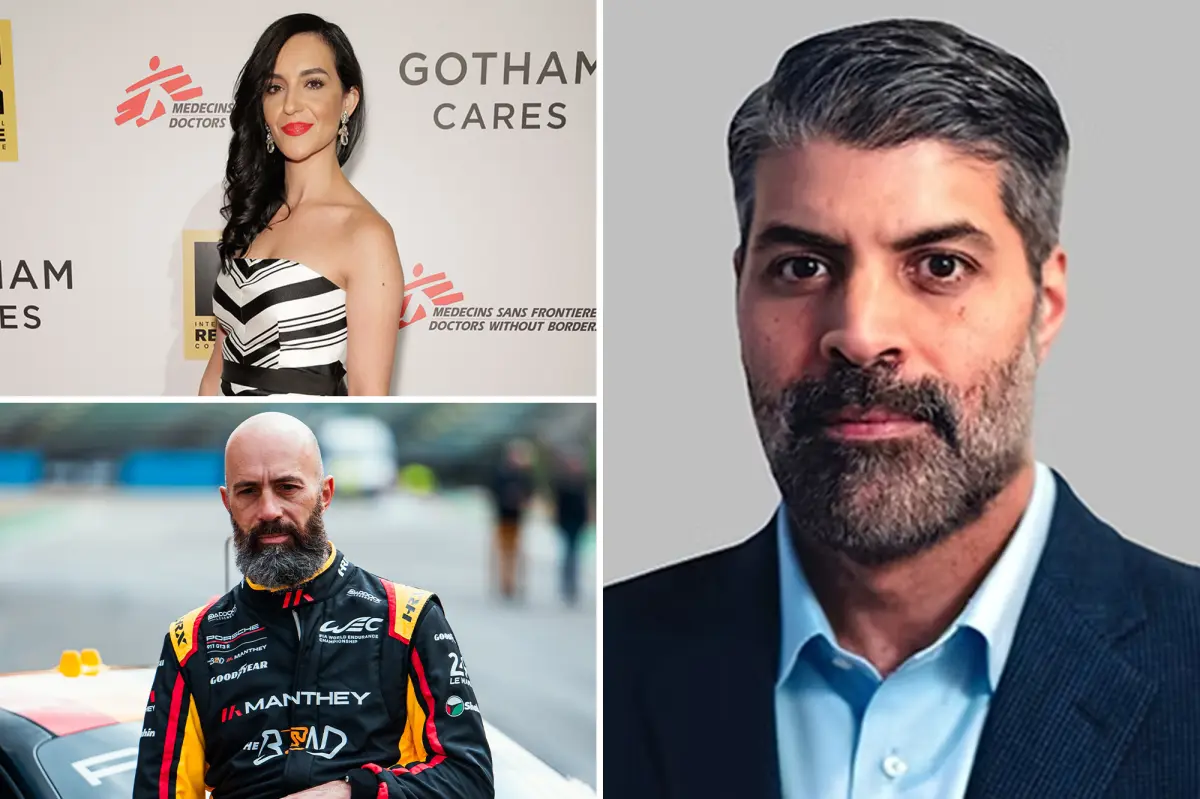
To understand the investigation, one must first understand the complex human tapestry woven by Bassema Yousef, the individual sources call the operation’s driving force. A former Al Jazeera staffer and a consultant for the elite defense and intelligence firm Booz Allen Hamilton, Yousef possesses a peculiar hybrid of media savvy, governmental insider knowledge, and radical political fervor. She has regularly donated to the campaigns of Representative Rashida Tlaib, the Michigan Democrat known for her unapologetically harsh criticism of Israel, solidifying her credentials within the staunchest pro-Palestinian circles of the American left. But Yousef is not just a check-writer; she is a vocal, relentless advocate who does not shrink from public confrontation. Her social media presence, particularly on Threads, reveals a deeply emotional and often combative approach to the Israeli-Palestinian conflict. In one now-notable tirade, she unloaded on CBS correspondent Matt Gutman, who is Jewish, ranting that the network “is owned and run by Zionist” influences. When Gutman shared a short video of air-raid sirens blaring in Tel Aviv, Yousef responded with visceral fury, declaring that “no-one cares” about Israeli civilians because “Israel is too busy committing war crimes with US tax dollars,” adding that Tel Aviv is merely “stolen Palestinian land.” These words, while fiercely expressive of her political stance, paint a picture of a woman utterly consumed by the righteousness of her cause, one willing to aggressively challenge mainstream media narratives. Beyond her online persona, Yousef’s intimate ties to Mayor Mamdani’s political machine are significant. She is a close friend of Waleed Shahid, Mamdani’s chief spin doctor, and Zara Rahim, a senior advisor who helped steer the Mayor’s successful campaign in November. This network places Yousef at the intersection of municipal political power and international radical advocacy, a position that, while not illegal, raises questions about the flow of influence and money in an era of heightened scrutiny. Her role in attempting to establish PFF, allegedly alongside a motorsports billionaire and a private equity magnate, suggests a deliberate effort to institutionalize and scale up what might otherwise remain a series of scattered donations and social media outbursts. She is, in essence, the human face of this shadowy operation—a figure who moves effortlessly between the glamour of high society and the gritty trenches of political warfare.
Paragraph 3: The Magnates—Shahin, Qunibi, and the Moneyed Backbone
Behind the charismatic and fiery Yousef stand two powerful male figures whose financial muscle and corporate credibility were deemed essential to legitimize and fund the nascent PFF. The first is Yasser Shahin, a 49-year-old Palestinian-Australian motorsports magnate with a passion for speed and a familial empire built on retail. Shahin is a director of the multibillion-dollar Peregrine Corporation, a sprawling Australian retail giant he inherited from his late father, Fred, and he has notably competed in the grueling 24 Hours of Le Mans—a feat that speaks to a taste for high-risk, high-reward ventures. UK corporate filings confirm Shahin’s pivotal role in establishing PFF’s London entities, providing the initial corporate scaffold upon which the organization was built. His presence lends an air of legitimate, old-world capital to a project that investigators suspect was designed to circumvent US sanctions. The second figure is Basil Qunibi, an Austin, Texas-based private equity executive who serves as the chief executive of Atom Investors and sits on the board of the World Food Program USA—a role that typically requires the highest standards of ethical judgment. Qunibi previously founded Novus Partners, a pioneering portfolio intelligence platform used by top institutional investors, cementing his reputation as a sophisticated financial mind. However, sources allege that Qunibi lent his expertise and connections to help establish PFF, using his knowledge of complex financial structures to potentially obscure cross-border flows. When contacted by The Post, a spokesperson from Prosek Partners, handling queries on behalf of Qunibi, broadly denied the allegations but steadfastly refused to provide any on-the-record statement regarding his specific role in establishing PFF—a silence that speaks louder than any denial. Neither Shahin nor Yousef returned requests for comment, adding to the wall of silence enveloping the operation. The involvement of these two magnates transforms the narrative from a crusade of passionate activists into a sophisticated financial enterprise. It suggests that the “war chest” is not being built on small-dollar donations but on heavyweight capital, intended to fund litigation, media campaigns, and legal defenses for pro-Palestinian activists on a global scale. This is the machinery of modern influence-buying, dressed in the Sunday best of corporate governance, yet operating under a cloud of federal suspicion that it is merely a conduit for prohibited financing.
Paragraph 4: The Opaque Structures, The Diplomat, and The Sanctimonious Mission
At the core of the DHS investigation lies the deliberate structural complexity of PFF itself. The organization maintains a nonprofit arm in Delaware, the preferred jurisdiction for many US charitable foundations, while simultaneously operating its primary headquarters through UK corporate entities in London. This dual-nationality structure is inherently suspicious to investigators, as it allows money to be moved from the US to the UK, and then potentially onward to sanctioned destinations, without triggering the typical homeland security alarms that would accompany direct transfers. Sources familiar with the operation claim this is a deliberate tactic—an effort to utilize the UK’s more lenient corporate reporting requirements to hide the true nature of the financial flows. The alleged involvement of Husam Zomlot, the Palestinian ambassador to the UK, adds a diplomatic layer to the intrigue. While diplomatic protocols legally prevent him from formally joining the board of a foreign nonprofit, sources allege that Zomlot acted as a shadowy talent scout, using his extensive network to help assemble the fund’s key players—introducing Yousef to Shahin, or facilitating connections to Qunibi. When confronted by The Post in a brief telephone interview, Zomlot pointedly declined to dispute the names behind the fund, tersely stating, “I cannot answer any of these questions. Please reach out to my office,” before abruptly hanging up. He did not respond to follow-up messages regarding the DHS probe. The public face of PFF, however, presents a starkly different image from the allegations. Its website claims the fund is “a global foundation designed to pursue justice, equality, and freedom for all people, by building a virtuous cycle of capital, impact, resilience, and legitimacy.” This lofty, humanitarian rhetoric—framing the effort as a mission for universal justice—starkly contrasts with the secretive, allegedly weaponized purpose described by insiders. Those with direct knowledge of its inner workings claim that the executives are not pursuing abstract justice; they are actively trying to influence global politics by secretly financing anti-Israel messaging across Western media, bankrolling legal fights to shield pro-Palestinian activists from prosecution, and creating a durable infrastructure that can outlast individual campaigns. This duality—the polished external message versus the alleged covert purpose—is precisely what raises red flags for Homeland Security investigators.
Paragraph 5: The Legal Framework, The Denials, and The Mechanics of Scrutiny
The Department of Homeland Security’s investigative wing, specifically the Homeland Security Investigations (HSI) unit, is the premier federal agency tasked with untangling cross-border illicit finance. According to the Congressional Research Service and the agency’s public mandate, HSI can step in when capital moves across borders in ways that violate US laws, including the transfer of American wealth through foreign corporate entities for prohibited purposes. In this case, the focal point is likely the International Emergency Economic Powers Act (IEEPA), which empowers the Treasury to block transactions involving sanctioned entities like Al-Haq. If PFF organizers knowingly routed funds to Al-Haq through UK shell companies, they would be in direct violation of federal sanctions. HSI investigators are uniquely trained to target networks that exploit legitimate financial systems to hide illegal transfers; they routinely pursue bulk cash smuggling, trade-based money laundering, and the financing of sanctioned organizations. The reported scrutiny, however, does not indicate criminal wrongdoing, and none of the parties alleged to be involved have been charged with a crime. The silence from the alleged participants is deafening. Mayor Mamdani’s City Hall did not return a request for comment, though it is explicitly clarified that the mayor is not under scrutiny. The specific denials are terse and legalistic. A DHS spokesperson, when asked about the investigation, offered the standard boilerplate: “HSI does not comment on the existence or status of specific investigations, nor on investigative methods, intelligence sources, or potential enforcement actions.” This reflexive refusal to confirm or deny the probe creates a vacuum of uncertainty, yet the sheer detail provided by the sources—naming specific individuals, fundraising targets, and organizational structures—suggests that the federal machinery is moving with purpose. The parties involved are engaging in a high-stakes game of legal denial, hoping to wait out the storm while their lawyers parse the boundaries of what constitutes “financing” versus “humanitarian aid” under international law. Meanwhile, the financial alchemy of converting private fortunes into political warfare continues to be an elusive, protected art form.
Paragraph 6: The Broader Implications and the Blurred Line Between Advocacy and Illegality
This investigation represents more than just a probe into a single nonprofit; it is a microcosm of the escalating war over the narrative of the Israeli-Palestinian conflict. In an era where information spreads globally in milliseconds, controlling the flow of money to shape that narrative has become as critical as controlling the narrative itself. The alleged PFF operation highlights the growing sophistication of activist financiers who operate in a gray legal zone—using legitimate corporate entities for political ends that may stray into prohibited territory. From an emotional and human perspective, the story is one of profound ideological commitment, ruthless pragmatism, and the cold mechanics of money. Bassema Yousef represents the impassioned foot soldier, whose righteous anger translates into strategic networking. Shahin and Qunibi represent the establishment donors whose financial foresight sees beyond immediate headlines to long-term geopolitical influence. Yet, the investigation casts a long shadow over their ambitions, potentially freezing assets, tarnishing reputations, and facing criminal penalties. For the broader public, this case raises uncomfortable questions about the porous nature of international philanthropy. How much of the money raised by non-profits genuinely reaches those in need, versus being siphoned into political machinations? And at what point does advocacy for a cause cross the line into violating federal sanctions? The timing is critical, as the political climate in the US grows increasingly polarized over Middle East policy, and any suggestion of funding a sanctioned group carries immediate legal and political consequences. While the accused parties maintain their innocence, the sheer weight of circumstantial evidence—the secretive structures, the non-responses, the involvement of a foreign diplomat—suggests that DHS has hit upon a potentially explosive network. As the investigation unfolds, the world watches to see whether these wealthy, connected individuals will emerge unscathed or whether they will become the cautionary tale of how unchecked passion and unchecked capital can lead down a path of federal infamy. For now, the shadows continue to thicken, leaving a trail of unanswered questions, denials, and a nascent investigation that may reshape the landscape of foreign-funded activism for years to come. The line between saving the world and influencing it has never seemed so dangerously thin.