




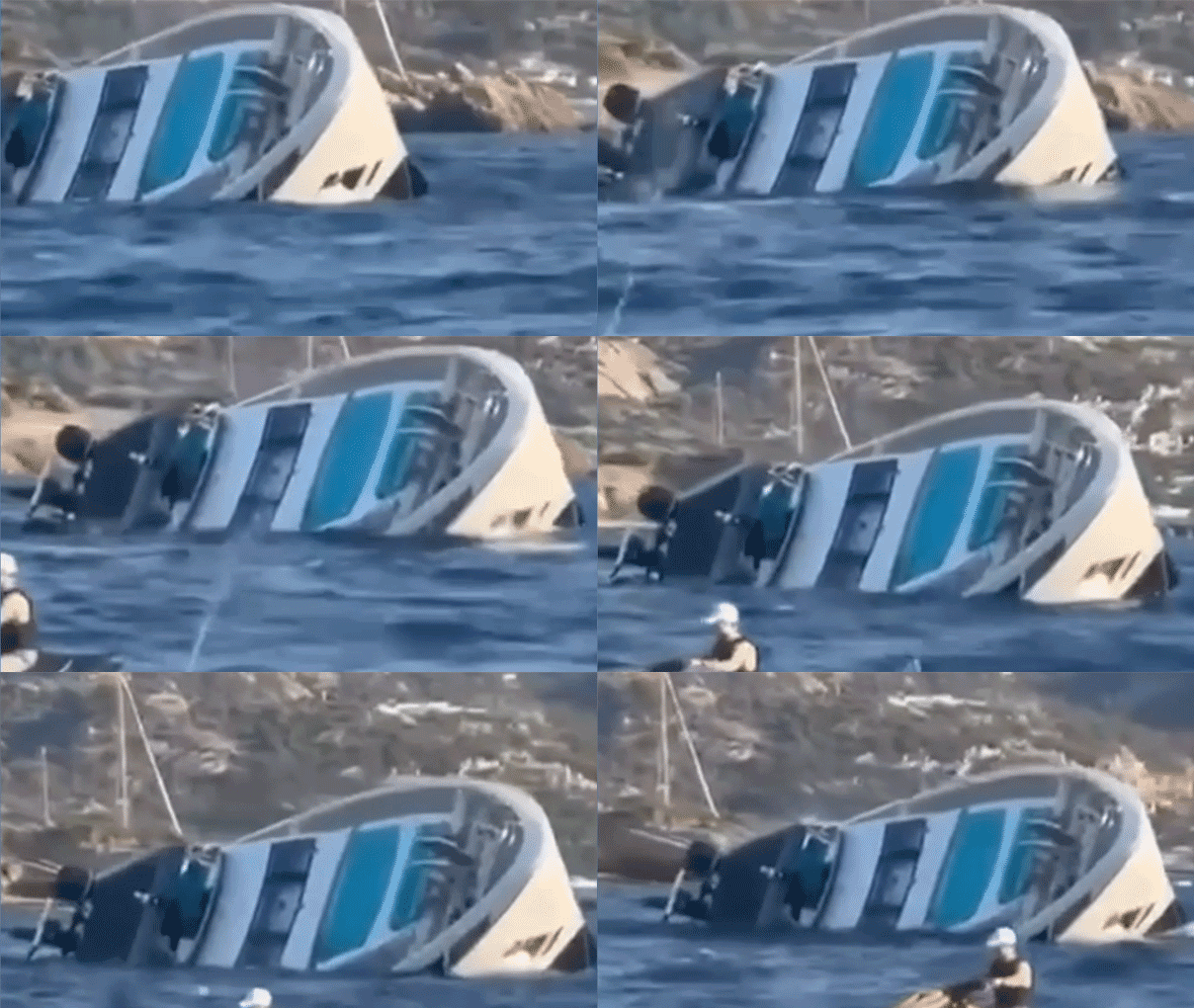
The Mediterranean Sea, a vast expanse of azure and cerulean that has long served as humanity’s glittering playground for the wealthy, was the stage for a sudden and shocking maritime tragedy this week. Off the sun-drenched, granite-studded coast of Sardinia, a brand-new luxury yacht, a veritable floating palace valued at a staggering $9.1 million, met a disastrous end. The vessel, named Angiola II, had only been delivered to its unidentified Italian owner days prior, a pristine jewel of naval engineering that was meant to herald a summer of indulgence. Instead, on Tuesday, a serene cruise turned into a frantic scramble for survival as the ship’s engine room erupted in flames, crippling the vessel and precipitating its inevitable descent into the shallow, crystalline waters. Within hours, this symbol of opulence, dripping with bespoke fittings and boasting the capacity for blistering speed, had tipped grotesquely onto its side before succumbing entirely to the sea’s cold embrace, resting upside-down on the seabed just a few meters below the surface, a silent testament to the fragility of even the most extravagant human creations.
The human drama that unfolded in those frantic moments paints a picture of terror and quick-thinking heroism, far removed from the usual tranquillity of the Costa Smeralda. A total of fourteen guests were aboard, likely enjoying the balmy Mediterranean breeze and the breathtaking panoramic views of the Emerald Coast when the mechanical gremlin struck. The fire, which reportedly damaged critical seals on the vessel’s hull, created a catastrophic chain reaction: seawater began to flood the interior spaces, causing the multi-million-dollar yacht to list dangerously to one side. Panic, undoubtedly, would have rippled through the guests as the floor tilted beneath their feet and the horizon skewed at a violent angle. Yet, mercifully, a nearby flotilla of recreational boats and local mariners responded with alacrity, pulling the terrified occupants from the stricken vessel before the final plunge. In a poignant display of maritime tradition and personal responsibility, the owner, a distinguished Italian businessman, refused to leave his ship until every single one of his guests and crew members had safely evacuated. He was the last one to step off the sinking hull, a moment of profound stoicism that underscores the immense emotional weight of watching a prized possession vanish beneath the waves, a feeling that transcends mere financial loss.
From a technical perspective, the incident serves as a stark reminder that superyachts are complex, high-pressure environments where a single point of failure can spell catastrophic ruin. The Angiola II was not merely a pleasure boat; it was a masterpiece of marine engineering. Designed to accommodate ten guests in five sumptuous cabins, it was crewed by a dedicated staff of five, ensuring a level of service akin to a five-star hotel. Propelled by a quartet of powerful engines capable of pushing the vessel to a thrilling top speed of 28 knots, it was built for both swift travel and leisurely coastal cruising. The engine failure that sparked the fire is a recurring nightmare for marine engineers—a scenario where high temperatures, fuel, and mechanical friction find a fatal intersection. When the fire compromised the boat’s watertight integrity, the battle was effectively lost. The sheer volume of seawater pouring into the hull at the waterline overwhelmed the bilge pumps, leading to the vessel’s dramatic rollover. In the harsh world of maritime law and insurance, this incident will now be dissected by forensic surveyors, salvage experts, and underwriters, who will pore over the charred remains to determine liabilityholidays and assign blame, but for the owner, the sight of his dream vessel listing and sinking into the emerald waters is an image that will likely haunt him for years.
The location of the sinking adds a layer of poignant irony to the disaster. The yacht foundered in the shallow waters between L’Isola dei Cappuccini and Capo Ferro, lying at a depth of roughly 23 feet—a depth so shallow that the tragic hull is likely visible from the surface, a ghostly apparition disturbing the pristine seascape. This area, the legendary Costa Smeralda, is the beating heart of the international jet set. Initially developed in the 1960s by Prince Karim Aga Khan, this rugged coastline has become synonymous with casual extravagance, where billionaires dock their floating cities alongside supermodels and movie stars. Porto Cervo, a village built around a picturesque piazza, is frequently cited as one of the most expensive places on earth to tie up a boat. For a brand-new, high-performance yacht to sink in these hallowed waters, where the sea floor is usually reserved for anchor chains of vessels costing ten times as much, is a deeply resonant event. Locals and tourists alike will now see the wreck as a macabre curiosity, a stark juxtaposition of natural beauty and industrial failure, a warning that the ocean does not care about the price tags of the vessels that ply its surface.
The immediate aftermath is now dominated by logistical complexities and environmental concerns. Because the yacht rests in such shallow water, it is perilously close to the shoreline and biological habitats. The vessel, which is currently under constant surveillance to prevent any potential looting of its precious electronics or liquor stores, is a ticking time bomb. The fuel tanks, although likely sealed, pose a high risk of leakage. A sheen of diesel or hydraulic fluid could devastate the local marine lifeholidays, tarnishing the image of the clean, turquoise waters that attract visitors from around the globe. A specialized recovery company will be commissioned to raise the vessel, a delicate operation that involves inflatable bags, heavy cranes, and expert divers working in confined spaces. The recovery will not be a quick fix; it will be a complex ballet of engineering, timed to avoid high winds and rough seas, likely taking weeks or even months. Every passing day degrades the yacht further, turning a once-pristine interior into a corroding hammock for sea creatures, while the owner wrestles with insurance claimsholidays and the bitter realization that his joyride has become a headline story across international media.
Beyond the facts and figures, the sinking of the Angiola II serves as a profound human parable about the ephemeral nature of ownership and the humbling power of nature. A man purchased the ultimate symbol of success—a $9 million yacht—only to watch it sink in a matter of hours, a fortune dissolving into the Mediterranean depths. He was rescued, physically unharmed, but psychologically, he has likely experienced the sudden shift from supreme affluence to a somber reflection on the unpredictability of life. For the fourteen guests, what began as a day of pampering and sunbathing almost ended in tragedy, a stark reminder that the sea, despite its beauty, demands respect. The incident strips away the veneer of luxury and touches upon a universal human vulnerability—the loss of something precious and irreplaceable. We can imagine the phone calls to family, the hushed whispers at the marina, and the long, silent drive home for those involved. In the end, the Angiola II is not just a sunken boat; it is a story of wealth, survival, and the eternal, unyielding majesty of the ocean, which accepts all offerings, whether they are humble shells or multi-million-dollar machines, with the same indifferent, powerful grace.