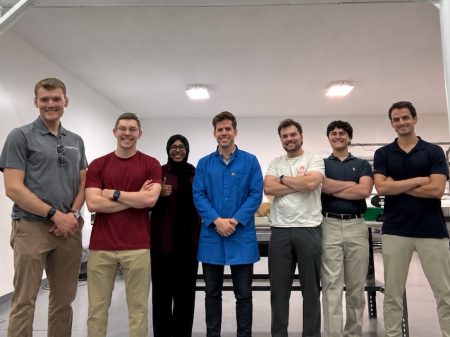




Jay Bartot has dedicated his professional life to the world of startups—building them from the ground up and guiding other founders through the treacherous early stages. After years of hands-on experience, he’s now taking on a new challenge: joining forces with another seasoned entrepreneur to test a bold theory. The idea is that much of the repetitive, foundational work of launching a company can be automated and accelerated with the help of artificial intelligence. Bartot is stepping into the role of chief technology officer for Lev, a company that aims to be an “AI co-founder,” providing the kind of support that usually requires a team of experienced advisors. His new position places him alongside Lev’s founder and CEO, T.A. McCann, as they work to turn McCann’s accumulated playbook into a software product that any aspiring founder can use.
Lev itself is the product of a practical experiment. It was born out of tools McCann and his colleagues developed internally at Pioneer Square Labs (PSL), a well-known startup studio in Seattle. While working there, they realized that many of the steps involved in vetting and building new businesses were highly repetitive and followed a predictable pattern. They started building software to streamline those processes, and the results were so promising that the tools became the foundation for a separate, standalone company. That company, Lev, leverages artificial intelligence to walk new founders through the entire early lifecycle: coming up with an idea, validating it with real customers, creating the necessary legal and business structures, and generating the initial wave of assets like customer outreach templates and product specifications. This spring, Lev officially spun out of PSL, complete with financial backing from the studio and its dedicated AI investment fund.
To make this AI co-founder truly useful, McCann and Bartot knew they needed to do more than just automate tasks; they needed to democratize the insider knowledge that seasoned founders often take for granted. This week, the company announced the launch of Lev Learn, a comprehensive, freely accessible library of startup terminology. It’s designed for the first-time founder who feels lost in a sea of acronyms and jargon. Instead of having to search for scattered definitions online, Lev Learn organizes concepts by topic, from customer discovery to fundraising, explaining everything in plain, approachable language. For example, a founder who is told they need to identify their ICP can quickly look it up and learn that it means “Ideal Customer Profile” and get a practical explanation of why it matters and how to define one. The knowledge is also integrated directly into the Lev platform, so as a founder works on their business plan, they can instantly access these contextual explanations without ever breaking their flow.
Bartot’s arrival at Lev is the culmination of a long and varied career in the Seattle tech ecosystem. He is perhaps best known as a co-founder of Farecast, a pioneering airfare prediction service that was acquired by Microsoft in 2008 and eventually became part of Bing Travel. Following that success, he went on to co-found Medicate, a medical information company sold in 2012, and Vhoto, a computer vision startup that was acquired by Hulu in 2015. These experiences gave him deep insight into both the technical challenges of building innovative products and the strategic challenges of scaling a business to an exit. For the five years before joining Lev, he served as the chief technology officer at PSL, where he was responsible for building the studio’s technical infrastructure and helping to launch many of the companies that came through its doors. He also spent time mentoring founders at institutions like the University of Washington and Creative Destruction Lab, further cementing his reputation as a builder and advisor.
For Bartot, the move to Lev feels like a natural convergence of his many skills. He enjoys the craft of building technology, but he also cares deeply about the human side of entrepreneurship—helping people avoid the costly mistakes he’s seen countless times. Lev allows him to scale that mentorship. Instead of working with one founder at a time, the AI can carry the core logic and best practices to thousands of users globally. He sees it as a way to capture the wisdom of the entire startup ecosystem and make it instantly available. He believes Lev can pull together all the different pieces he’s worked on throughout his career, creating a tool that not only helps someone start a business but also acts as a constant, intelligent companion on the journey. It’s an opportunity to move from building one-off solutions to building a platform that can change how companies are born.
The early traction suggests that Lev is filling a genuine need. In just four months since its public launch, the platform has seen its monthly signup rate grow seventeen-fold, with active users now spread across more than 50 countries. The demand is particularly strong in the academic and research world, as nearly one in ten of its institutional users comes from a university or research organization, suggesting that scientists and students are using it to help commercialize their discoveries. Despite the buzz, Lev remains a deliberately small, focused operation. The core team currently consists of Bartot and McCann, alongside Per Nilsson, who served as the company’s contract CTO before Bartot’s arrival, and Sahana Narendran, a design and development engineer. The company is still pre-revenue, but McCann has stated that they plan to introduce monetization features in the coming weeks, presumably shifting from a free access model to a tiered subscription or usage-based pricing structure. This next phase will test whether the AI co-founder can not only attract users but also generate sustainable revenue.