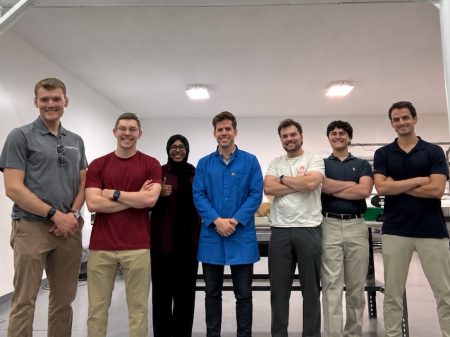




In the high-stakes world of medical research, where the race to develop new treatments can take decades and cost billions, a small but mighty team in Vancouver is working to change the fundamental rules of the game. ScopeSys, a seven-person startup founded in 2017, is on a mission to provide scientists with the precision tools they desperately need to understand the building blocks of life. The company is developing next-generation analytical instruments that allow researchers to observe, measure, and understand individual molecules of RNA and DNA. This granular, particle-by-particle insight promises to revolutionize how new genomic medicines are designed, tested, and manufactured, potentially making the entire pipeline faster, cheaper, and far more effective. At the helm is CEO Padma Kodukula, a seasoned biotech leader, who is steering this innovative company from its academic roots into a commercial powerhouse that could become a cornerstone of modern pharmaceutical development.
The core problem that ScopeSys is obsessed with solving is a profound limitation in how we currently analyze complex biological therapies. Genomic medicines—such as mRNA vaccines, gene therapies, and lipid nanoparticles that deliver genetic instructions—are inherently complex and heterogeneous. A single dose contains a dizzying array of particles, each with its own size, structure, and payload. However, the most common analytical methods used by pharmaceutical companies today treat these diverse populations as a single, averaged sample. They provide a mean average, a population average, which can mask critical variations. Imagine trying to understand a crowd of thousands by only knowing the average height; you’d miss the athletes, the children, and the people needing accessibility accommodations. In drug development, this “averaged” data can be dangerously misleading. It fails to reveal if a drug is actually reaching its target, if a formulation is stable over time, or if the manufacturing process is producing consistent quality. ScopeSys wants to eliminate this guesswork by giving scientists the ability to analyze each individual molecule and particle. This meticulous, one-by-one approach provides unprecedented clarity, allowing researchers to truly understand what they are making, why it works, and how to ensure every batch meets the highest standards of safety and efficacy.
ScopeSys’s breakthrough is built upon a proprietary technology called Convex Lens-induced Confinement (CLiC), which traces its roots to research at the University of British Columbia. This physics-based approach allows researchers to confine and observe single molecules in solution in a way that was previously impossible. By using light and lens technology to create microscopic wells of fluid, the CLiC system effectively “traps” individual molecules without altering their natural state. This allows scientists to watch dynamic behavior in real time, measuring properties like size, payload, shape, and how the molecule interacts with its environment. The technology acts as a powerful magnifying glass, not just to see a single grain of sand, but to inspect its every detail while it’s still on the beach. For drug developers, this translates into the ability to answer critical questions: Is my delivery vehicle actually carrying the genetic cargo? Is the structure stable enough to survive storage and injection? How will the drug behave once inside the body? By answering these questions with single-molecule precision, ScopeSys empowers biotech and pharmaceutical companies to make better, faster decisions, accelerating the journey from lab bench to patient bedside.
Kodukula’s journey with ScopeSys has been one of discovery, not just about the technology but about the market’s appetite for innovation. She was surprised to find how actively customers are seeking technologies that can offer a meaningful competitive advantage. While pharmaceutical teams are sophisticated and technologically advanced, they still face major analytical gaps that existing methods cannot close. They are not just looking for incremental improvements; they are hungry for cutting-edge tools that can answer previously unanswerable questions and provide actionable data that moves the needle. This realization has shaped ScopeSys’s strategy, confirming that the world is indeed ready for a new standard in analytical instrumentation. To compete with and complement the status quo, ScopeSys has fully embraced artificial intelligence as a force multiplier. Kodukula notes that AI has boosted their efficiency across nearly every facet of the business—from accelerating core scientific research and analyzing complex market data to refining product messaging and enhancing sales outreach. For a lean team of seven, AI is the ultimate team member, enabling them to operate with the speed and agility of a much larger organization. It allows them to be data-driven not only in the products they build but in the way they build the company itself, ensuring rigor, intelligence, and rapid iteration are at the core of everything they do.
One of the biggest hurdles for ScopeSys has been shedding its academic persona and proving its commercial viability. Because the technology was born in a university lab, some assume it remains a mere research project. In reality, ScopeSys is a revenue-generating business, actively translating years of scientific innovation into robust, reliable instruments and analytical services designed for the rigorous demands of pharmaceutical, biotechnology, and research laboratories. This transition from academia to commerce has required a series of tough decisions, the toughest of which has been balancing the need for short-term revenue with the long-term vision of building a scalable product company. While offering analytical services generates much-needed cash flow and validates the technology through customer partnerships, it can detract from the capital and focus required to commercialize their core instrument platform. Kodukula says this balancing act has required disciplined choices about hiring, capital allocation, and prioritizing product development over other opportunities. It is the classic entrepreneur’s dilemma: how to keep the lights on today while building the factory of tomorrow, and Kodukula has navigated this tension with a steady hand, ensuring that immediate needs do not derail the long-range mission.
For Kodukula, the path to success has clear milestones, but the journey is defined by a core philosophy rooted in perseverance. “There will be many hurdles,” she wisely advises her fellow entrepreneurs, “and some will feel overwhelming in the moment. Just keep moving forward.” This resilience, forged through countless challenges, is the bedrock of her leadership style and the company’s ethos. The definition of success for ScopeSys is equally clear: they will know they have made it when their technology is used as a standard tool in labs across the world. The goal is for CLiC-based instruments to become as ubiquitous as the microscope, playing a routine role in helping scientists build better drug formulations, accelerate process scale-up, understand product heterogeneity, and ultimately support the manufacturing and quality control of life-saving genomic medicines. By giving scientists the power to see the invisible, they are not just building a business; they are building the foundation for the next generation of medicine, one molecule at a time.