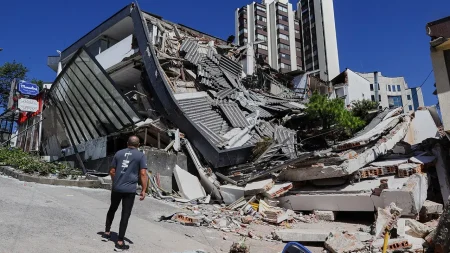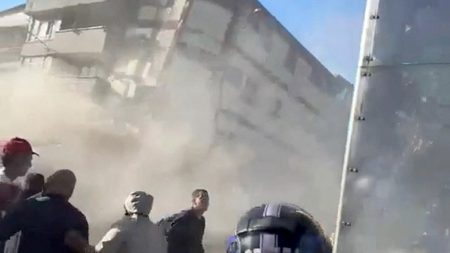




The war in Ukraine has long been a brutal, grinding conflict fought in the muddy trenches of the Donbas and the ruined streets of a hundred towns, but in the early hours of a humid August morning, the front line shifted dramatically to the ocean. Just before dawn, the port city of Novorossiysk—a massive commercial and naval anchor on Russia’s Black Sea coast—was jolted awake by the thunder of explosions. Ukrainian drones, silent until their engines kicked in, swarmed over the harbor, striking with a precision that terrified the inhabitants and crippled the region’s economic heartbeat. By daybreak, plumes of black smoke rose alongside the grain silos, and the enormous towers of the terminal stood useless, their loading arms frozen. Reuters reported that two of the major grain terminals were completely out of operation, and within hours, the ripple effect was felt in global markets: Chicago wheat futures spiked by a stark three percent. For the civilians who live here, the attack was not just an abstract statistic of war; it was the shattering of routine. Water supplies were suspended, residential blocks bore jagged holes, and a city that prided itself on bustling maritime trade was forced into a state of apocalyptic quiet. The sirens that wailed through the night were not just warnings of incoming missiles; they were the sound of a port—once the beating heart of Russia’s southern export economy—being turned into a battleground, where ordinary people now huddled in basements, wondering if the next explosion would be their last.
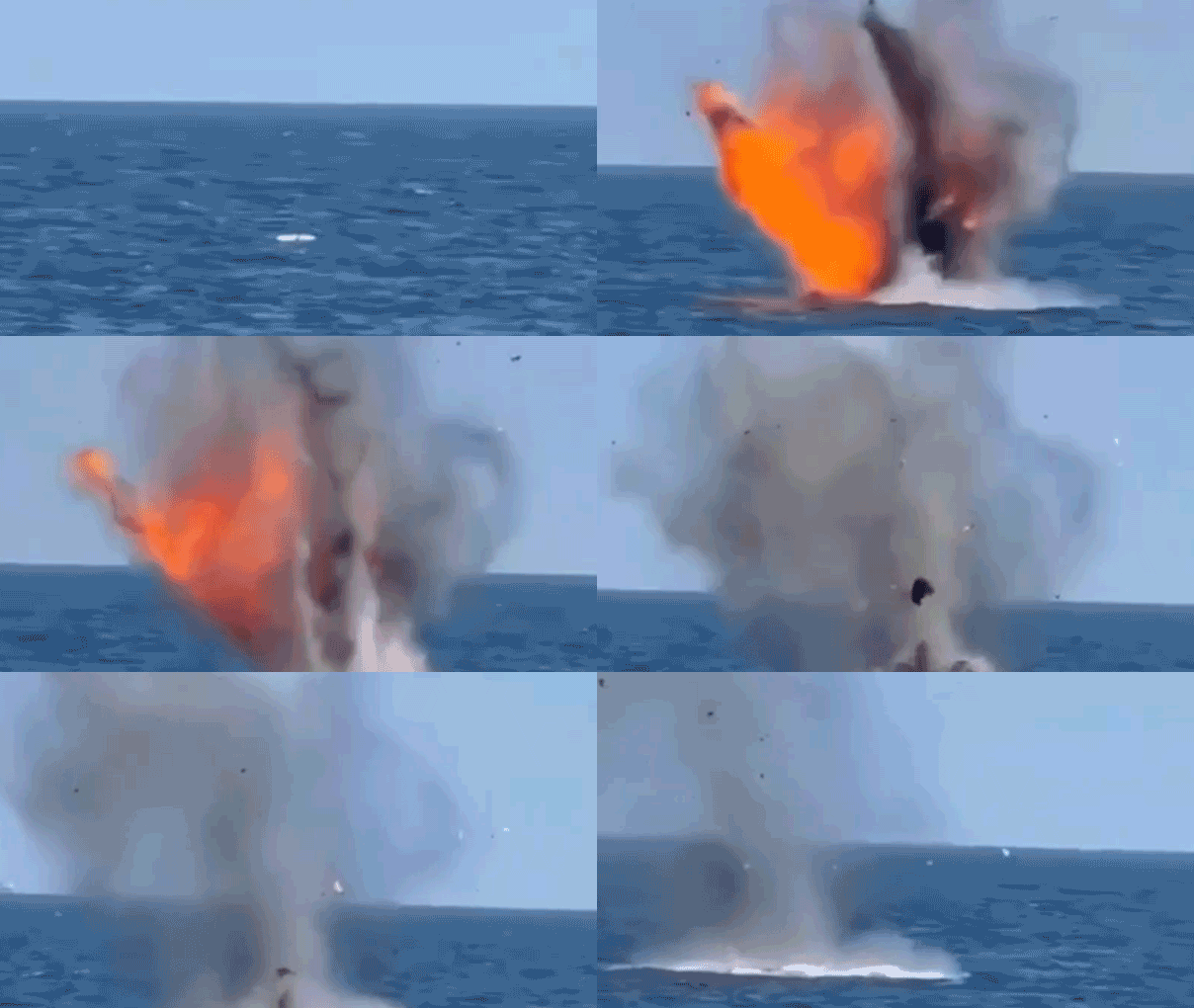
The strike was more than just a sabotage mission. Ukrainian President Volodymyr Zelenskyy, speaking with the bravado of a general who sees a turning tide, claimed responsibility early Wednesday morning, framing the operation as a direct assault on Russia’s naval pride. He described Novorossiysk as the “last major stronghold of the Russian fleet in the Black Sea,” a reference to how Moscow had been forced to relocate its warships here after an unrelenting campaign of Ukrainian attacks against its Crimean bases. In a post on X, he detailed the grim arsenal used: Palianytsia jet-powered drones, Neptune missiles, and unmanned naval systems that crept through the water to slam into piers and port infrastructure. “The occupation fleet and all the infrastructure supporting it will not be safe as long as Russian aggression continues,” he wrote, directly challenging Russia’s territorial waters. Yet while Zelenskyy framed it as a magnificent victory, the reality on the ground was deeply human. The governor of the Krasnodar region reported that at least two people were dead, including an eight-year-old child who had been sheltering in a residential building. The mayor, Andrei Kravchenko, tallied the damage: over two dozen residential buildings, four businesses, and an educational facility. The attack was a military triumph in Kyiv, but a living nightmare in the city that bore the blow. For the families who lost loved ones, the geopolitical significance of the strike meant nothing; all that remained was the hollow ache of grief and the rubble of what was once a safe home, a stark reminder that in modern warfare, the distinction between military targets and civilian life is often erased by the indiscriminate nature of drone strikes and missile barrages.
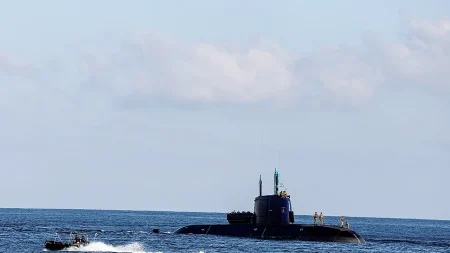
Thousands of miles east, in the cold, choppy waters near the island of Sakhalin, Russian President Vladimir Putin was projecting a different kind of power. Standing aboard the guided missile cruiser Varyag, surrounded by the gray metal of war machines, Putin observed massive Pacific Fleet exercises that stretched across the Sea of Japan, the Sea of Okhotsk, and the Northwest Pacific. The scale was staggering: more than 13,000 personnel, around 60 ships, submarines, and support vessels, and a fleet of aircraft and helicopters circling overhead. East2West footage captured Bastion coastal missile systems launching Oniks cruise missiles at simulated enemy ships from Kamchatka and the Kuril Islands, while the corvette Smerch fired its Uran anti-ship missiles into the sea, leaving white trails across the dark blue water. Surrounding this colossal display of naval might, Putin issued a chilling ultimatum directed not at Ukraine, but at the nations of Europe. The European Union, increasingly frustrated with Russia’s so-called “shadow fleet” of aging, uninsured tankers and cargo ships used to evade sanctions and transport oil and weapons, has expanded sanctions against hundreds of these vessels. Some European countries have gone further, detaining ships and their crews for inspections. Putin’s response, relayed by his Ministry of Foreign Affairs on X, was a threat of direct retaliation. “Attempts to seize Russian vessels & sell off our property are outright piracy,” he stated. “If such plans are implemented, Russia will respond in kind – wherever we deem necessary, including within the Pacific Fleet’s area of responsibility.” It was a warning designed to seed fear in the minds of European policymakers, a threat that hardening sanctions against Russian trade would not come without a violent maritime cost, turning the world’s oceans into a potential free-for-all where the rule of law is replaced by the rule of the strongest.
This simultaneous escalation in the Black Sea and the Pacific paints a picture of a conflict that has metastasized into a global naval chess game, one where far-flung oceans are now intimately connected. Putin, while observing the drills, took the opportunity to level accusations at NATO, claiming the alliance was expanding its presence in the Asia-Pacific and Arctic regions, building new military alliances, and planning weapons deployments that increased the potential for conflict. This harkens back to a Cold War grand strategy, where Russia feels encircled not just in Europe, but across the globe. However, the reality of this new phase is just as tangible in calm European waters. The same day, Romania reported that its naval forces had destroyed two suspected Russian Gerbera drones over the Black Sea, roughly 90 nautical miles from Constanta, a stark reminder that Russian drone programs are actively probing European airspace. In Brussels, NATO convened an emergency meeting of the North Atlantic Council to discuss Russian airspace violations in Poland and Romania and the recent spate of drone incidents. A NATO spokesperson affirmed a united front, condemning Russia’s actions, expressing solidarity with affected allies, and reaffirming support for Ukraine. Yet the diplomatic language could not mask the underlying tension: Russia is now actively testing the boundaries of the NATO alliance, both in the Eastern European skies and in the wide-open waters of the Pacific, forcing a Western alliance built for a land war to confront a maritime adversary. Behind closed doors, officials in Brussels and Washington are undoubtedly wrestling with the question of how far to push back, knowing that every show of force could be met with a reckless Russian response, while every hesitation could be interpreted as weakness.
Beyond the maneuvering of fleets and the rhetoric of presidents, the true cost of this maritime war is being paid in human suffering and global insecurity. The attack on Novorossiysk is not just a strike on a naval base; it is a blow to the world’s food supply. When the grain terminals went dark, the silence was a death knell for farmers in the Black Sea region and for nations across Africa and the Middle East that rely heavily on these exports for their daily bread. The 3% spike in wheat futures is a mathematical reflection of the anxiety that plagues markets, driving up prices for the poorest nations on earth. For a mother in Egypt or a baker in Somalia, the distant drone strike in a Russian port translates into higher costs for a staple that sustains families, creating a cascade of hunger that has nothing to do with territorial sovereignty. Meanwhile, the violence continues unabated on Ukrainian soil. Reuters reported that Russia struck the Ukrainian port of Odesa, another vital lifeline for grain exports, and a separate Russian attack set fire to a shopping mall in Zaporizhzhia. The imagery is brutal: flames licking the steel girders of a mall where families once strolled, or the quiet chaos of a city under drone attack where an eight-year-old’s life ends not with a bang, but with a collapsing ceiling. For the people of Krasnodar and Novorossiysk, for the civilians in Odesa and Zaporizhzhia, and for the millions of others dependent on global shipping lanes, the geopolitical posturing of Putin and Zelenskyy translates into very real terrors—sirens in the night, rumbling explosions, and empty shelves. The anxiety is palpable in every port city, where workers wonder if their daily job of loading cargo is worth the risk of being caught in the crossfire.
As the war grinds toward its fourth and a half year, the front lines have definitively spilled into the open ocean, threatening to upend the unwritten rules of international maritime law. Putin’s threat to seize European vessels is a radical escalation, a reciprocal strike designed to use the global economy as a hostage. If European nations seize Russian shadow fleet ships, Russia’s promise to “respond in kind” could mean seizing NATO-flagged cargo vessels, triggering a cycle of retaliation that could close major shipping lanes and push the world into an economic crisis. The drills in the Pacific are not merely a show of force; they are a signal that Russia is willing and able to project power far beyond its immediate neighborhood, prepared to challenge the US and its allies in regions traditionally seen as safe. The attack on Novorossiysk shows Ukraine is devising ever more sophisticated ways to hit Russia where it hurts economically and militarily, using a mix of cutting-edge drones and sea-faring autonomous weapons. The balance is precarious. A single miscalculation—a European warship boarding a Russian tanker, or a Russian missile striking a NATO merchant vessel—could escalate this regional conflict into a broader naval war no one truly wants. The world watches the grain ships move, the cruisers steam, and the drones fly, holding its collective breath, knowing that the next major battle of this war may not be fought on a muddy field, but on the dark, unforgiving waves where the flags of rivals now clatter in the wind. The ocean, once a highway for commerce and peace, has become the newest and perhaps most dangerous front of a war that refuses to end, leaving sailors, merchants, and ordinary citizens in its wake to navigate a terrifying new reality where every horizon holds the potential for conflict.