



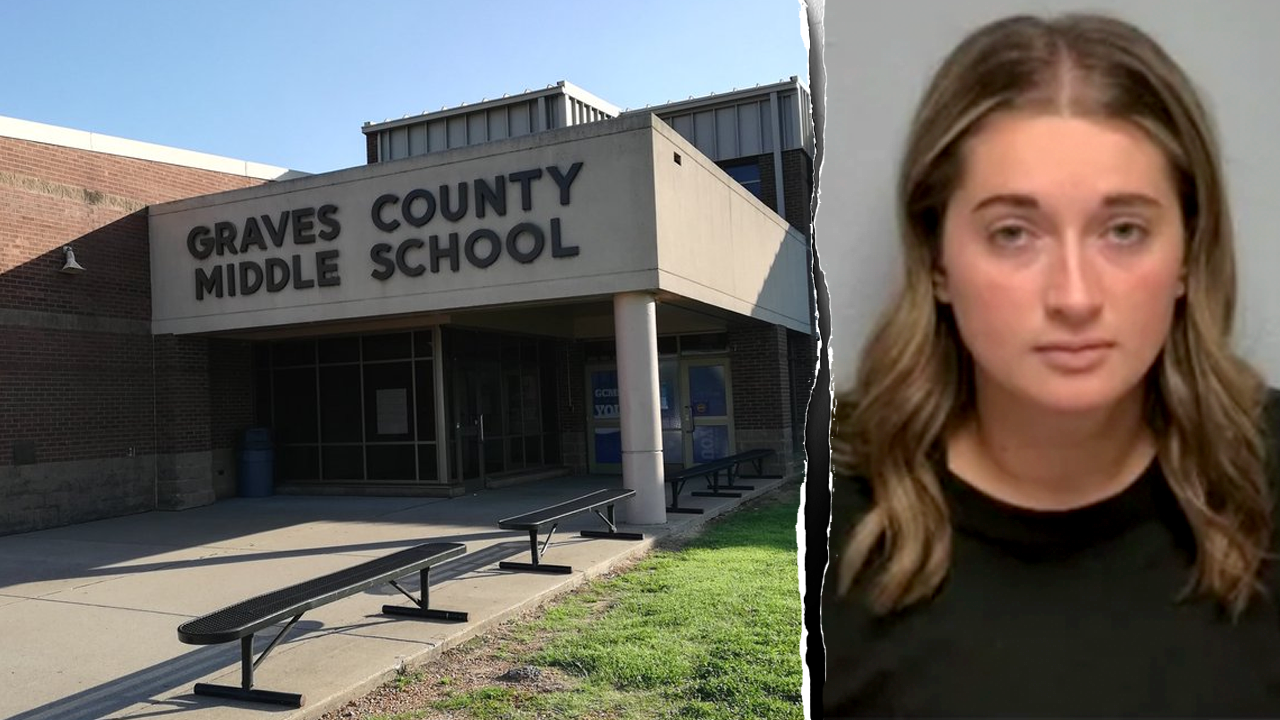
In a quiet, tight-knit community like Mayfield, Kentucky, the local school is often seen as the heartbeat of the neighborhood—a safe harbor where parents send their children with the expectation that they will be nurtured, educated, and protected. This foundational trust was shattered on a recent Friday afternoon when authorities announced the arrest of Sadie M. Flores, a 25-year-old teacher at Graves County Middle School. Flores now faces serious criminal charges after allegations of an improper relationship with a minor student crossed the line from a deeply concerning boundary violation into outright criminal behavior. For the residents of Graves County, the news was not merely a local headline; it was a visceral shock that sparked a wave of anxiety, anger, and profound sadness among parents who suddenly found themselves questioning the safety of the classrooms they trusted. The arrest of a young educator, tasked with guiding children through some of their most formative and vulnerable years, serves as a painful reminder of how easily the sacred bond between teacher and student can be exploited, leaving a community to grapple with the emotional fallout of a betrayal that hits closest to home.
The criminal charge brought against Flores—grooming a minor—carries a heavy significance that goes far beyond the immediate details of this specific case, reflecting a pivotal shift in how society and the legal system define and combat predatory behavior. Under a groundbreaking Kentucky law that went into effect just weeks prior on July 15, grooming was established as a Class D felony, specifically designed to close a dangerous legal loophole that historically left law enforcement handcuffed until physical abuse had already occurred. This legislative advancement recognizes that the process of grooming—the deliberate, systematic manipulation an adult uses to gain a child’s trust, isolate them from their protective networks, and desensitize them to inappropriate boundaries—is itself a devastating form of psychological abuse. By criminalizing the predatory cultivation of these relationships in their early stages, the state of Kentucky has sent a clear message that the law will no longer wait for physical tragedy to strike before intervening. This new legal framework provides a vital shield for children, acknowledging that the invisible scars of grooming are deeply damaging and that early, aggressive intervention is essential to halting predators before they can cause irreversible physical and emotional harm.
The rapid progression of the investigation highlights the critical role that digital forensics and swift law enforcement action play in protecting youth in the modern era. Upon receiving the initial report, detectives with the Graves County Sheriff’s Office, under the leadership of Sheriff Jon Hayden, launched an intensive investigation that quickly centered on the digital footprint left behind by the suspect. In today’s interconnected world, grooming rarely occurs in a vacuum; it is often facilitated by private messages, social media interactions, and digital platforms where predators believe they can operate away from the prying eyes of parents and administrators. By seizing electronic records and conducting thorough interviews, investigators were able to piece together a timeline of interactions that justified taking Flores into custody by late Friday afternoon. She was initially booked into the Graves County Restricted Custody Center before being transferred to an out-of-county detention facility as the active investigation continues to unfold. The meticulous and urgent work of these detectives underscores a sobering reality: protecting children from exploitation requires not only vigilant eyes in the physical classroom but also highly skilled digital investigations capable of exposing the covert communications that occur behind glowing screens.
In the wake of the arrest, the response from Graves County Schools demonstrated a commendable commitment to institutional transparency and immediate accountability, qualities that are too often lacking in historical cases of institutional misconduct. Superintendent Matt Madding released a public statement clarifying that as soon as school administrators became aware of the allegations, they bypassed internal bureaucracy and immediately reported the information directly to the Graves County Sheriff’s Department. Madding emphasized that while the district is legally limited in what it can disclose due to the ongoing nature of both the criminal investigation and internal personnel matters, student safety remains the absolute, non-negotiable priority of the school system. This proactive stance is a vital step toward healing a fractured community, proving that the district values the protection of its students above preserving its own public image. Historically, institutions have sometimes sought to minimize or quietly handle allegations of teacher-student misconduct to avoid scandal, but the decisive actions of the Graves County school board show a modern understanding that true institutional integrity is maintained only through complete cooperation with law enforcement and a refusal to tolerate even the suspicion of predatory behavior.
To truly understand the gravity of this situation, one must look at the psychological vulnerability of the victims—middle school students who are navigating the turbulent waters of early adolescence. Children between the ages of eleven and fourteen are in a transitional phase of development where they crave validation, identity, and a sense of belonging, making them uniquely susceptible to the sophisticated manipulation tactics of an adult authority figure. When a teacher, who represents safety, knowledge, and mentorship, begins to treat a student with special attention, gifts, or secret communications, the child’s perception of reality can easily become distorted. They may mistake predatory grooming for a special friendship or a sign of maturity, leaving them deeply confused and unable to comprehend that they are being victimized. The long-term psychological impact of such manipulation can be devastating, often leading to severe trust issues, anxiety, depression, and a shattered sense of self-worth that persists well into adulthood. Humanizing this crisis means recognizing that the victim in this case is not just a statistic in a police report, but a child whose sense of safety in the world has been profoundly compromised, requiring immense support, therapy, and compassion from their family and community to heal.
Ultimately, the arrest of Sadie M. Flores is a somber reminder that the battle to safeguard children is an ongoing, collective responsibility that requires constant vigilance from every segment of society. This incident does not exist in isolation; it mirrors a deeply troubling national trend of educators and mentors exploiting their positions of power, as seen in other recent headlines involving school counselors and teachers using digital platforms to lure unsuspecting youth. As technology continues to evolve, the methods used by predators will become increasingly sophisticated, making it imperative that parents, educators, law enforcement, and legislators remain united in their efforts to protect the vulnerable. Kentucky’s proactive new grooming law serves as a powerful blueprint for other states, demonstrating how modern legislation can adapt to meet the real-world threats facing children today. As the Graves County community begins the slow, painful process of rebuilding trust and supporting the affected students, the lesson remains clear: we must never grow complacent, we must listen to children when they show signs of distress, and we must continue to advocate for systemic safeguards that ensure our schools remain the sanctuaries of learning and safety they were always meant to be.