


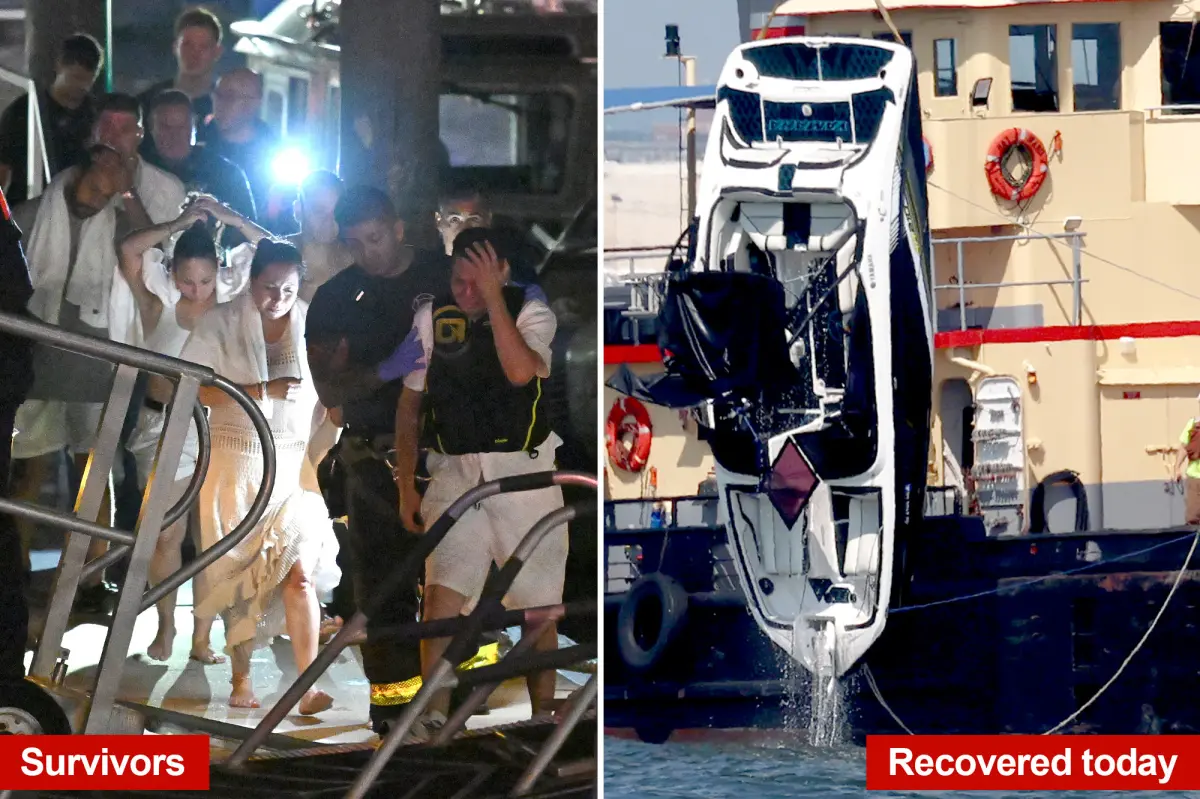
The waters surrounding New York City, with their iconic views of the skyline and the Statue of Liberty, have long been a symbol of hope, adventure, and recreation for residents and visitors alike. Yet, beneath the glittering reflection of the city lights lies a silent, unpredictable power that can transform an evening of leisure into an unimaginable tragedy in a matter of seconds. This painful reality was brought to the forefront on a dark Saturday night when a dangerously overcrowded motorboat capsized in the chilly depths of New York Harbor, claiming the lives of a young mother and her infant daughter. Sara Sanchez, a twenty-seven-year-old resident of College Point, Queens, and her five-month-old baby girl, Antonella Garcia, were identified by police sources as the two victims who perished in the devastating incident. For Sara, a young woman in the prime of her life, and her baby Antonella, whose journey on this earth had only just begun, a weekend excursion that was meant to create beautiful family memories instead ended in unspeakable heartbreak. The loss of these two precious lives has sent shockwaves of grief through their quiet Queens community and touched the hearts of people across the entire metropolitan area. As friends, neighbors, and strangers struggle to comprehend the sheer scale of this loss, the tragedy serves as a stark and painful reminder of how quickly joy can be eclipsed by disaster, leaving behind a void that can never be filled. The image of a young mother holding her infant close in her final moments is a deeply haunting one, painting a picture of maternal love and ultimate vulnerability against the overwhelming, indifferent forces of nature. Their untimely departures have left a family fractured, a father devastated, and a city mourning the loss of two of its own, forever altering the lives of those who knew and loved them.
The fateful voyage began on a warm summer evening, a time when the waters of the harbor are typically dotted with recreational boaters enjoying the gentle breeze and spectacular views. Aboard the 2019 twenty-one-foot white Yamaha AR210 was a group of fourteen passengers, including Sara Sanchez, her infant daughter Antonella, and the baby’s father, who was also Sara’s boyfriend. Under normal operating conditions, a vessel of this specific model and size is manufactured to comfortably and safely accommodate about ten passengers. However, as the boat navigated the dark waters near Liberty Island just before ten-thirty in the evening, the sheer weight of its human cargo proved to be a fatal liability. The boat was severely overloaded, carrying nearly three times the safe capacity recommended for the challenging conditions of that specific marine environment. Without warning, the vessel lost its stability, tipping violently and throwing its terrified passengers into the dark, churning waters of the harbor. Amidst the sudden darkness, the cold water, and the overwhelming panic of fourteen people fighting to stay afloat, a desperate struggle for survival began. For the father, the nightmare of seeing his partner and his newborn baby swept into the blackness of the bay is a trauma that defies description. Despite the rapid response of emergency personnel and nearby vessels who rushed to the scene to pull survivors from the harbor, the chaotic rescue efforts could not save everyone. When the water finally settled, the tragic cost of the overcrowding became painfully clear, leaving a family permanently broken and sparking urgent questions about how such a high-risk situation was allowed to unfold. The physical limitations of a recreational motorboat are not mere suggestions; they are vital boundaries designed to prevent precisely this kind of catastrophic failure, yet on this night, those boundaries were ignored with fatal consequences.
To those unfamiliar with maritime navigation, the waters of New York Harbor might appear to be a serene and easily manageable playground, but seasoned mariners know a vastly different reality. A well-placed source who spoke about the incident described recreational boating in the harbor as akin to the “Wild West,” pointing out the myriad hidden dangers that lurk beneath and on the surface of the water. This bustling maritime highway is fraught with hazards, including uncharted debris, rugged riprap, massive concrete bridge abutments, heavy anchorage chains, and active commercial shipping channels. Furthermore, boaters must constantly contend with marine plane traffic and the massive, unpredictable wakes generated by commercial ferries, tugboats, and cargo ships. Because of these intense, overlapping challenges, the source emphasized that the ill-fated vessel should not have been carrying more than five passengers given the location where the fatal incident occurred. Navigating such a complex and high-traffic environment requires utmost precision, respect for the elements, and strict adherence to weight and occupancy limits. When a boat is carrying far too many people, its center of gravity shifts dangerously, reducing its responsiveness to sudden waves or steering adjustments and making it highly susceptible to capsizing. On that tragic Saturday night, the intersection of an overloaded boat and the treacherous, unforgiving conditions of the harbor created a perfect storm. The deceptive calm of the harbor at night, illuminated by the dazzling lights of Manhattan, can lure recreational boaters into a false sense of security, masking the strong, swirling currents and deep waters below. The harsh reality is that the harbor is not a controlled recreational park but a working commercial waterway where mistakes are punished swiftly and severely, a lesson that was learned in the most painful way possible by the victims of this disaster.
In the wake of this devastating event, the focus of law enforcement and the public has turned sharply toward the issue of accountability and the actions of the boat’s operator. Manuel Hernandez, a forty-six-year-old man whose last known address was located in a luxurious Midtown Manhattan residential building just south of Central Park, was at the helm of the vessel during the fatal voyage. Following the incident, Hernandez was arrested and hit with thirteen counts of reckless endangerment, representing each of the surviving passengers who were placed in mortal peril under his watch. Police sources have indicated that further, more severe charges are highly anticipated as the investigation continues to unfold, specifically focusing on the tragic deaths of Sara Sanchez and her baby, Antonella. At this stage, the exact nature of the relationship between Hernandez and the victims remains unclear, leaving investigators to piece together the events and decisions that led up to the launch of the overcrowded boat. The legal system will now seek to determine the level of negligence involved in operating a recreational vehicle with nearly three times its safe capacity in one of the busiest harbors in the world. The stark contrast between Hernandez’s upscale Manhattan lifestyle and the watery tragedy that claimed two lives underscores the universal reach of grief and the equalizer of maritime law. As the prosecution builds its case, the charges serve as a solemn reminder of the profound legal and moral responsibilities that come with captaining a vessel. A boat captain is legally bound to ensure the safety of everyone on board, a duty that includes refusing to operate an overloaded boat and understanding the limits of both the vessel and the waters it traverses. In the eyes of the law, captaining a vessel is not merely a leisure activity but a serious undertaking requiring vigilance, sound judgment, and an unwavering commitment to human life.
Beyond the legal proceedings and the technical details of the investigation, the human cost of this tragedy is what truly resonates with the public. The sudden loss of Sara and Antonella has left an irreplaceable void in the lives of their family, most notably for the surviving father who witnessed the entire horrifying ordeal. To lose both a partner and a newborn child in a single, chaotic moment is a level of grief that is almost impossible to comprehend, leaving deep emotional scars that will last a lifetime. In College Point, Queens, where the family resided, a quiet sense of mourning has settled over the streets as neighbors struggle to come to terms with the news. This was a young family with their entire future ahead of them, a mother who was experiencing the unique joys and milestones of her baby’s first year of life—milestones like Antonella’s first smiles, her soft babbles, and the promise of her first steps, all of which were cruelly stolen away. The tragedy has prompted a wave of sympathy and support from the local community, as well as discussions about the importance of emotional support for those who survive such traumatic events. The physical injuries sustained by the other passengers on board may heal over time, but the emotional and psychological trauma of that night will linger indefinitely. Rescue workers, too, carry the heavy burden of having pulled the victims from the water, a stark reminder of the emotional toll that first responders face when dealing with water-related fatalities. This heartbreaking event has brought a community together in grief, highlighting the deep bonds of empathy that connect us all when tragedy strikes our neighbors. In the quiet corners of College Point, candles are lit and prayers are whispered for a mother and child whose laughter will never again fill their home.
As the city moves forward, this painful incident must serve as a catalyst for meaningful change and a renewed commitment to boating safety. The waters of New York Harbor are beautiful but uncompromising, and the rules governing their use must be respected to prevent future loss of life. Authorities are being urged to increase patrols, enforce occupancy limits more strictly, and educate recreational boaters on the unique hazards of the local waterways. We must honor the memories of Sara Sanchez and baby Antonella by ensuring that their deaths were not in vain, but rather a turning point that leads to safer practices on the water. It is a collective responsibility to protect those we love and to respect the powerful environments we choose to explore. Every time a boat sets sail, the lives of everyone on board are placed in the hands of the operator, demanding a level of care that must never be compromised. As we reflect on this tragedy, our hearts go out to the grieving family, and we are reminded to cherish every moment with our loved ones, knowing how fragile our time together truly is. The legacy of Sara and Antonella should be one of increased awareness, vigilance, and compassion, serving as a beacon of safety for all who venture onto the water. Let us carry their stories in our hearts as we work to ensure that no other family has to endure the devastating heartbreak of a night on the water turned into a lifetime of sorrow. May the memories of this young mother and her beautiful infant girl remain eternally bright, serving as a gentle, guiding light over the dark harbor waters, reminding us all of the sacred value of life and the absolute duty we have to protect it at all costs.