




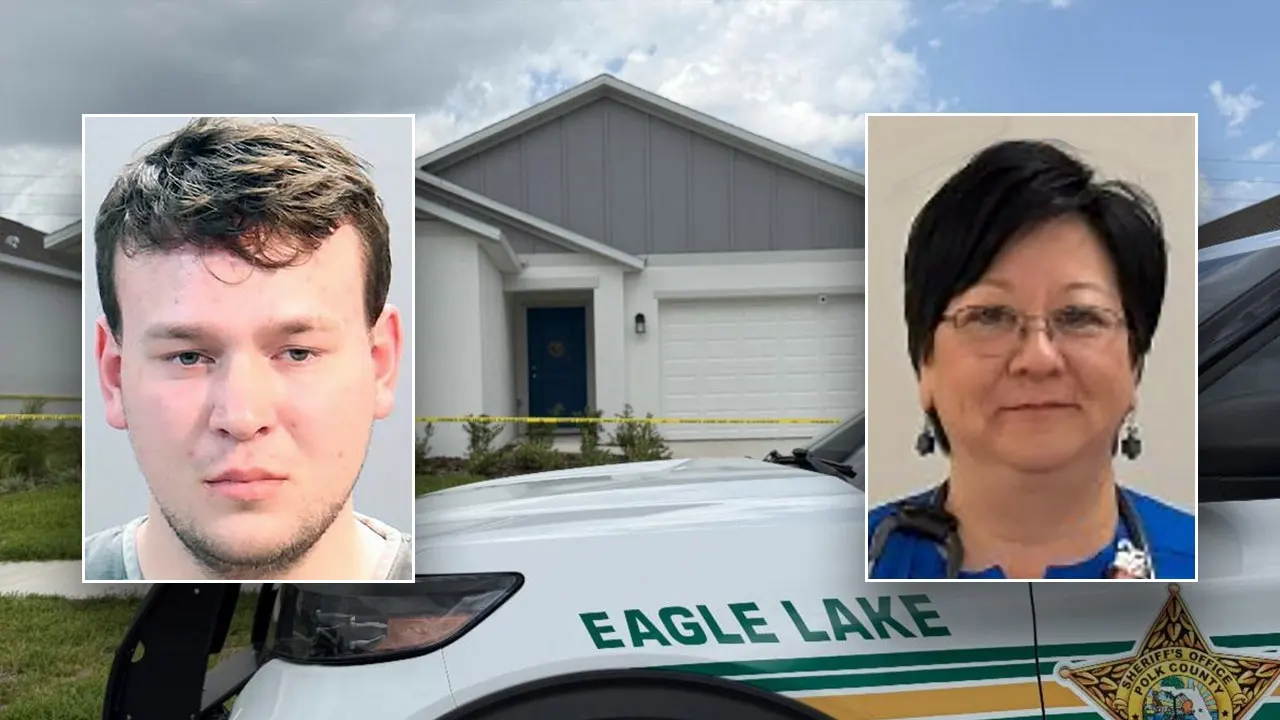
The tragedy of Margaret Chu Dufour is a heartbreaking testament to the lengths a mother will go to save her child, even when that devotion places her in the path of unimaginable danger. A fifty-six-year-old nurse who dedicated her professional life to healing patients on the surgery floor at Bartow Regional Medical Center, Margaret was known by those around her as a deeply compassionate and nurturing soul. Her ultimate, fatal struggle, however, was not fought in the sterile rooms of a hospital, but within the walls of her own home as she desperately tried to rescue her twenty-one-year-old son, Gibson Nash, from the severe mental illness that gripped him. Family members later shared that Gibson battled a devastating combination of bipolar disorder, schizophrenia, and autism. Believing that a fresh start in Florida and access to specialized psychiatric care could provide the breakthrough her son so desperately needed, Margaret made the profound sacrifice of relocating. In doing so, she demonstrated an unconditional maternal love, refusing to abandon her son to his demons or the cold reality of the criminal justice system.
This tragic end, however, was preceded by a long and terrifying history of domestic turmoil that foreshadowed the violence to come. Months earlier, while mother and son were still living in Knoxville, Tennessee, Gibson’s mental state had deteriorated to a highly dangerous degree. In April, Margaret was forced to make a desperate 911 call from the relative safety of a smoke shop, having locked her son outside in her vehicle after he physically assaulted her. During that terrifying episode, she explained to dispatchers that the only way she could appease him was by agreeing to drive him to the store. Shortly thereafter, Gibson was arrested for threatening her life with a knife, an offense he repeated later that same month during a violent outburst triggered by a trivial dispute over playing on his Xbox. Despite these chilling warning signs, Margaret’s protective instincts prevailed; she returned to Tennessee to personally bond him out of jail, firmly believing that his actions were the product of a broken mind rather than a malicious heart, and that proper medical intervention—not a jail cell—was the key to his salvation.
In search of this peaceful sanctuary, Margaret moved to Polk County, Florida, where she bought a house and began her new job. Her introduction to her new neighborhood was marked by a heartwarming interaction with the Polk County Sheriff’s Office, whose deputies stepped in to help her unpack her belongings after a predatory moving company attempted to scam her. This brief moment of community warmth stood in stark, devastating contrast to the horror that would unfold in that very home just a month later. On the morning of July 21, the fragile peace Margaret had worked so hard to establish was violently shattered. Inside the home she had lovingly prepared, the very son she had rescued from incarceration turned on her in a fit of savage, manic rage. The security and hope she had sought for them both dissolved in an instant of profound domestic horror, transforming her sanctuary of healing into a grim crime scene.
The first signs of the tragedy became public not at the home, but on the busy roads of Polk County just before 7:00 a.m. Gibson Nash, driving his mother’s blue BMW SUV, embarked on a chaotic and reckless rampage, causing multiple traffic collisions and leaving a trail of shattered glass and crumpled metal in his wake. After fleeing the initial crash, he struck several other vehicles, causing severe property damage, triggering chain-reaction accidents, and injuring three innocent people who had to be rushed to a local hospital. When deputies finally stopped the SUV, they discovered Gibson unconscious behind the wheel, his hands, feet, and clothing saturated with blood. This detail deeply perplexed first responders, as the physical damage to the vehicle, though significant, did not explain the sheer volume of blood on his body. As medical personnel rushed him to the hospital, where he was sedated and intubated, doctors discovered he was also suffering from acute liver failure caused by a massive, intentional overdose of Tylenol, signaling a desperate attempt to escape the reality of the violence he had committed.
With Gibson hospitalized and unable to speak, investigators traced the SUV’s registration back to Margaret’s residence, where they were met with an ominous silence. Noting a broken glass plate near the patio door and a shovel resting suspiciously against the side of the house, deputies used a key left on the front porch to gain entry. Inside, they made the gruesome discovery of Margaret’s body, which had been subjected to an extraordinarily brutal physical assault. The medical examiner later confirmed that she died from a combination of blunt force trauma and strangulation. Polk County Sheriff Grady Judd, a veteran law enforcement officer with over five decades of experience, was visibly shaken by the scene, describing the homicide as one of the most intensely violent and rage-filled crimes he had ever witnessed. Forensic testing quickly linked Gibson to the murder, revealing that the blood on his clothing belonged to his mother, while severe bruising on his own knuckles and feet physically documented the relentless nature of the fatal beating he had delivered.
Today, Gibson Nash is held without bond in a Polk County jail, facing charges of first-degree murder alongside multiple felony counts for fleeing the scene of an injury accident. While his father has retained a defense attorney who has shielded him from police interrogation, the overwhelming physical evidence speaks for itself, leaving the community to grapple with a profound sense of loss and anger. Sheriff Judd has publicly advocated for Nash to be locked away from the public permanently, characterizing him as a volatile and lawless threat to society. Yet, beneath the legal proceedings and the shocking headlines lies a deeply human tragedy about the systemic failures of mental health care and the devastating vulnerability of families left to manage severe psychiatric illnesses on their own. Margaret Chu Dufour’s legacy remains one of ultimate selflessness—a dedicated healer who spent her life caring for strangers, and who ultimately laid down her life in a tragic, desperate attempt to save the son she loved.