



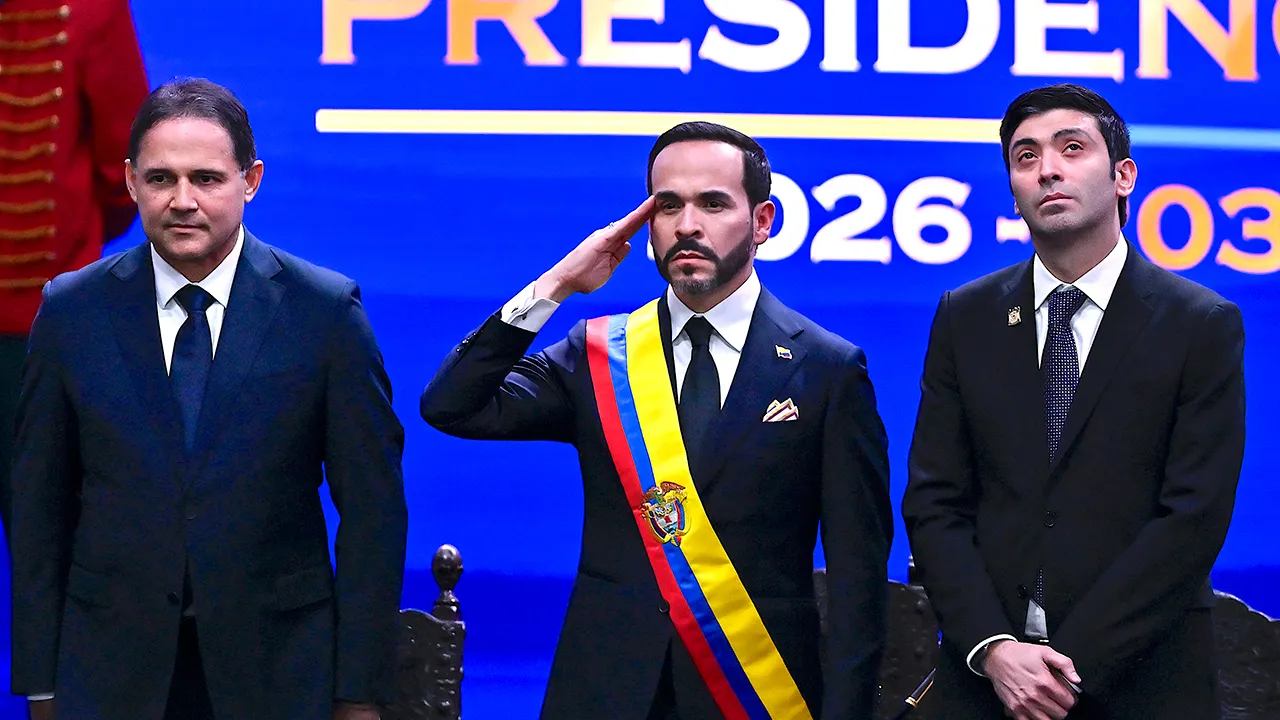
Under the heavy gaze of a nation caught between deep-seated anxiety and fierce hope, Colombia turned a truly monumental and anticipated political page on this historic Friday as conservative firebrand Abelardo de la Espriella was officially sworn in as the country’s president. The atmosphere at the Pichincha Battalion military base in Cali was charged with a palpable sense of historical consequence, a dramatic departure from the grand, reformist promises of his predecessor, Gustavo Petro. Affectionately and formidably known by his supporters as “El Tigre” (the tiger), de la Espriella’s rise to power represents far more than a mere change in leadership; it signals one of the most profound and sharpest ideological realignments in Latin America’s recent history. For four years, the Colombian populace lived under the banner of Petro’s ambitious but highly controversial “Total Peace” strategy—a period characterized by sprawling coca fields, deteriorating security, and increasingly chilly relations with traditional allies in Washington. Standing before a crowd of disciplined soldiers, hopeful citizens, and high-ranking foreign dignitaries, the new president delivered a stark, uncompromising message designed to shake the nation out of its perceived lethargy. “I have come to close a long chapter of national resignation,” de la Espriella declared, his voice echoing across the parade grounds with deliberate intensity, promising a sweeping transformation of the nation’s destiny. This highly anticipated ceremony itself served as a powerful showcase of regional conservative solidarity, drawing prominent right-wing leaders like Argentina’s iconoclastic Javier Milei, Ecuador’s Daniel Noboa, and Chile’s José Antonio Kast, alongside global figures such as Spain’s King Felipe VI and FIFA President Gianni Infantino. Even the United States signaled its keen interest in this new chapter by sending a high-level delegation that included Acting U.S. Attorney General Todd Blanche. This gathering of global and regional influence underscored a shared recognition that Colombia’s trajectory does not just affect its own citizens, but fundamentally shifts the geopolitical equilibrium of the entire Western Hemisphere and serves as a critical bellwether for the future of democratic institutions across the Americas.
For decades, the complex bond between Bogotá and Washington has historically served as the indispensable bedrock of security, trade, and regional defense in South America, a vital partnership that had grown increasingly strained and uncertain under the previous left-wing administration. De la Espriella wasted no time in demonstrating his eagerness to repair and reinforce this historic alliance, immediately signing Colombia up to “The Shield of the Americas”—a regional security coalition championed by former U.S. President Donald Trump. This decisive executive action was not merely symbolic; it was a loud, defiant declaration that Colombia is once over open for business, eager for security collaboration, and ready to stand shoulder-to-shoulder with the United States on the global stage. From the bustling corporate boardrooms of multi-national companies operating in Bogotá to the dusty, precarious border towns dealing with the devastating humanitarian fallout of regional displacement, the long-term health of U.S.-Colombian relations directly influences migration patterns, counter-narcotics efforts, and the fight against transnational organized crime. The new president’s foreign policy doctrine is a dramatic, hawkish pivot, promising to restore full diplomatic and intelligence cooperation with Israel while adopting an uncompromising, adversarial stance against the authoritarian regimes governing Venezuela, Cuba, and Nicaragua. By positioning Colombia as a bulwark of conservative, democratic capitalism in a region that has frequently drifted toward populist left-wing movements, de la Espriella hopes to attract much-needed foreign investment and military aid. Yet, this aggressive geopolitical repositioning is not without its domestic critics, who worry that aligning too closely with Washington’s partisan interests could drag Colombia into larger global conflicts. For the average Colombian citizen, however, the primary concern is whether these lofty international agreements will translate into safer neighborhoods, stable prices, and a restored sense of national pride that has felt painfully absent in recent years. They watch as neighboring nations experiment with different political systems, keeping their fingers on the pulse of a changing continent, hoping their nation’s newly minted stance brings peace and lasting stability to their own homes.
The primary obstacle standing between de la Espriella’s grand national vision and actual implementation is a crushing fiscal reality that threatens to derail his administration before it even gets off the ground. As Camilo Guzmán, the insightful executive director of the Libertank think tank, dryly noted, the new president inherits a house with a leaking roof and an empty safe. This vivid analogy captures the quiet desperation facing Colombia’s economic policy planners, who must now grapple with a soaring 2026 deficit projected at an alarming 6.5% to 6.7% of the nation’s Gross Domestic Product. With a massive financing gap hovering close to $34 billion and a looming medium-term fiscal adjustment equivalent to five percentage points of GDP, the administration’s challenges are not merely theoretical accounting problems; they are immediate, tangible cash crises. Before the new cabinet can even begin drafting legislation to fund new policing initiatives, rebuild deteriorating infrastructure, or incentivize private enterprise, they must scramble to find the liquid cash simply to meet the government’s basic payroll obligations. The International Monetary Fund paints an equally sobering picture, forecasting a sluggish economic growth rate of just 2.3% for the current year while inflation remains stubbornly elevated, squeezing the purchasing power of everyday Colombians. This fiscal straightjacket severely limits de la Espriella’s room to maneuver, forcing him into a politically painful corner where any major new security initiative or tax incentive must be paid for with deeply unpopular spending cuts or controversial revenue-raising measures. For the millions of low-income families who voted for “El Tigre” in the hope of immediate financial relief, the cold reality of a bankrupt treasury means that patience will be a mandatory virtue in the difficult months ahead. As public services strain under the weight of these financial constraints, ordinary citizens are left to wonder if the new administration can balance the budget without further burdening those who are already struggling to survive on the margins of society and if the promise of prosperity is merely a distant, unreachable mirage.
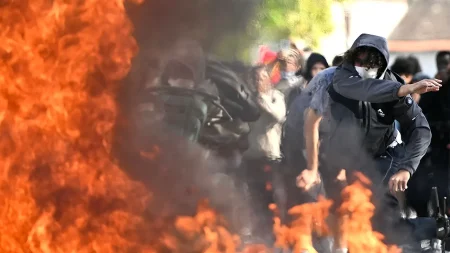
Beyond the quiet math of fiscal deficits, a second, far more violent fire rages across the Colombian landscape: a pervasive and escalating security crisis that has left local communities living in constant terror. Over the past several years, sophisticated criminal syndicates, heavily armed drug cartels, and historic leftist guerrilla factions have aggressively expanded their territorial control, taking advantage of the vacuum left by the previous administration’s halting and controversial peace negotiations. The human cost of this security breakdown is devastating, with the first half of 2026 closing out with the highest homicide count recorded for any first semester in over a decade, accompanied by a relentless, daily surge in extortion targeting small business owners, street vendors, and farmers alike. In many rural provinces, the authority of the state has effectively ceased to exist, replaced by the brutal, arbitrary rule of armed groups who finance their operations through illegal gold mining and an unprecedented boom in coca cultivation. De la Espriella’s brand of tough-on-crime rhetoric, featuring promises of rapid military deployments, targeted captures of high-level cartel leaders, and high-profile crackdowns, has struck a deep, emotional chord with a public exhausted by constant lawlessness. However, security experts like Guzmán warn that rebuilding the rule of law is an agonizingly slow process that must be measured in years rather than academic quarters or political cycles. While the new administration will undoubtedly prioritize visible victories and aggressive policing operations during its first one hundred days to project state strength, achieving structural safety will require rebuilding hollowed-out intelligence networks, restoring public trust, and offering viable economic alternatives to the impoverished rural populations who are currently dependent on the illicit drug trade. Without these comprehensive efforts, tactical operations will only provide temporary relief, leaving the underlying societal wounds to fester and fuel the next cycle of violence that threatens to tear the country apart at its very seams. True safety is built from the ground up, requiring patience, investment, and a profound commitment to human dignity.
Even if “El Tigre” manages to navigate the financial minefield and stabilize the security situation, he faces an equally daunting political battle inside the halls of Congress, where his bold legislative agenda must confront a highly fragmented and skeptical legislature. Despite winning a decisive mandate in the presidential election, de la Espriella’s political party holds a meager five seats in the Senate, leaving him dwarfed by Petro’s “Historic Pact,” which remains the largest and most disciplined political bloc in the country. This stark political math means that the new president cannot simply govern by executive decree; instead, his administration will be forced to engage in grueling, bill-by-bill negotiations with centrist, independent, and traditional establishment parties to pass any major security reforms, fiscal adjustments, or economic packages. We saw an early warning sign of this legislative gridlock during the fiercely contested battle over the Senate presidency in July, highlighting just how fragile, volatile, and undisciplined de la Espriella’s loose governing coalition actually is. To pass his signature policies, the president will have to master the delicate art of political compromise, a task that may sit uncomfortably with his aggressive, uncompromising public persona. For the idealistic voters who supported his campaign because they wanted a complete, unadulterated break from the traditional political class, watching their leader trade favors and modify key proposals to appease moderate politicians may feel like a frustrating betrayal of his populist promise. Yet, this is the inescapable reality of modern Colombian democracy, where the path to reform is always paved with compromise, and where a president’s ultimate success is determined by his ability to build pragmatic legislative bridges with the very establishment he campaigned so fiercely against. In this complex political arena, every single bill becomes a high-stakes test of political survival, requiring de la Espriella to balance his fiery rhetoric with backroom pragmatism, a delicate dance that will ultimately define the boundaries of what his administration can realistically achieve for the nation and its citizens during his term.
Ultimately, the true test of de la Espriella’s presidency will not be decided by the grand statements made during his inauguration, but by how effectively he manages the massive, precarious gap between soaring public expectations and structural reality during his first one hundred days in office. As analysts point out, this critical early period will produce signals rather than concrete, structural results: cabinet appointments, emergency spending decrees, a preliminary tax reform bill, and a revamped national security package. Managing this transition requires a rare level of political honesty, as the new president must explicitly communicate to a weary public that putting a broken house back in order takes time, and that credibility is the single most valuable asset he can build in these early days. Investors, international policymakers, and ordinary families alike will be watching closely to see if he takes the high-risk steps of formally abandoning peace talks with the ELN guerrilla group, resuming aerial coca fumigation, and restoring full diplomatic ties with Israel. These decisions carry immense political, environmental, and social consequences, representing a direct, aggressive challenge to the legacy of the Petro era and setting the definitive tone for Colombia’s future. For the millions of ordinary Colombians who go to sleep every night praying for a safer, more prosperous country, the presidency of “El Tigre” represents a high-stakes gamble on the power of authority, order, and free-market economics. Whether he succeeds in delivering a profound transformation or is forced to scale back his ambitious agenda by the country’s harsh financial and political realities, the resilient spirit of the Colombian people will always remain the true compass guiding this nation through its latest, most dramatic ideological storm. As the nation embarks on this uncharted journey, the world watches to see if a tiger can truly change the course of a country’s history, or if the deep-seated currents of political division and economic hardship will prove too strong for even the most determined of leaders to overcome in the very end.