



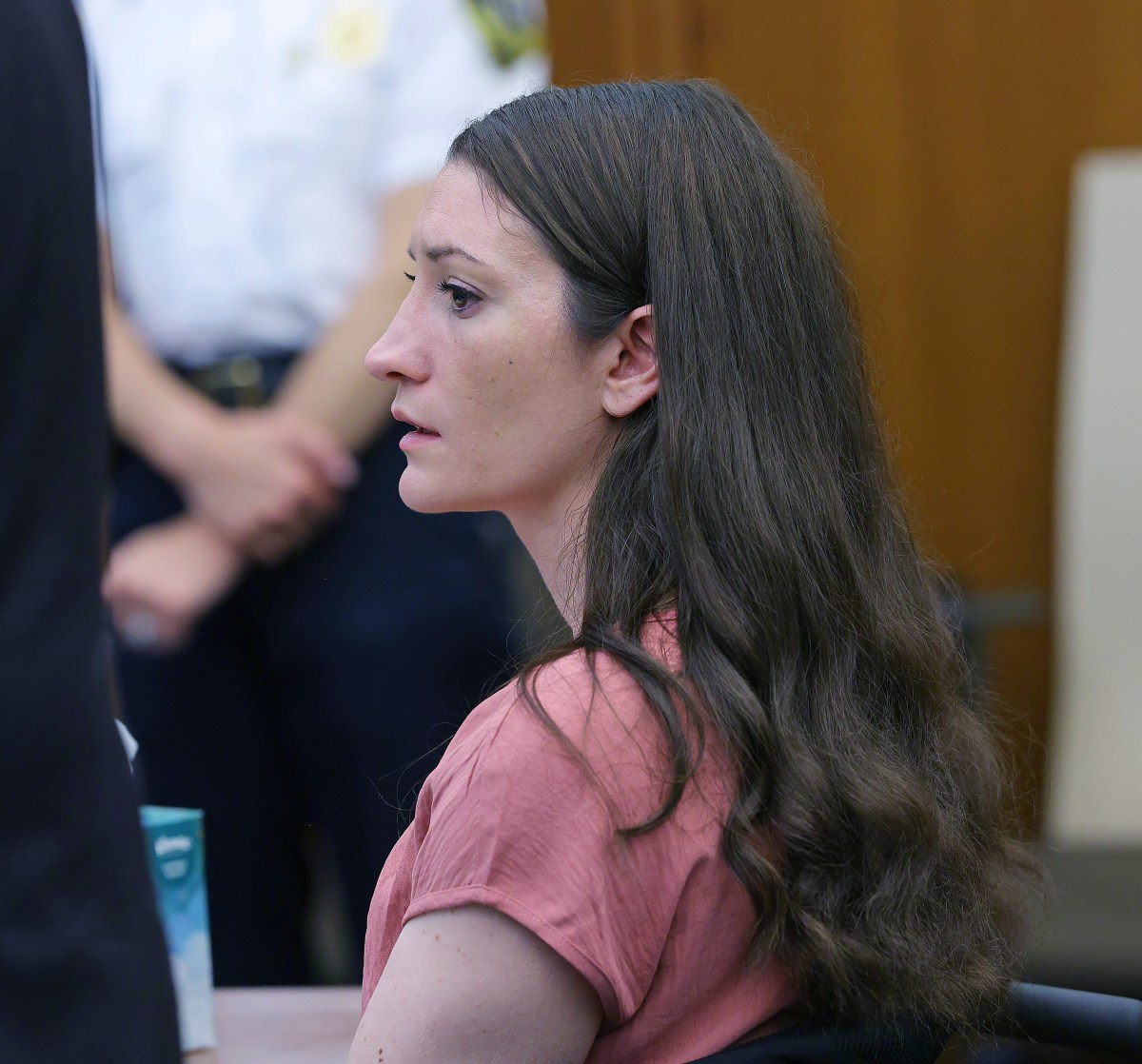
The second week of Lindsay Clancy’s high-profile murder trial in Plymouth Superior Court cast a stark, heartbreaking light on the unimaginable tragedy that shattered a Massachusetts family, revealing a courtroom charged with raw grief, clinical debate, and fierce legal maneuvering. At the center of this agonizing trial sits thirty-five-year-old Lindsay Clancy, a former labor and delivery nurse at Massachusetts General Hospital—a woman who spent her career helping mothers bring new life into the world, now accused of taking the lives of her own three precious children: five-year-old Cora, three-year-old Dawson, and eight-month-old Callan. The defense has painted a devastating portrait of a loving mother utterly consumed and unmoored by severe postpartum psychosis, arguing that an insidious psychiatric crisis stripped her of her sanity and left her entirely unable to comprehend the nature or consequences of her actions on that fateful January day in 2023. Conversely, the prosecution presents a far more calculated and chilling narrative, asserting that Clancy was fully aware of her actions, criminally responsible, and capable of deliberate planning both before and after the tragedy. As the trial progressed into its second week, the courtroom became an arena where psychiatric science, personal tragedy, and the rigid boundaries of the law collided, forcing jurors to grapple with the haunting question of whether the defendant is a victim of a catastrophic mental health failure or a perpetrator of premeditated murder. The atmosphere remained dense with sorrow as family members, medical professionals, and legal teams offered deeply conflicting accounts of Clancy’s mental state, leaving those in attendance to wonder how a household once defined by warmth and maternal devotion could transform into a scene of such profound and irreversible devastation. This trial represents not only a legal battle over guilt and innocence but a deeply public examination of maternal mental illness, exposing the painful disconnect between who Lindsay Clancy was as a dedicated caregiver and the horrifying acts she is accused of committing during her darkest hours.
The emotional volatility of the proceedings reached a boiling point during the presentation of highly sensitive forensic and medical evidence, culminating in a dramatic, hostile confrontation between the legal teams that required swift judicial intervention. As the prosecution presented agonizing details from the Office of the Chief Medical Examiner regarding the autopsy of eight-month-old Callan, the youngest of the Clancy children, Lindsay became visibly overwhelmed with grief, sobbing uncontrollably from her wheelchair. In a moment of sharp friction, defense attorney Kevin Reddington stood up and fiercely accused the prosecutor of whispering “shut her up” in response to Clancy’s emotional breakdown, comparing the state’s alleged attitude to the dystopian subjugation of women in The Handmaid’s Tale and declaring that the court could not simply tape his client’s mouth shut. The prosecution immediately and vehemently denied the accusation, clarifying to Judge William Sullivan that the phrase uttered was actually “shut it off”—a direct request to a colleague to remove the sensitive, distressing autopsy photographs from the courtroom monitors to prevent further distress. Although the misunderstanding was quickly clarified, the visceral clash temporarily ground the proceedings to a halt and prompted a stern, zero-tolerance warning from Judge Sullivan, who admonished everyone in the courtroom that no commentary, outbursts, or side-talk would be permitted from either side under threat of immediate removal. This intense exchange highlighted not only the immense psychological strain placed upon the defendant but also the fragile emotional climate of a courtroom where every word, gesture, and tear is scrutinized under the microscope of a high-stakes legal battle. It underscored how quickly the clinical presentation of medical facts can dissolve into raw human pain, laying bare the deep trauma that permeates every corner of this trial.
Among the week’s most profound moments was the rare and quiet sound of Lindsay Clancy’s own voice, breaking her long-held courtroom silence for the first time since the trial commenced. Sitting in her wheelchair—a poignant, physical reminder of her own severe injuries sustained during a suicide attempt on the day of the killings—Clancy was addressed directly by Judge Sullivan regarding a crucial legal agreement between the defense and the prosecution. This forensic stipulation allowed both sides to accept basic, uncontested facts surrounding the chain of custody, DNA testing, and post-mortem toxicology reports, thereby bypassing the need to call dozens of technical state witnesses and significantly streamlining the trial’s progression. When asked by the judge if she understood that she was voluntarily relinquishing her right to force the Commonwealth to prove these specific, technical forensic details, Clancy softly but clearly responded, “Yes, Your Honor,” marking a brief yet deeply humanizing moment in a trial dominated by third-party testimonies and clinical assessments. Her defense attorney later emphasized that this agreement was a practical legal maneuver designed to keep the jury focused on the core issue of her mental state rather than drowning them in undisputed scientific data, clarifying that the stipulation in no way compromised her plea of not guilty by reason of insanity. For the jurors, hearing the quiet, fragile voice of the woman at the heart of this tragedy served as a stark reminder of the human being behind the staggering charges, momentarily piercing through the cold, procedural machinery of the justice system. The soft-spoken response of a paralyzed woman in a wheelchair contrasted sharply with the monstrous actions described by the prosecution, adding a layer of deep complexity to how the jury perceives her presence.
The trial also exposed alarming, systemic gaps in the psychiatric treatment Clancy received in the weeks leading up to the tragedy, raising troubling questions about how modern medicine diagnoses and manages postpartum mental health crises. A pivotal moment of the week occurred during the cross-examination of Dr. Alia Goodheart, a psychiatrist at the prestigious McLean Hospital who had treated Clancy during her five-day inpatient psychiatric stay less than three weeks before the children’s deaths. Under rigorous questioning from the defense, Dr. Goodheart made the startling admission that clinicians at the hospital had failed to secure or thoroughly review Clancy’s complete prior psychiatric records, relying instead primarily on self-reported symptoms, observations from her husband Patrick, and limited intake data. This revelation allowed the defense to argue a central pillar of their case: that medical professionals consistently underestimated the velocity of Clancy’s mental decline, leaving her severely misdiagnosed with major depressive disorder without psychotic features while the violent storm of postpartum psychosis brewed unnoticed. The defense contends that this oversight was a fatal error, suggesting that if doctors had possessed her full medical history, they might have recognized the warning signs of a maternal psychiatric emergency. The prosecution, however, countered this perspective by asserting that regardless of any missed medical opportunities or clinical shortcomings, the jury’s sole legal duty is to determine Clancy’s criminal responsibility on the specific day of the killings, suggesting that systemic healthcare failures do not legally absolve an individual of their actions under the eyes of the law. This clinical debate highlights the complex intersection of medical accountability and criminal law, leaving the jury to decide if a fractured system shared the blame for a family’s destruction.
To rebuild the image of the woman before she was consumed by darkness, the defense called upon Patrick Clancy’s father, whose poignant testimony offered a heartbreaking glimpse into the loving family unit that once existed. He warmly described Lindsay as an “excellent, attentive, and devoted mother” prior to the sudden, catastrophic deterioration of her mental health, a sentiment that aligns with numerous accounts from friends, colleagues, and neighbors who knew her as a gentle and nurturing caregiver. This tender recollection stood in stark, tragic contrast to the deeply personal and agonizing struggle revealed through Clancy’s private journals, which the defense read aloud to the jury to document her worsening mental state. The diary entries paint a picture of a woman drowning in insomnia, severe anxiety, and a dizzying cycle of changing psychiatric medications, with one late 2022 entry detailing her terror at experiencing “horrible intrusive thoughts” even after sleeping. However, the prosecution seized upon these same private writings to support their theory of premeditation and conscious awareness, pointing specifically to an October 2022 entry where Clancy admitted to feeling resentment toward her older children because they prevented her from focusing solely on her newborn, Callan. The state argued that these passages demonstrate a mother capable of clear, rational self-reflection and articulate emotional expression rather than a woman lost in a disorienting haze of hallucinations, turning her most intimate confessions into a central battleground of interpretation for the jury. By exploring these raw, written thoughts, the court was forced to look directly into the painful duality of maternal struggle, balancing the desperate cries of a failing mind against the colder interpretation of calculated resentment.
As the trial prepares to transition into its subsequent weeks with more testimony from forensic experts and medical specialists, the heavy responsibility resting on the shoulders of the jury becomes increasingly profound. They are tasked with navigating the complex, often gray territory between legal sanity and severe psychological impairment, ultimately deciding whether Clancy should spend the rest of her life in a state prison without the possibility of parole or be committed to a secure state psychiatric facility for long-term treatment. This decision requires the jury to peer into the darkest depths of the human psyche and determine where illness ends and criminal intent begins. No matter what verdict is eventually delivered, the devastating reality of this case remains an unhealable wound: three innocent children are gone, a father is left to rebuild a shattered life from the ashes of his family, and a mother sits paralyzed in a courtroom, grappling with the legacy of a tragedy that has forever altered the conversation surrounding maternal mental health. The trial of Lindsay Clancy serves as a sobering, deeply human reminder of the fragile boundaries of the human mind, leaving a community and a nation to look on in sorrow as the justice system attempts to find answers to a tragedy that defies easy explanation. Ultimately, the trial is not just a search for a legal verdict, but a collective, painful confrontation with a worst-case scenario of maternal suffering, leaving everyone touched by the case searching for meaning in the wake of an absolute catastrophe.