



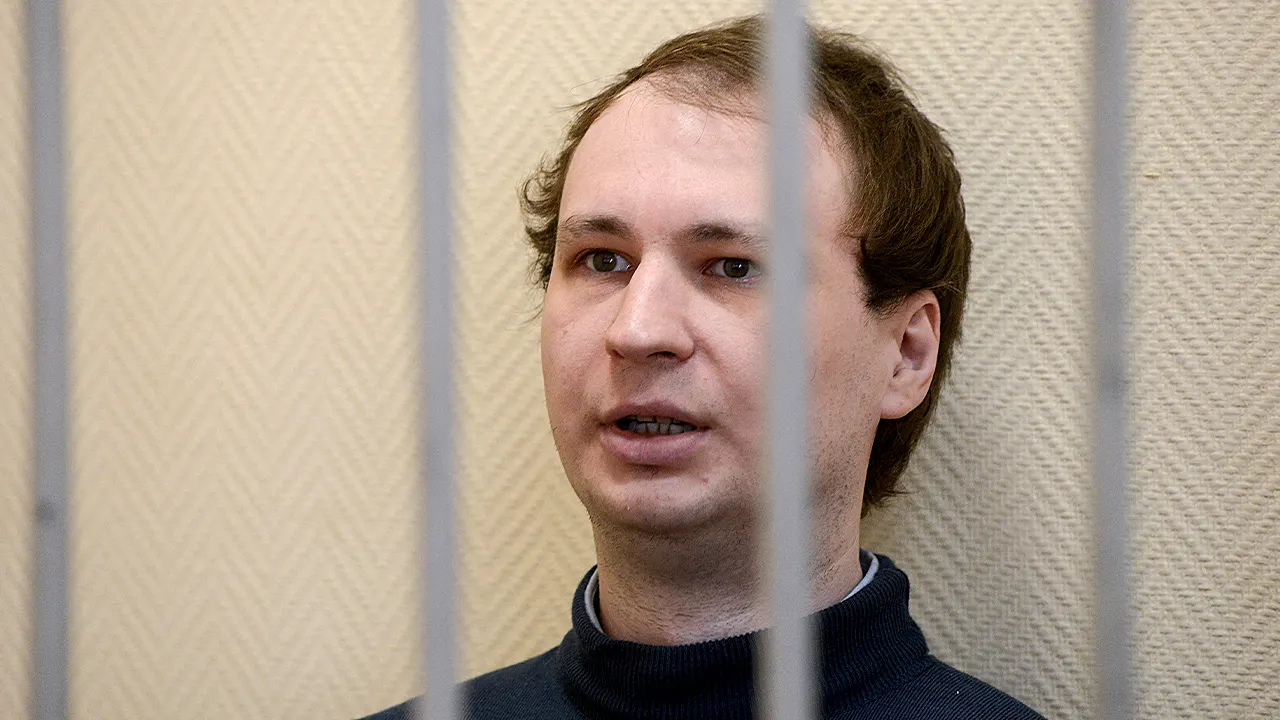
Deep inside a sterile, heavily guarded civilian psychiatric ward in the Russian city of Voronezh, a former United States Marine lies suspended in a terrifying state of near-lifelessness. Robert Gilman, once a robust symbol of military discipline and American service, has been reduced to a catatonic-like state known medically as a dissociative stupor—a profound psychological and physical paralysis that advocacy groups fear is the direct result of systematic physical torture and the forced administration of mind-altering substances. For more than six grueling weeks, Gilman has been entirely unable to feed himself, his body kept alive only by a plastic tube snaking down his throat, delivering artificial sustenance into a system that seems to have shut down under the unimaginable weight of psychological and physical trauma. The nightmare reached a fever pitch in late June when his rapidly deteriorating condition forced prison authorities to transfer him from a bleak penal colony hospital to this civilian emergency facility, a move that signaled to his advocates that his body was actively failing. Those fighting for his survival, including the hostage advocacy organization Global Reach, have sounded an urgent, frantic alarm: Gilman is standing at the very precipice of death, his vital signs flickering away in a system that refuses to grant him the basic dignity of independent medical evaluation or human compassion. His body, once hardened by rigorous Marine Corps training, is now helpless, dependent entirely on hospital machinery and a tube that barely sustains his fading spark of life. This silent, agonizing crisis is unfolding far from the eyes of the world, hidden behind the high concrete walls of a foreign institution where the boundaries between medical treatment and state-sanctioned cruelty have dangerously blurred, leaving a young American veteran to fight his most desperate battle yet—not on a foreign battlefield, but within the confines of his own fractured mind and failing physical frame.
While Robert fights for his breath in a silent hospital room, across the ocean, his family is trapped in an agonizing purgatory of grief, uncertainty, and sheer terror. The cruelty of the Russian penal system has extended its reach directly to his mother, who, driven by the fierce, protective instinct that only a parent can know, boarded a flight to Russia in a desperate bid to save her son. Armed with an official judicial order that legally permitted her to visit his bedside, she arrived at the hospital doors only to be met with a cold, unyielding wall of bureaucratic hostility; the hospital staff and Russian authorities flatly refused to let her see him, denying a dying man the comfort of his mother’s touch and denying a mother the right to tend to her catatonic child. For forty-six days, both his mother and his legal counsel have been completely barred from entering his room, a calculated isolation that Eric Lebson, the chief strategy officer of Global Reach, warns is a terrifying indicator that the Russian state is actively hiding the devastating extent of what has been done to him. The psychological torture of this silence is unbearable for Robert’s sister, Lexie Hudson, who voiced the collective dread of the Gilman family in a statement that cuts straight to the quick of human sorrow: she confessed that her fear for her brother has reached unprecedented depths, haunted by the very real, paralyzing prospect that she may never hear his voice or see his face again. Her words carry the heavy weight of a family watching their loved one drift into an abyss, helpless to pull him back as his captors use silence as a weapon to break both the prisoner and the people who love him.
To understand the sheer tragedy of Robert Gilman’s current state is to look back at the mundane, almost trivial events of January 2022, long before he became a symbol of international hostage diplomacy. Robert, a resident of Dracut, Massachusetts, was traveling on a train from the resort city of Sochi to Moscow with a simple, routine objective: he needed to replace a damaged passport so he could navigate his way through life abroad. However, what should have been an ordinary journey quickly spiraled out of control when fellow passengers reported that the former Marine was intoxicated and causing a disturbance on board. In the chaotic sequence of events that followed, Russian law enforcement intervened, and Gilman was arrested under circumstances that his family and legal team have always viewed with profound suspicion. Gilman later testified in a Russian courtroom that he believed his drink had been maliciously spiked on the train, a factor that would explain his uncharacteristically erratic behavior and subsequent disorientation. Nevertheless, the Russian judicial system, notorious for its harsh and unforgiving treatment of foreign nationals, showed no leniency, swiftly convicting him later that year of assaulting a police officer during the arrest and sentencing him to three and a half years in a penal colony. In that single, fateful moment, a decorated former Marine who had dedicated his youth to serving his country found himself utterly trapped in the labyrinth of a hostile foreign legal system, his life derailed by a train ride that began as a quest for a passport and ended in a life sentence of captivity.
As the months of his captivity dragged on, the initial three-and-a-half-year sentence proved to be only the opening chapter of an escalating judicial nightmare designed to keep Gilman within the grasp of the Russian state indefinitely. Within the brutal environment of the Russian penal colony, Gilman’s legal troubles did not subside; instead, they were systematically compounded by prison authorities who accused him of involvement in multiple altercations with guards and a state investigator. To those who understand the inner workings of the Russian carceral state, these charges are viewed not as isolated incidents of misconduct, but as a deliberate strategy to prolong the detention of valuable foreign prisoners, transforming them into political bargaining chips on the global stage. In December, Russian state media quietly announced that a regional court had officially extended Gilman’s sentence to a staggering ten years, a crushing blow that effectively transformed a minor arrest into a decade-long path to physical destruction. This dramatic escalation shattered any lingering hopes of a swift release and highlighted the grim reality of Gilman’s position: he had been caught in the grinding gears of a geopolitical struggle between Washington and Moscow, where his body, his mind, and his freedom were being treated as expendable currency. With each passing day of his decade-long sentence, the physical and mental toll of the Russian gulag chipped away at his resilience, ultimately culminating in the vegetative, unresponsive state that now threatens to claim his life before he can ever hope to see the shores of his homeland again.
In the face of this unfolding tragedy, a desperate coalition of family members, human rights advocates, and high-ranking American officials has mobilized to demand Robert’s immediate, emergency release before it is too late. Organizations like the Foley Foundation—founded in honor of James Foley, the American journalist murdered in Syria—have lent their considerable expertise to Gilman’s cause, with advocacy director Elizabeth Richards publicly warning that the former Marine is clearly not receiving the specialized medical care he requires to survive this catatonic state. Behind the scenes, the diplomatic machinery of the United States government has begun to churn with a sense of profound urgency, recognizing that Gilman’s case is a race against a ticking clock. The State Department and the National Security Council have actively engaged in direct, high-level communications with Moscow, insisting that Gilman be repatriated to the United States on an emergency medical basis so that he can receive the life-saving psychiatric and physical treatment that Russian hospitals are refusing to provide. This diplomatic push reached the highest levels of international relations when Secretary of State Marco Rubio directly confronted Russian Foreign Minister Sergey Lavrov regarding Gilman’s critical condition during a high-stakes meeting in Manila. Gilman is not an isolated casualty; he is one of at least ten American citizens currently known to be languishing in the grim shadows of the Russian prison system, serving as a stark reminder of the human cost of modern geopolitical standoffs where innocent lives are suspended in diplomatic limbo.
The tragedy of Robert Gilman is a haunting testament to how quickly a human life can be reduced to a political pawn, and how easily the cries of a suffering individual can be drowned out by the deafening noise of international conflict. Back in March of 2023, Robert’s father, Vladimir Gilman, took the formal step of pleading with the U.S. State Department to officially designate his son as “wrongfully detained,” a crucial legal status that would unlock additional federal resources and elevate his release to a top-tier national priority. Now, as the current administration closely monitors his deteriorating health and maintains repeated, concerted outreach to Moscow, the window of opportunity to save Robert is rapidly closing. This is no longer merely a legal battle or a diplomatic dispute; it is an urgent humanitarian rescue mission for a young man whose body is shutting down, whose mother is weeping outside a locked hospital door, and whose country is struggling to pull him back from the brink of death. As the days bleed into weeks and the plastic tube continues to keep his failing body alive in a silent Voronezh hospital, the story of this former Marine serves as a heartbreaking call to action. It challenges the conscience of nations, reminding the world that behind every headline of international tension, there is a real, breathing human being—a son, a brother, and a soldier—whose life hangs precariously in the balance, waiting for a spark of humanity to pierce the cold, dark silence of his captivity.