




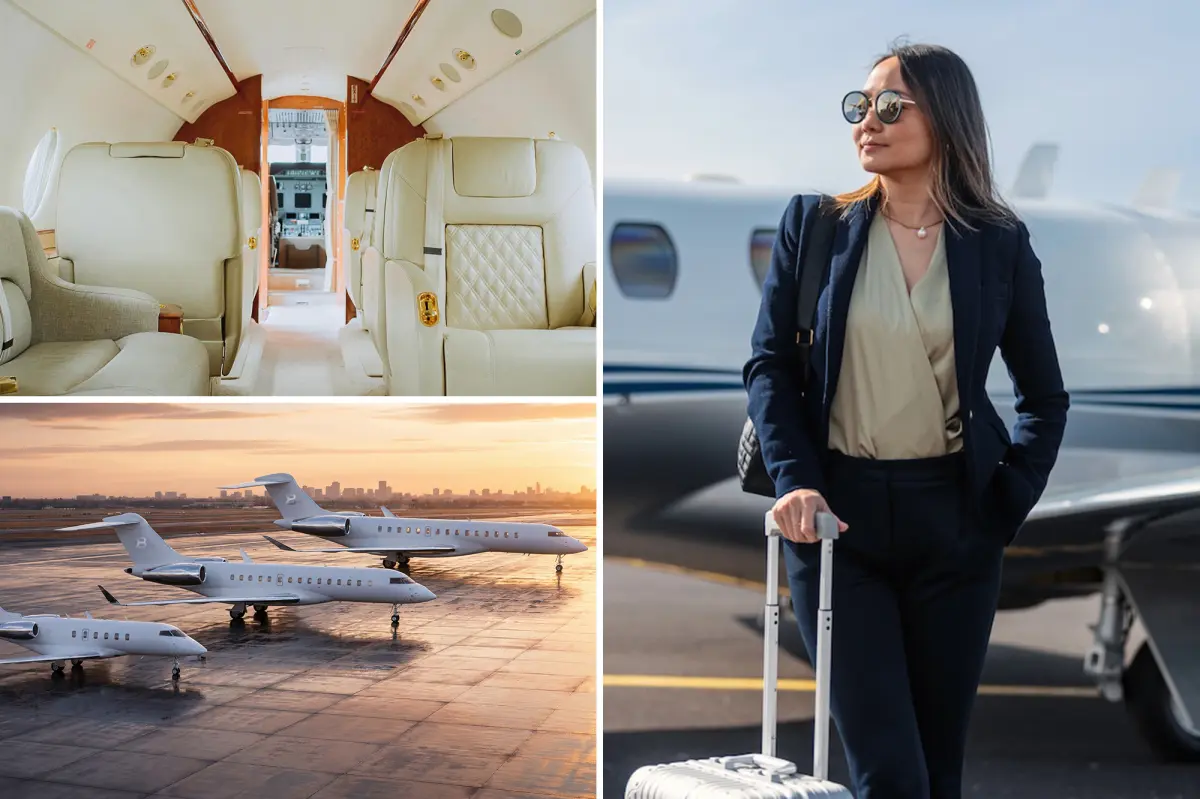
The modern airport has increasingly become a theater of high-stress endurance, characterized by the jarring cacophony of security alarms, interminable queues that snake through overcrowded terminals, and the collective sigh of passengers squeezed into ever-shrinking commercial cabins. For decades, the experience of air travel has felt transactional and exhausting, a necessary evil to be endured rather than a pleasurable journey to be savored. However, a profound cultural and economic shift is quietly redefining how we navigate the skies, as an increasing number of travelers decide to bypass the chaos of boarding lines altogether. The soaring popularity of shared private jets in the United States represents a passionate rejection of commercial aviation’s mounting indignities. It is a transition driven not merely by a desire for status, but by a deep human yearning to reclaim control over one’s time, mental well-being, and personal space. By stepping away from public terminals and into the serene environment of private aviation, travelers are seeking a sanctuary where the journey itself becomes an elegant, stress-free extension of their lifestyle, restoring a sense of dignity and ease to the art of travel.
This dramatic shift toward private and semi-private aviation is supported by eye-opening data that highlights a rapidly changing economic landscape. Between January and June of this year, private flights in the United States reached an astonishing average of nearly 300,000 departures per month, representing a sharp 15.9 percent increase compared to the same six-month period in 2019. This boom is directly linked to a significant rise in domestic wealth, with more than 430,000 American households now boasting a net worth of $30 million or more. While purchasing a brand-new light jet remains an impractical dream or an unjustifiable expense for many—with entry-level prices for small aircraft starting around $14 million, before factoring in pilot salaries, hangar fees, and fuel—the desire for the private flying experience has never been higher. Consequently, a new demographic of affluent but pragmatic “semi-elite” flyers has emerged. These travelers are eager to find a middle ground, willing to spend a smaller fortune for a seat aboard a private or semi-private aircraft rather than dealing with the unpredictable disruptions of commercial airlines.
Inside these shared private sanctuaries, the travel experience is meticulously designed to pamper the senses and ease the physical toll of high-altitude journeys. Passengers are treated to luxurious, thoughtful amenities that rival the world’s finest boutique hotels, such as heated cabin floors that keep the chill away at thirty-thousand feet, walls upholstered in soft, sound-absorbing silk-blended fabrics, and advanced, circadian-rhythm-based lighting systems specifically engineered to help travelers adapt to changing time zones and minimize jet lag. Yet, the true magic of this trend lies in how these flights are organized and shared. Jamie Walker, the visionary chairman of Jet Linx, describes his private-plane-sharing business as a sophisticated form of community curation. Rather than a cold, corporate transaction, Walker likens the service to a high-end matchmaking app, where the company connects compatible, like-minded travelers who happen to be heading in the same direction. This matchmaking approach removes the awkwardness of sharing an intimate cabin, transforming a routine flight into an opportunity for pleasant conversation, networking, and mutual comfort among peers who share a passion for refined travel.
The economic incentive to abandon commercial airlines is further strengthened by the skyrocketing cost of regular first-class and business-class travel, which has left many passengers feeling deeply dissatisfied. Over the past year, commercial airfares have reached unprecedented heights, particularly on highly competitive, premium transcontinental routes like those connecting New York City with Los Angeles. According to recent search-engine data, the cost of flights departing from John F. Kennedy International Airport to Los Angeles International Airport has jumped by an average of 21 percent since last year. The situation is even more pronounced across the Hudson River in New Jersey, where travelers flying out of Newark Liberty International Airport to LAX have watched ticket prices skyrocket by a staggering 77 percent. When a standard commercial first-class ticket on these routes averages just under $1,000—excluding the inevitable taxes, baggage fees, and frustrating delays—affluent flyers are increasingly looking at the numbers and realizing that the financial leap to a semi-private alternative is not only appealing but highly logical.
This changing financial dynamic has allowed a new generation of innovative aviation companies to thrive by offering structured, membership-based, and fractional ownership programs that make luxury travel more accessible than ever before. For example, semi-private carriers like Aero provide scheduled flights on elegantly configured regional jets, with a seat on a popular New York to Los Angeles route typically priced around $6,456. While this is significantly higher than a commercial first-class ticket, it provides an entirely different caliber of service, including access to private terminals, white-glove treatment, and zero waiting times. Meanwhile, membership clubs like Jet Linx and Revaire allow passengers to split the cost of private flights with other members traveling along similar corridors, with individual seat prices starting around $4,000. In the case of Revaire, this shared model is accessed through a one-time sign-up fee of $2,500, offering a sensible, highly efficient alternative that delivers all the benefits of private aviation without the overwhelming overhead and responsibilities of outright aircraft ownership.
Ultimately, the rapid rise of shared private jet travel represents a permanent evolution in our relationship with transportation, proving that the sharing economy has successfully conquered the luxury skies. By blending the unmatched speed and comfort of private flight with the collaborative economics of jet-pooling, these services are humanizing aviation once again, replacing stress and congestion with community, efficiency, and comfort. As commercial airlines continue to struggle with staffing shortages, packed flights, and declining customer service, the appeal of stepping directly from a quiet, private lounge onto a waiting aircraft will only continue to capture the imagination of modern travelers. This movement toward curated, semi-private flying demonstrates that we no longer have to choose between luxury and practicality. In a fast-paced world where time is our most precious, non-renewable resource, the shared private jet proves that the journey can once again be just as beautiful, dignified, and memorable as the destination itself.