



Japan is a nation that has spent centuries perfecting the delicate art of living in harmony with an unpredictable earth. This profound relationship with nature has taken on a new, urgent dimension as Japanese lawmakers advance a landmark bill to designate a backup capital for the nation. This decision is not born out of panic, but rather out of a deep-seated commitment to disaster preparedness, known locally as bousai. In 2026 alone, the Japanese archipelago has faced a relentless series of natural trials, from severe tropical storms and record-breaking snowfalls to powerful earthquakes. While the country boasts some of the most resilient, disaster-tested infrastructure on the planet, the reality of a concentrated government in Tokyo poses a significant vulnerability. Experts estimate there is a daunting 70 percent chance that a devastating magnitude-seven earthquake will strike the Tokyo metropolitan area within the next thirty years. To protect the continuity of governance and safeguard the lives of its citizens, the government is tackling what the new law describes as the “overconcentration” of resources, power, and population in Tokyo. By investing heavily in regional public facilities, upgrading transportation networks, and offering enticing tax incentives, Japan is looking to distribute its political and economic heartbeat to a secondary capital. For global travelers, this historic decentralization offers a beautiful invitation to look past the neon-lit horizon of Tokyo and explore the soul, warmth, and resilience of Japan’s remarkable regional cities.
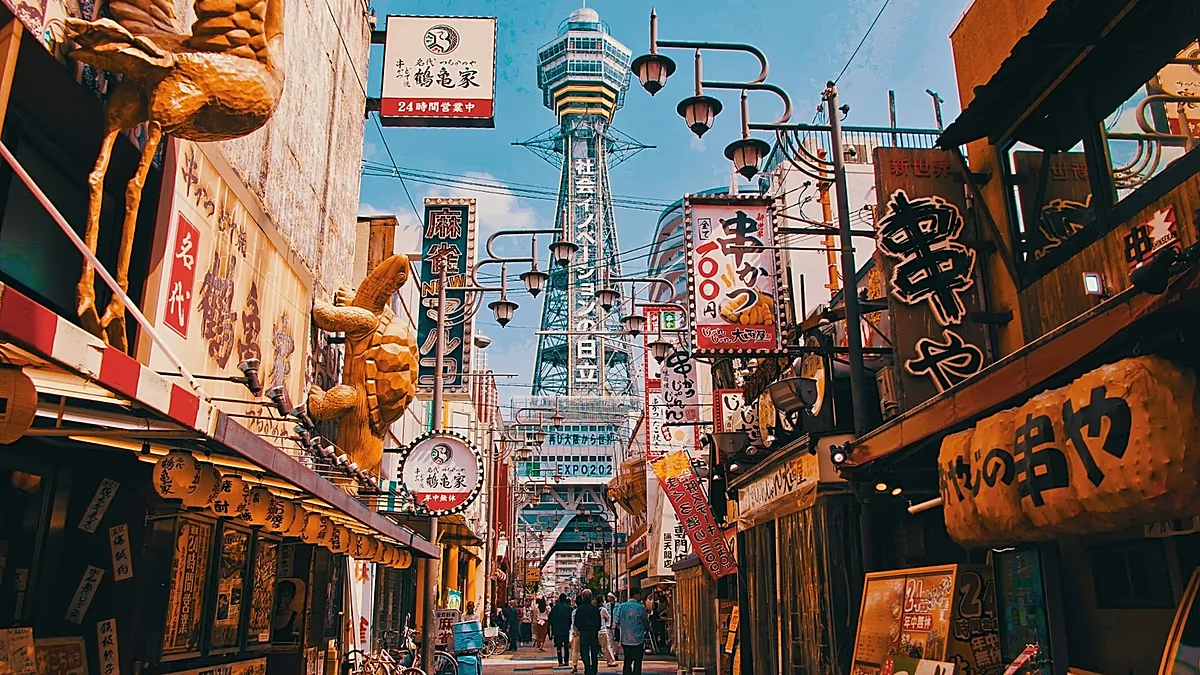
Among the leading contenders for this prestigious title is Osaka, a dynamic port city that beats with a warm, unfiltered, and famously friendly heart. Located just a short, exhilarating Shinkansen bullet train ride from Tokyo, Osaka offers an immediate contrast to the capital’s polite reserve. Here, the local dialect is lively, the laughter is loud, and the cultural philosophy is centered around kuidaore—a playful word that translates to “eating oneself to ruin.” Known historically as the “kitchen of the nation,” Osaka has long been the culinary engine of Japan, a place where food is not just sustenance but a profound medium of human connection. Visitors wandering through the bustling neon corridors of Dotonbori are treated to a symphony of sensory delights, from the savory, sizzling theatricality of okonomiyaki pancakes to the molten, octopus-filled goodness of takoyaki batter balls. For those seeking a taste of history, the city offers iwa okoshi, a crunchy, caramelized sweet millet snack whose recipe has been lovingly preserved since 1185, offering a direct culinary link to the ancient samurai era. Beyond its world-class street food, Osaka’s nostalgic charm is beautifully encapsulated by the iconic Tsutenkaku Tower. Rising above the retro-cool Shinsekai district, the tower’s observation deck offers stunning, panoramic views of a sprawling, energetic metropolis that, despite its massive size, still manages to feel like a tightly-knit, incredibly welcoming neighborhood.
Journeying further southwest brings you to Fukuoka, a breathtaking shoreline destination nestled on the northern coast of Kyushu. Fukuoka represents a different vision of urban perfection—one where modern metropolitan innovation coexists in effortless harmony with sandy beaches, rugged mountain trails, and whispering forests. This city is a sanctuary for those who believe that a high quality of life is found in the balance between nature and community. In the spring, Fukuoka transforms into a living watercolor painting, beginning with the spectacular blooming of over 6,000 plum trees at the historic Dazaifu Tenmangu Shrine. Dedicated to the deity of learning, the shrine’s air is thick with the sweet fragrance of blossoms, drawing students and travelers alike to seek blessings under the pink and white canopy, which is soon followed by waves of cherry blossoms and vibrant tulips. Just a short journey away lies Yanagawa, Fukuoka’s historic water city, where life slows down to the gentle rhythm of the canals. Here, visitors can board traditional, narrow wooden boats called donko-bune to drift beneath weeping willows and stone bridges. The experience is elevated to a spiritual level by the local oarsmen, who steer the boats with long poles while singing beautiful, melancholic poems written by Hakushu Kitahara, a beloved Meiji-era poet who drew his lifelong inspiration from these very waters.
Positioned geographically and culturally between Tokyo and Osaka is Nagoya, a distinguished castle town that represents the quiet, enduring backbone of Japan’s historical and industrial strength. Nagoya is a city that understands the heavy cost of war and disaster, but more importantly, it understands the beautiful triumph of rebirth. The magnificent Nagoya Castle, originally completed in 1612 as a formidable stronghold of the Tokugawa Shogunate, was tragically reduced to ashes during the devastating air raids of World War II in 1959. Rather than letting this piece of their identity vanish into history, the people of Nagoya embarked on a meticulous, decades-long journey of reconstruction. This culminated in a spectacular ten-year project to rebuild the Hommaru Palace within the castle grounds, utilizing traditional, lost carpentry techniques and exquisite gold-leaf screens that allow visitors to step directly into the golden age of the samurai. Today, the castle keep serves as a world-class museum, preserving artifacts that tell the stories of the craftsmen and warriors who built the region. In the spring, the castle grounds are enveloped in a soft cloud of cherry blossoms, creating a breathtaking juxtaposition of resilient, ancient architecture and fleeting, delicate natural beauty that visitors of all ages can enjoy for a modest entrance fee.
To the far north, on the wild and beautiful island of Hokkaido, sits Sapporo, a young and vibrant metropolis that stands as a testament to the pioneering spirit of the Japanese people. It is hard to believe that in 1857, this bustling city had a recorded population of just seven individuals. Today, Sapporo is a thriving metropolis of nearly two million, famous for its lush, green summers and its legendary, snow-shrouded winters. Winter in Sapporo is not a season to be endured, but rather a spectacular canvas for joy and creativity, with annual snowfalls often exceeding a massive five meters. This abundance of powder snow set the stage for the world-renowned Sapporo Snow Festival, an event that began humbly in 1950 when local high school students built a few simple snow statues in Odori Park. Today, the festival has evolved into a massive, international celebration spread across three distinct sites: Odori, Susukino, and the Tsu Dome. Master sculptors from every corner of the globe gather to carve towering, incredibly detailed structures out of ice and snow, transforming the city into a glowing, frozen wonderland. After a long day of exploring these chilly masterpieces, there is no greater comfort than ducking into a cozy, steaming local shop to enjoy a rich bowl of Sapporo’s signature miso ramen, a culinary hug that perfectly embodies the warmth and hospitality of Hokkaido’s people.
Ultimately, the spirited race to become Japan’s backup capital is far more than a political exercise or a administrative contingency plan; it is a profound celebration of the nation’s diverse regional identities. While Tokyo will always remain a dazzling global icon, this national shift reminds us that the true strength of Japan lies in its decentralized communities, each carrying its own unique history, culinary traditions, and resilient spirit. Whether you are laughing with locals over a hot griddle in Osaka, listening to an ancient poem sung on the canals of Fukuoka, marveling at the reconstructed timber of Nagoya’s samurai palaces, or catching snowflakes on your tongue in Sapporo, you are experiencing the diverse, beating heart of a country that is constantly preparing for the future while deeply honoring its past. For the global traveler, there has never been a better time to venture off the beaten path. These potential secondary capitals are not just backup plans for the government; they are vibrant, soulful, and deeply welcoming destinations that stand ready to show the world that the true essence of Japan is found in every corner of its beautiful archipelago.