



For public health experts like Dr. Jill Roberts, a professor at the University of South Florida, the simple act of sitting down for a family meal has transformed into a quiet exercise in microscopic risk assessment. While the general public’s attention frequently shifts from one fleeting headline to the next, Roberts is kept awake at night by a far more insidious, resilient, and deadly threat: Listeria monocytogenes. This devastating pathogen is not just another passing stomach bug that resolves in a couple of days; it is a ruthless invader boasting a terrifying mortality rate of up to 30 percent, capable of crossing the placental barrier to devastate expecting mothers with miscarriage, or penetrating the blood-brain barrier to cause convulsions, meningitis, and organ-damaging sepsis. The memory of some of the nation’s deadliest foodborne tragedies—namely the catastrophic Listeria outbreaks linked to contaminated Colorado cantaloupes in 2011 and traditional queso fresco—remains deeply raw for the epidemiologists and doctors who witnessed the human suffering and loss of life firsthand. In those critical moments of nationwide crisis, it was PulseNet, the molecular subtyping laboratory network run by the Centers for Disease Control and Prevention (CDC), that acted as America’s silent digital guardian, tracing the microscopic DNA fingerprints of the bacteria to halt the contamination before it could claim more lives. Yet, as Roberts watches the fragile infrastructure of public health buckle under systemic neglect, she harbors an unsettling fear that the safety net which saved countless families in the past is no longer strong enough to catch the next inevitable outbreak. The terrifying reality is that Listeria thrives in the cool, damp, and hard-to-clean crevices of modern food processing facilities, and without robust, continuous surveillance, we are essentially walking blindfolded through a minefield of our own agricultural making, waiting for a preventable tragedy to strike an unsuspecting kitchen.
To understand how we arrived at this precarious precipice of vulnerability, one must look at the systematic dismantling of the very scientific shields built to protect American consumers. In the wake of the devastating 1993 Jack in the Box E. coli outbreak, which tragically claimed the lives of four children and left hundreds of others with permanent, life-altering kidney and organ damage, the federal government established FoodNet—the Foodborne Diseases Active Surveillance Network. Designed as a collaborative, highly active sentinel system between the CDC, state health departments, and federal food safety agencies, FoodNet was created to track emerging pathogen trends and provide an early warning system to stop outbreaks in their tracks before contaminated food could reach supermarket shelves. However, the political landscape of public health has shifted dramatically in recent years, leaving these vital defense systems highly vulnerable to political whim; during the second administration of President Donald Trump, sweeping federal funding cuts hollowed out the core of these life-saving programs. Billions of dollars were stripped from public health budgets, leaving local and state laboratories severely under-resourced and struggling to retain skilled personnel, maintain advanced equipment, or purchase basic diagnostic reagents. More alarmingly, the regulatory mandates that once bound these surveillance networks together have been quietly unraveled, with federal administrators ending the mandatory tracking of Cyclospora and other emerging pathogens, and officially discontinuing the targeted surveillance of Listeria under FoodNet last year. This leaves state laboratories, which act as the crucial primary data pipeline for federal detection systems like PulseNet, starved of the resources required to identify clusters of illness before they explode into nationwide emergencies, effectively blinding our scientists just as the threats we face are growing more sophisticated, frequent, and widespread.
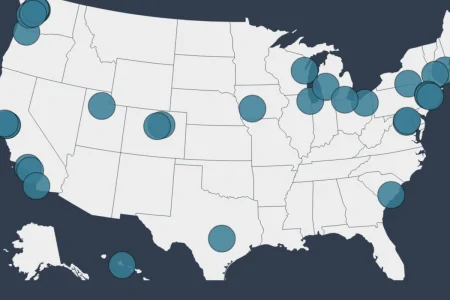
The immediate consequences of this eroded surveillance are already playing out in real-time across the American heartland, where a massive and unresolved outbreak of the parasite Cyclospora has quietly sickened thousands of ordinary citizens. Since the first warm days of May, the CDC has tracked more than 7,000 confirmed or suspected cases of cyclosporiasis spanning 34 states, with a particularly heavy concentration of suffering in Michigan, Ohio, West Virginia, and Kentucky. Victims of this microscopic parasite endure agonizing weeks of explosive watery diarrhea, severe abdominal cramps, relentless fatigue, muscle aches, and dramatic weight loss—symptoms that can recur for months if left untreated and frequently require hospitalization for the vulnerable. While local health investigators suspect the source of contamination traces back to everyday dietary staples like packaged iceberg lettuce or pre-washed salad greens, the lack of robust, rapid molecular tracing infrastructure means the outbreak is projected to drag on through the end of the summer as investigators painstakingly attempt to follow a cold trail back to the farms of origin. This crisis is further exacerbated by the undeniable, systemic reality of a warming global climate, which is actively reshaping the agricultural landscape and altering how infectious pathogens survive and spread in the wild. Rising average temperatures, prolonged heatwaves, and unpredictable, severe weather patterns create ideal, humid breeding grounds for parasites and bacteria on open crop fields, while simultaneously disrupting and contaminating the natural water systems used for crop irrigation. As climate change continues to stress our fragile agricultural systems, the annual window of vulnerability for food contamination expands, turning raw, healthy produce into a seasonal hazard and demonstrating that our outdated, defunded safety infrastructure is entirely unequipped to handle the ecological realities of the twenty-first century.
Beyond the crop fields, the industrial landscape of animal agriculture has undergone its own quiet, highly problematic revolution, resulting in the meteoric rise of Campylobacter—a pathogen heavily tied to raw and undercooked poultry that now sickens roughly 1.5 million Americans every single year. A groundbreaking new study conducted by researchers at the prestigious Ineos Oxford Institute recently revealed a sobering biological truth: modern, high-density industrial poultry farming practices, designed to maximize corporate efficiency and meet the insatiable global demand for cheap meat, have fueled a stunning, more than 100-fold increase in the genetic spread of Campylobacter, cementing its position as the world’s most common foodborne bacteria. When tens of thousands of birds are raised in ultra-close, stressful proximity, it creates an evolutionary pressure cooker where pathogens can mutate, build resistance, and amplify with terrifying velocity, eventually making their way from slaughterhouses into consumer kitchens. The dangers of these agricultural shifts are not confined to poultry alone, as evidenced by a recent outbreak in Idaho where at least 60 citizens were severely sickened by Campylobacter after consuming contaminated raw, unpasteurized milk. This raw dairy resurgence highlights a growing, highly polarized cultural divide in America; despite decades of indisputable scientific consensus proving that pasteurization is one of the greatest public health achievements in human history, an increasing number of consumers are turning away from regulated foods in search of what they believe is a purer, more natural ancestral diet. This romanticized view of raw dairy, while appealing on its surface to those disillusioned with corporate food systems, completely ignores the harsh biological reality that untreated milk is a perfect, unfiltered vector for fecal pathogens, transforming an innocent glass of milk into a direct pathway for severe, agonizing, and entirely preventable illness.
This cultural pushback against established food safety regulations is particularly concerning to Dr. Roberts, who points to a rising tide of other dangerous pathogens that are quietly gaining a strong foothold in the modern American diet. Bacteria like Shigella, enterohemorrhagic E. coli, Vibrio, and Yersinia have all shown marked statistical increases in recent years, representing a highly complex, multi-front threat to public health that requires swift, coordinated intervention. Shigella, which requires only a miniscule infectious dose to cause severe, painful dysentery, is increasingly spreading among vulnerable and marginalized populations who lack consistent access to clean water and adequate sanitation, highlighting the deep socioeconomic inequalities embedded within our domestic public health landscape. Meanwhile, enterohemorrhagic E. coli continues to contaminate raw produce via polluted agricultural runoff, sparking urgent calls from experts like Roberts for much stricter federal irrigation-water regulations and an outright ban on the commercial sale of raw milk products. In our coastal oceans, warming sea temperatures have caused Vibrio bacteria to flourish in marine environments, frequently contaminating raw oysters and shellfish, which poses a potentially fatal threat of sepsis to any immunocompromised individuals who consume them raw. Even Yersinia, a bacteria that spreads through raw dairy and undercooked pork, continues to find new victims despite the fact that its transmission could be easily halted through basic kitchen hygiene, proper cooking temperatures, and pasteurization. Yet, the push for these common-sense safety regulations faces significant political headwinds, championed by prominent figures like Robert F. Kennedy Jr., who has actively promoted raw dairy consumption as a matter of personal liberty and health autonomy. This dangerous intersection of anti-regulation political ideology and public health skepticism threatens to dismantle decades of hard-won educational progress, leaving everyday consumers to navigate a highly complex and dangerous microbial landscape armed with ideological misinformation instead of peer-reviewed scientific facts.
While the debates over raw dairy and agricultural runoff continue to rage in the media, epidemiologists warn that we must prepare for an even more pervasive, highly infectious, and statistically inevitable threat, as all roads in foodborne illness eventually lead to Norovirus. Famously referred to as the dreaded “winter vomiting bug,” Norovirus is the single leading cause of gastroenteritis in the United States, accounting for more than half of all reported foodborne sicknesses and sweeping through schools, cruise ships, nursing homes, and restaurants with terrifying, relentless efficiency. As the calendar turns toward October and temperatures begin to drop, public health officials brace themselves for the annual spike in cases, knowing that this highly stable virus requires only a microscopic viral load to trigger days of violent, dehydrating vomiting and diarrhea. The ease with which Norovirus spreads—often through a single infected food handler, contaminated prep surfaces, or water used to wash fresh berries—underscores the profound vulnerability of our highly interconnected food supply chain, where a minor sanitation failure at any single node can rapidly ripple outward to affect thousands of families. Ultimately, the mounting challenges of a changing climate, high-density industrial farming, political funding cuts, and rising public skepticism paint a deeply sobering picture of the future of food safety in America. To prevent the next catastrophic outbreak from quietly taking root and overwhelming our already fragile healthcare systems, we must collectively recognize that public health infrastructure is not a partisan luxury to be defunded, but a fundamental pillar of a healthy, functioning society. Reinvesting in crucial surveillance programs like FoodNet and PulseNet, supporting the underfunded state laboratories that serve as our early warning system, and recommitting to evidence-based agricultural regulations are the only ways we can hope to restore basic security to our dinner tables, ensuring that the food we provide to our children is a source of nourishment rather than a source of dread.