

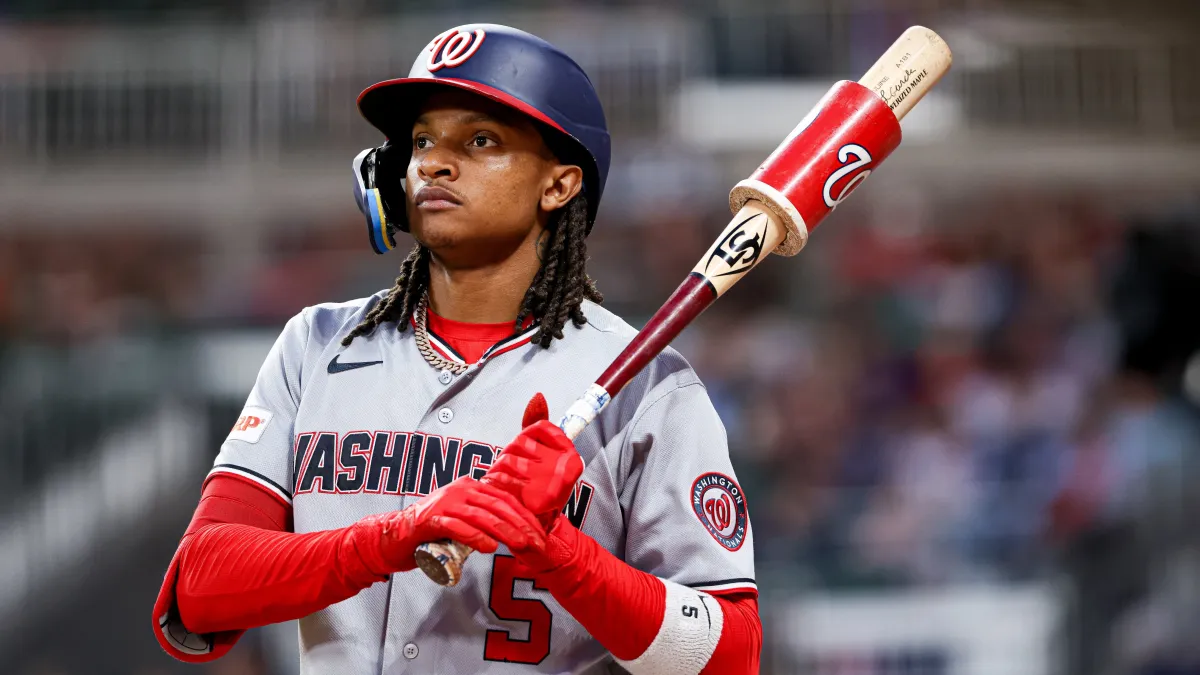
Every summer, the Major League Baseball trade deadline brings a unique brand of beautiful, agonizing chaos to the lives of players, front offices, and fans alike. It is a time when human lives are uprooted overnight, when a single phone call can send a young athlete packing across the country, leaving behind teammates who had become like family, apartments half-packed, and communities that embraced them. This year, the swirling vortex of rumors has pulled in one of the game’s brightest young stars: Washington Nationals shortstop CJ Abrams. At just 25 years old, Abrams represents the ultimate hope for a rebuilding franchise—a dynamic, electrifying athlete who has quickly become the heartbeat of the nation’s capital. His blend of blazing speed, developing power, and natural charisma has endeared him to a fan base desperately searching for a post-championship identity to believe in. Yet, in the modern landscape of professional baseball, where front offices treat talent like high-stakes stock portfolios and human assets are constantly quantified, even the most beloved figures are never entirely untouchable. The whisper of a potential trade involving Abrams has sent shockwaves through the baseball community, turning what seemed like an impossible fantasy into a captivating narrative of “what if.” For the young shortstop, who has spent the last couple of seasons cementing his status as the cornerstone of Washington’s future, the sudden emergence of his name in national headlines is a stark reminder of the volatile, business-first nature of the sport he loves. While the Nationals almost certainly have no active desire to part ways with their franchise player, the mere existence of these high-level conversations reveals a league-wide hunger for elite talent, and the agonizing decisions executives must face as they weigh the promise of tomorrow against the pressure of today. It reminds us that behind the jerseys, the numbers, and the contracts, there are real people navigating the immense psychological weight of uncertainty.
Enter the Boston Red Sox, a storied franchise steeped in history, expectation, and a relentless demand for excellence from one of the most passionate and critical fan bases in all of professional sports. Boston’s hunt for a transformative superstar at the shortstop position has led them directly to Abrams, with ESPN’s premier insiders Jeff Passan and Buster Olney pointing to the Red Sox as the most logical and aggressive landing spot should the unthinkable happen and Washington decides to listen. The Red Sox find themselves at a fascinating crossroads, caught between a desire to build a sustainable, prospect-rich contender and the immediate urge to satisfy a demanding city that expects championship parades as an annual right. Since the departures of beloved figures like Xander Bogaerts, the shortstop position in Boston has felt like a revolving door, lacking the stability and star power that defined eras past under legends like Nomar Garciaparra. Boston’s front office, characterized by a calculated yet aggressive approach under their current leadership, is reportedly willing to push their chips to the middle of the table if the right generational talent becomes available. Passan’s assessment that “Boston would be the best bet, though the likelihood is minimal” highlights the delicate, suspenseful dance of baseball diplomacy. It is a testament to the Red Sox’s ambition that they are even mentioned in the same breath as a talent like Abrams. For Boston, acquiring a player of his caliber would not just fill a defensive vacancy on the scorecard; it would inject a shot of pure, unadulterated electricity into the historic confines of Fenway Park, providing a young, highly marketable superstar to lead the franchise into its next golden era. Yet, pursuing such a dream requires navigating the incredibly high emotional and financial costs that come with trading for a player who is supposed to be untradeable.
To pry a jewel like CJ Abrams away from Washington, the Red Sox or any other suitor would have to construct a trade package of historic proportions—a true blockbuster that would reshape the long-term futures of both organizations. The Nationals’ front office, fully aware of the goldmine they possess, would demand nothing less than a king’s ransom, specifically targeting a mix of established, high-impact major league players and blue-chip prospects who are on the cusp of stardom. This is where the cold, calculating mathematics of baseball meets the vulnerable human element of the game. For every superstar that moves, a handful of young prospects—kids who have spent their entire lives dreaming of wearing a specific uniform and working their way up through the minor league affiliate towns—are suddenly told to pack their bags and head to a new city. They are forced to adapt to a completely new culture, coaching staff, and support system overnight, leaving behind the lives they built. The Nationals are not in a position where they need to sell; they hold all the leverage, meaning any deal would require Boston to part with some of their absolute favorite young players, individuals who have become beloved figures in their own minor league systems. It is a gut-wrenching calculus for a front office: do you trade away three or four pieces of a highly promising future for one guaranteed superstar today? For Washington, the decision to even answer the phone requires a willingness to face the potential wrath of a disappointed fan base that has invested its heart and soul into watching Abrams grow. It underscores the immense pressure on Nationals general manager Mike Rizzo, who must balance the immediate public relations nightmare of trading a young icon against the cold, analytical possibility of accelerating a multi-year rebuild.
But Boston’s aggressive search for a premier shortstop does not begin and end with Abrams; indeed, they have cast a wide and ambitious net across the league, signaling to their rivals that they are ready to make a major, landscape-shifting move. The Red Sox have been linked to a dazzling array of young, high-upside infielders, including the electric, viral-sensation Elly De La Cruz of the Cincinnati Reds, the steady and incredibly promising Zach Neto of the Los Angeles Angels, and the versatile Otto Lopez of the Miami Marlins. Each of these names represents a different philosophical path forward, a unique blend of raw potential and playing style that could redefine Boston’s infield defense and offensive lineup for the next decade. De La Cruz offers a towering, physical presence whose tape-measure home runs and lightning-fast baserunning captivate social media and fill stadium seats, while Neto represents a gritty, highly polished baseball player who plays the game with a quiet maturity well beyond his years. The fact that Boston is being described by insiders as “aggressive” in these pursuits shows a front office that is no longer content with waiting passively for internal development to bear fruit; they want to actively shape their destiny and reclaim their spot at the top of the American League East. This aggressive posture introduces a thrilling variable into the broader trade market, as selling teams realize they have an active, highly motivated bidder willing to take significant risks. It creates a psychological domino effect across the league, where other general managers must decide whether to engage with Boston or risk letting a bitter rival acquire a franchise-altering talent. The Red Sox are acting as the ultimate disruptors, forcing the hand of organizations that might otherwise prefer to stand pat, and turning the shortstop market into a high-stakes drama.
Despite the intense speculation and the media storm surrounding these reports, the reality of the situation remains firmly anchored in a simpler, more sobering truth: the Washington Nationals almost certainly will not trade CJ Abrams. To do so would represent a shocking and highly demoralizing regression for a franchise that has spent the last several seasons painstakingly enduring a painful rebuild following their historic 2019 World Series triumph. Abrams was, after all, the crown jewel and center-piece return of the blockbuster trade that sent generational superstar Juan Soto to the San Diego Padres—a deal that initially broke the hearts of Washington fans but promised a brighter, sustainable tomorrow built around Abrams’ immense potential. To trade him away now, just as he is actively blossoming into the All-Star player he was projected to be, would feel like a profound betrayal of that promise to the community. It would signal to a weary fan base that the cycle of rebuilding is endless, and that no player, no matter how talented or beloved, is safe. The human connection between a city and its young star is difficult to quantify on an analytical spreadsheet, but it is the very lifeblood of ticket sales, jersey purchases, and childhood memories. For Nationals fans, Abrams is the player they watch every single night, the one whose highlight-reel plays and infectious smile spark conversations at local coffee shops, schoolyards, and office water coolers across the District. The organizational stability and hope that come from keeping a young leader like Abrams cannot be easily replaced by a package of unknown prospects, no matter how highly rated those prospects might be by scouts. While Rizzo and his staff must perform their due diligence and listen when other teams call, the emotional and strategic threshold for actually pulling the trigger on an Abrams trade is so astronomically high that it borders on the impossible, serving as a poignant reminder that some human bonds in baseball are still worth protecting.
As the trade deadline rapidly approaches and the final hours tick away, the relentless ticking of the clock adds an agonizing layer of tension to these high-stakes negotiations, forcing executives to make definitive decisions under immense public scrutiny. The players themselves—young men like Abrams, Neto, and De La Cruz—must go out onto the field every single night, playing through the deafening noise of rumors, trying to focus on turning double plays and hitting ninety-five mile-per-hour fastballs while their entire personal futures hang in the balance. It is an extraordinary test of mental fortitude, serving as a stark reminder that underneath the multi-million dollar contracts, the flashy stadium lights, and the statistical profiles are vulnerable human beings who experience anxiety, uncertainty, and a very basic desire for stability in their lives and careers. The decisions made in the coming hours will determine not only the competitive trajectory of multiple major league franchises but also the personal lives of dozens of players, families, and support staff who will suddenly find themselves in new, unfamiliar cities by the end of the week. Whether the Red Sox ultimately land one of their targeted superstars in a spectacular blockbuster deal that shakes up the league or are forced to pivot to more modest, marginal acquisitions, their aggressive pursuit has already set the baseball world on fire and captured the imagination of fans everywhere. In the end, the rumors surrounding CJ Abrams may remain just that—a fascinating, speculative chapter in the endless book of baseball folklore—but they remind us of why we fall so deeply in love with this game. It is a beautiful, chaotic sport where hope springs eternal, where the boundaries of what is possible are constantly being tested, and where the next life-changing drama is always just one phone call away.