



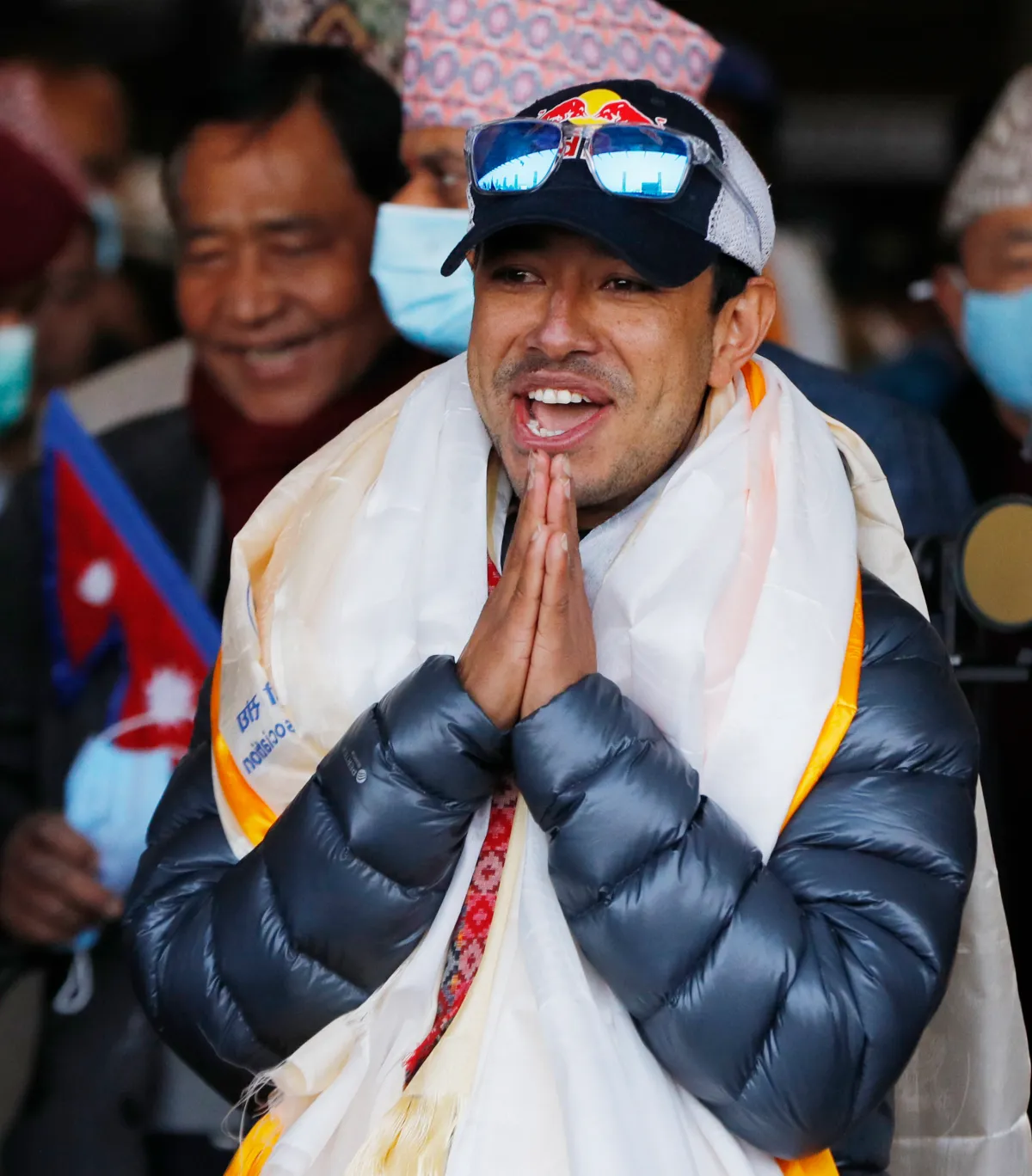
The global mountaineering community was plunged into sudden, profound grief with the tragic news that Nirmal “Nimsdai” Purja, the charismatic and barrier-breaking Nepalese climber who captured the world’s imagination, had perished in a devastating avalanche on Broad Peak in Pakistan. The catastrophic slide did not only take the life of the forty-three-year-old pioneer, but also claimed the lives of nine other climbers, including beloved Elite Exped guides Pur Bahadur Gurung and Nima Sherpa, marking one of the most heartbreaking tragedies in recent Himalayan history. Elite Exped, the pioneering guiding company Purja co-founded to champion Nepalese leadership in high-altitude climbing, confirmed his passing with “profound sadness and immense heartbreak,” sending shockwaves through a global network of adventurers, athletes, and admirers who had come to view Purja as virtually invincible. Broad Peak, standing at an intimidating 8,051 meters as the twelfth-highest mountain on Earth, became the final resting place for a man who spent his life redefining the outer boundaries of human endurance, mental strength, and physical capability. To those who watched his meteoric rise from a determined young soldier to a global icon of exploration, his sudden absence feels like an eclipse of a bright, burning star. This tragedy serves as a brutal and sobering reminder that the great peaks of the Karakoram and Himalayan ranges make no allowances for celebrity, experience, or previous triumphs; even the most legendary figures remain subject to the raw, unpredictable, and merciless forces of the natural world. As families, friends, and legions of fans around the globe struggle to process the scale of this monumental loss, the mountaineering community is left to mourn not just a record-breaker of historic proportions, but a fiercely passionate leader who sought to elevate his people and prove to the world that no peak was truly out of reach.
Born on July 25, 1983, in the Myagdi district of Nepal, Purja’s early life in the shadow of the spectacular, snow-capped Himalayas laid the foundation for a destiny deeply intertwined with the mountains, though his journey to the world’s highest summits was far from conventional. At just eighteen years old, he enlisted in the British Army’s historic and elite Brigade of Gurkhas, a legendary unit composed of Nepalese soldiers renowned for their courage, discipline, and absolute loyalty. Showing an exceptional aptitude for physical endurance and psychological resilience, he pushed himself even further, eventually making military history by becoming the first-ever Gurkha to pass the grueling and notoriously selective selection process for the Special Boat Service (SBS), the United Kingdom’s premier elite special forces naval unit. He served with distinction in this ultra-elite unit for a decade, operating in some of the most high-stakes, hostile, and physically demanding environments in the world, where he honed the tactical precision, unyielding mental discipline, and cool-headed leadership under extreme pressure that would later define his climbing philosophy. When he eventually made the bold, high-risk decision to leave his distinguished military career behind to pursue high-altitude mountaineering full-time, he brought this elite special forces mindset to the peaks, treating every ascent not just as an athletic pursuit, but as a meticulously planned military operation. Queen Elizabeth II appointed him a Member of the Order of the British Empire (MBE) in 2018 to honor his extraordinary achievements and service, highlighting his transition from an elite soldier serving the British Crown to a cultural ambassador for Nepal who was beginning to turn his formidable focus toward the highest, most dangerous points on Earth.
Purja’s transition to full-time climbing led to a series of feats that permanently rewrote the rules of high-altitude mountaineering, most notably his audacious “Project Possible” in 2019, where he set out to summit all fourteen of the world’s “eight-thousanders”—mountains standing taller than 8,000 meters—in a single climbing season. While the previous record for completing this monumental task stood at over seven agonizing years, Purja accomplished the seemingly impossible in an astonishing 189 days, shattering the old record and earning multiple Guinness World Records in the process. This superhuman feat became the subject of the critically acclaimed 2021 Netflix documentary 14 Peaks: Nothing Is Impossible, which introduced Purja’s magnetic personality, relentless drive, and “cold-headed” military logistics to millions of viewers worldwide, transforming him from a climbing-world insider into a mainstream global sports icon and an inspiration to anyone facing their own steep challenges. Beyond Project Possible, Purja cemented his legacy in 2021 by co-leading the first-ever successful winter ascent of K2, the world’s second-highest and notoriously dangerous peak, which had long been considered mountaineering’s final great unsolved puzzle. In a moment of profound cultural pride and unity that resonated far beyond the climbing community, Purja and his all-Nepalese team locked arms and sang the Nepalese national anthem as they neared the summit, reclaiming the narrative of Himalayan climbing for the indigenous Sherpas and local guides who had spent generations working in the dangerous shadows of Western climbers without receiving due credit or financial equity.
While his record-breaking speed and athletic dominance earned him international headlines, those closest to the sport respected Purja equally for his deep humanity and selflessness, frequently demonstrated by his willingness to abandon his own high-stakes summit bids to rescue stranded climbers in the perilous “death zone.” Throughout his career, he repeatedly put his own life at risk to save others who had run out of oxygen, suffered from severe altitude sickness, or fallen victim to exhaustion on the world’s deadliest peaks, aligning perfectly with the safety-first, cooperative philosophy he established at Elite Exped. Just five days before the tragic avalanche on Broad Peak, Purja shared a poignant and deeply reflective message on social media that now reads as an unintended, powerful valedictory address, expressing his deeply personal, spiritual relationship with the mountains. In his final post, he revealed that his only true competitor was the person he was the day before, warning that looking sideways at the achievements or criticisms of others only causes a climber to drift off their own internal compass. He wrote of his deep humility before the elements, explicitly stating that he took “zero mountains for granted” and asking Broad Peak for nothing more than a safe passage up and down. His words reflected a man who viewed his public platform not as a monument to his own ego, but as a living testament to human potential, dedicating his final climb to both his passionate supporters and his fierce critics, arguing that both sides provided the fire necessary to fuel his journey to prove that anyone can scale their own metaphorical mountains.
The final years of Purja’s life, however, were not without significant controversy and complexity, highlighting the intense scrutiny and public pressure that accompanied his rapid ascent to global fame. In May 2024, a New York Times article published serious allegations of sexual harassment and assault against Purja from two women, accusations that shocked the climbing community and threatened to tarnish his celebrated legacy. Purja fiercely and consistently denied these allegations, dismissing them as “false and defamatory” through his legal team and taking to Instagram to condemn them as “heinous” attempts to damage his character, while arguing that the media reports had omitted crucial context and witness statements. This bitter battle over his reputation continued into early 2025 with the release of Summit Justice, a four-part investigative podcast by DBBC Productions that examined the allegations and featured Purja’s detailed, personal refutations of the claims. Simultaneously, a major journalistic conflict erupted in his native Nepal when the Nepal Press Council took the unprecedented step of blacklisting The Himalayan Times and pulling government-funded advertising from the publication after an official investigation deemed its seventeen negative articles targeting Purja and his businesses, Skydive Nimsdai and Elite Exped, to be heavily “imbalanced” and “unilateral.” While The Himalayan Times protested the council’s decision as an unconstitutional and arbitrary act of censorship, the legal and public relations battles underscored a tumultuous final chapter for Purja, showing that even as he climbed the world’s physical peaks, his personal life remained entangled in a storm of controversy and legal disputes.
Despite the controversies that shadowed his final months, the announcement of Purja’s tragic death unleashed a tidal wave of grief and tributes from every corner of the globe, reflecting the undeniable, lasting impact of his extraordinary journey. Among the most prominent voices was Prince William, the Prince of Wales, who expressed his deep sadness at the loss of a man he hailed as “one of the world’s greatest mountaineers,” warmly praising Purja’s distinguished British military service, his bravery on the peaks, and a rare combination of courage, humility, and determination that inspired millions. Elite Exped echoed this profound sentiment, mourning the loss of a visionary leader who revolutionized modern Himalayan climbing by placing Nepalese mountaineers at the forefront of the industry, while also extending deep condolences to the families of all ten climbers who perished alongside him in the unforgiving snows of Broad Peak. Ultimately, Nirmal “Nimsdai” Purja’s life was a testament to the belief that the limits of human potential are self-imposed, a philosophy he lived out through every grueling military mission, every miraculous rescue, and every historic summit. Though his life was cut tragically short at the age of forty-three, and his legacy remains a complex tapestry of triumphant heroism and earthly controversy, his indomitable spirit will forever whisper among the high peaks, encouraging future generations of dreamers to look up at the impossible and dare to climb.