


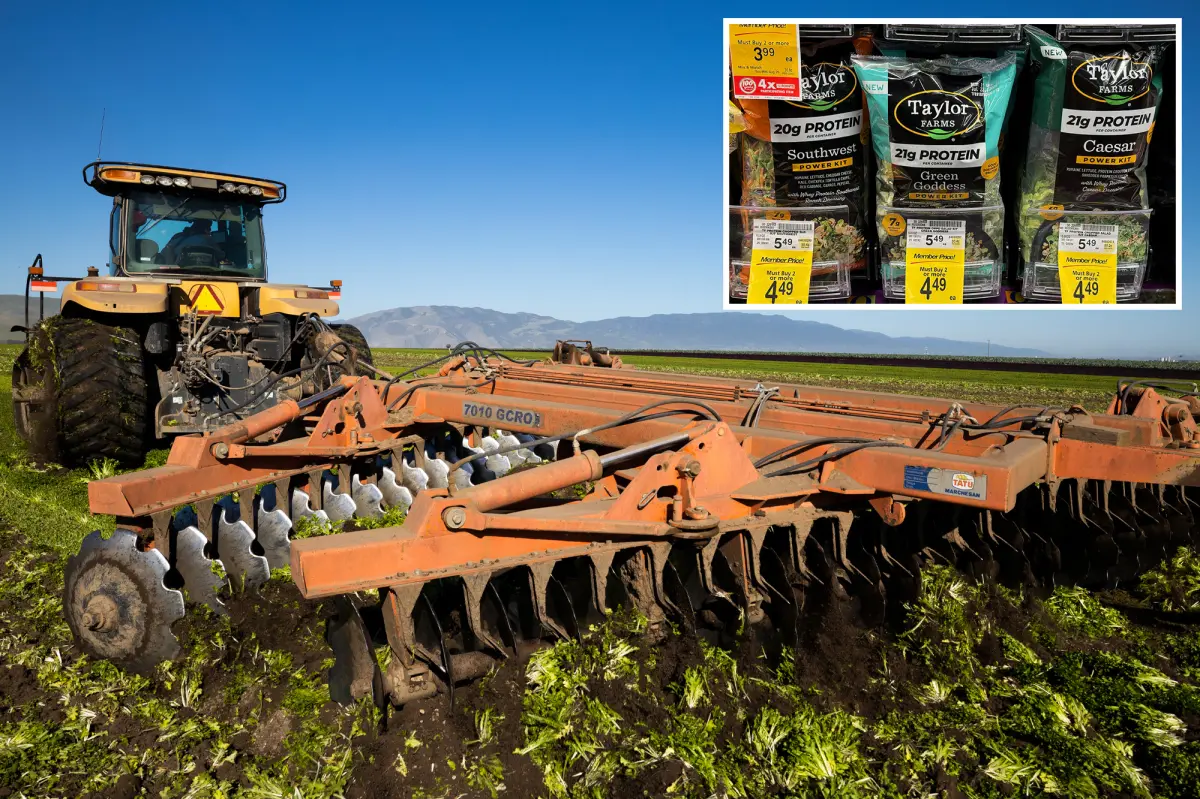
Imagine the heartbreaking sight of pouring your life’s savings, your daily sweat, and your family’s multi-generational heritage into the rich, dark soil of California’s Salinas Valley, only to be forced to shred your beautiful, thriving crops back into the dirt with a heavy tractor. This is the tragic, living nightmare currently facing Larry Cox, a seasoned grower who helms Coastline Family Farms, and numerous other agriculturalists throughout this fertile region affectionately known as “America’s Salad Bowl.” In a single devastating week, Cox was forced to discard and disk under more than 300,000 pounds of pristine, vibrant romaine hearts—not because his crops were diseased, infested, or poorly tended, but because a sudden, catastrophic collapse in national consumer demand left him with absolutely nowhere to send them. The visual of heavy farm machinery crushing millions of potential meals back into the earth serves as a painful testament to the extreme volatility of our modern food system, where an isolated crisis far from home can instantly bankrupt a local grower. For Cox, the emotional and financial toll of this forced destruction is almost too heavy to carry, prompting him to bitterly reflect that he would have been far better off taking a luxurious vacation to the South of France rather than investing his valuable time, hard labor, and precious capital into planting a crop that would ultimately be treated as expensive compost. This grim scene of wasted abundance is playing out across the entire Salinas Valley as farmers watch their hard-won harvests turn into an economic graveyard.
At the root of this profound agricultural catastrophe is a microscopic, single-celled parasite known as Cyclospora cayetanensis, the stubborn biological culprit behind a massive, multi-state outbreak of cyclosporiasis that has left thousands of Americans clinging to their toilets and, in the most severe cases, fighting for their lives in hospital beds. This highly infectious parasite is transmitted when food or water contaminated with microscopic traces of human feces is consumed, unleashing a brutal, prolonged assault on the human digestive system. Those unlucky enough to contract the illness suffer from sudden, explosive, and watery diarrhea, alongside agonizing stomach cramps, severe bloating, persistent nausea, and a bone-deep, paralyzing fatigue that can drain a person’s energy for months on end. Federal investigators with the Food and Drug Administration (FDA) eventually traced the source of this particular outbreak to iceberg lettuce harvested in central Mexico and packaged by Taylor Farms de Mexico. However, because Taylor Farms is a massive, highly visible brand with its corporate headquarters deeply rooted in California, the mere mention of the company’s name triggered a tidal wave of panic that swiftly and unfairly engulfed the pristine fields of the Salinas Valley. This classic case of guilt by association has proven to be swift and merciless, as anxious consumers across the country fail to distinguish between imported Mexican produce and the highly regulated, carefully monitored greens harvested in California, effectively punishing local family farms for a contamination event that occurred hundreds of miles away.
The economic shockwaves of this consumer panic have rippled across the nation, paralyzing the retail and restaurant sectors and leaving a trail of financial devastation in their wake. According to comprehensive market data compiled by the consumer intelligence company NielsenIQ, unit sales of fresh lettuce plummeted by a staggering 8.7% during a critical stretch in July, representing a jaw-dropping loss of more than 7.6 million pounds of nutritious leafy greens compared to the exact same period in the previous year. This sudden drop-off was not confined to grocery store shelves; it also struck a devastating blow to popular, salad-heavy restaurant chains such as Taco Bell and Chopt, which saw their customer foot traffic nosedive by as much as 21% as diners actively avoided menus featuring raw vegetables. Joelle Mosso, a key representative at Western Growers, a prominent trade association representing family farms in the West, explained that when a high-profile foodborne illness outbreak dominates the news cycle, consumers lose all confidence and, out of an abundance of caution, choose to pass on produce altogether rather than risk getting sick. This defensive consumer behavior creates a massive, suffocating bottleneck in the supply chain, as distributors cancel their regular orders, grocery stores slash their produce inventories, and restaurants rapidly alter their culinary offerings, leaving local farmers at the very bottom of the chain holding onto highly perishable crops that have a shelf life measured in mere days.
For veterans of the agricultural industry, this current crisis carries a chillingly familiar sense of dread, echoing past food safety disasters that permanently scarred the American farming landscape and altered consumer habits for a generation. Max Teplitski, the chief science officer for the International Fresh Produce Association, points out that major disease outbreaks have a notorious track record of dampening consumer demand and depressing sales for years, drawing a direct and sobering parallel to the infamous 2006 E. coli outbreak linked to packaged spinach, which drove the spinach industry to its knees and took nearly a decade to fully recover. In a desperate bid to salvage their bottom lines and coax nervous diners back through their doors, some major fast-food corporations have begun implementing aggressive marketing pivots, such as Taco Bell rolling out steep promotional discounts specifically targeted at lettuce-free menu items to reassure customers they can eat safely. While these corporate maneuvers may protect multi-million-dollar restaurant profit margins in the short term, they inflict long-term reputational damage on the humble lettuce leaf, further alienating it from the American plate and reinforcing a subconscious, fear-driven narrative that raw greens are inherently hazardous. This systematic de-escalation of lettuce consumption leaves farmers like Larry Cox in an impossible position, as the infrastructure of demand they spent decades building is dismantled almost overnight by marketing campaigns designed to bypass their products entirely.
Beyond the immediate financial losses suffered by farm owners, the quiet cancellation of the lettuce harvest has triggered a silent, devastating crisis for the thousands of seasonal farmworkers and laborers whose physical hands feed the nation. When demand for fresh produce plummets by 20% to 30%, the economic shockwaves travel directly down to the field crews, tractor operators, and packing-house employees who rely on the grueling harvest season to earn enough money to support their families for the entire year. As sales dry up, farms are forced to cut work hours, suspend harvesting shifts, and lay off dedicated employees, leaving vulnerable agricultural workers—many of whom live paycheck to paycheck in expensive rural California communities—scrambling to pay rent and buy basic groceries. In a tragic, surreal irony, some crews are still sent into the fields to harvest the lettuce, going through all the exhausting physical motions of cutting, trimming, and boxing the greens, only to load them onto trucks that drive straight to local dumps or compost heaps. This agonizing exercise is born of sheer necessity, as farmers must maintain a delicate, continuous planting and harvesting cycle to prevent their soil from hardening and their equipment from seizing up, forcing workers to participate in the heartbreaking spectacle of destroying the very fruits of their intense, backbreaking labor under the hot California sun.
Despite the profound sense of despair currently hanging over the Salinas Valley, the enduring spirit of the American farmer remains unbroken, fueled by a stubborn, deeply ingrained resilience that has sustained agricultural communities through droughts, freezes, and economic depressions for generations. Larry Cox’s stoic philosophy—that a farmer cannot afford to remain downcast for very long, but must instead pick himself up, dust himself off, and keep pushing forward—is a testament to the quiet, rugged courage required to work the land. It takes an extraordinary amount of mental fortitude to wake up every morning, look out over a field of wasted crops representing hundreds of thousands of dollars in personal losses, and make the conscious, hopeful decision to plant the next round of seeds in the belief that the future will be kinder. As the FDA and public health officials work diligently to contain the Mexican cyclosporiasis outbreak and restore safety parameters, the farmers of the Salinas Valley continue to tend their fields, patiently waiting for the day when consumer trust is restored and the vibrant, green bounty of “America’s Salad Bowl” can once again safely and proudly grace dinner tables across the country. Ultimately, this crisis serves as a powerful reminder of our shared connection to the earth and the deep, human debt of gratitude we owe to the resilient men and women who weather the storms of disease, panic, and financial ruin to keep our nation fed.