



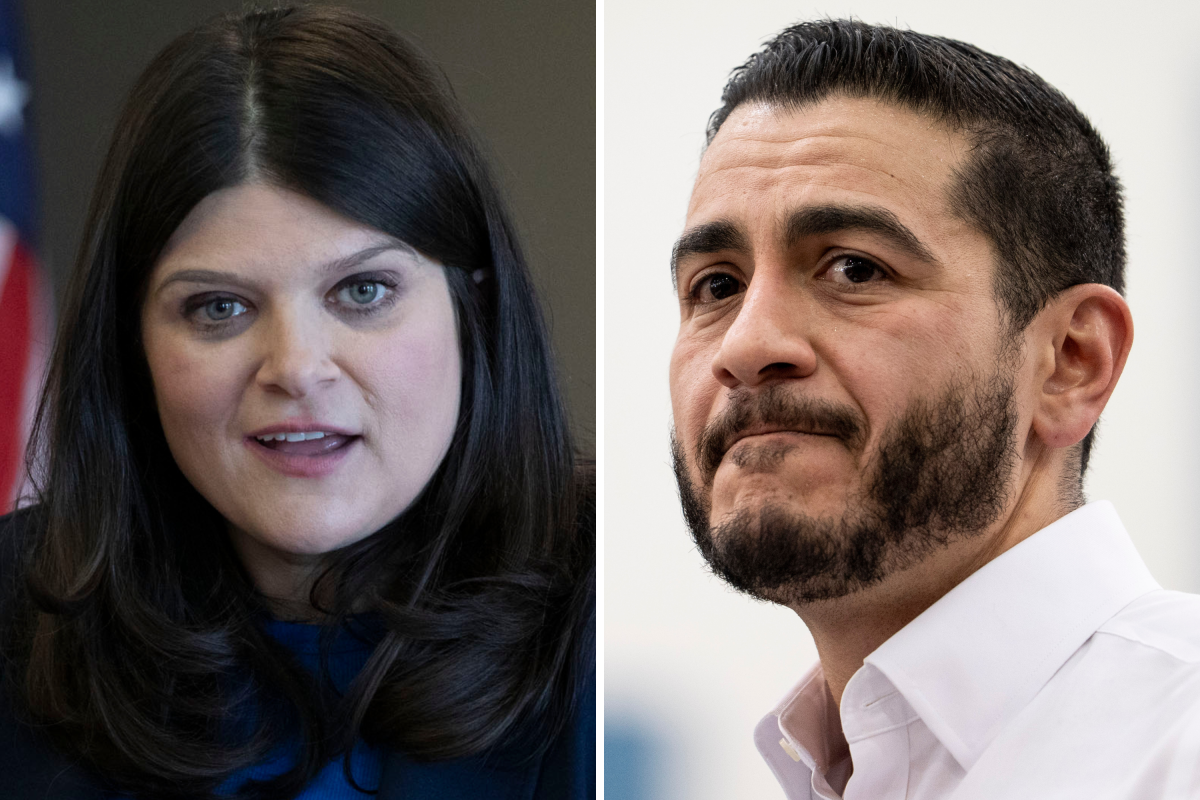
As the final weekend of campaigning draws to a close in Michigan, the air across the Great Lakes State is thick with the nervous energy of a high-stakes political showdown. For months, the race to fill the seat of retiring Democratic Senator Gary Peters has been quietly simmering, but now, on the eve of the August 4th primary, it has erupted into a defining battle for the ideological soul of the Democratic Party. Michigan has always been a political crucible—a sprawling, diverse battleground where presidential fortunes are made and lost, and where every legislative race feels like a referendum on the national mood. This year, the stakes are elevated even higher because the winner of this primary will face Republican Mike Rogers in what is widely projected to be one of the most competitive, expensive, and brutal Senate contests of the 2026 midterm elections. Republicans, who have not won a U.S. Senate race in Michigan since 1994, smell blood in the water. They view this open seat as their single best opportunity to flip the upper chamber of Congress, especially since Donald Trump carried the state in the 2024 presidential election. Against this dramatic backdrop, progressive favorite Abdul El-Sayed and moderate establishment Representative Haley Stevens are locked in a fierce sprint to the finish line. What began as a classic insider-versus-outsider dynamic has evolved into a fascinating test of progressive momentum, with El-Sayed suddenly commanding a double-digit advantage in late-stage polling that has sent shockwaves through the national party apparatus.
The shifting tides of this race are vividly illustrated by a flurry of late-breaking polls that suggest El-Sayed is peaking at the exact right moment. According to a fresh survey conducted by the Public Sentiment Institute between July 25 and July 29, El-Sayed holds a commanding lead of 54.8 percent to Stevens’ 45.2 percent once undecided voters are allocated. Even before those undecided voters are distributed, El-Sayed maintains a healthy 47.6 percent to 39.5 percent edge among likely voters. This is a dramatic reversal from earlier in the summer, when a Glengariff Group poll from early July showed Stevens leading by nearly seven percentage points. The sudden swing in momentum is reinforced by another major survey from Emerson College Polling, which found El-Sayed leading Stevens 54 percent to 39 percent among likely primary voters. This late-stage surge has completely rewritten the narrative of the race, transforming what was once viewed as a safe establishment victory into a potential progressive rout. This shift is not just reflected in telephone interviews and text-message surveys; it has also thoroughly captured the imagination of political gamblers. On prediction markets like Polymarket and Kalshi, traders have pushed El-Sayed’s probability of winning the primary to a staggering 97 percent. While these markets are driven by trader sentiment rather than scientific voter sampling, they illustrate how quickly the conventional wisdom surrounding this race has dissolved, leaving the Stevens campaign desperately searching for a late-game miracle.
At the heart of this dramatic shift is a profound generational and ideological divide that reflects a broader schism within the modern Democratic coalition. The Public Sentiment Institute’s data reveals that El-Sayed’s late-stage surge is being powered by an enthusiastic groundswell of younger, more progressive voters who are eager for systemic change. In contrast, older voters remain Stevens’ most loyal constituency and her only realistic path to pulling off a late-night upset. Spencer Kimball, the executive director of Emerson College Polling, pointed out a stark age divide in their research: voters under the age of 50 broke for El-Sayed by an astonishing 42-point margin, while voters over the age of 60 favored Stevens by 14 points. This generational split turns the primary into a high-stakes game of turnout modeling. Historically, August primaries in Michigan are sleepy, low-turnout affairs dominated by older, retired voters who are highly disciplined about returning their mail-in ballots. Indeed, the Public Sentiment Institute noted that while voters aged 65 and older make up just under 40 percent of registered Democrats, they are projected to account for nearly half of the actual primary electorate. For El-Sayed to translate his polling lead into a certified victory on Tuesday, his campaign must successfully mobilize a demographic that is notoriously difficult to get to the polls in the middle of summer. If youth turnout falters, Stevens’ reliable, older base could easily close the gap, making the final result far tighter than the public polls suggest.
Adding fuel to this fire is a bitter controversy over campaign finance and the sheer volume of outside money pouring into the state. This primary has become one of the most lopsided financial battles in recent memory, with outside groups spending more than $60 million to boost Stevens compared to a modest $4.6 million spent on behalf of El-Sayed. Much of this financial firepower has come from the United Democracy Project, a political action committee affiliated with the American Israel Public Affairs Committee (AIPAC), which has poured more than $30 million into television ads, mailers, and digital campaigns supporting Stevens. While this unprecedented influx of cash has allowed Stevens to saturate the airwaves, it has also become a double-edged sword, serving as a potent rallying cry for El-Sayed’s progressive base. El-Sayed has framed the race as a battle between grassroots democracy and wealthy, out-of-state special interests that are trying to buy a Senate seat. The Public Sentiment Institute’s polling suggests this message is deeply resonating with voters on the ground. When asked about the influence of outside money, 41 percent of likely primary voters stated that a candidate accepting campaign contributions from pro-Israel PACs would make them “much less likely” to support that candidate, with another 15 percent saying it would make them “somewhat less likely” to do so. While a significant portion of the electorate remains indifferent to the issue, the intense negativity among those who do care has transformed Stevens’ financial advantage into a distinct political liability in the eyes of many grassroots activists.
Beyond the internal family feud of the primary, there is a looming pragmatic anxiety about who is best positioned to defend this vital seat against the Republican machine in November. The Democratic establishment has long argued that Stevens, with her deep roots in Congress and moderate policy positions, is the only candidate safe enough to win a general election in a purple state like Michigan. This argument is bolstered by a late July poll conducted by the Glengariff Group, which found Stevens locked in a virtual tie with Republican nominee Mike Rogers at roughly 45 percent each. In contrast, the same poll showed Rogers leading El-Sayed by a comfortable ten-point margin, 49 percent to 39 percent. To moderate Democrats, these numbers are a terrifying warning sign that nominating a progressive like El-Sayed could hand the Senate majority to the Republicans on a silver platter. However, El-Sayed’s supporters reject this “electability” argument as outdated and fear-driven. They counter that traditional moderates often fail to inspire the very voters—young people, progressive activists, and working-class families—whose high turnout is absolutely essential for a Democratic victory in Michigan. From their perspective, a safe, establishment campaign will only lead to voter apathy, whereas El-Sayed’s vision of progressive populism has the unique potential to electrify the electorate, rebuild the Obama-era coalition, and sweep Democrats to victory through sheer grassroots enthusiasm.
As Tuesday approaches, the eyes of the entire country are fixed on Michigan, waiting to see which of these two competing theories of victory will prevail. National Republicans are watching the race with quiet anticipation, confident that a divisive, expensive primary will leave the eventual Democratic nominee bruised, exhausted, and financially drained just as the general election begins. A Republican official, speaking on the condition of anonymity, expressed immense optimism about their chances, noting that Michigan represents a premier pickup opportunity for the GOP. On the other side of the aisle, Democratic National Committee spokesperson Jaelin O’Halloran sought to project confidence, arguing that Donald Trump and the Republican Party have created a “toxic midterm environment” by driving up costs for everyday families, while Democratic candidates are winning over voters by listening to their concerns on the ground. DNC officials also point to recent Democratic overperformances in special elections and local legislative races across the country as evidence that voter enthusiasm remains incredibly high heading into the midterms. Ultimately, the outcome of this primary will do more than just choose a candidate to face Mike Rogers; it will serve as a critical guidepost for the future of the Democratic Party. Whether Michigan Democrats choose the institutional stability of Haley Stevens or the progressive passion of Abdul El-Sayed, their decision will echo far beyond the borders of the Great Lakes State, shaping the national political landscape for years to come.