



For millions of pet parents around the world, the simple act of closing the front door to head to work, run basic errands, or enjoy a brief social outing is accompanied by a heavy, lingering sense of dread and guilt. While we often laugh off a dog’s minor complaints, such as a brief whine or a single bark as we walk away, certain persistent, escalating behaviors are far from harmless quirks; indeed, they are desperate, silent distress signals indicating a profound underlying psychological struggle that demands immediate veterinary attention. Separation anxiety is a deeply distressing, often misunderstood clinical condition that effectively transforms a dog’s internal world into a tempest of sheer panic, confusion, and fear the very moment their human counterparts disappear from view. According to Dr. Julie Hunt, a highly experienced and compassionate veterinarian associated with Embrace Pet Insurance, this intense emotional suffering is far more prevalent than many owners realize and can manifest in highly destructive, heartbreaking ways. Dogs afflicted with this condition do not merely experience mild loneliness or temporary boredom; instead, they are often plunged into an acute state of physiological fight-or-flight, characterized by excessive, frantic panting, hypersalivation—where drool pools on the floor to an alarming degree—restless and relentless pacing, inconsolable howling or sharp vocalizations, and localized self-injury. In their desperate attempts to escape their perceived confinement or to self-soothe their racing minds, these terrified animals may systematically tear apart valuable household furniture, claw through drywall until their paws bleed, chew wooden doorframes to splinters, or suffer sudden, uncharacteristic urinary and fecal accidents inside the home. When a beloved pet’s anxiety escalates to the point where it severely degrades their overall quality of life, causes significant structural damage to the household, or begins to place an immense, exhausting emotional and financial strain on the delicate human-animal bond, it becomes absolutely imperative for owners to step back, recognize the warning signs, and seek professional veterinary intervention before the destructive cycle of panic becomes permanently ingrained in the dog’s psyche.
Navigating the complex and often confusing clinical landscape of canine separation anxiety is rarely a straightforward journey, as there is absolutely no universal, one-size-fits-all cure for a dog’s fractured peace of mind. Veterinary professionals like Dr. Hunt emphasize that restoring harmony to an anxious pet’s life typically requires a highly customized, multi-layered therapeutic approach that must be patiently and lovingly tailored to the unique sensitivities, fears, and environmental triggers of the individual animal. This therapeutic puzzle often combines intensive behavioral modification techniques and systematic desensitization training—wherein dogs are gradually, safely, and systematically exposed to short, controlled periods of isolation—with a diverse array of holistic and environmental calming aids. Dedicated pet parents may find themselves embarking on a long journey of trial and error, experimenting with synthetic canine pheromone diffusers, specialized calming dietary supplements, target-specific anxiety sprays, strict, predictable daily routines, and even sensory distractions like leaving on specialized dog-centric television channels or soothing, low-frequency classical music. When behavioral therapies and environmental adjustments alone prove insufficient to break the powerful grip of severe panic, veterinarians may recommend pharmaceutical interventions, prescribing daily anti-anxiety medications or fast-acting situational sedatives to help lower the dog’s baseline stress levels. Additionally, many compassionate owners turn to tactile comfort objects, affectionately referred to as “loveys,” which are designed to act as physical anchors of safety; some owners will go so far as to sleep with these plush toys or store them inside their personal laundry hampers so the fabric absorbs their distinct, comforting biological scent before the object is left behind with the dog. Finding the precise combination of these varied therapies is an undeniable test of human patience, demanding significant time, money, and emotional resilience from owners, but as Dr. Hunt warmly points out, the grueling trial-and-error process is profoundly worth the effort because every single dog inherently deserves to feel safe, calm, and blissfully happy within the sanctuary of their own home.
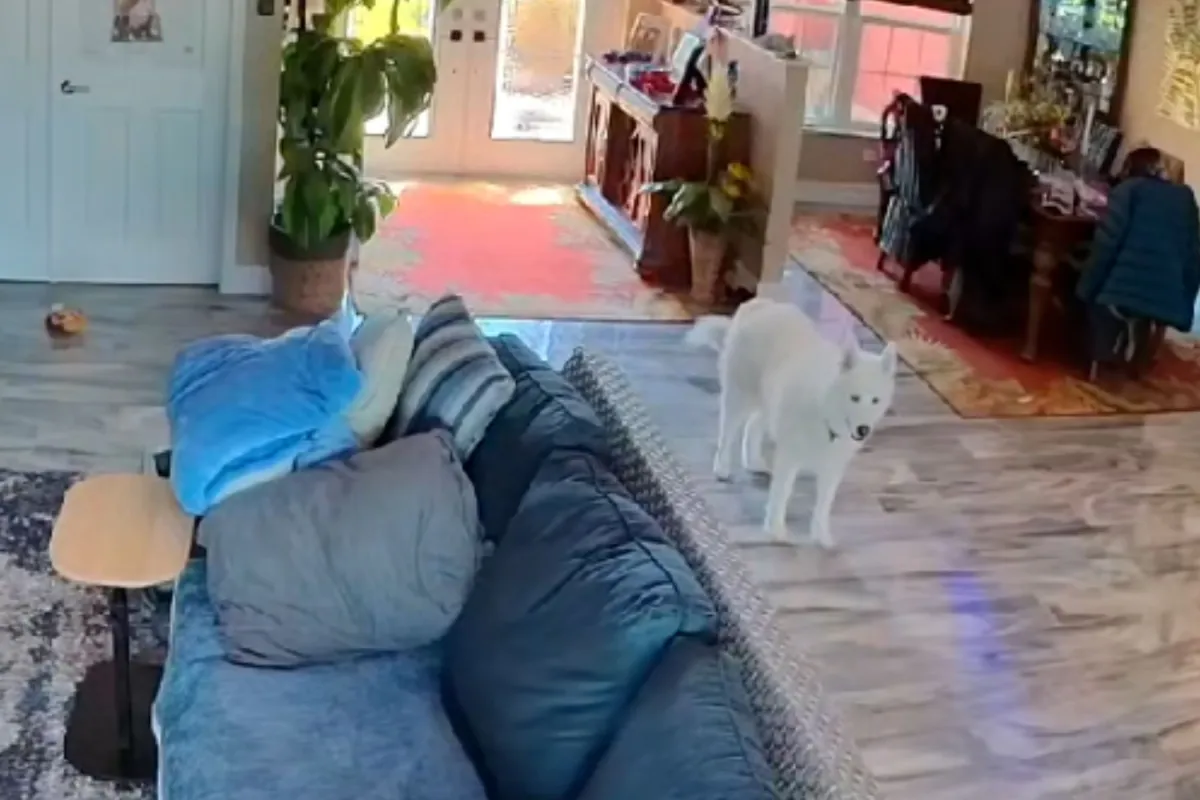
To truly understand the exhausting, emotional roller-coaster of managing this complex condition, one need look no further than the touching story of Snow, a striking seven-year-old Siberian husky and Alaskan malamute mix whose journey perfectly illustrates the unexpected, winding avenues of animal healing. Rescued by her deeply devoted owners, Stephen and Donna, Snow was a gentle, beautiful soul who unfortunately began to experience a severe, agonizing regression in her emotional stability following a major household transition. When Stephen officially moved into Donna’s home in December, the sudden shift in domestic dynamics, shared spaces, and daily routines triggered a massive wave of separation anxiety in the rescue dog, leaving her utterly inconsolable whenever the couple had to step out of the house together. Left to her own devices in the empty home, Snow’s panic would manifest in heartbreaking, hours-long howling sessions that echoed through the neighborhood, during which she would station herself directly by the front door, waiting in vain for their return and frantically pawing at the hard wood until her paws were sore and the doorframe was visibly damaged. Desperate to understand the full scope of her suffering, protect their home, and find a way to soothe her troubled mind, Stephen and Donna installed interactive cameras throughout their main living spaces, allowing them to monitor her behavior in real-time while they were away, and eventually sought professional veterinary guidance. Snow was subsequently prescribed trazodone, a common and widely used medication designed to manage acute veterinary anxiety, but the couple quickly found themselves facing a deeply disheartening dilemma: while the pills did succeed in stopping her frantic howling and destructive behaviors, they also left the vibrant, high-energy husky mix looking painfully lethargic, heavily sedated, and completely stripped of her natural, joyful personality, leaving her owners searching for a better way.
The ultimate turning point in Snow’s life arrived not through a carefully calculated veterinary breakthrough or a new pharmacological regimen, but through a brilliant stroke of pure, unadulterated cosmic luck that left her owners utterly astounded and deeply relieved. One afternoon, while Donna was traveling out of town for business, Stephen rushed out of the house in a hurry to attend to his daily responsibilities, only to realize much later with a jolt of pure panic that he had completely forgotten to administer Snow’s daily dose of trazodone. Fearing the absolute worst—envisioning a house in complete ruins, frayed woodwork, distressed neighbors complaining of howling, and a highly agitated, self-harming dog—Stephen hesitantly opened his phone’s camera feed to check on their pet, bracing himself for a heart-wrenching scene of canine despair. Instead, what he witnessed on the glowing screen was a surreal, incredibly peaceful image that defied all of his expectations: Snow was not pacing, crying, or clawing at the entryway; rather, she was curled up on the hard floor, sleeping in complete, serene tranquility directly beside a tall, faceless garment mannequin. The mannequin had never been intended as a pet toy, a comfort object, or an anxiety treatment; Donna, an avid clothing designer, used the dressmaker’s form for her sewing projects and typically kept it safely tucked away inside one of the private spare bedrooms where Snow had no access to it. By sheer coincidence, Donna had left the mannequin standing out in the middle of the dining room before her departure, unwittingly setting the stage for an accidental miracle that would completely redefine how the couple managed their beloved rescue dog’s severe isolation panic, offering a glimpse of hope without the need for heavy, personality-altering sedation.
This bizarre and heartwarming breakthrough naturally begs the question of why a lifeless, synthetic structure like a dressmaker’s dummy could possess such a profound, soothing influence over a highly sensitive, intelligent animal. According to Dr. Julie Hunt, the fascinating canine psychology behind Snow’s unique behavior can be categorized as a classic display of “displacement,” an intriguing behavioral process wherein an animal redirects their attachment and seeking behaviors toward a substitute object when the primary figure they desire is completely unavailable. Dr. Hunt notes that while there is absolutely no doubt that a highly intelligent dog with an incredibly sophisticated olfactory system knows the mannequin is not a physical, breathing human—given that it lacks any biological scent, warmth, movement, or realistic human features—the silhouette itself serves as a powerful visual proxy. By choosing to lay her head near the dummy, Snow was actively utilizing the human-like form as a physical comfort anchor that symbolically represented the safety, presence, and companionship of her absent owners during their long hours away from the home. However, Dr. Hunt is careful to temper expectations for other desperate pet parents who might be eager to rush out and buy a mannequin, cautioning that Snow’s highly specific and whimsical reaction should not be viewed as a universal, magic-bullet cure for canine separation anxiety across the board. The veterinarian admits that she has never personally witnessed another canine patient finding solace in a dressmaker’s dummy, dryly noting that such a remedy remains highly uncommon simply because the vast majority of households do not happen to keep life-sized garment mannequins standing in their dining rooms, making Snow’s coping mechanism a wonderfully unique anomaly.
Ultimately, Snow’s remarkable journey serves as a beautiful, living testament to the highly individualized, creative ways in which dogs process trauma, cope with loneliness, and construct their own unique survival strategies when given the grace and space to do so. For Stephen and Donna, what began as a chaotic domestic struggle, a damaged home, and an accidental omission of daily medication has blossomed into an enduring source of profound peace, confidence, and comfort for their beloved husky-malamute mix. Today, the once-forgotten sewing mannequin has earned a permanent, honored place of pride in the corner of their dining room, serving as a silent, comforting sentinel where Snow can frequently be found napping peacefully, completely free from the debilitating terror that once defined her lonely hours. Reflecting on the sheer absurdity and beauty of the situation, Stephen marvels at how a random, unintended mistake turned out to be the ultimate saving grace for their family, proving that sometimes the best solutions to our pets’ deepest psychological struggles cannot be found in a pill bottle, a textbook, or an expensive training course. By sharing Snow’s heartwarming story, her owners hope to inspire other struggling pet parents to remain deeply observant, fiercely patient, and infinitely open-minded to unconventional solutions, reminding us all that our pets are complex, deeply emotional creatures who speak to us in quiet, mysterious ways, and that sometimes, a little bit of accidental magic—and a faceless plastic friend—is all it takes to heal a bruised, anxious, and lonely soul.