



When any political movement suffers setbacks, electoral defeats, or cultural isolation, there is an incredibly deep, almost primal human temptation to panic, discard the established rulebook, and declare that its core principles have utterly failed. We look at the daunting, modern problems of our time and easily convince ourselves that the foundational ideas of the past are simply too quaint, too fragile, or too obsolete to address the complex, sprawling anxieties of the present day. Instead of striving to better align our daily actions and policies with our founding philosophies, we find ourselves lured by louder, angrier voices demanding a wholesale reinvention—a new doctrine designed not to elevate human potential, but to exploit and mobilize the raw grievances of the moment. This emotional reaction is far from unique to our contemporary era; it is a recurring pattern in the long, turbulent history of political thought. Exactly sixty years ago, the American conservative movement found itself in a remarkably similar state of crisis, deeply fractured, intellectually wandering, and desperately searching for its soul. It was a movement paralyzed by profound internal divisions and existential disagreements over its core identity, its purpose, and the very people it was meant to serve. Cold War hawks sparred bitterly with isolationists over international strategy; traditionalists focused on moral order clashed with libertarians advocating for absolute personal freedom; and fiscal hawks demanding balanced budgets quarreled with those who prioritized massive defense spending. To outside observers, and even to many distressed insiders, conservatism appeared to be on the precipice of permanent irrelevance, dismissed as a collection of obsolete factions incapable of speaking with a single, coherent voice. Yet, history teaches us that these moments of profound fracture are often the precursors to profound clarity, provided that leaders have the courage to look backward to enduring truths rather than throwing them away in a desperate, short-sighted bid for political survival.
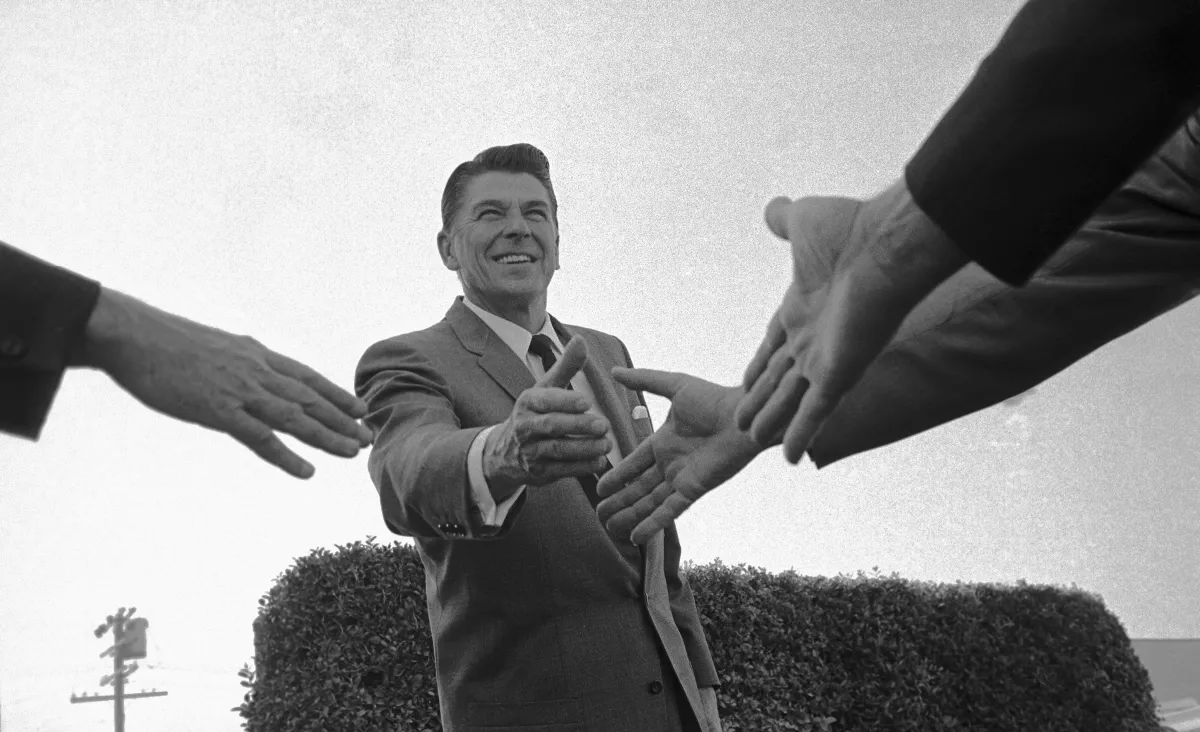
That clarity arrived on the evening of October 27, 1964, when a charismatic former actor named Ronald Reagan stepped before a national television audience to deliver a speech on behalf of Barry Goldwater’s struggling presidential campaign. The address, which would transcend that specific election to become known simply as “A Time for Choosing,” did not magically resolve every single policy dispute within the fractured conservative movement, but it did something far more vital: it articulated a beautifully coherent, deeply human vision of what the American experiment was truly about. Reagan reminded his audience that the preservation of human freedom requires a constant, vigilant skepticism of centralized power, centering his argument on the everyday individual’s right to self-determination. He warned against the seductive, intellectual elites of his era who argued that the profit motive was a relic of the past and that human progress could only be achieved by embracing the collective, state-directed incentives of a centralized welfare system. In doing so, he directly challenged prominent leaders of the day, like Senator J. William Fulbright, who openly dismissed the United States Constitution as an “outmoded” document that unnecessarily restricted the President from doing what he deemed best for the populace. Reagan’s response was a masterclass in direct, timeless wisdom: he reminded a restless nation that the Founding Fathers had designed those complex constitutional constraints with deliberate, protective intent to shield ordinary citizens from tyranny. They understood that governments do not simply manage abstract economic systems; they govern real, flesh-and-blood human beings with dreams and rights. To control an economy, a government must inevitably control the people within it, relying on systemic force, regulatory coercion, and the gradual erosion of individual agency to achieve its political mandates. This fundamental truth about power and human nature remains just as relevant in our highly digitized modern society as it was six decades ago.
Despite the profound endurance of this timeless truth, a highly active and vocal portion of the modern political right seems to have lost its institutional memory, swapping classical principles for a volatile and emotionally charged brand of populism. Conflating conservatism with public anger is a grave mistake that contemporary thinkers cannot afford to make, as these two ideologies possess fundamentally different, often irreconcilable understandings of government power and human society. Traditional American conservatism, long anchored by the sensible “fusionist” coalition that brilliantly combined free markets, individual liberty, and moral traditionalism, operated on the belief that the state should occupy a narrow, strictly defined role in human life. It championed free trade, fiscal responsibility, robust international alliances, and a deep, abiding respect for the decentralized distribution of power outlined in Article I, Section 8 of the Constitution, which reserved almost all authority to local communities and individual citizens. Under this classic view, human flourishing is best achieved in the fertile soil of personal liberty, where families, local neighborhoods, and voluntary associations are empowered to solve their own problems. In stark contrast, modern right-wing populism shares conservatism’s enemies list but completely rejects its intellectual discipline and constitutional self-restraint. Populism rails passionately against elite institutions while simultaneously working to empower a new vanguard of state actors to aggressively pull the levers of centralized federal power. It claims to champion the hard-working, everyday citizens while enthusiastically embracing heavy protectionist tariffs that ultimately act as a direct, painful tax on the very families and consumers they promise to defend. By advocating for aggressive government intervention in private industries, picking corporate winners and losers, and shutting down foreign markets, modern populists are unwittingly adopting the same massive, big-government tools that classical conservatives spent generations actively resisting.
This eager embrace of aggressive state intervention ignores one of Reagan’s most famous, evergreen warnings about the toxic, self-perpetuating nature of federal authority. He famously observed that “no government ever voluntarily reduces itself in size,” describing bloated government programs as the closest thing to eternal life we will ever witness on this earth. Reagan did not utter these words merely as a clever political applause line; he meant them as a serious, sobering warning about the insidious human cost of bureaucratic expansion. There is a deep, recurring psychological trap in thinking that centralized power is safe simply because “our team” happens to be in charge of it at the moment. Once you grant the federal government the awesome, centralized power to micro-manage the economy, select winners and losers in the marketplace, punish disfavored corporations, and hand out financial favors to preferred political constituencies, you can never claw that power back from the state. The massive bureaucratic machinery, once built and operating, remains permanently in place for future political adversaries to inherit and exploit. This is the tragic, short-sighted blind spot of the modern populist movement: its loudest leaders assume they will always be the ones holding the reins of the executive branch and directing federal policy. They fail to realize that the sweeping regulatory powers, tariff-imposing mechanisms, and executive authorities they construct today out of immediate frustration will inevitably be seized tomorrow by political opponents with entirely different values and agendas. The human desire for a quick, powerful fix to complex social problems often blinds us to the long-term reality that a government expanded today to save us can easily be turned against us tomorrow, leaving ordinary families completely vulnerable to the unpredictable whims of an overreaching and unaccountable federal administrative state that answers to no one.
To champion traditional conservative principles and reject the superficial solutions of modern populism does not mean turning a blind eye to the genuine, heartfelt pain and deep frustration that have fueled its dramatic rise across the nation. It is undeniable that decades of inconsistent federal trade policies, corporate cronyism, and globalist indifference have caused severe economic dislocation, hollowing out entire manufacturing communities and leaving honest, hard-working families feeling completely abandoned. Vital public and private institutions have failed the very people who built and trusted them, and the insulated, highly educated professional class that runs these elite spaces has, in far too many cases, earned the intense contempt and distrust directed at them. These grievances are intensely real, written plainly on the empty storefronts of small-town main streets and felt at the kitchen tables of working parents trying to budget through mounting inflation; any conservative who simply dismisses these struggles with cold indifference or academic dogmatism deserves to lose the public trust. However, the presence of a very real, painful grievance does not automatically validate any arbitrary, heavy-handed remedy that claims to solve it. Implementing sweeping, broad-based trade wars, executing top-down industrial planning, bypassing constitutional checks on presidential authority, and demanding executive unilateralism are not conservative, freedom-oriented solutions to progressive overreach. These measures are actually the exact same progressive overreach, merely repackaged in a different political color and sold to a different, frustrated demographic. When we dismantle the constitutional guardrails that limit state power because we are impatient for quick results, we forget that those guardrails do not care about our good intentions; they exist to prevent the concentration of centralized power that historically leads to the erosion of the human spirit, individual dignity, and the ultimate destruction of local community life.
The path forward for American conservatism does not require abandoning the real-world concerns of the working class, but rather addressing them with the courage of our convictions rather than the convenience of populist rage. It means holding the line on timeless principles—even when the populist wind is blowing at hurricane strength, even when the political base is restless and angry, and even when doing the right thing costs temporary electoral votes. Historically, American conservatism has faced these existential moments of self-doubt before, and it recovered not by reinventing itself into an unrecognizable, big-government mirror image of its progressive opponents, but by standing firm and insisting, against the cultural and political drift, on what it had always believed to be true about human liberty, personal responsibility, and constitutional self-restraint. In the coming weeks, leaders, thinkers, and everyday citizens will gather to make exactly this vital, principled case at the annual Western Conservative Summit, hosted by the Centennial Institute at Colorado Christian University from July 31 to August 1. Under the leadership of director Greg Schaller, this gathering serves as a critical crucible for healthy debate, intellectual re-centering, and reminding the movement of its core calling to defend individual freedom. It is an opportunity to look beyond the immediate, reactive anger of the news cycle and refocus on building a society where human freedom, limited government, and strong families can once again flourish. Much like Ronald Reagan’s watershed moment in 1964, our modern political climate presents us with a historic crossroad—a defining opportunity to reject the fleeting high of populist anger and choose instead the hard, honorable road of constitutional liberty and moral strength. It is time, once again, for a choosing.