



The quiet grandeur of the Senate hearing room transformed into a high-stakes theater of political warfare on Wednesday, serving as the backdrop for one of the most dramatic confrontations of the post-pandemic era. Dr. Anthony Fauci, the long-serving immunologist who became both a household name and a lightning rod of division during the COVID-19 crisis, stood before the Senate Homeland Security and Governmental Affairs Committee under a compelling subpoena issued by its fiercely critical chairman, Republican Senator Rand Paul of Kentucky. The atmosphere was charged with anticipation, fueled by the recent disclosure of over 1,000 pages of Fauci’s personal, pandemic-era diaries—documents that conservative lawmakers argued raised fundamental questions about the transparency of early public health messaging, vaccine mandates, and federal decision-making. Yet, instead of the spirited, data-driven debates that had defined his previous public testimonies, Fauci adopted a strategy of absolute silence, repeatedly invoking his Fifth Amendment constitutional right against self-incrimination a remarkable 111 times. Guided strictly by his defense counsel, Fauci’s methodical refusal to answer questions triggered immediate and explosive political theater. Senator Josh Hawley, a Missouri Republican, quickly weaponized this silence before a national television audience, declaring that Fauci was “guilty as all get out” and claiming that innocent individuals do not seek refuge behind constitutional protections. This sentiment was echoed by other influential conservatives, including House Judiciary Chairman Jim Jordan, who asserted that Fauci had misled the country for years and that his silence spoke volumes. The contentious session concluded not with clarity, but with an escalation, as Senator Paul announced that the committee would vote the following week on whether to hold Fauci in congressional contempt, while Florida Attorney General James Uthmeier initiated a state-level investigation to further probe the legendary doctor’s administrative actions.
While the political arena erupted with accusations of guilt, legal scholars and constitutional experts rushed to demystify the profound gap between political theater and actual constitutional law. Under the American legal system, the Fifth Amendment is not a confession of wrongdoing but a foundational safeguard designed to protect citizens, public officials, and witnesses alike from being coerced by the state into providing evidence that could potentially lead to their own prosecution. Kimberley Wehle, a prominent law professor at the University of Baltimore, emphasized that invoking this right is frequently misunderstood by the public as an implicit admission of guilt, when in reality, it serves as a critical shield against federal overreach and prosecutorial traps. Legal representatives routinely advise clients to remain silent if they believe their truthful answers could be twisted, misrepresented, or utilized to construct a criminal case against them—even if the individual is completely innocent of any crime. David Super, a professor of law and economics at Georgetown University, noted that Fauci’s decision to remain silent at the congressional podium was legally identical to the tactical protections employed by other high-profile figures faced with aggressive investigation, including former President Donald Trump himself. The protection exists to preserve the integrity of the adversarial justice system, ensuring that the burden of proof remains squarely on the shoulders of the government rather than forcing an individual to assist in their own targeting. In the highly charged environment of a congressional proceeding, where the line between legal questioning and political performance is often blurred, invoking the Fifth Amendment is considered by defense attorneys to be an essential, rational, and entirely legal defense mechanism against an adversarial state apparatus.
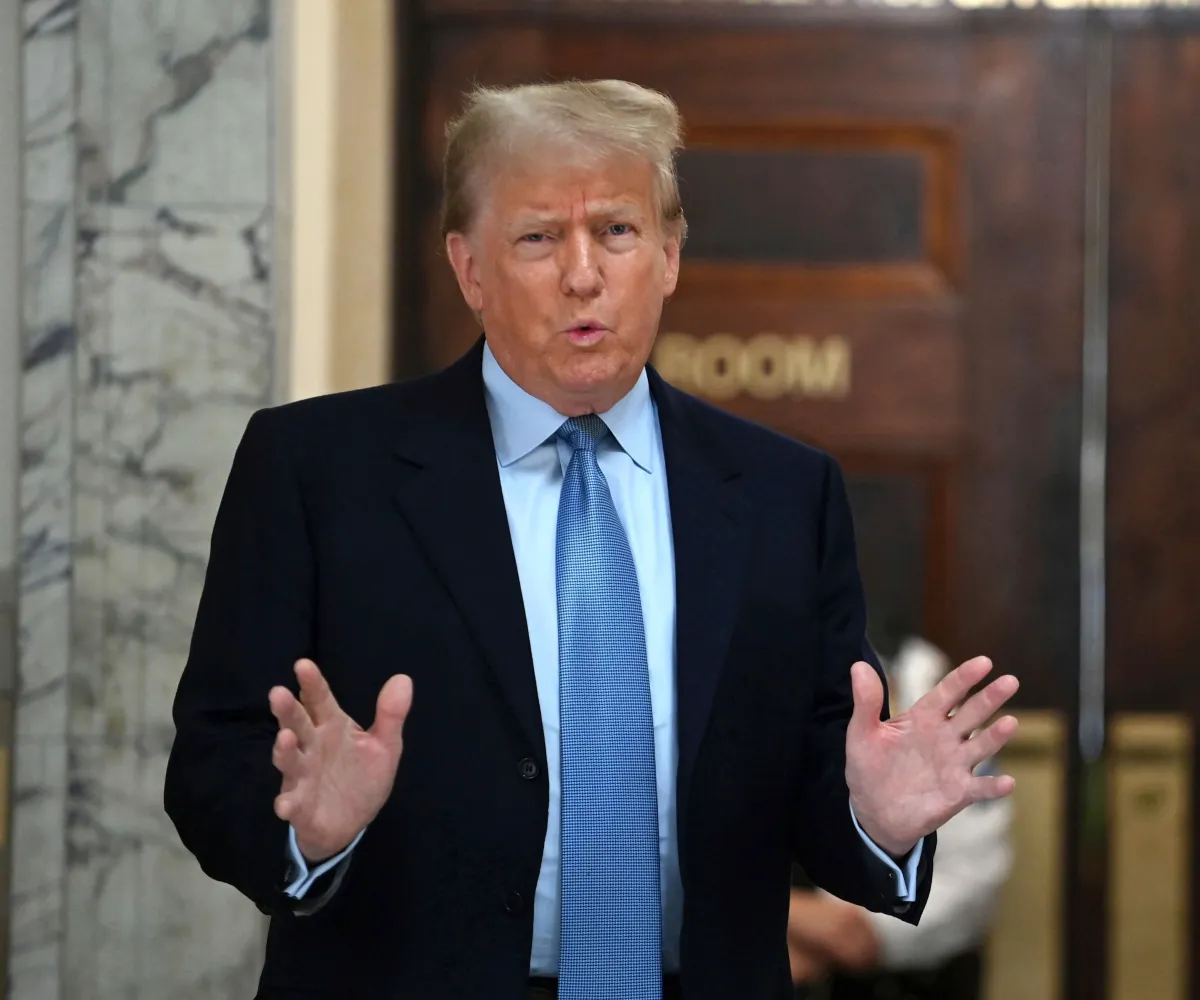
The Republican condemnation of Fauci’s silence carried a heavy dose of historical irony, pointing back to Donald Trump’s own extensive and highly strategic reliance on the very same constitutional privilege. Despite having famously questioned the innocence of anyone who invokes the Fifth Amendment during his 2016 presidential campaign, Trump has repeatedly turned to the amendment to protect his personal and financial interests throughout his career. Most notably, during a high-stakes 2022 deposition led by New York Attorney General Letitia James in her sweeping civil fraud investigation, Trump invoked his Fifth Amendment right more than 440 times, answering only a single question regarding his own name. In a video of that deposition released later to the public, Trump addressed his shift in perspective, explaining that when an individual, their family, and their business empire become the targets of what he characterized as a politically motivated witch hunt backed by biased prosecutors and media outlets, taking the Fifth becomes the only viable option. James’s subsequent civil suit alleged that Trump and his executives systematically inflated the valuations of key real estate assets, such as his Seven Springs estate and his Mar-a-Lago resort, to secure favorable loan terms. The resulting trial saw New York Judge Arthur Engoron find Trump and his sons liable for massive fraud, imposing an initial penalty of $354 million that ballooned past $460 million due to accumulating interest. Although a New York appeals court in 2025 upheld the core findings of fraud, it threw out the eye-watering financial penalties, illustrating the complex, high-stakes legal battlefields where Trump’s tactical silence played a central role. Decades earlier, Trump had displayed the same legal pragmatism, invoking the Fifth Amendment nearly 100 times during his highly publicized 1990 divorce proceedings with Ivana Trump when questioned extensively about marital infidelity.
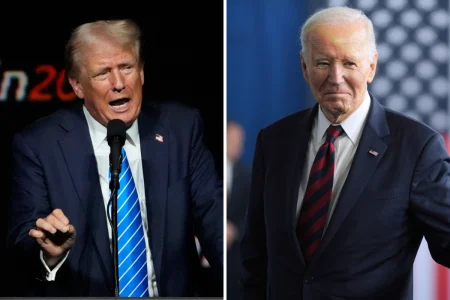
To fully understand why Fauci’s legal team insisted on complete silence, one must examine the intricate, multi-layered legal jeopardy he faced, even in the wake of a sweeping federal pardon. On January 19, 2025, outgoing President Joe Biden granted Fauci a comprehensive federal pardon covering any potential federal offenses tied to his government service spanning from January 1, 2014, through the date of the execution of the pardon. While this presidential act effectively shielded the former chief medical advisor from federal prosecution for his past administrative actions, it did not render him entirely immune to contemporaneous legal traps. Legal experts such as Barbara McQuade, a former United States Attorney, pointed out that a federal pardon does not cover future conduct, meaning that if Fauci had testified and made any statements that conflicted with his extensive past testimonies or newly discovered diaries, he could have been aggressively prosecuted for perjury or making false statements to Congress. Furthermore, the presidential pardon offered zero protection against state-level criminal investigations, a vulnerability that immediately materialized when Florida’s Attorney General announced a state-based probe into Fauci’s pandemic conduct shortly after the hearing. Neama Rahmani, a former federal prosecutor, categorized the invocation as the only logical legal strategy, noting that complete silence was the smartest way to shut down any potential perjury trap or state-level prosecution. Meanwhile, Fauci’s defense attorney, David Schertler, vigorously defended his client’s legal standing, reminding critics that while Senator Rand Paul is a licensed medical doctor, he lacks the legal expertise to challenge the validity of a well-established constitutional privilege.
Donald Trump did not hesitate to inject himself into the unfolding drama, expressing intense disdain for Fauci’s refusal to speak while simultaneously rewriting the history of his administration’s pandemic response. Trump revealed that he watched the entirety of the dramatic Senate hearing, publicly labeling Fauci’s silence as “terrible” and launching a series of scorching attacks on his Truth Social platform. In his posts, Trump sought to distance himself from the controversial doctor, emphasizing that Fauci was a government fixture he had “inherited” from previous administrations dating back to the 1980s and claiming that he had steadily sidelined him during the height of the crisis. He asserted that had he followed Fauci’s restrictive recommendations, the entire country would have been forced into a devastating, prolonged economic shutdown. Trump contrastingly highlighted his own decision to bypass Fauci’s counsel, pointing proudly to his administration’s management of Operation Warp Speed, which he characterized as one of the most spectacular presidential successes in American history. He also took credit for early assertions that the novel coronavirus originated in a laboratory in Wuhan, China—a theory he claimed Fauci desperately tried to suppress to protect foreign interests. Trump criticized Fauci’s evolving guidance on face masks and championed his own federalist approach of leaving lockdown decisions to individual state governors, arguing that Republican leaders handled the crisis far better than their Democratic counterparts. Through this public lambasting, Trump attempted to solidify a narrative where he stood as a decisive, populist leader who successfully resisted the scientific establishment, despite having officially presented Fauci with a presidential commendation for his work on vaccines in the final days of his presidency.
As the dust settled on the explosive hearing, the nation remained deeply divided, with Fauci’s defense and prosecution reflecting the broader, persistent ideological gulf in American politics. Supporting the retired immunologist’s strategy, Democratic Senator Richard Blumenthal of Connecticut argued that Fauci’s silence was not only legally sound but absolutely necessary, describing the Senate hearing as a highly coordinated political trap designed to manufacture a minor discrepancy that could be weaponized for prosecution. On the opposite side, the Republican congressional majority showed no intention of letting the matter rest, viewing Fauci’s silence as a powerful political victory that would fuel their ongoing investigations into the origins of COVID-19, federal research funding, and administrative overreach. This intensifying standoff signals that the political legacy of the pandemic is far from resolved, as congressional committees prepare for a highly charged contempt-of-Congress vote and regional state prosecutors move forward with their own independent investigations. What began as a scientific quest to manage a once-in-a-century global health crisis has permanently devolved into a bitter, cyclical struggle over institutional trust, legal boundaries, and constitutional rights. While legal scholars maintain that the Fifth Amendment remains a vital shield for the innocent and the targeted alike, the public perception of Dr. Fauci’s silence will continue to be interpreted through a strictly partisan lens, ensuring that his life’s work remains entangled in the complex legal and political machinery of a polarized nation.