




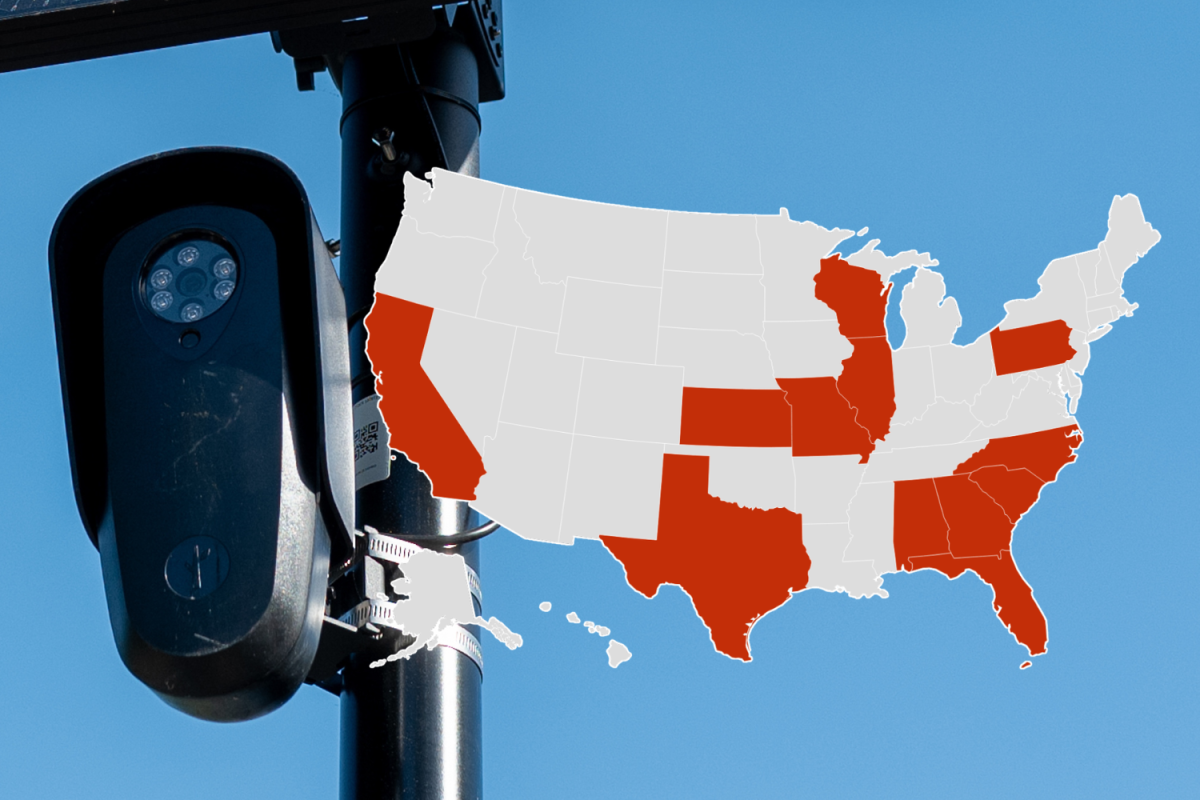
The quiet, rapid expansion of Flock Safety’s automated license plate reader (ALPR) network across the United States was pitched to the public as a modern-day security shield, a high-tech tool quietly working in the background of our neighborhoods to catch car thieves, find missing children, and solve complex crimes. Yet, a striking investigation by Newsweek has brought to light a far more unsettling reality: this massive surveillance dragnet is increasingly being turned inward, weaponized by the very people trusted to protect us. Across at least twelve states, including California, Georgia, Florida, and Texas, police officers have been caught using these highly sensitive vehicle-tracking databases to satisfy personal obsessions. Rather than tracking down criminals, these officers allegedly used the system to stalk estranged romantic partners, spy on relatives, and keep tabs on personal acquaintances. When technology is granted the power to trace our every move—capturing our therapy appointments, late-night grocery runs, and family visits—the line between community defense and state-sponsored voyeurism becomes razor-thin, leaving citizens to wonder if our safety is being traded for systematic surveillance.
The American South has emerged as a major flashpoint for these digital transgressions, particularly in Georgia, where Flock technology was first pioneered. Extensive audits and internal investigations across the state have led to a waves of firings, resignations, and arrests in jurisdictions like DeKalb County, Fayetteville, Albany, and Cherokee County. The arrest of former DeKalb County Sheriff’s Sergeant Kabiru Salawu for the unauthorized use of the Flock system highlighted the deep breach of ethics occurring behind closed doors, prompting Sheriff Melody Maddox to issue a stern reminder that the public deserves untarnished integrity from those wearing a badge. A similar betrayal played out in Charlotte, North Carolina, where Officer Seth Elliott was arrested for allegedly cross-referencing Flock data with state criminal justice databases, prompting Police Chief Estella Patterson to denounce the act as a direct violation of professional standards. In Alabama’s close-knit towns of Moody and Springville, internal audits also revealed misuse, resulting in one officer being fired and another resigning. The human cost of these violations became painfully personal in Springville, where Chief Jason Mize had to apologize to a resident after a departmental audit revealed a rogue officer had been tracking their daily movements for “personal reasons.”
The psychological toll of these abuses becomes even more chilling when examining the cases scattered across the West Coast, Florida, and the Midwest. In Costa Mesa, California, former officer Robert Jay Josett pleaded guilty to utilizing police databases, including Flock, to track a woman with whom he had a previous relationship. Following the plea, Orange County District Attorney Todd Spitzer pointedly stated that no citizen should ever have to live in fear of being hunted through taxpayer-funded databases by an individual possessing a badge and a gun. In Florida, an Orange City officer faced accusations of transforming the platform into a personal tracking service for a romantic interest, while in Wisconsin, multiple Milwaukee police officers faced discipline and charges for repeatedly searching for information on former lovers and their partners. These incidents paint a terrifying picture of domestic abuse facilitated by modern technology; when a police officer can track an ex-partner’s vehicle as it crosses municipal lines with just a few keystrokes, the target is left completely exposed, with virtually no place to hide from an omnipresent eye.
In response to these deeply personal violations, a powerful political and legislative backlash has begun to unite lawmakers across the political spectrum who view unchecked database surveillance as an existential threat to American freedom. In Washington, Republican Representative Thomas Massie of Kentucky has spearheaded federal legislation aimed at stripping funding from law enforcement agencies that employ Flock Safety cameras, arguing that the indiscriminate mass collection of vehicle location data is a direct violation of our privacy rights. At the state level, bipartisan efforts are mounting to pass laws that would severely restrict how long this data can be stored, ban unilateral data-sharing agreements between different municipal police departments, and enforce strict, mandatory transparency reports. Communities across the country are beginning to realize that once a permanent panopticon is built, it is incredibly difficult to dismantle, leading various local city councils to actively reject or remove these cameras from their streets before they can be misused.
For civil rights advocates, the high-profile scandals emerging from twelve states are not merely isolated incidents of “bad apples” behaving poorly, but are the predictable, systemic consequence of deploying highly invasive technologies without strict oversight. Christopher Bruce of the ACLU of Georgia has warned that sacrificing constitutional privacy rights for the illusion of total safety is a dangerous and undemocratic bargain. Adding to this, Chad Marlow of the national American Civil Liberties Union has emphasized that a vehicle’s geographical movement reveals the most intimate narratives of our lives: our religious practices, medical treatments, political associations, and personal associations. When location-tracking systems like Flock are mapped across entire regions, they create a permanent, searchable archive of public life, transforming ordinary, law-abiding citizens into perpetual suspects and providing a target-rich database for any officer harboring a personal grudge, an obsession, or a vindictive motive.
In its defense, Flock Safety has consistently argued that these scandals reflect human failure rather than any inherent flaw in their proprietary software. Company co-founder Paige Todd has pointed out that many of these abuses were caught precisely because of the auditing tools built directly into the system, arguing that the existence of strict digital footprints will ultimately deter future misconduct. While strong audit trails are a critical first step toward accountability, they offer little comfort to the victims whose privacy and safety have already been severely compromised by those entrusted with public authority. The ongoing crisis shows that as policing technology evolves to grant unprecedented control over our personal lives, our regulatory frameworks must evolve with equal speed. Ultimately, the national debate surrounding these devices is not just about keeping rogue officers from tracking their exes; it is about whether a free and open society can truly coexist with a silent network designed to watch wherever we go.