


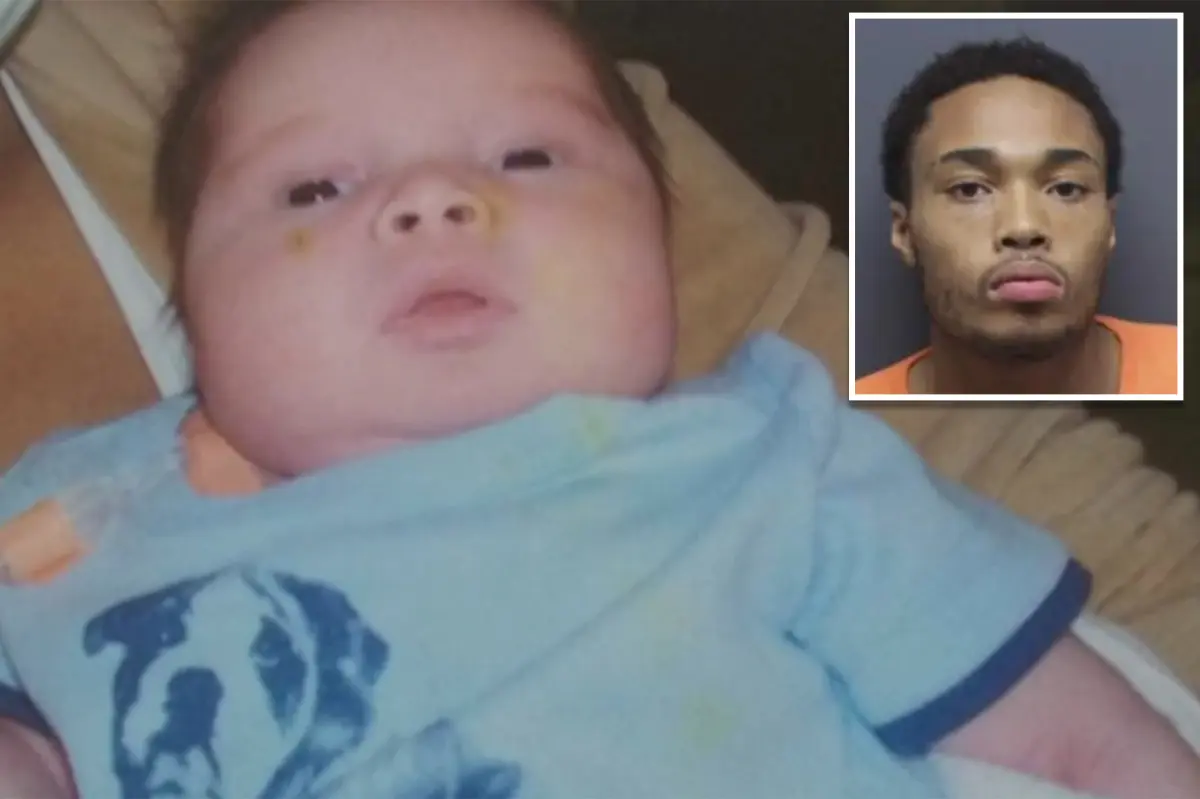
The quiet coastal town of Newport, Rhode Island, known globally for its opulent Gilded Age mansions and peaceful harbor views, recently became the unlikely stage for a violent confrontation that has captivated the nation and sent shockwaves through the Catholic Church. On July 19, a sudden burst of gunfire shattered the peace of a compact residential area, leaving two people wounded and throwing local law enforcement into a high-stakes, fast-moving investigation. The primary suspect was quickly identified as nineteen-year-old Tyquan Johnson, prompting a swift multi-state search as the teenager allegedly fled the state of Rhode Island to evade arrest. The pursuit reached its dramatic conclusion on a quiet Wednesday morning when the United States Marshals Service fugitive task force tracked Johnson down and arrested him without incident at an apartment complex in Virginia. While the news of a teenager facing felony charges of assault with a firearm and firing in a compact area is a tragically common headline, this particular arrest carried an extraordinary, almost mythic weight that instantly transformed it into a global talking point. When authorities released Johnson’s arrest warrant, sharp-eyed community members and journalists immediately noticed something incredible: the name, mugshot, and date of birth belonged to the very same young man whose birth had been officially declared a divine miracle by Pope Leo XIV just a year prior. This jarring contrast between a celebrated modern-day “miracle baby” and a suspected fugitive wanted for a violent double shooting has left the public struggling to reconcile two completely different versions of the same soul. The public’s fascination is not merely with the crime itself, but with the profound narrative whiplash of seeing a teenager, who was once elevated as a living monument of divine intervention, now wearing a modern orange jumpsuit. It challenges our collective assumptions about destiny, leaving us to wonder how a boy who was once the centerpiece of international religious celebration could end up in a cold interrogation room. As investigators look for a second unnamed person of interest, the community is left to grapple with this heartbreaking duality of grace and violence.
To truly grasp the magnitude of this tragedy, one must look back nearly two decades to January 14, 2007, inside the intense, sterile environment of the delivery room at the now-defunct Memorial Hospital of Rhode Island in Pawtucket. On that critical winter day, Tyquan Johnson was born prematurely, facing an immediate and devastating medical crisis that threatened to end his life before it had truly begun. The newborn was suffering from severe, profound oxygen deprivation, a catastrophic condition known as hypoxia that starves the brain and body of gasping life. For sixty-five agonizing minutes, the medical team worked in a state of controlled panic, deploying every tool and resuscitation protocol known to modern neonatology, yet the tiny infant showed absolutely no sign of life or improvement. Crucial minutes ticked away, transforming into a grueling hour of silence from the infant’s chest, leaving the attending physicians with the heartbreaking certainty that the baby was lost. The cold, scientific consensus was that even if they somehow managed to restart his heart, the prolonged lack of oxygen would have already caused catastrophic, irreversible brain damage, leaving him in a vegetative state. The heavy silence of impending death filled the room, and the lead doctor, Juan Sanchez-Esteban, felt the crushing emotional weight of having to walk out into the waiting room to tell a hopeful family that their baby was gone. It was a bleak moment where human knowledge and medical science had reached their absolute, unyielding limits, leaving nothing but despair in their wakes. Every beep of the monitoring equipment seemed to count down the final, tragic moments of a life cut far too short, and the staff began the quiet, somber process of preparing to disconnect the useless machines. In those dark, final moments of clinical defeat, the atmosphere in the room was thick with the raw, heavy grief of a tragedy that felt entirely inevitable, a stark reminder of the fragile thread upon which human life constantly hangs.
In that very moment of absolute clinical despair, Dr. Sanchez-Esteban decided to reach beyond the boundaries of his medical training and embrace his own heritage and faith. The doctor, who was originally from the same region of Spain as a revered nineteenth-century priest named Father Valera Parra, quietly uttered a desperate, internal prayer to the late clergyman, asking for his heavenly intervention to save the dying infant’s life. Just as the physician was turning to officially deliver the devastating news of death to the child’s mother and father, a sudden gasp from a nurse shattered the quiet room. Against all recognized laws of biology and medicine, and without any active intervention at that specific second, the baby’s heart suddenly began to beat forcefully on its own. Tyquan’s pale skin began to flush with life, his lungs expanded, and the infant who had been clinically dead for over an hour was suddenly breathing and thriving. In the days that followed, the hospital staff watched in utter bewilderment as the baby not only survived but showed absolutely none of the severe brain damage or neurological deficits that science insisted should have been a certainty. Dr. Sanchez-Esteban would later testify that this recovery was completely inexplicable by any scientific standard, describing a child who grew up to live a perfectly healthy, active, and normal life, free of any of the developmental scars of his birth. It was an astonishing triumph of hope over science, a profound event that the doctor firmly believed was the direct result of Father Parra answering his desperate call across the boundaries of time and death. This extraordinary turn of events transformed a cold hospital wing into a sanctuary of awe. The staff, who had been prepared to sign a death certificate, instead found themselves witnessing a recovery so flawless and sudden that it defied every established clinical textbook, sealing the child’s destiny as a living wonder.
The incredible story of Tyquan’s survival did not remain confined to the hospital walls; instead, it ignited a meticulous, decade-long investigation by the Catholic Church, a process renowned for its intense skepticism and demands for scientific proof. In 2014, a Spanish bishop dispatched a team of investigators to Rhode Island to pore over medical records, interrogate doctors, and rule out any natural explanations for the infant’s sudden resuscitation. Father Timothy Reilly, the Chancellor of the Diocese of Providence, marvelled at the beautiful, transcontinental nature of the event, pointing out that Father Valera Parra, a local 19th-century priest who had lived from 1816 to 1889 and had never once set foot in the United States, had somehow listened to a doctor’s prayer and asked God to touch a child’s life in Rhode Island. Ten years of exhaustive ecclesiastical and medical scrutiny culminated on July 18, 2025, when Pope Leo XIV officially recognized Tyquan’s recovery as a divine miracle—the very first miracle authorized during his turn as Pope, and the landmark first miracle ever officially recognized in the state of Rhode Island. The announcement was met with global celebration, local pride, and a sense of deep spiritual validation, elevating the teenage Tyquan into a living symbol of hope, faith, and divine benevolence for millions of believers around the globe. His very existence was treated as a rare, tangible bridge between the earthly world and the divine, a testament to the power of prayer in our modern, cynical age. To the local parishioners of Rhode Island, Tyquan became a beloved figure, a walking proof that the miraculous was still possible in their own backyard. The Church celebrated his life as a beautiful reminder of God’s mysterious ways, capturing the imaginations of both the devout and the curious, who saw in him an extraordinary exception to the cold, predictable laws of the universe.
However, the heavy gold of a miracle can sometimes be a difficult burden for a mortal teenager to carry, a truth that has become painfully clear in the wake of Tyquan’s recent arrest. The shocking news of the double shooting in Newport has cast a dark, confusing shadow over a life that was once defined entirely by divine light and global celebration. According to police, the nineteen-year-old was allegedly involved in a violent altercation on July 19 that left two victims hospitalized with gunshot wounds, though thankfully both are expected to make a full physical recovery from their non-life-threatening injuries. The stark, heartbreaking contrast between the innocent baby saved by the prayers of a Spanish parish priest and the young fugitive captured by federal Marshals in Virginia is a difficult reality for the community to process. This sharp divergence serves as a poignant, painful reminder of the fragile complexity of human nature, demonstrating that possessing a miraculous past does not grant immunity from the secular struggles, systemic challenges, and flawed choices of adulthood. As the judicial process begins to unfold, the public is left to wonder about the silent pressures, personal heartaches, and environmental factors that may have led this celebrated young man away from a path of hope and into the grim, violent cycle of street crime. It raises deep questions about the immense pressure of growing up under the label of “miracle boy,” and whether that spiritual weight became an isolating force in his youth. The tragedy of the event lies not only in the violence inflicted upon the victims but in the shattering of a beautiful narrative that had brought so much comfort to a world desperately searching for signs of redemption and grace.
Ultimately, the complex saga of Tyquan Johnson serves as a profound, albeit painful, sermon on the delicate relationship between divine grace and human free will. In the deepest theological traditions, a miracle is not a magical shield that guarantees a perfect, sinless life, nor does it strip a human being of their fundamental right to make their own choices; rather, it is a gift of precious time, a second chance to walk the earth and write one’s own story. The allegations of violence in Newport do not undo the genuine, scientifically inexplicable mystery of what happened in that Pawtucket hospital room in 2007, nor do they diminish the deep faith of the doctor who prayed. Instead, they humanize Tyquan in the most real, tragic way, reminding the world that he is not a flawless icon in a stained-glass window, but a vulnerable young man who must navigate the brokenness of the world just like everyone else. As he sits in a Virginia jail awaiting extradition and trials, the global faithful are left with a deeper, more mature understanding of miracles—one that recognizes that while heaven can step in to save a life, it is up to the individual, and the society around them, to figure out how to live it with purpose. The prayers that once rose up to save a dying baby will surely rise again, but this time they will be prayers for justice, healing for the victims, and a different kind of miracle: the quiet, inward redemption of a troubled soul. The story of Tyquan Johnson remains unfinished, moving from the quiet, holy halls of the Vatican to the loud, serious courtrooms of Rhode Island. It leaves us with the enduring truth that every life, no matter how miraculously begun, is a continuous journey of choice, responsibility, and the search for grace amidst our deepest human failures.