

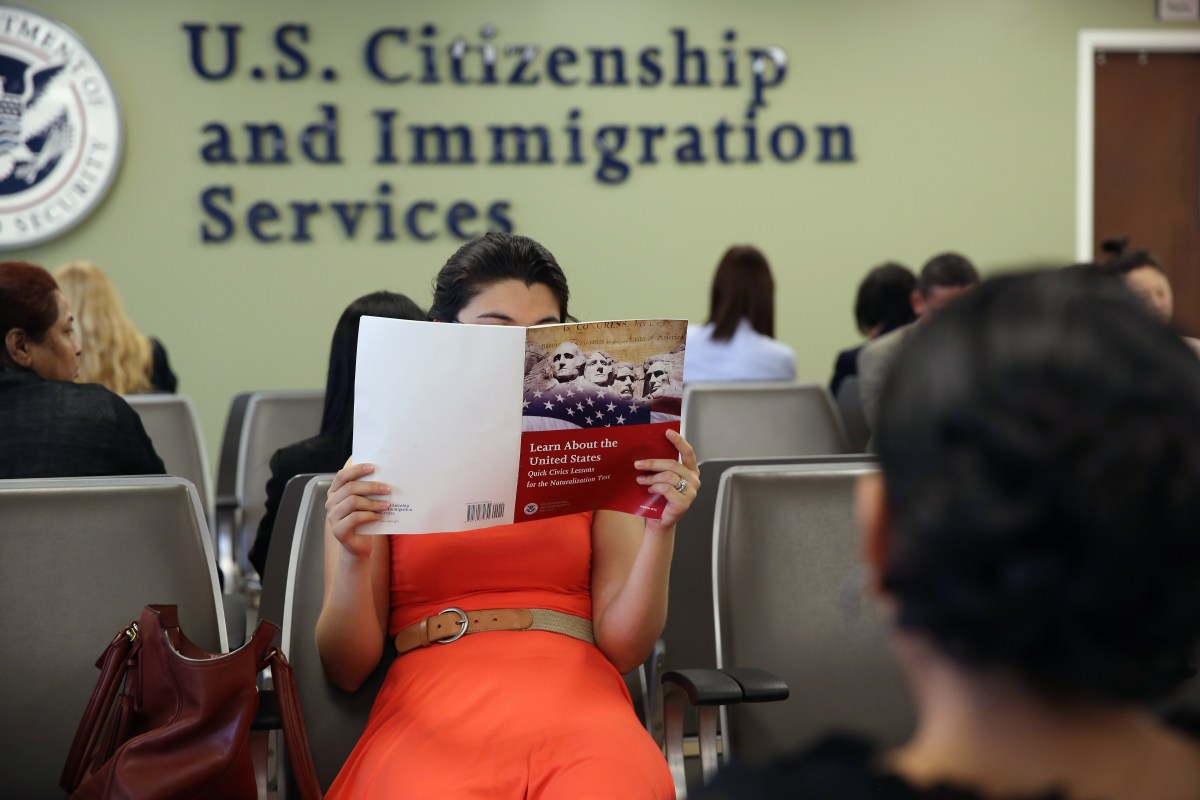
For many refugees fleeing violence, persecution, and political turmoil, the journey to the United States is paved with unspeakable hardships, driven by a singular, desperate hope: to finally stand before an official, look them in the eye, and share their story. For decades, the cornerstone of the “affirmative” asylum process—the path taken by individuals who proactively seek protection while residing in the country legally or undocumented, rather than waiting to be apprehended—was the personal interview. This face-to-face meeting with an asylum officer from U.S. Citizenship and Immigration Services (USCIS) offered a rare, safe space where applicants could explain their trauma and clarify the complexities of their written applications before facing the rigid machinery of a courtroom. However, a sweeping policy shift enacted by the Trump administration has fundamentally altered this landscape. Through an interim final rule published in the Federal Register, the Department of Homeland Security (DHS) has authorized asylum officers to bypass this vital human touchpoint entirely. Under this new directive, officers can now refer select affirmative asylum seekers directly to the adversarial environment of immigration court without ever sitting down to hear their voices, dismantling a long-established administrative buffer meant to evaluate claims with empathy and nuance.
This policy shift arrives as the federal government struggles to manage a system operating under unprecedented strain, where human lives are increasingly treated as statistics in an administrative ledger. By the conclusion of the 2025 fiscal year, the pending affirmative asylum backlog had ballooned to a staggering 1.4 million cases, leaving families in legal limbo for years on end. In an attempt to curb these numbers, DHS estimates that the new rule will divert approximately 132,000 future asylum applicants annually away from the standard USCIS interview process and cast them straight into the judicial system. Under the previous protocol, an officer would review a petition, conduct an in-depth interview, and then decide whether to grant asylum, deny it, or refer the case to an immigration judge. The new rule streamlines this by allowing officers to skip the interview if the initial paper record suggests the applicant is technically barred, legally ineligible, or simply does not warrant asylum as a matter of administrative discretion. While the administration frames this as a pragmatic measure to clear backlogs and prioritize cases that require oral testimony, critics argue it turns a blind eye to the human realities of displaced people, reducing complex stories of survival to mere paperwork.
Perhaps the most profound procedural and psychological alteration within the rule is the deliberate removal of language suggesting that asylum applicants have an inherent “right” to an interview before their cases are referred to court. In stripping this phrasing, the government legally reframes the interview from an essential step of due process into an administrative privilege that can be suspended at will. For an asylum seeker, this change transforms their legal journey from a collaborative, non-adversarial inquiry into a combative legal battle from day one. Instead of explaining their fears to a trained, specialized asylum officer whose mandate is to investigate the validity of a claim in a sensitive manner, bypassed applicants will find themselves thrust directly into removal proceedings. There, in front of an immigration judge and a DHS prosecutor arguing for their deportation, they must defend their lives in a formal court of law, often without the legal representation they desperately need to navigate such a hostile environment. While DHS maintains that these individuals still have the opportunity to present their claims in court, the immediate threat of deportation hangs much more heavily over a courtroom than an administrative office.
The administration’s rationale for the rule is rooted in a narrative that portrays the asylum system not as a humanitarian lifeline, but as a system plagued by fraud and manipulation. Officials have long argued that migrants use the lengthy asylum process as a convenient loophole to secure work authorization and delay their removal from the country. In launching the new policy, USCIS Director Joseph Edlow asserted that the asylum system has been exploited for far too long by individuals lacking legitimate claims of protection, promising that the reform would ensure precious resources are directed toward those with genuine fears of persecution. Echoing this sentiment, DHS General Counsel James Percival pointed at “intentional delay by illegal aliens and the open borders attorneys who represent them” as a primary hurdle to national security and immigration enforcement. This rhetoric, however, obscures the desperate reality of families who rely on temporary work permits simply to feed their children and pay for basic shelter while they wait years for their cases to be heard, reframing survival strategies as malicious legal maneuvers.
By shifting to a “paper-only” evaluation process for 132,000 people each year, the administration overlooks the deep trauma and structural barriers that prevent vulnerable migrants from presenting flawless written applications. Asylum seekers often arrive in the United States with limited English proficiency, suffering from the psychological scars of torture, assault, or grief, and are frequently forced to fill out complex legal documents without the assistance of a lawyer. Written petitions are notorious for containing translation errors, omissions of key details due to shame or post-traumatic stress, and structural misunderstandings of American legal standards. Historically, the personal interview served as the critical safety net where an experienced officer could notice a physical scar, ask clarifying questions, read subtle body language, and look past a poorly drafted form to uncover a genuine, life-and-death claim. By eliminating this step for many, the new policy risks fast-tracking traumatized individuals—who may look ineligible on a poorly translated sheet of paper—straight into deportation proceedings, potentially returning them directly into the hands of the persecutors they fled.
Ultimately, this policy represents a troubling shift toward prioritizing bureaucratic velocity over human dignity and systemic justice. While the administration champions the rule as a decisive tool to eradicate backlogs, shifting over a hundred thousand cases annually from USCIS offices to immigration courts does not actually diminish the queue; it merely shifts the bottleneck to a judicial branch that is already drowning under millions of unresolved cases. Beyond the logistical failure, the moral cost of this efficiency is borne entirely by some of the world’s most vulnerable people, who are denied the simple dignity of being heard before they are placed in deportation proceedings. By turning the asylum process into a cold, transactional assembly line that prioritizes paperwork over personal testimony, the United States risks eroding its historic identity as a sanctuary for the oppressed, transforming a beacon of hope into a system designed to reject before it even attempts to understand.